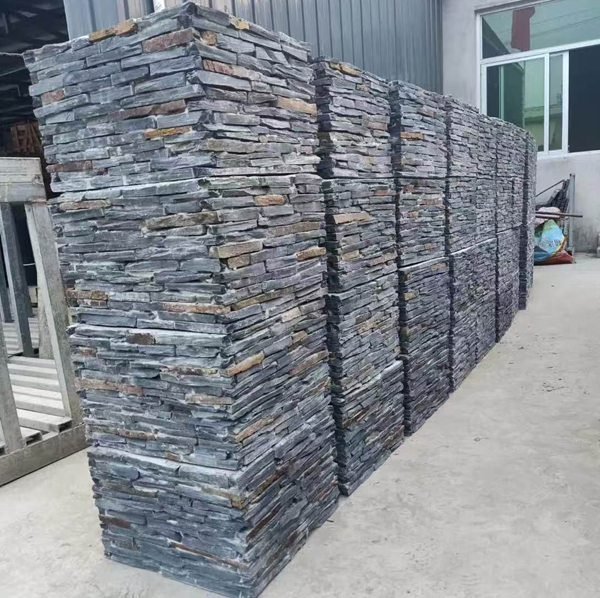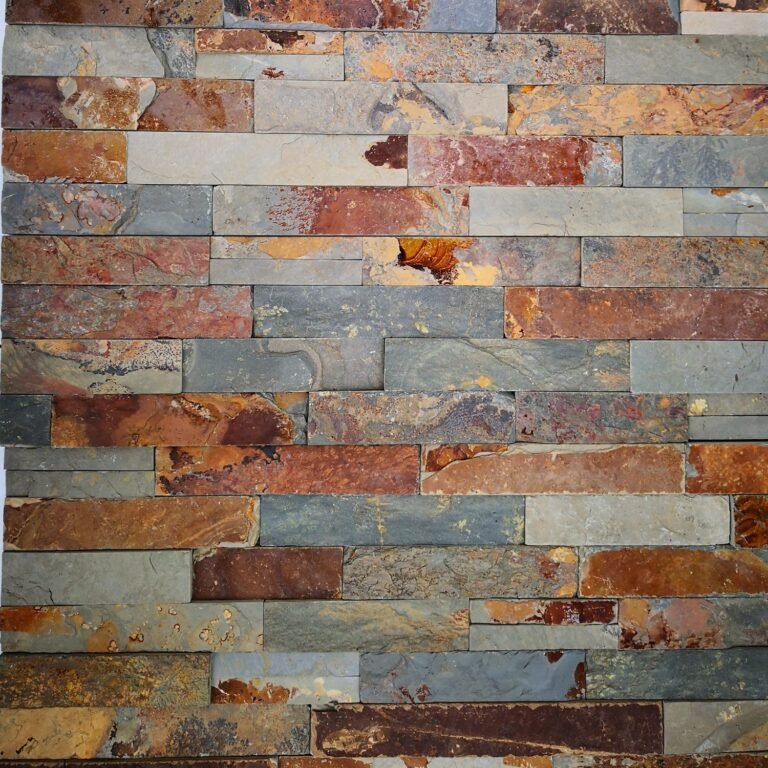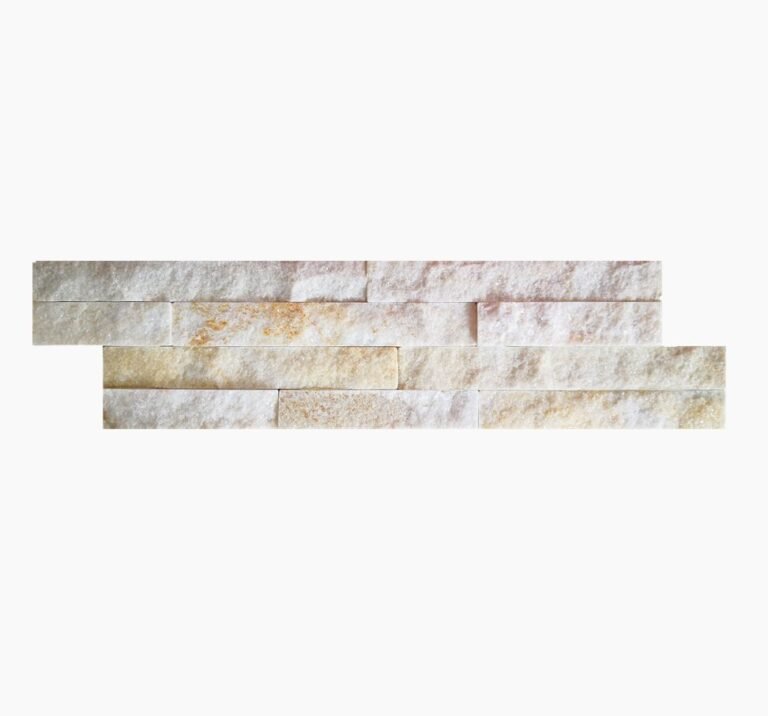
Every cladding estimate comes down to the same two line items: material and labor. When the material is natural stacked stone, the format decision decides both. A stacked stone panel is a factory-assembled grid of split-face ledger stone, and individual stone is the loose pieces behind that grid. Same quarry, same face, radically different install math. Contractors who bid against each format quickly learn that the panel side of the comparison wins big on flat walls — and the individual side refuses to die for one honest reason.
The numbers tell the story. Prefabricated L-corner pieces save roughly 50% of installation labor at outside corners, and infrared CNC cutting drops on-site waste by about 20%. On a 200-square-meter commercial facade, that difference is days of crew time and a small dumpster of offcuts. This guide compares both formats on labor, waste, corners, appearance control, and landed cost, then gives a straight recommendation on which to spec. The factory data comes from Top Stone Panels, a direct-from-quarry producer in Yixian, Hebei that has run stacked stone and thin veneer programs through 220+ containers a year for 18+ years.
Key Takeaways
- Panels are factory-assembled grids (15x60cm and 15x55cm); individual stone is loose split-face strips laid piece by piece.
- Prefabricated L-corner pieces cut installation labor roughly 50% at outside corners versus onsite miter cutting.
- Infrared CNC precision cutting reduces on-site waste about 20% on panel projects.
- Both formats ship from the same quarry families with vein-based color sorting and 95% color harmony control.
- Panels win flat, plumb walls; individual stone wins tight curves, irregular openings, and freehand patterns.
- MOQ is one 20GP container, samples in 1-3 days, production 20-25 working days, FOB Xingang.
What the Two Formats Actually Are
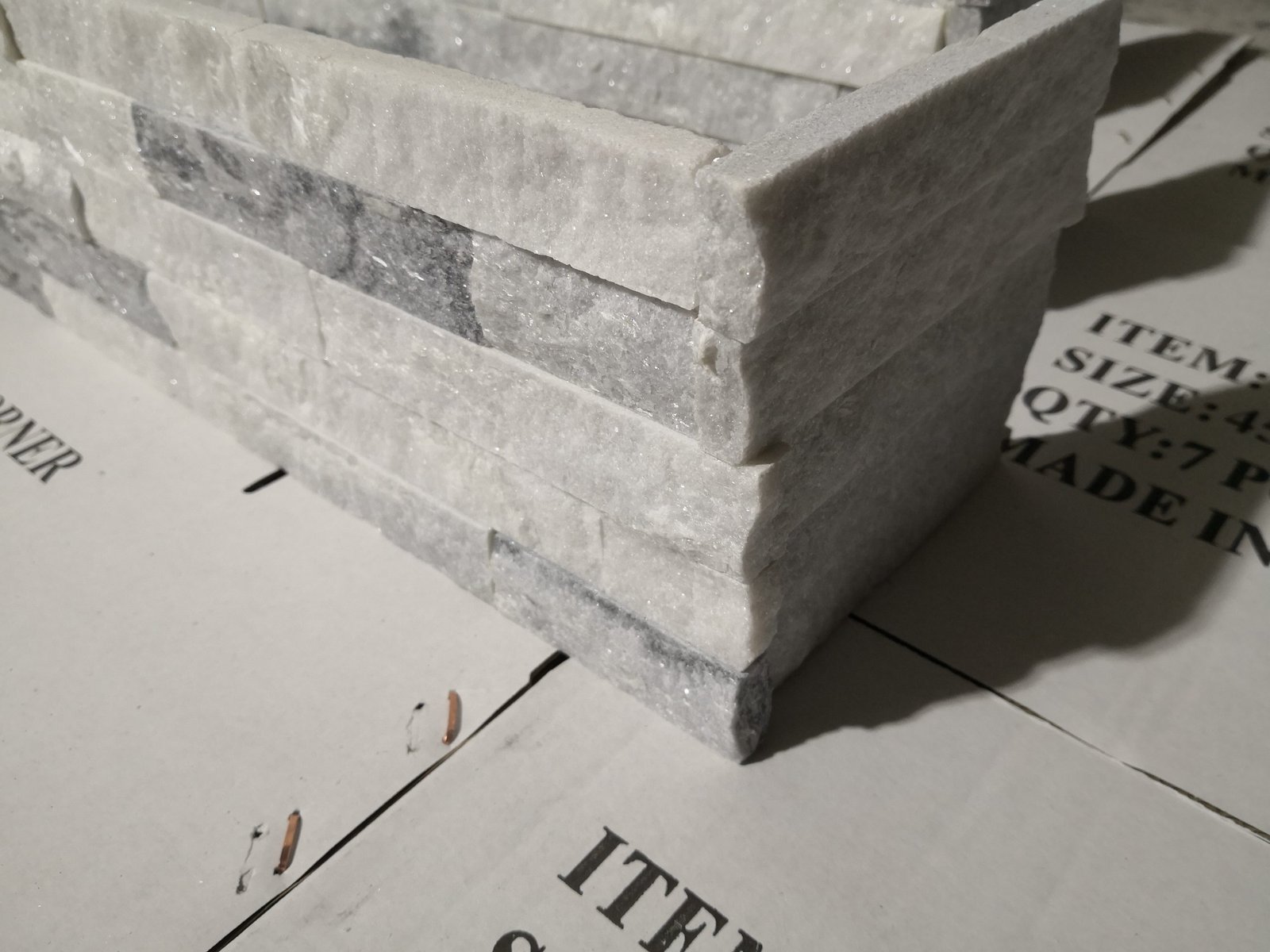
The panel is the production-line version of the stone wall. Natural ledger pieces are cut to grid, arranged on a backer, and shipped ready to hang. In the Top Stone Panels program, stacked stone panels run 15x60cm and 15x55cm faces with cement, mesh, or marine-grade epoxy backers, and a corner is not a task but a product: prefabricated L-corner pieces in flat or rough profiles that wrap a 90-degree turn in one factory-made unit.
Individual stone is the same material family before assembly. Thin veneer strips and loose ledger pieces arrive color-sorted from the quarry, and the installer builds the pattern. That freedom is the attraction. The layout can follow an arch, climb an irregular gable, or blend tones freehand in a way a fixed grid cannot. The cost is time, because every piece is placed, spaced, and leveled by hand.
Call the distinction a manufacturing decision, not a quality decision. Both are 100% natural stone. Both come from the same vein-selected slate and quartzite deposits that give the stacked stone panel line and the thin stone veneer line their color. The formats differ in who does the assembling: the factory or the crew on site. That single difference drives everything below.
Side-by-Side Comparison
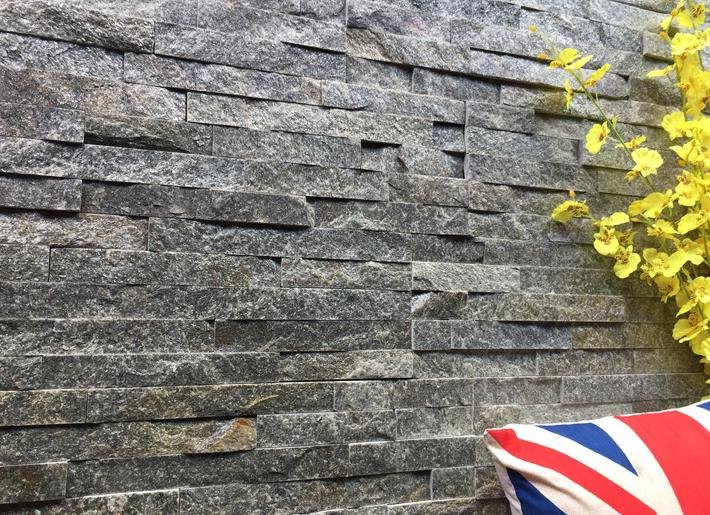
Judge the two formats by the decisions a buyer actually signs off on. Labor dominates the bid, waste inflates the material order, corners decide the finish quality, and consistency decides whether the second wall matches the first. The table below scores both formats on those axes, with the factory figures as first-party data.
| Comparison axis | Stacked stone panels | Individual stone |
|---|---|---|
| Format | 15x60cm / 15x55cm grids on cement, mesh, or epoxy backer | Loose split-face strips and ledger pieces |
| Installation labor | Lower; L-corner pieces save ~50% at corners | Higher; every piece laid and leveled by hand |
| On-site waste | ~20% lower via infrared CNC precision cutting | Offcuts depend on layout skill and edge cuts |
| Corners | Prefabricated L-corners, one-piece or two-piece | Onsite miter cutting and fitting |
| Color control | Vein-sorted, 95%+ harmony held in factory assembly | Vein-sorted delivery; final blend is the crew’s job |
| Design flexibility | Flat, plumb walls; grid-consistent patterns | Curves, arches, irregular shapes, freehand mixes |
| Consistency across orders | High; production batch matches the approved master | High material consistency; wall-to-wall depends on installers |
| Shipping density | More m² per ton, grid-cut and stacked flat | Loose pieces take more volume per useful m² |
The comparison hides one number buyers overlook: useful square meters per container. Panels pack flat because the grid is regular. Loose strips stack less efficiently, which pushes the FOB-per-square-meter picture toward panels even before labor is counted. Get quotes in square meters on both formats, then add the labor difference.
Labor and Installation Speed
Install labor separates the formats into different budget classes. A two-person crew setting stacked stone panels coats a run of wall in far fewer placing cycles than the same crew laying loose strips. Each panel covers roughly 0.09 square meters with a finished face, which means several stones placed per pass instead of one at a time.
The corner is the real labor ledger. A standard outside corner done onsite asks the crew to measure, mark, miter, and trial-fit each return. Prefabricated L-corner pieces remove that whole sequence, and the factory figure is blunt: L-corner pieces save about 50% of installation labor at corners. Multiply that across a facade with a dozen corners and the number becomes days, not hours. The L-corner guide breaks down one-piece versus two-piece corner returns and when each works.
Speed compounds on speed. Faster walls free the crew for the real money line: square meters laid per day. If you bid, panels collapse the labor line; if you sell, panels let installers quote tighter and still protect margin. The panel installation guide documents the step-by-step sequence that delivers the speed, from substrate prep to setting and jointing.
One warning: speed assumes a flat, plumb wall. Panels amplify substrate error because a grid shows every deviation. The crew that skips the leveling pass will pay the installed-width difference back in shim and mortar. Individual stone forgives more, which is why the two formats coexist.
Waste, Yield, and Material Cost
Material cost is quoted on what ships, but the buyer pays for what gets wasted. On a stone facade, waste arrives two ways: edge cuts that miss the layout grid and broken pieces from clumsy handling. Precision cutting addresses the first. Top Stone Panels cuts panel faces on infrared CNC equipment, and the resulting dimensional accuracy reduces on-site waste by about 20% on panel projects. The CNC precision article explains how square, repeatable faces feed straight into clean joints.
Individual stone converts waste differently. The random length of loose strips means fewer cuts for standard walls, because the installer fits pieces to the run rather than cutting a grid to size. But curves, openings, and pattern transitions generate offcuts, and there is no factory gate to catch a bad day. Yield on loose stone rides on the skill of the person at the saw.
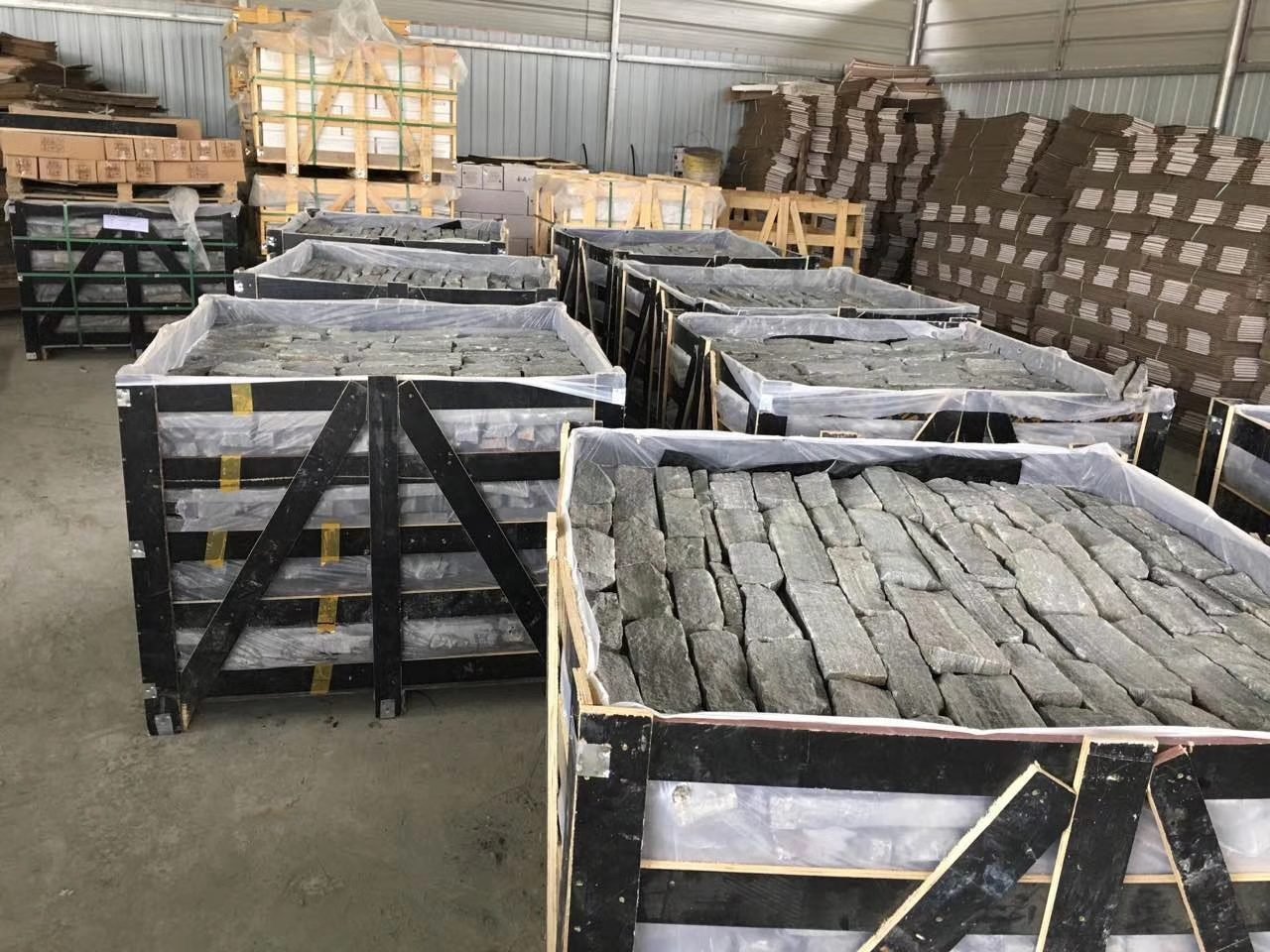
Count the broken-piece risk too. Loose strips arrive as individual units and take individual hits in transit, while panels are packed flat in 3-5 layer cartons on plywood pallets with 4-6 steel straps, then airbag-blocked inside the container. The breakage packaging guide details the zero-breakage protocol. Fewer pieces moving loose means fewer replacements claimed, and every avoidable replacement eats margin.
Corners and Finishing Details
Corners determine whether a stone wall reads as craftsmanship or handyman work. A clean outside corner continues the ledger profile around the turn with no exposed edge, no gap, and no miter slip. Panels deliver this by manufacturing: L-corner pieces return the stone in one factory-made unit, and the profile matches the face panels because both are cut from the same production line.
Individual stone forces the corner into the field. A skilled mason miters each return, and a good miter looks identical to a factory corner. The difference is time and variance: mitered corners take per-piece cutting, trial fitting, and cleanup, and the result depends on the crew on the day. The corner cutting guide covers the technique when individual pieces win the decision anyway.
Window and door returns tell the same story. Flanking an opening is a repeated 90-degree detail that panels solve with pre-made returns, while loose stone asks for careful scribing at every jamb. For multi-unit residential and commercial work with dozens of openings, that repetition is exactly where panel economics stack.
Appearance Consistency and Design Control
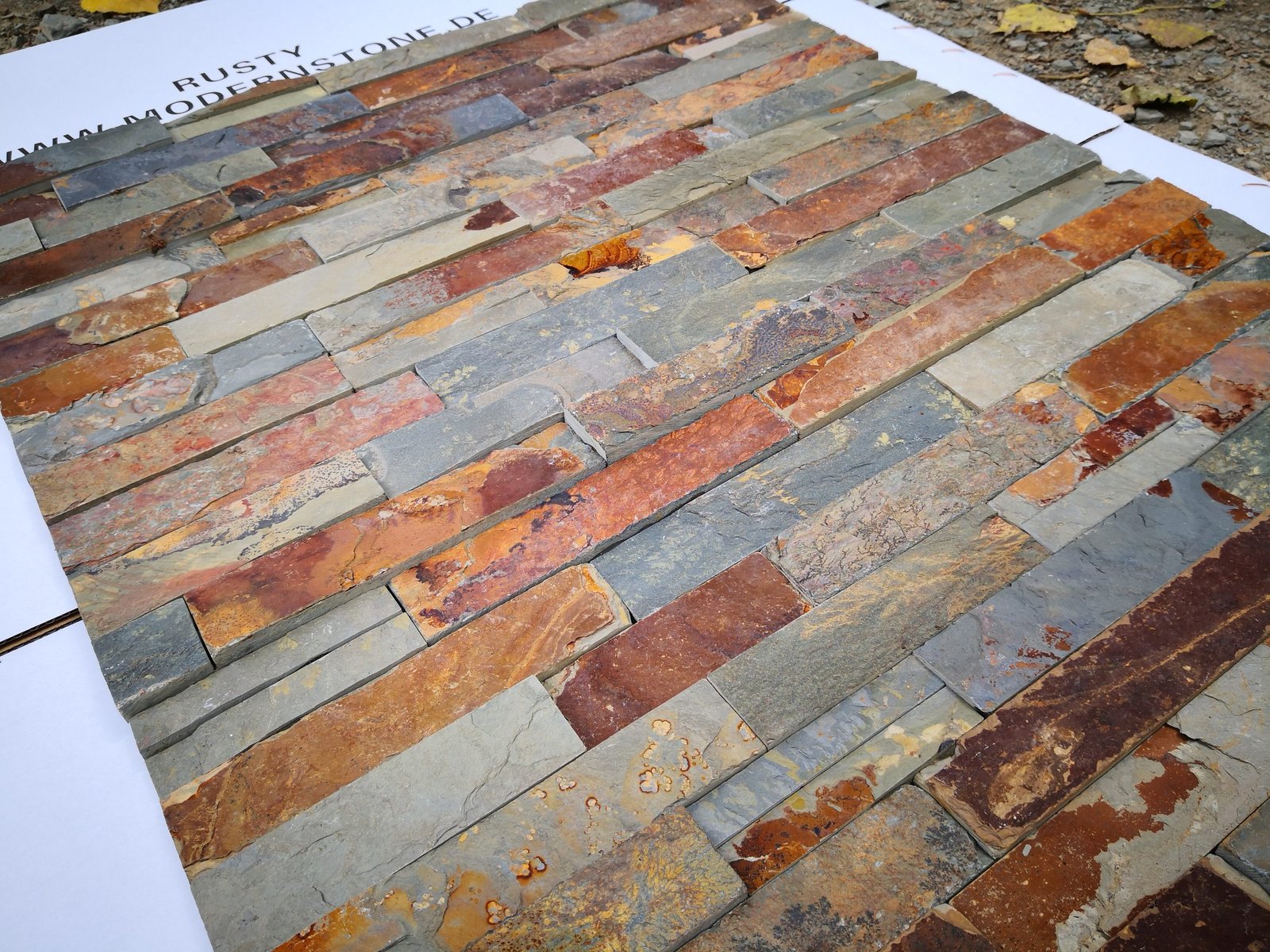
Color is the first thing a buyer notices and the last thing they audit. Both formats start from the same discipline: batch-specific vein selection from the same quarry family, with production held to 95% or better color harmony against the approved master. The vein selection guide documents how quarries control that consistency across orders.
The control point differs after the material ships. A panel locks the blend in the factory, so wall one and wall ten match because the assembly was governed by one master. Individual stone ships color-sorted, but the final blend is assembled on site, which means the harmony depends on the person distributing tones across the wall. Same material, different governance.
Design control runs the other way for pattern. Panels impose their grid; the ledger texture is consistent because the row structure is consistent. Individual stone allows freeform layouts, random lengths, and transitional tones that a grid cannot produce. If the design brief demands true randomness, individual stone carries it; if it demands repeatable rhythm, panels deliver it cheaper.
Where Individual Stone Still Wins
Honesty forces the counter-case. Individual stone wins four scenarios outright. First, tight-radius curves: a panel grid cannot bend, while strips follow a barrel vault or curved bench seat. Second, irregular openings and gables: freehand scribing beats grid cutting on every odd angle. Third, freehand tonal blending: the floor-to-ceiling transition that mixes colors gradually is a mason’s move, not a factory spec. Fourth, repair patches: one replaced strip is cheaper than one rebuilt panel section.
The commercial reality is that most cladding square meters sit on flat exterior walls, fireplace surrounds, and entry features — exactly the plane a grid serves. Projects that are 20% curve work and 80% flat wall routinely use panels for the flat mass and individual product for the details. The two formats are complements, and the flagstone and crazy-paving lines show the same split logic in another product family.
Spec the format that fits the wall
Top Stone Panels produces both stacked stone panels and loose thin veneer from the same quarry families, with samples in 1-3 days and mixed containers available across lines. Send your wall plan and get a panel-versus-loose breakdown for your square meters.
Which Should You Spec
The recommendation is not subtle. Independent contractors protecting labor hours, distributors stocking a sellable wall system, and commercial projects with many openings should spec panels. The prefabricated corner savings alone justify the format on any facade with corners, and the waste reduction pays part of the freight. The stacked stone siding guide shows how the panel format behaves as a distributor stock line across real wall types.
Spec individual stone when the geometry demands it or the design is genuinely freehand. Curved features, irregular masonry, and bespoke blends are the exceptions that justify the extra labor. On mixed projects, buy both: panels for the flat mass, loose for the details, from one container.
| Project profile | Format to spec | Why |
|---|---|---|
| Flat exterior facade, many corners and openings | Stacked stone panels | L-corner labor savings and repeatable grid |
| Fireplace wall with tight return details | Panels + prefabricated corners | Factory corners clean up the profile |
| Curved barrel vault or radius seating | Individual thin stone veneer | Strips follow radius geometry panels cannot |
| Freehand tonal blend, feature art wall | Individual loose stone | Installer-driven mixing and transitions |
| Multi-unit residential, standard wall modules | Panels | Repeatable speed across repeatable units |
Reordering is where the format choice compounds. A panel line reorders by SKU and matches the approved master at 95% or better harmony, so a distributor’s second container looks like the first. Loose stone reorders the quarry family, but the wall blend shifts with the crew. For a product you intend to sell in volume, buy the one that reproduces itself. For a wall you intend to craft, buy the freedom.
FAQ
Is stacked stone panel cheaper than individual stone?
Per square meter of wall surface, panels usually cost less because labor and waste drop. Prefabricated L-corners save about 50% of corner labor, and precision cutting cuts waste, so installed cost typically lands below individually laid stone.
How much labor do stacked stone panels save?
L-corner pieces save roughly 50% of installation labor at outside corners, with additional savings across flat wall areas where one panel replaces many individual placements.
Can I get the same look with individual stone pieces?
Yes, with more layout time. Both formats come from the same vein-sorted quarry family. Panels lock the blend in the factory; individual pieces leave the mixing to the installer on the wall.
When should I choose individual stone instead of panels?
Choose individual stone for tight-radius curves, irregular openings, freehand tonal blends, and repair patches. Choose panels for flat, plumb walls where speed and consistency pay.
Do panels and individual stones cost the same per container?
No. Panels ship more square meters per ton because grid-cut faces stack flat. Compare FOB quotes per square meter on both formats, then add the labor difference.
Conclusion
Stacked stone panels beat individual stone on the axes that decide most commercial and residential bids: labor at corners, waste on edge cuts, and consistency across reorders. Individual stone keeps the design freedom for curves, irregular geometry, and freehand blends. The buyer who treats them as competing products misses the point.
- Prefabricated L-corner pieces save roughly 50% of corner installation labor; panels reduce on-site waste about 20% through CNC precision.
- Spec panels for flat walls, many openings, and repeatable color; spec individual stone for curves, freehand patterns, and repairs.
- Compare FOB quotes per square meter on both formats, because shipping density differs per container.
- Buy both from one 20GP mixed container when the project needs flat mass plus crafted details.
When your wall plan sits on flat, plumb planes, panel the mass, corner it with L-pieces, and save the loose product for the details that deserve a human hand. That split is the honest answer to the format question, and it is the one the numbers support.