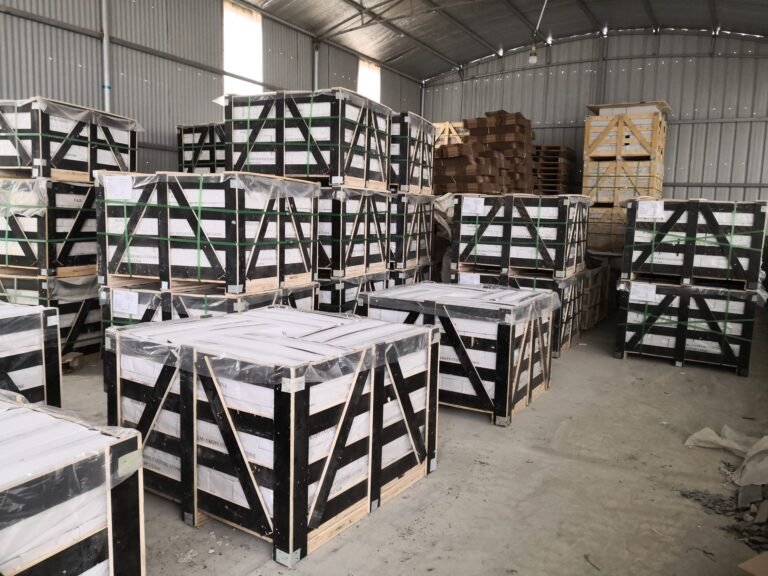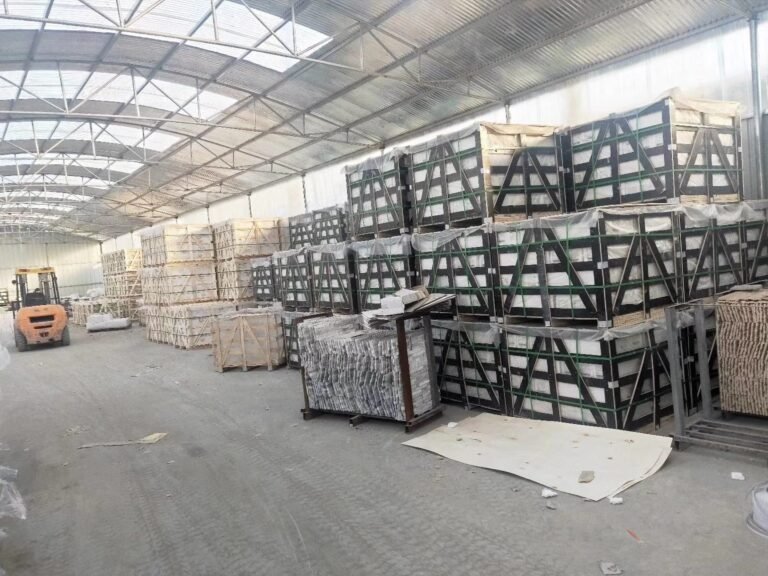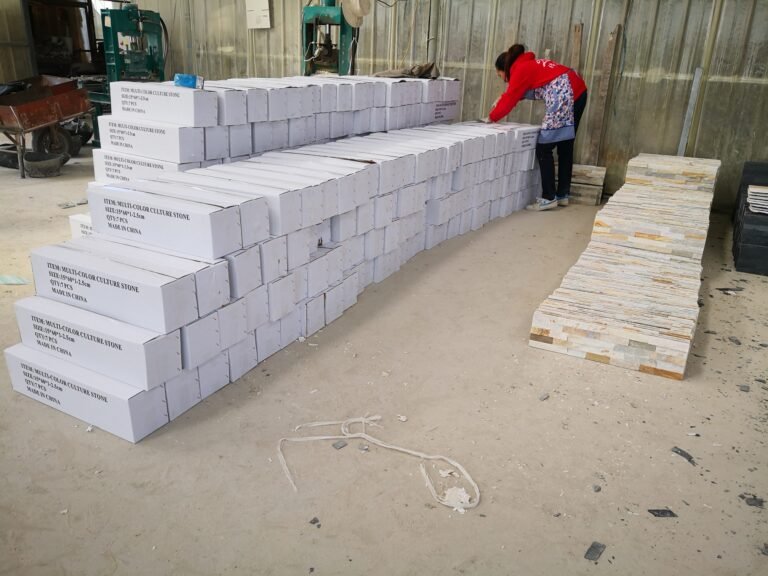
Every distributor who has done this once knows the arithmetic. A pallet of stacked stone in a local yard costs one number, and the same square meters from a factory in Hebei costs another, and the difference is the wholesale business. The problem is that the cheap factory price means nothing if the panels crack in the container, the color drifts between batches, or the load turns out to be 400 square meters instead of 500.
Buying stacked stone wholesale is a container decision, not a sample decision. Top Stone Panels, a quarry-direct factory in Yixian, Hebei, standardizes panels at 15x60cm and 15x55cm with L-corners. Physical samples ship in 1 to 3 days, standard production runs 20 to 25 working days, and the minimum order is one 20GP on 30 percent deposit with 70 percent before balance. This guide walks the whole purchase line: format, coverage math, container economics, quality gates, and the packaging that gets the box across the ocean intact.
- Wholesale starts at one container: a 20GP carries roughly 500 to 530 m2 of stacked stone at about 26.5 metric tons, and the 20GP usually wins on cost per square meter for dense panels.
- A 15x60cm panel covers 0.09 m2, or 11.1 panels per square meter, before a 5 to 10 percent allowance for cuts and returns.
- Order samples before the container: physical samples ship in 1 to 3 days and let you verify color, weight, and surface against the batch data.
- Use the quality gates — 3-step QC, loading video, batch photos, pre-shipment inspection — before releasing the 70 percent balance.
- The Zero-Breakage packaging protocol ships in 3 to 5 layer cartons on plywood pallets with 4 to 6 steel straps and air bags, which is how dense stone survives 8,000 miles.
- 1. What Wholesale Means in Natural Stone
- 2. Why the Buying Unit Is One Container
- 3. Choose the Panel Format Before the Color
- 4. Coverage Math for a Wholesale Order
- 5. What Factory-Direct Sourcing Changes
- 6. How the FOB Xingang Price Is Built
- 7. Quality Gates Before the Balance Payment
- 8. Samples and the 1 to 3 Day Rule
- 9. Packaging That Survives Ocean Freight
- 10. Mixed Containers and Custom Color Mixes
- 11. Reorders and Color Consistency
- FAQ
- Conclusion
1. What Wholesale Means in Natural Stone
Wholesale in natural stone is not a discount tier, it is a quantity relationship. The unit is the container, the pricing is FOB or EXW, and the buyer carries the logistics and the inventory. That is the trade the distributor makes: lower unit cost in exchange for working capital, warehouse space, and freight risk.
The economics favor the buyer who understands the weight rule. Stone panels weigh 40 to 55 kg per square meter installed, so a container usually runs out of legal payload before it runs out of space. Every decision downstream, the box size, the pallet plan, the cost per square meter, hangs on that single fact. The distributor who ignores it compares cube prices and overpays; the distributor who uses it builds the margin into the quote.
Whether the volume target is one container or a ten-container program, the buying logic is the same: pin the panel format, run the coverage math, verify the batch, and hold the freight story to a named incoterm. The distribution margin is not a percentage the supplier marks up, it is the spread the buyer protects on the way from the factory floor to the local yard.
2. Why the Buying Unit Is One Container
The first wholesale question is not the unit price per square meter. It is which box, and how many square meters the box actually carries. The factory pricing structure assumes a load, and the load math starts with the container because freight, port handling, and documentation carry fixed components per shipment.
A 20-foot standard container holds about 13.9 square meters of floor and 33 cubic meters of volume, with a payload around 21,700 to 26,500 kg depending on the carrier and reinforcement. A 40-foot high cube offers about 28.3 square meters of floor, 76 cubic meters, and a payload near 26,500 to 27,600 kg. For dense stacked stone at roughly 50 kg per square meter, both boxes weigh out at a similar 500 to 550 square meters. The 20GP usually delivers the lower cost per square meter for this product line.
Reinforced loading changes the picture. Standard 20-foot boxes are rated with a max gross of about 30,480 kg, leaving roughly 21,700 kg of cargo after tare. Stone mills that load 25 to 26.5 tons in a 20GP rely on reinforced containers, overweight permits, or line-specific allowances. Ask which payload the quote is based on before you plan your squares, and test both box sizes from the same carton weight and cube data. The full comparison of 20GP versus 40HQ loads, including when the long box wins for light formats, is in our container guide.
3. Choose the Panel Format Before the Color
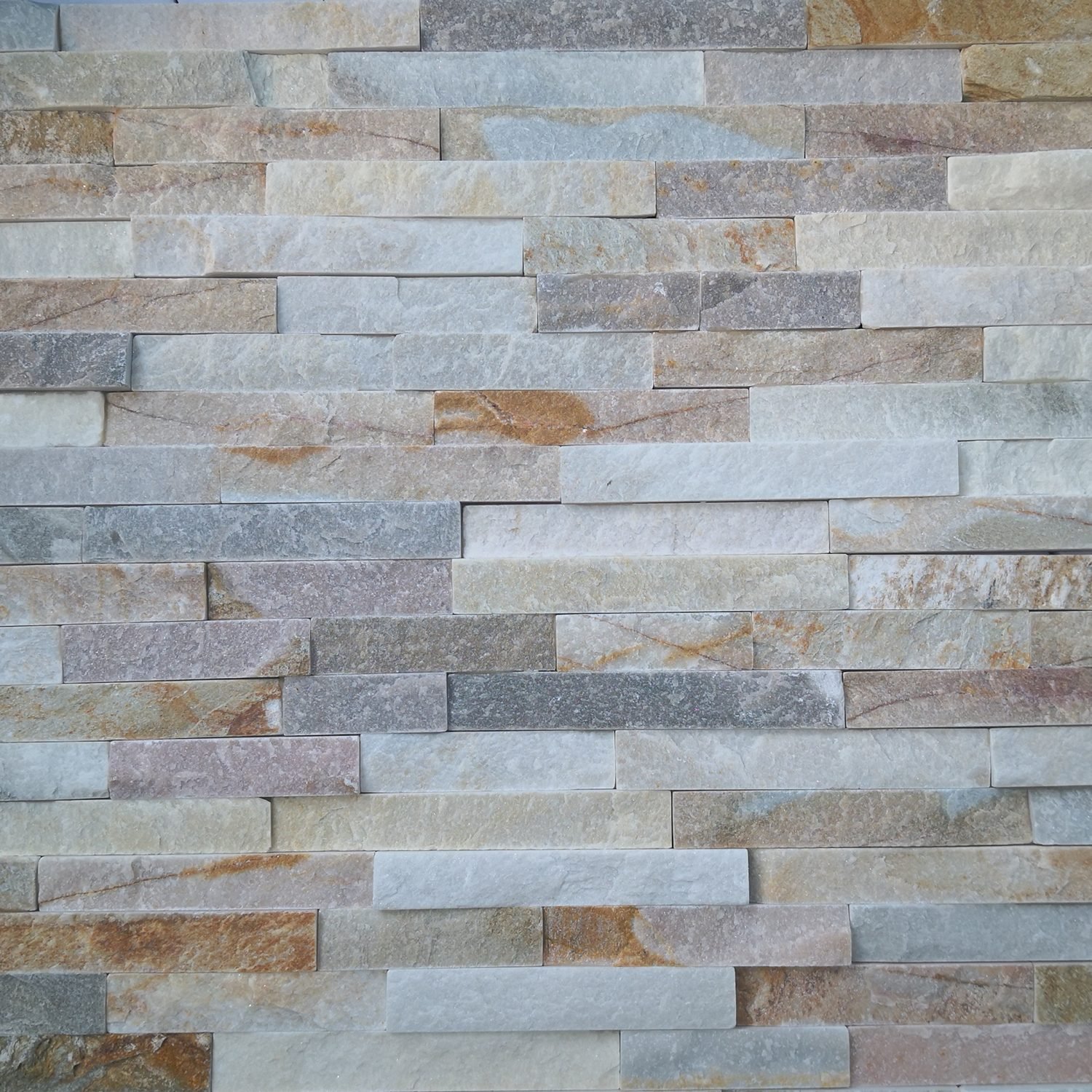
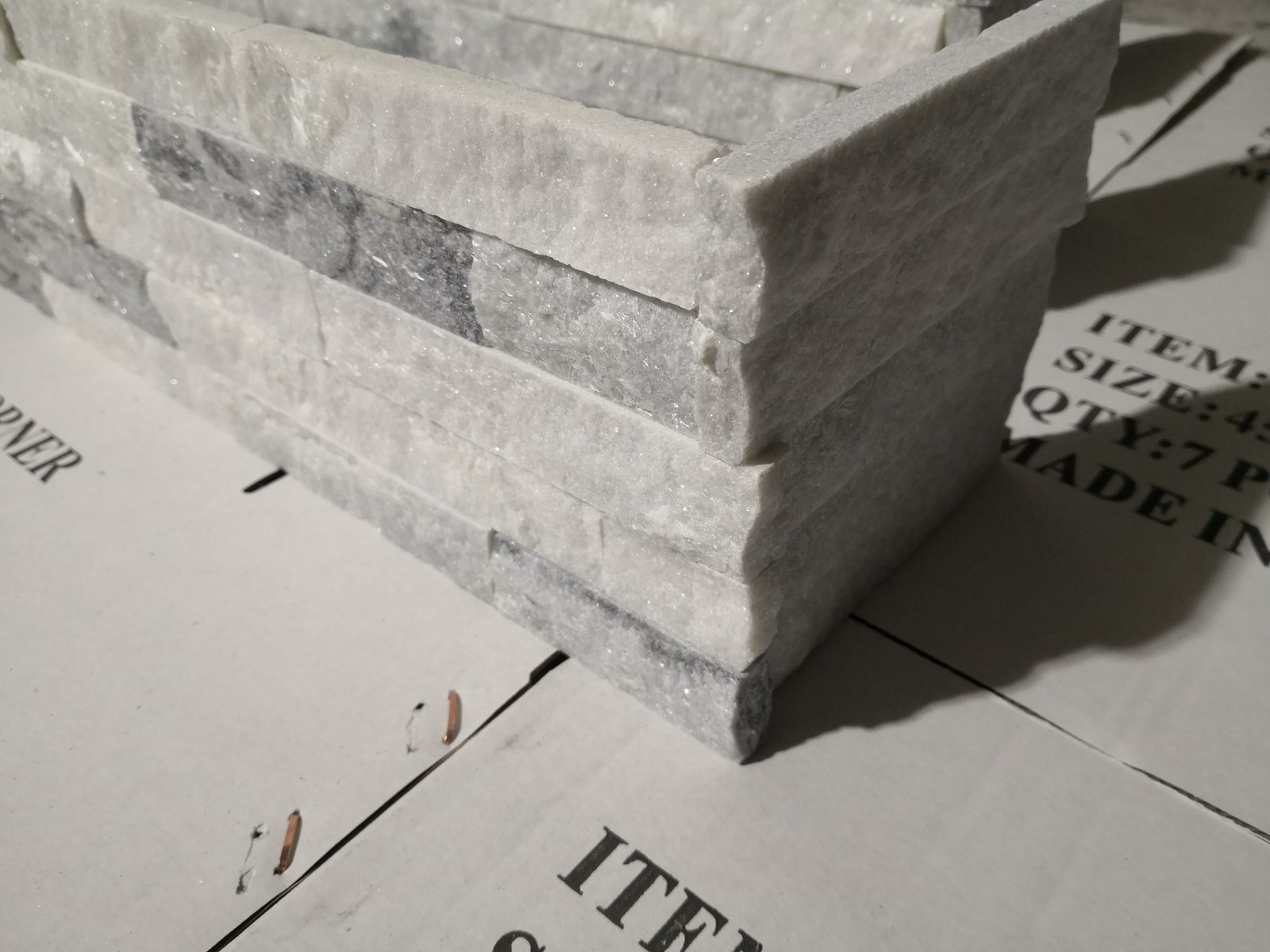
Colors change with fashion, but the panel format decides the entire logistics chain, so it gets decided first. The stacked stone standard at Top Stone Panels is a ledger panel at 15x60cm and 15x55cm, each covering 0.09 square meters, with L-corners supplied as part of the system. The repeating rectangle is the format distributors stock because it installs fast and estimates cleanly.
Corners are where wholesale buys quietly fail. A wall without corner pieces forces the installer to miter every outside turn on site, and the labor cost lands on the distributor’s margin. Factory L-corners, pre-made in the same color range, cut return labor roughly in half and keep the boxed product complete. When you request the quote, ask for the corner count per box and the coverage the corner sets add, because the corner line is usually the difference between complete and incomplete inventory.
4. Coverage Math for a Wholesale Order
Panel count is the number the warehouse can verify against the packing list, so it belongs on the quote. With a set panel size, coverage is division: a 15x60cm panel covers 0.09 square meters, which puts 11.1 panels in every square meter before waste. A 500 square meter container order needs about 5,550 panels before the cut allowance, and roughly 6,100 panels after a 10 percent allowance for cuts and returns.
| Format | Panel size | Coverage per panel | Panels per m2 | Installed weight |
|---|---|---|---|---|
| Stacked stone | 15x60cm / 15x55cm | 0.09 m2 | 11.1 | 35 to 55 kg/m2 |
| Thin ledgestone | 36x10cm ultra-thin | 0.036 m2 | 27.8 | Lighter retrofit format |
| Interlocking z-panel | 20x55cm / 15.2x61cm | 0.11 / 0.093 m2 | 9.1 / 10.8 | Cement or mesh backing |
Weight is the second half of the count. Installed stacked stone runs 35 to 55 kg per square meter, and the container fills on weight long before it fills on volume. The practical rule for the quote: get the gross weight per carton and the cube per carton from the mill, then test which limit, payload or cube, bites first for your mix. The same coverage logic scales from one box to a program, and the detailed sizing math is in our stacked stone panel sizes guide.
5. What Factory-Direct Sourcing Changes
Factory-direct means the supplier controls the material from the quarry block to the carton, and that vertical line changes what the buyer can demand. A trading company can only pass on price; a factory can open the batch record, name the vein, and adjust color selection for the next run. Top Stone Panels operates its own slate and quartzite sources in Yixian, which is why batch-specific vein selection is a written step in production, not a promise.
The difference shows in the documents and the samples. A quarry-direct mill ships physical samples in 1 to 3 days, because the material sits in its own warehouse. A mill that quotes from a brochure usually hesitates, because the material is not its own. The same gap appears in capacity: at 80,000 square meters of monthly stacked stone output and 220-plus containers a year, a factory can schedule a new customer without starving existing programs.

6. How the FOB Xingang Price Is Built
The factory quote is assembled from a short list of real inputs: raw block yield, cutting cost, backing and packaging, labor, and the margin the mill needs to keep the line running. FOB Xingang, the port used for the 220-plus annual containers, puts the risk transfer at the vessel, and the price should be quoted on the same panel format and carton data the buyer plans to receive.
Payment structure is part of the price conversation. The standard line at Top Stone Panels is 30 percent T/T deposit with 70 percent before balance, released after the loading video and batch photos are confirmed. That sequence matters because it aligns the buyer’s money with verifiable production milestones: the deposit funds the stone, and the balance releases only after the container is loaded and documented.
Compare two suppliers and the quote that survives is the one that names the standard cost lines. Gross weight per carton, cube per carton, maximum square meters per box, the payload the carrier allows, and the incoterm. Volume moves the unit price, so a distributor scaling from one box to a program should ask what the additional containers change. The distribution margin guide walks through how that price lands on a retail shelf.
7. Quality Gates Before the Balance Payment
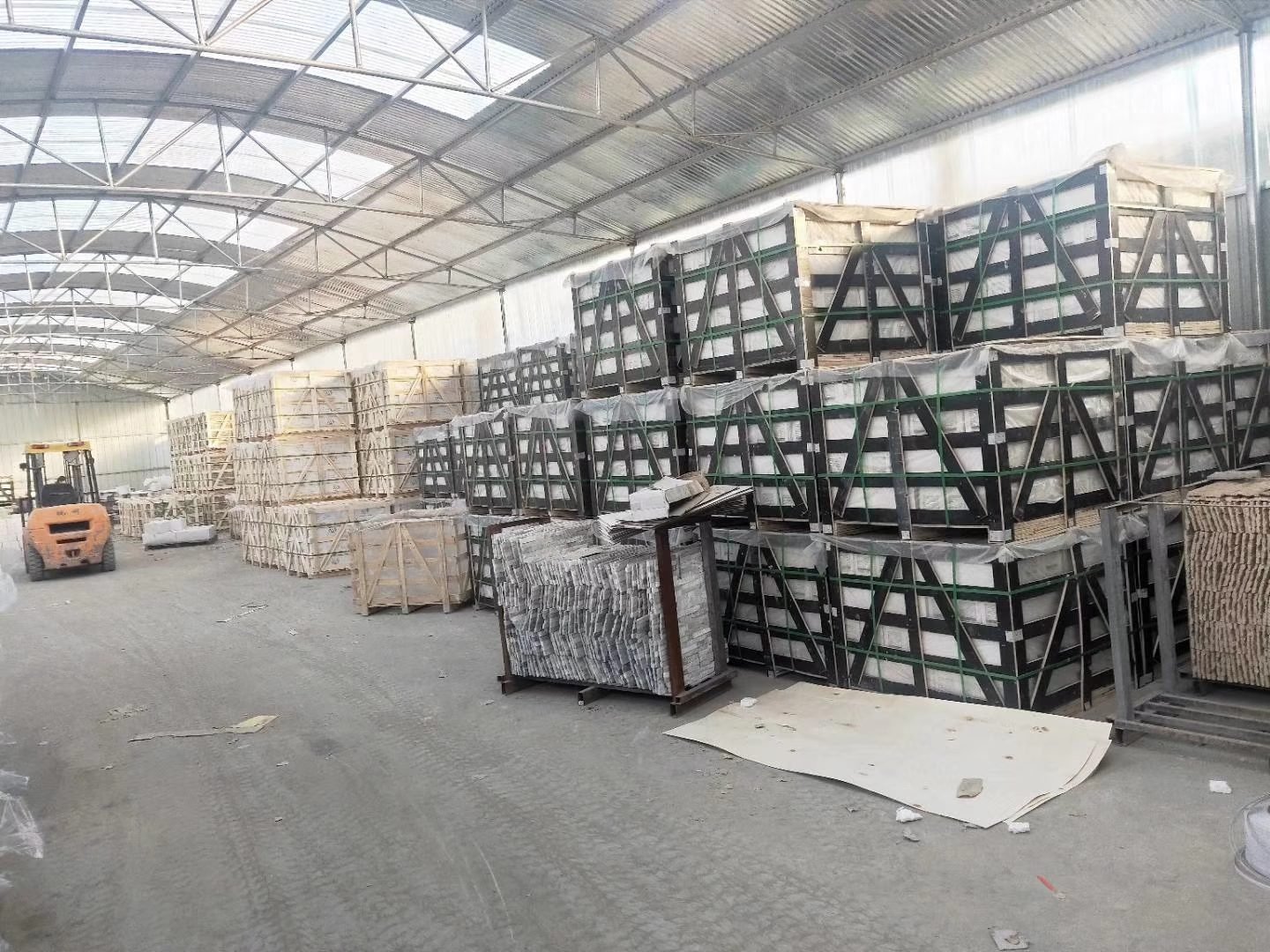
The wholesale buyer’s protection is not the contract, it is the sequence of verifiable checkpoints negotiated into the order. The factory runs a 3-step quality control process, raw material selection, in-process re-check, and final pre-shipment inspection, but the buyer still holds three gates of their own.
| Gate | What it covers | Why it matters |
|---|---|---|
| Physical sample | Color, surface, thickness, weight | Baseline for matching the container to the sample |
| Batch photos | Production layout and color mix before shipping | Approves the actual batch before the balance is due |
| Loading video | Container loading and packaging as shipped | Confirms the packed product and the load plan |
Pre-shipment inspection adds a factory-neutral check on top of the mill’s own QC. A third-party inspector can verify panel counts, dimensions, surface condition, and carton counts against the packing list before the container seals. For a first order, the inspection fee is cheap insurance against a 500 square meter mismatch found at the destination port.

8. Samples and the 1 to 3 Day Rule
The physical sample is the cheapest part of the order and the one most buyers skip. A few square feet of the exact panel format, in the color range the factory will select from, answers questions no photo can. Does the surface match the catalog? Is the thickness uniform? Does the color mix suit the local market? Top Stone Panels ships samples in 1 to 3 days, and a buyer can test a batch against the sample before a single container is committed.
Hold the sample to the same standard as the production batch. Color in natural stone varies within a quarry vein, and the sample is the anchor, not the range. The factory’s batch-specific vein selection keeps the production run inside the range the sample represents, which is exactly why the sample, the batch photos, and the container should be compared before the balance is paid.
For distributors scaling a program, sample retention is a system, not a shelf. The approved sample becomes the reference for reorders, the benchmark for the next batch, and the exhibit if a shipment drifts. Matching production to approved samples across repeat orders keeps the whole program honest.
9. Packaging That Survives Ocean Freight
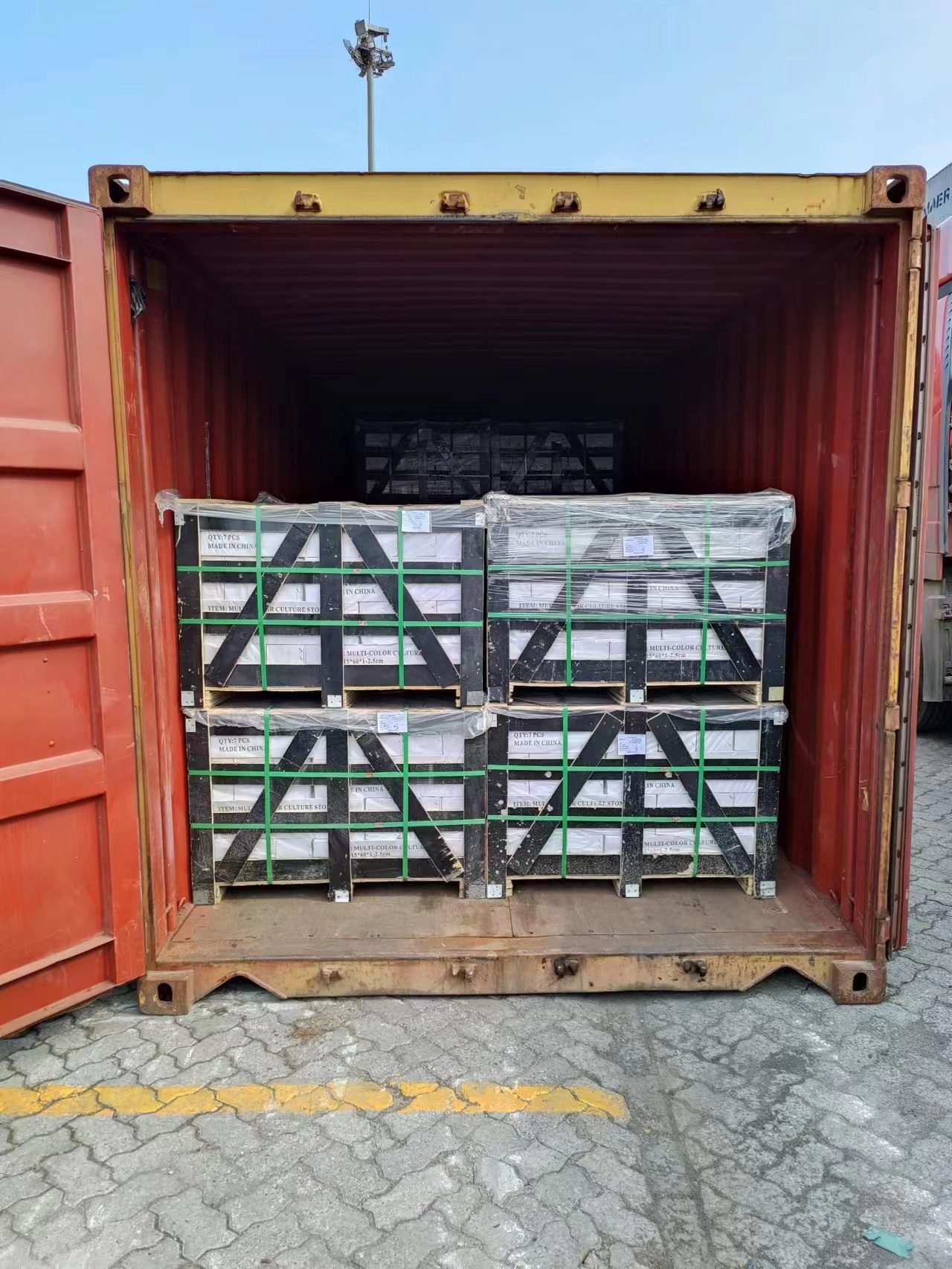
Stone breaks in transit when the box moves faster than the packing. The Zero-Breakage packaging protocol used on every Top Stone Panels container answers that with four layers: 3 to 5 layer corrugated cartons, plywood pallets, and 4 to 6 steel straps. Industrial air bags lock the load inside the container. The carton takes the compression, the pallet carries the weight, the steel straps hold the stack, and the air bags stop the freight from shifting at sea.
The pallet plan is where the container math meets the packaging. A 20GP stages 10 to 11 Euro pallets and a 40HQ stages 24 to 26, because the internal width of about 2.35 meters takes two pallets across with a working gap. The carton cube and the pallet plan determine how many square meters a box actually carries, so the packaging protocol is not logistics trivia, it is the number behind the FOB price per square meter.
10. Mixed Containers and Custom Color Mixes
A wholesale container does not have to be one product, one color. Mixed loads let a distributor test a new format beside an established one, and custom color mixes let the marketing story lead the inventory instead of the other way around. The mixed-container math is straightforward: each product line keeps its own carton weight and cube, and the load plan blends them inside the payload limit.
The same logic extends to custom color selection. Batch-specific vein selection at the quarry controls the percentage of each tone in a run, so a buyer can ask for a warmer mix, a greyer mix, or a blend that matches a regional preference. The factory will quote the color mix as a line item, and the batch photos show exactly what the mix will look like before it ships.
Distributors who combine formats should read the ordering rules ground up. The MOQ and container mix guide covers mixing multiple stone types in one shipment, and the OEM color mix process guide walks through custom blends for private-label programs.
11. Reorders and Color Consistency
The first container proves the supplier; the second one proves the color system. Natural stone varies by vein, and a mill without batch controls ships the second order from a different rock. The reorder question is not whether a factory can match the color, but which batch records prove it. Quarry-direct production keeps the source fixed, which is why Yixian slate and quartzite reorders stay inside the approved range.
Repeat orders also soften the economics. Volume pricing, faster scheduling, and a production line that already knows the product mix make the second container cheaper to manage even when the stone price itself moves. The distributor buying ten containers across the year gets better freight lanes, better port relationships, and a supplier who treats the account as a program rather than a transaction.
Start with the container, not the catalog.
Top Stone Panels quotes FOB Xingang with the m2 plan for both box sizes, ships samples in 1 to 3 days, and backs every order with the loading video and batch photos.
Get the stacked stone product line details · Request a wholesale quote
FAQ
What is the MOQ for stacked stone wholesale?
The minimum order at Top Stone Panels is one 20GP container, which carries roughly 500 to 530 square meters of stacked stone at about 26.5 metric tons.
How many square meters of stacked stone fit in a 20GP container?
At roughly 50 kg per square meter, a reinforced 20GP carrying about 26.5 tons of stone fits roughly 500 to 530 square meters of stacked stone panels.
How long does a stacked stone wholesale order take?
Samples ship in 1 to 3 days, standard production runs 20 to 25 working days, and first orders with custom cartons run about 25 to 30 days.
Can I mix colors or formats in one wholesale container?
Yes. Mixed containers and custom color mixes are standard practice, and the factory keeps batch-specific vein selection so repeat orders match the original color.
What is the payment structure for a stacked stone container?
Top Stone Panels works on 30 percent T/T deposit with 70 percent before balance, released after the loading video and batch photos are confirmed.
Conclusion
Stacked stone wholesale works when the container math, the sample discipline, and the payment gates line up before the first dollar moves. Choose the 20GP or 40HQ on carton data, run the coverage count at 11.1 panels per square meter, verify the batch against a physical sample, and release the balance only after the loading video is in hand.
Key Takeaways
- Buy on container math: roughly 500 to 530 m2 per reinforced 20GP, with the payload line confirmed for your carrier.
- Verify before balance: physical sample in days, batch photos, loading video, and pre-shipment inspection when the order size justifies it.
- Plan for the reorder: batch-specific vein selection keeps the second container inside the approved color range.
Ready to price a wholesale container? Top Stone Panels quotes FOB Xingang with the m2 plan for both box sizes, ships samples in 1 to 3 days, and runs production in 20 to 25 working days. Send the product mix and destination port for a side-by-side loading plan.