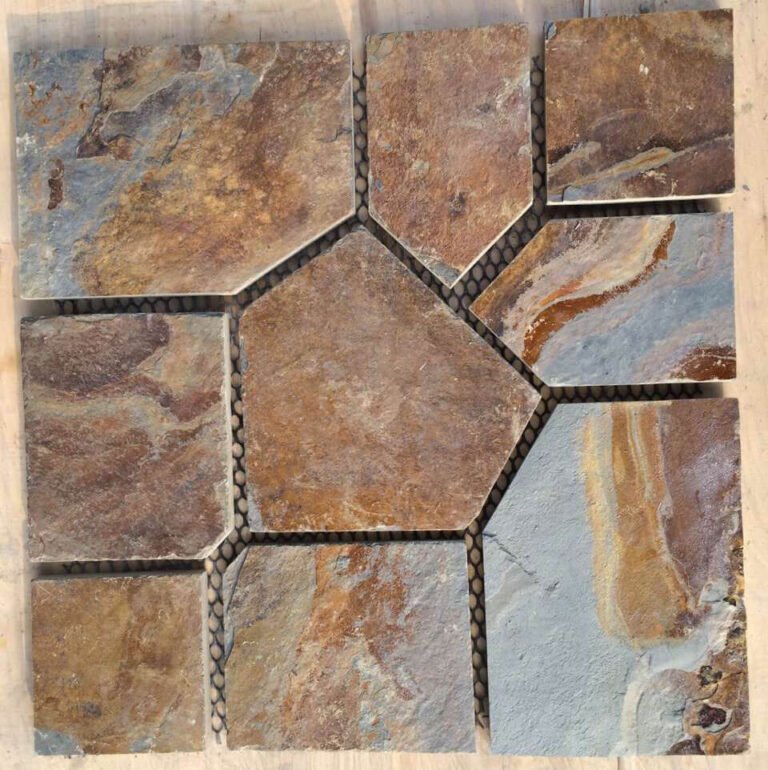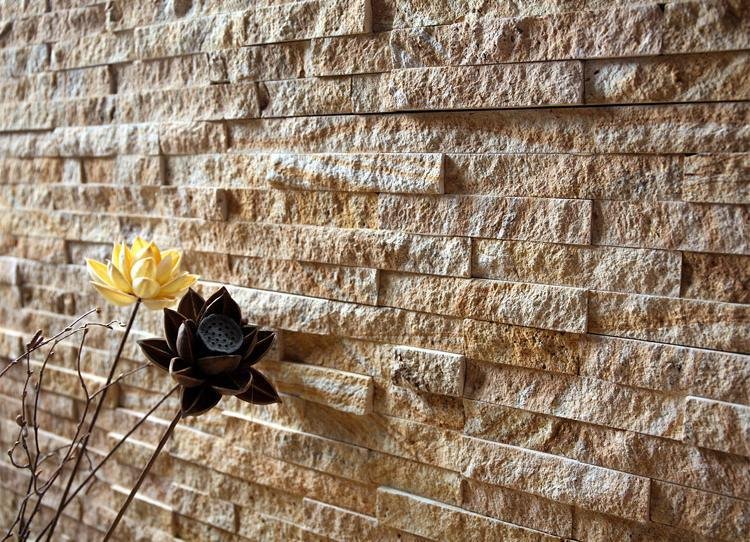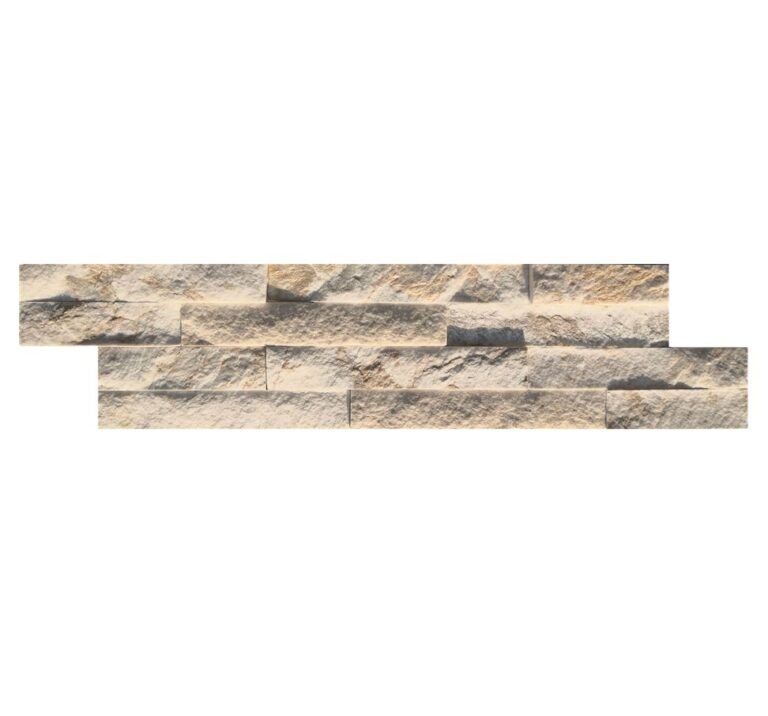
The architect pinned two samples to the board. One was a narrow strip of clear-faced quartzite about as wide as a thumb, and the other was a wider split-face ledger slab that read like a miniature block wall. Both were natural stone veneer. Both came from the same quarry region. And the spec sheet they went onto could go a dozen different ways based on which one got chosen.
Ledger stone and stacked stone are the two formats that dominate natural stone veneer, and buyers mix them up because the words overlap: a stacked stone panel is technically a ledger, and a “ledgestone fireplace” often uses the thin format. This guide separates the two systems by the numbers that matter on a real order: panel format, coverage, labor, freight, and where each one belongs on a building.
- Ledger stone at Top Stone Panels is ultra-thin 36x10cm ledgestone; stacked stone is 15x60cm or 15x55cm split-face panels.
- A 36x10cm ledger covers 0.036 m2, about 27.8 pieces per m2; a 15x60cm stacked panel covers 0.09 m2, about 11.1 panels per m2.
- Ledger reads as clean horizontal lines and installs fast in small spaces; stacked reads as staggered masonry and suits large walls.
- Both are 100% natural slate or quartzite with the same freeze-thaw, fire, and UV performance; the difference is format, not material.
- MOQ for each system is one 20GP, samples ship in 1-3 days, and standard production runs 20-25 working days.
- 1. Ledger Stone vs Stacked Stone at a Glance
- 2. What Is Ledger Stone?
- 3. What Is Stacked Stone?
- 4. Texture and Appearance: Linear vs Masonry
- 5. Installation Speed and Labor
- 6. Coverage, Weight, and Container Math
- 7. Cost: Where the Real Difference Shows
- 8. Which Format Should You Specify?
- FAQ
- Conclusion
1. Ledger Stone vs Stacked Stone at a Glance
The table below flattens the two systems into the numbers a specifier or buyer actually compares. Everything else is marketing; these are the dimensions that decide the quote.
| Criterion | Ledger stone (ledgestone) | Stacked stone |
|---|---|---|
| Standard format | 36x10cm ultra-thin strips | 15x60cm and 15x55cm panels |
| Coverage per piece | 0.036 m2 | 0.09 m2 (15x60cm) |
| Pieces per m2 | About 27.8 | About 11.1 |
| Visual rhythm | Clean horizontal lines | Staggered masonry courses |
| Typical walls | Fireplace surrounds, backsplashes, small features | Exterior facades, large feature walls, columns |
| Installed weight | Lower per m2 | About 35-55 kg/m2 |
| Corner pieces | Slim return pieces | Pre-made L-corner sets |
| Monthly capacity | 60,000 m2 | 80,000 m2 |
| MOQ | 1 x 20GP | 1 x 20GP |
Both systems are cut from the same 100% natural slate and quartzite program at Top Stone Panels, which means the material performance carries over identically: freeze-thaw resistance from -30°C to +50°C, natural A-class fire performance, UV stability, and coastal salt resistance. The difference between ledger and stacked stone is dimensional, not geological.
2. What Is Ledger Stone?
Ledger stone, sold at Top Stone Panels as thin ledgestone panels, is a narrow rectangular strip format: 36cm long, 10cm high, and thin enough to call ultra-thin. The pieces are laid in continuous rows, so the wall reads as tight horizontal lines rather than individual blocks. It is the format most people mean when they search “ledgestone fireplace” or “ledger stone backsplash.”
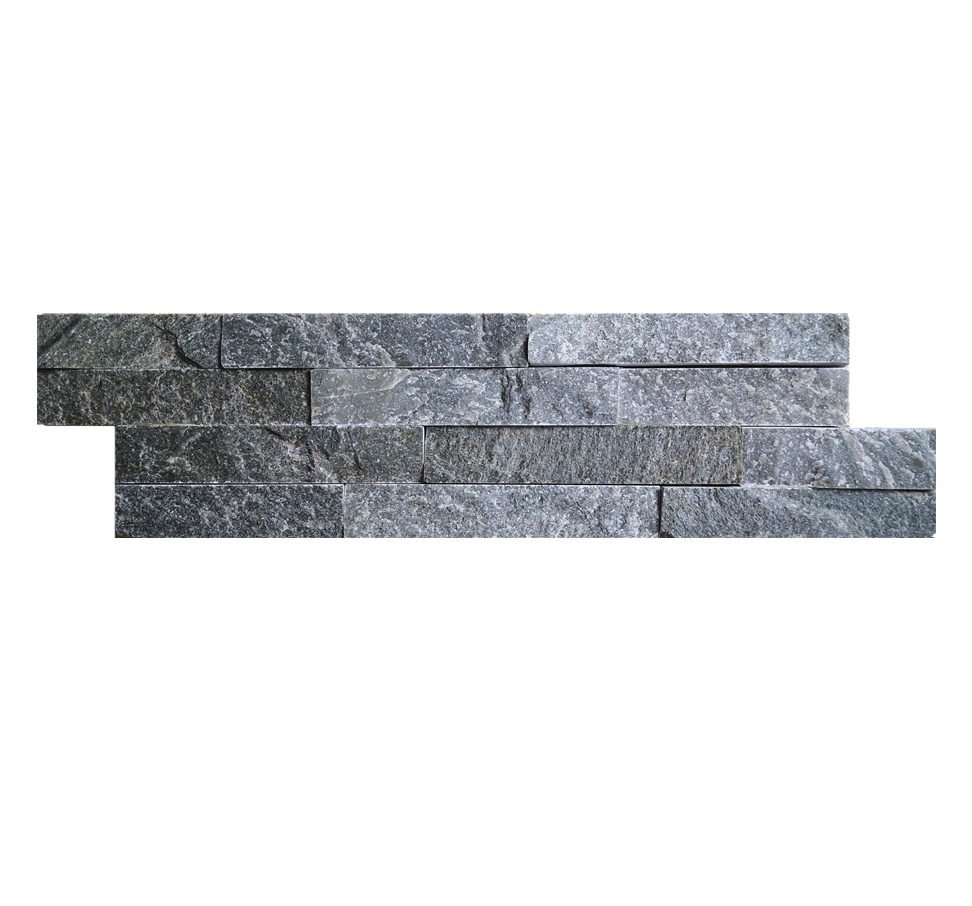
The 36x10cm format covers 0.036 m2 per piece, which is why it loads so efficiently and why the factory rates it at 60,000 m2 per month at a one-container minimum order. The thin profile does not sacrifice the natural split face: the stones are still hand-split slate or quartzite from the same quarry vein, so color control follows batch-specific vein selection. Distributors often pair ledgestone with the ledgestone fireplace designs in the article library when they are building a fireplace feature bundle for a retail client.
3. What Is Stacked Stone?
Stacked stone is the wider panel format: 15x60cm or 15x55cm split-face panels that get stacked course on course with staggered vertical joints. The longer panels give the wall a masonry look, closer to a dressed stone wall than a tile band. This is the format used for exterior facades, retaining walls, and the column wraps that give porches their weight.
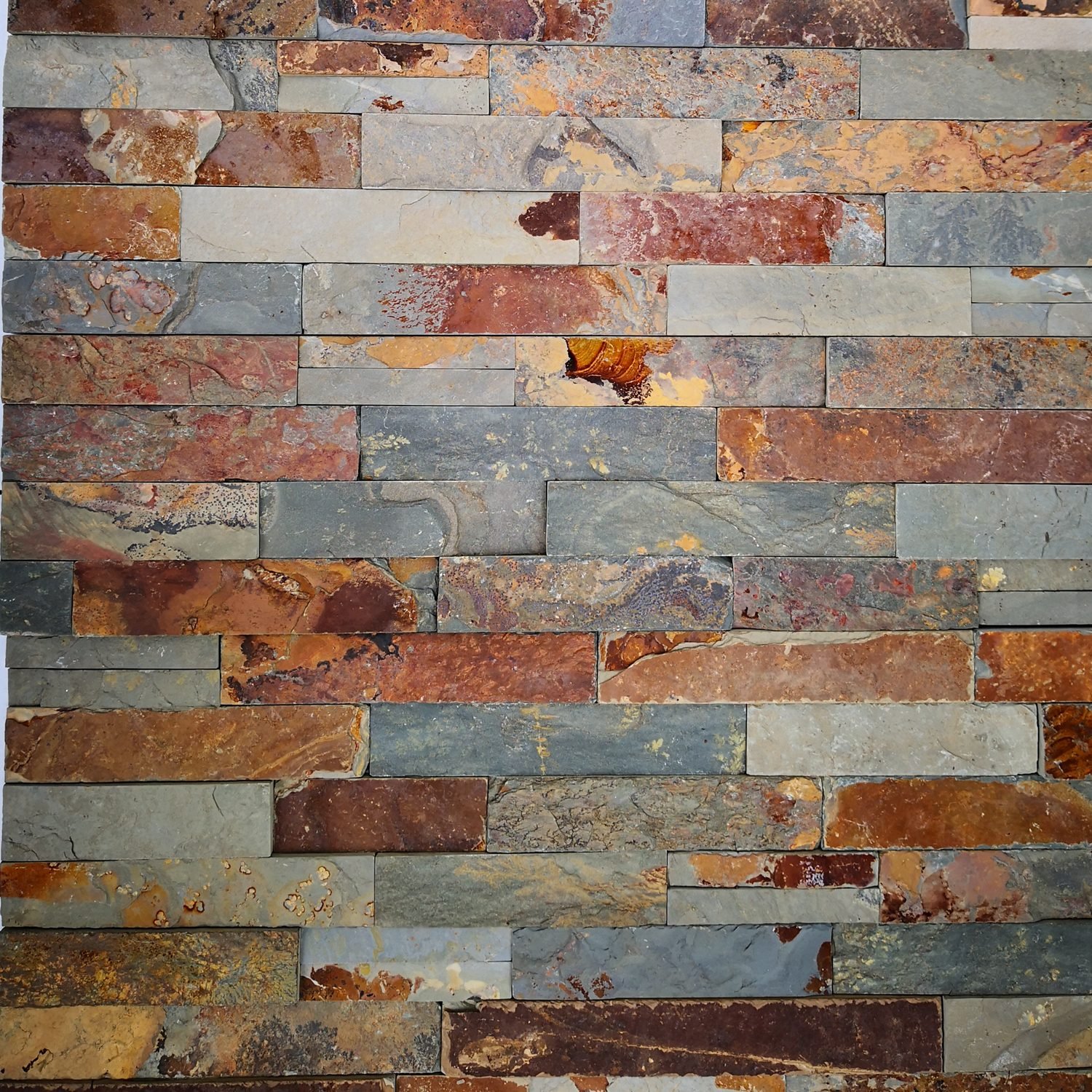
Each 15x60cm panel covers 0.09 m2, about 11.1 panels per square meter, and the format carries matching pre-made L-corner sets so outside corners never require a site-cut 45-degree miter. The factory rates stacked stone at 80,000 m2 per month, its highest volume line, because it is the workhorse for full-wall coverage. The full coverage and layout math is covered in the stacked stone panel sizes guide, which walks through converting a facade drawing to box counts.
Panel width also changes how a wall handles openings. Around a window, the installer addresses the jamb with one 15x60cm panel or two partials; with 36x10cm strips, the same jamb takes five or six small cuts plus the return pieces. On a facade full of punched windows, the wider panel reduces saw time and waste, which is one reason stacked stone dominates exterior work while ledger stone stays in interior features. Neither choice is wrong; the format just needs to fit the wall geometry, and a specifier who counts openings before choosing will order less waste and pay for less labor.
4. Texture and Appearance: Linear vs Masonry
Choose by reading the wall, not by the sample alone. Ledger stone produces a horizontal, almost striped texture because the 10cm course height stays constant and the only variation is stone face tone. That line rhythm makes rooms feel longer and calmer, which is why it appears so often in kitchens, bathrooms, and fireplace surrounds where the scale is intimate. Stacked stone produces a broken, masonry texture: the wider panels read as individual stones, and the alternating 15x60cm and 15x55cm lengths stagger the joints naturally, so the eye lands on the pattern of the full wall.
The material story is identical under the texture. Both are 100% natural slate or quartzite, both carry the split face that gives real stone its depth, and both hold color consistency through batch-specific vein selection from the quarry. The practical rule: if the client wants a quiet linear backdrop, specify ledger stone; if they want the wall to look built from stone blocks, specify stacked stone.
Batch consistency deserves its own line in the spec because it decides whether the delivered panels match the sample. The factory picks stone from the same quarry vein, then splits and assembles by color family at the QC stage, so a single order arrives within a narrow tonal band. Buyers who guard that consistency do three things: order samples from the exact batch that will produce, ask for a production photo before the balance payment, and hold one sample back on site for the installer to match against. The stone sample ordering guide covers that sequence, and it matters the same way for both ledger and stacked formats, because a stripe of mismatched tone in a linear ledger wall is as visible as one in a stacked facade.
5. Installation Speed and Labor
Labor per square meter is where the two formats diverge fastest. Ledger stone installs with smaller, lighter pieces that one installer can handle through an entire fireplace surround, and narrow strips wrap corners and returns with fewer cuts. The trade-off is piece count: 27.8 pieces per square meter means more setting time at full-wall scale. Stacked stone sets 11.1 panels per square meter, so a large facade goes up notably faster in pure coverage, and the pre-made L-corner sets remove the miter cutting that chews up hours on corners.
Neither system requires special equipment beyond standard veneer tooling: adhesive, spacers, a wet saw for cuts, and a notched trowel. Both bond to cement board, plywood, or metal lath substrates when the framing is sound, and both use the same adhesive ratio. The real labor decision is scale: under roughly 20 m2 of wall, the ledger format’s easier handling wins; above that, stacked panels pay back their speed on coverage.
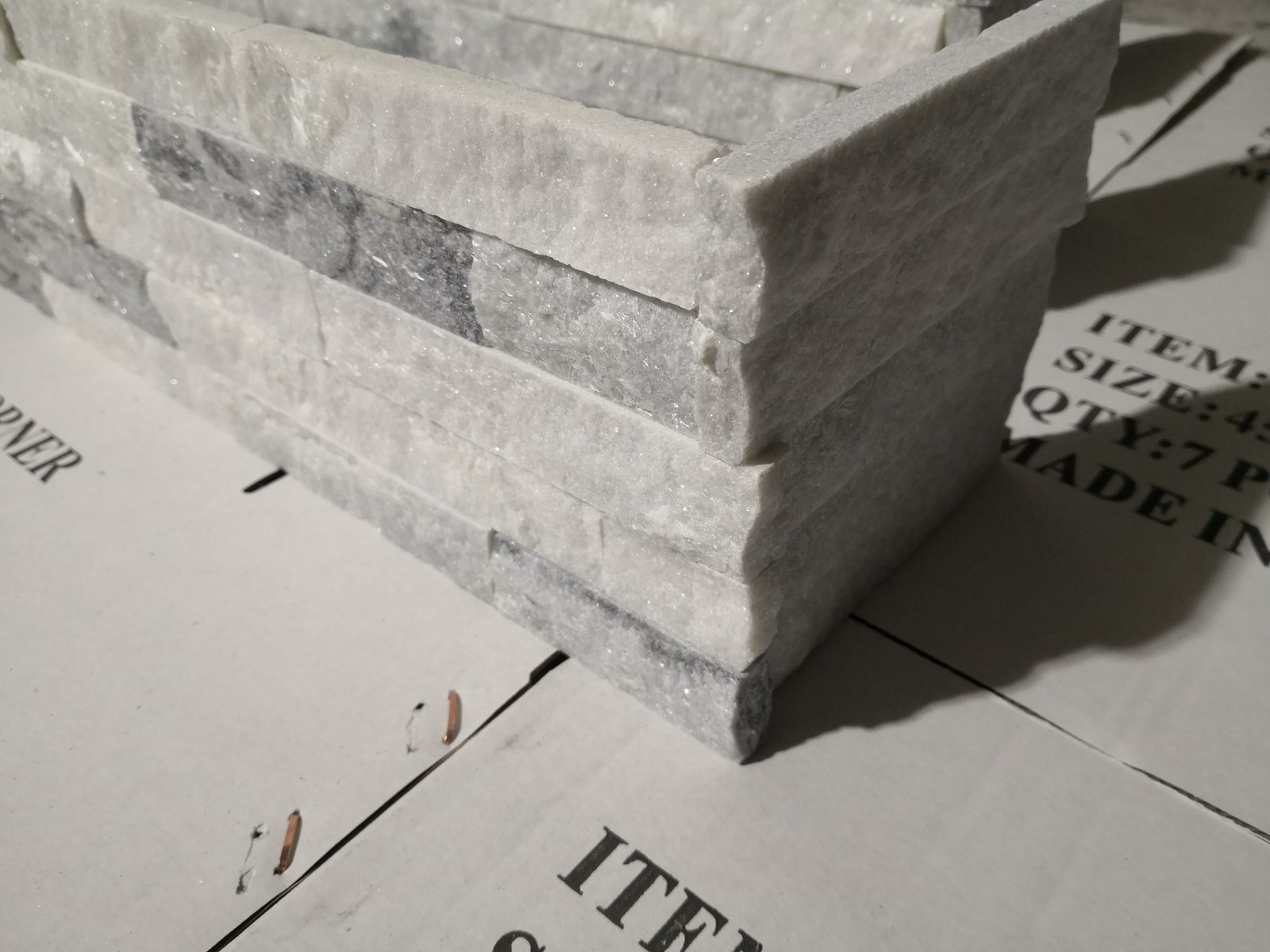
Corners are where the labor gap closes. Ledger strips return around an outside corner either by turning a long piece on its side or by mitering two small pieces, which is fine on a fireplace breast but tedious on a column. Stacked stone answers the same corner with pre-made L-corner sets sized to the course, so each row wraps in one piece with staggered joints. On a porch column or a pavilion pillar, that one difference plus the wider panel is what makes stacked stone the natural fit.
6. Coverage, Weight, and Container Math
Freight favors ledger stone, and the margin is not small. Stacked stone veneer typically lands at 35 to 55 kg per square meter installed, which is why a reinforced 20GP container carries roughly 500 to 530 m2 at a payload near 26.5 metric tons. The 36x10cm ledger format weighs less per square meter because it is the ultra-thin profile carrying the same stone face, so a container of ledger stone covers more wall. For a distributor planning repeat orders, that difference changes the landed cost per square meter before any price negotiation. The Natural Stone Institute publishes density and physical-property data that specifiers can use to sanity-check the kilograms per square meter a supplier quotes.
Coverage math is the same discipline in both formats: convert the wall to piece count, add a 5-10% cut allowance for openings and returns, then round to boxes. For stacked stone, 1 m2 needs about 11.1 panels of 15x60cm. For ledger stone, 1 m2 needs about 27.8 strips of 36x10cm. Both numbers should sit in the quotation as piece counts, not just square meters, so the receiving team can spot-check the delivery.
7. Cost: Where the Real Difference Shows
Pricing for the two formats is quoted per square meter from the factory, and for the same stone family the material range is close. The meaningful cost difference shows up in three places: freight per square meter, which favors the thinner format; labor per square meter, which favors stacked panels on large walls but ledger on small ones; and waste, which favors whatever format needs fewer cuts on the actual wall geometry. That is why two projects with the same stone and same square meter price can have very different installed cost.
Rather than chase a unit price, set the comparison in a planning frame: get per-square-meter quotes for both formats in the same stone, add freight per square meter for the expected container utilization, then add your labor estimate. The thin ledgestone panel page carries the format specs and capacity numbers for the ledger side, and the standard stacked stone page does the same for the panel side, so a buyer can compare both from one supplier and avoid matching competing quotes for two different products.

Zero-breakage packaging applies identically to both systems: sturdy corrugated cartons, fumigation-free wood or plywood pallets, multiple steel straps, and inflatable air bags inside the container. Because the thin ledger format packs more square meters per box, distributors often see inventory arrive in fewer, denser pallets, which shortens unloading time at the warehouse. Either way, the packing protocol stays the factory standard, and the pre-shipment video shows the actual load before the balance payment is released.
8. Which Format Should You Specify?
Match the format to the wall, not to fashion. The decision matrix below covers the common building situations.
| Situation | Recommended format | Why |
|---|---|---|
| Fireplace surround, backsplash, small feature wall | Ledger stone (36x10cm) | Narrow strips wrap small geometry with fewer cuts and a calmer line. |
| Full exterior facade, large interior feature wall | Stacked stone (15x60cm) | Wider panels cover more wall per piece and set faster at scale. |
| Columns and pillars | Stacked stone with L-corner sets | Corner pieces wrap all four faces cleanly; column kits exist in this format. |
| Bathroom shower and wet areas | Either, with proper waterproofing | Both are natural stone; the wetset joint and sealer decide performance, not the format. |
| Budget freight-sensitive orders | Ledger stone | Ultra-thin profile loads more square meters per 20GP container. |
| Quick large-facade labor saving | Stacked stone | Wide panels set 11.1 per m2 and ship with pre-made corners. |
Whichever format is specified, the ordering discipline is the same: request samples first (1-3 days), confirm the color family against production photos, and lock the piece count per box before the PO. The sawn vs cleaved edge guide explains the adjacent choice that affects how both formats cut at corners and returns.
Send the same information when requesting a quote on either format: net wall area, window and door dimensions, corner count, stone color family, and format preference. A factory quote comes back in square meters, piece counts, and boxes, and that is the moment to confirm the piece count per carton in writing. Buyers who standardize that request get comparable quotes from different suppliers, because the units line up; buyers who ask for price only get apples-and-oranges numbers that cannot be negotiated side by side.
What is the difference between ledger stone and stacked stone?
Ledger stone uses thin 36x10cm strips in clean horizontal lines; stacked stone uses 15x60cm or 15x55cm split-face panels with staggered courses. Both are natural veneer.
Which is lighter for shipping, ledger or stacked stone?
Ledger. Its ultra-thin format weighs less per square meter, so a 20GP container carries more square meters than stacked panels.
Can ledger stone and stacked stone be used on the same wall?
Yes, but keep each system on its own wall or in a clearly separated band so the joint lines stay consistent.
Is ledger stone cheaper than stacked stone?
Material ranges are comparable for the same stone; the real difference shows in labor and freight per square meter.
Which format suits a fireplace surround better?
Both work. Ledger wraps small surrounds with fewer cuts; stacked panels suit larger feature walls.
What are the standard ledger stone panel dimensions?
Thin ledgestone from Top Stone Panels is 36x10cm; stacked stone panels are 15x60cm or 15x55cm.
Conclusion
Ledger stone and stacked stone are not competing materials; they are two formats of the same natural stone program, and the spec decision is dimensional. Choose the 36x10cm ledger format when the wall is small, intimate, or freight-sensitive. Choose the 15x60cm stacked format when full-wall coverage, masonry texture, or corner-heavy geometry dominates the job. Price them in the same stone, check both against the container, and the quote stops being an apples-to-oranges comparison.
Key Takeaways
- Ledger stone = 36x10cm ultra-thin strips (0.036 m2 each); stacked stone = 15x60cm/15x55cm panels (0.09 m2 each).
- Ledger gives linear texture and better freight; stacked gives masonry texture and faster large-wall coverage.
- Both are 100% natural slate or quartzite with identical freeze-thaw, fire, UV, and salt performance.
- MOQ is one 20GP for both; samples in 1-3 days; production 20-25 working days.
Planning a veneer order and not sure which format carries your wall? Top Stone Panels supplies both ledger and stacked systems from the same quarry program, with samples in 1-3 days and container-level quotes from Tianjin Xingang. Send the wall drawings and the square meter area, and get a format recommendation with coverage and freight attached.