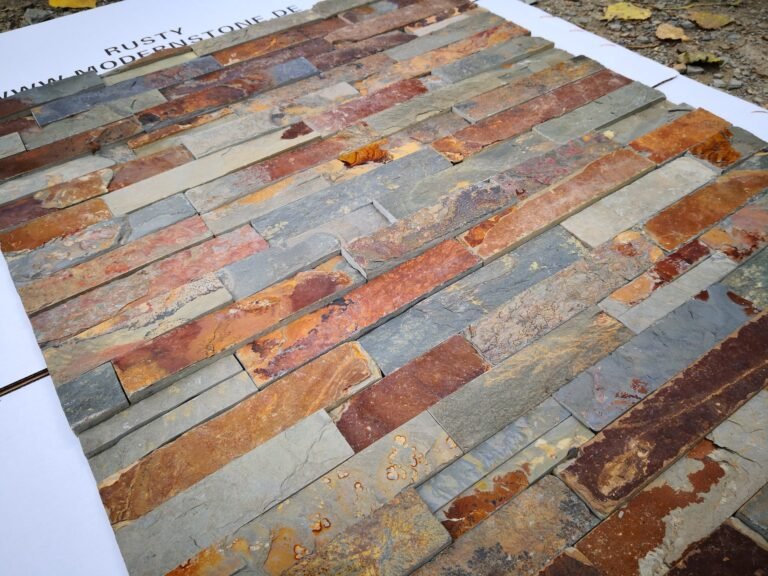
Stone panel thickness tolerance is the gap between the thickness written on the specification and the thickness that actually arrives in the container. On a calibrated order the gap should be one millimeter; on a loose split-face order it can stretch much farther. That spread decides whether your facade joints sit flush or develop lippage, shadow lines, and thin adhesive beds that invite water. This guide explains where the numbers come from, how the three layers of a panel each carry their own tolerance, and how to verify what you receive in about an hour per pallet.
It is written for importers, distributors, and specifiers who sign off on stone panel orders and need a defensible acceptance rule before the container lands. If you are still mapping the product range itself, start with the stone veneer thickness guide; here the focus is the tolerance band, not the nominal sizes.
Key Takeaways
- Calibrated CNC-cut face stone is held to ±1 mm; the customary slab-contract figure for dimension stone is about ±3 mm (±1/8 in).
- Panel thickness is really three numbers: face stone, bond layer, and backing. Specify the face stone, then confirm the backing separately.
- ASTM dimension stone standards C568, C615, C616, C629, and C503 publish tolerance tables; ASTM C1780-23a covers adhered-veneer installation practice.
- A five-point digital caliper check on a random 10% sample catches out-of-tolerance batches before they become a wall.
- Top Stone Panels holds face stone to ±1 mm with infrared CNC diamond-blade cutting, then re-verifies at a 3-step QC gate.
- What Stone Panel Thickness Tolerance Means
- Face Stone, Backing, and Panel Total
- The Tolerances Worth Specifying
- Industry Standards That Touch Thickness
- Why Natural Stone Varies Without Factory QC
- How to Verify Thickness at Goods-In
- Writing the Tolerance Into Your Purchase Order
- How Top Stone Panels Holds a One-Millimeter Band
- Frequently Asked Questions
What Stone Panel Thickness Tolerance Means
Tolerance is the allowed deviation between the nominal thickness in the spec and the measured thickness of the delivered panel. Say a project calls for 18 mm face stone. A supplier with ±1 mm tolerance can deliver 17 to 19 mm. A supplier working to ±3 mm delivers 15 to 21 mm. Both are nominally “18 mm panels,” but the second batch makes the wall look different, and it carries more water risk where thin stone meets the adhesive.
Tolerance matters because installation rewards consistency, not thickness on paper. When panels vary by a few millimeters, the installer has to shim, pack, or grind to bring joints flush. Each shim is a place where the bond is thinner than designed. On a 200 m² facade, small deviations accumulate into visible waves in raking light. The natural-stone panels themselves are sold and priced on density and finish; the tolerance band is what separates a factory that calibrates from one that batches.
Two numbers dominate the conversation. For calibrated CNC-cut face stone, ±1 mm is the workable commercial standard. For full-thickness dimension stone slabs, the figure most often written into contracts is about ±3 mm (±1/8 in). Knowing which one applies to your order, and stating it in the PO, removes most of the ambiguity at goods-in.
Face Stone, Backing, and Panel Total
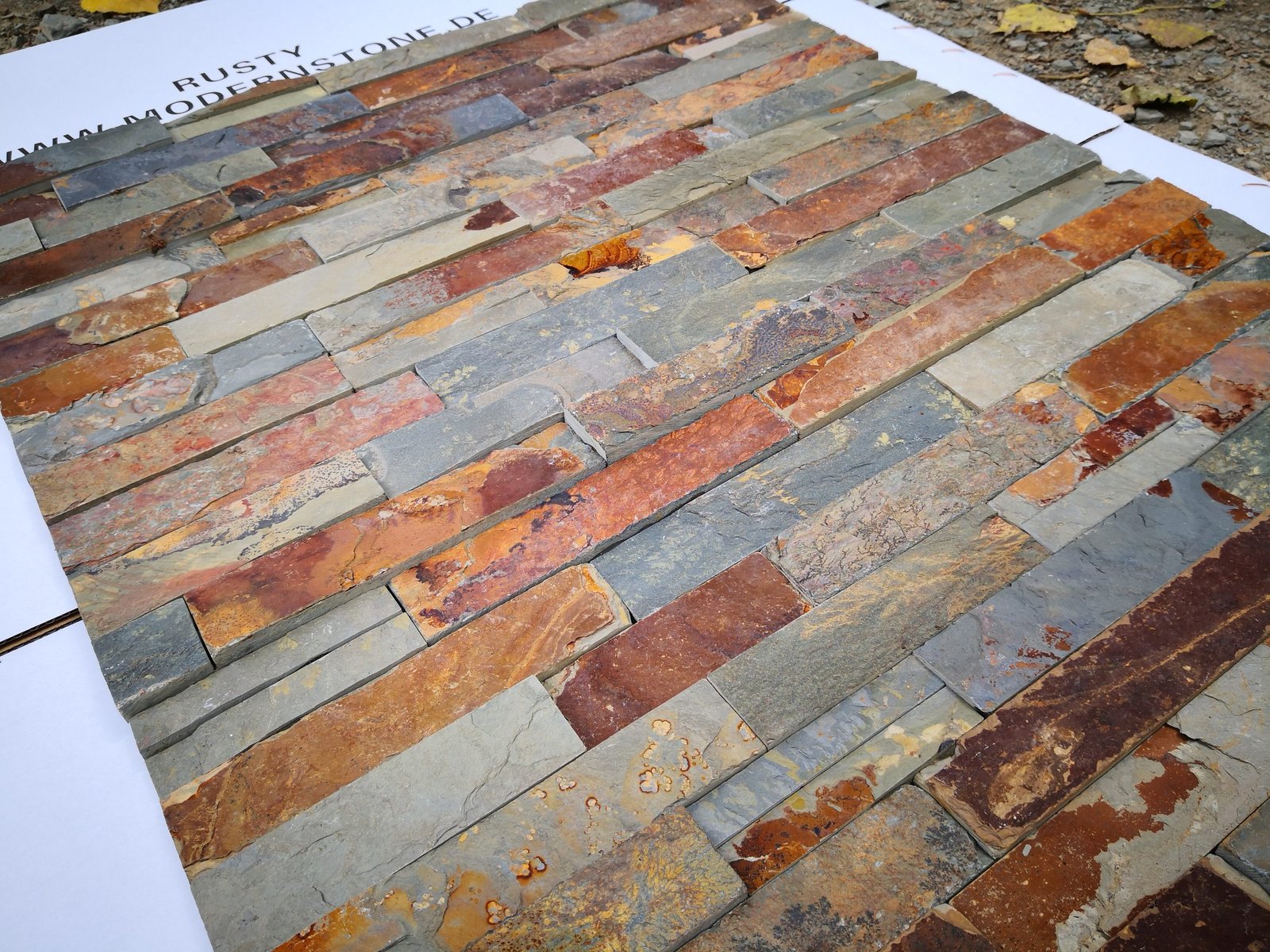
A manufactured stone panel is not one slab; it is three controlled layers. The face stone is the visible strip of slate, quartzite, or sandstone. The bond layer is the adhesive that holds the face to the backing. The backing is the rigid carrier that gives the panel its shape, and it comes in three forms: marine-grade epoxy on stacked stone panels, cement backer on interlocking Z-panels, and mesh on thin ledgestone.
Each layer has its own tolerance, and buyers should measure the face stone, not the panel total. The face stone governs aesthetics and structural behavior; a cement backer can be a millimeter here or there without changing how the wall looks or performs. Confusing the two layers is how a buyer rejects a good batch. The panels may read flat and uniform, but the total thickness shows 12.5 mm against a 12 mm spec because the cement board runs slightly thick, and the rejection holds up the shipment. The cement-backed family gets its own treatment in the interlocking Z-panels guide, where the panel total, backer included, is the number installers quote.
One decision belongs upstream. For your project, choose nominal face thickness by zone first, then apply the tolerance band. Ultra-thin ledgestone strips run about 7 to 12 mm; stacked stone face stone runs 10 to 25 mm; full-thickness cladding goes 25 to 40 mm. There is a full breakdown in the thickness selection guide. The tolerance question is different at each end of that range, because a 1 mm deviation compounds more visibly on a 10 mm strip than on a 30 mm slab.
The Tolerances Worth Specifying
Here is the tolerance table to bring to a price negotiation. The first column is the product family, the second is the layer you are measuring, and the third is a defensible acceptance band for a calibrated order. The current formats and backings for each family live on the stacked stone and thin ledgestone product pages, where nominal sizes are published next to the assembly details.
| Product family | Measure this layer | Acceptance band | Backing |
|---|---|---|---|
| Thin ledgestone strips | Face stone | ±1 mm on CNC-cut strips | Mesh; epoxy for rigid panels |
| Stacked stone panels | Face stone | ±1 mm on cut faces | Marine-grade epoxy |
| Interlocking Z-panels | Face stone plus backer | ±1 mm face; backer checked separately | Cement backer |
| Split-face veneer | Front to back of unit | Wider natural spread, state in PO | None or mesh |
| Dimension stone slabs | Full slab thickness | About ±3 mm (±1/8 in) | None |
The pattern to notice is that factories tighten tolerance when calibration pays for itself. A CNC-cut, epoxy-bonded stacked stone panel is measured in components, so holding ±1 mm is straightforward. A hand-split facing unit is cut by impact rather than by blade, so its natural spread is wider; that product needs an agreed number in the PO, not an assumption.
Industry Standards That Touch Thickness
Five ASTM dimension stone standards publish dimensional tolerance tables for natural stone: C568 for limestone, C615 for granite, C616 for sandstone, C629 for slate, and C503 for marble. These are the reference points specifiers use when a material must match a required size range. The standards do not declare one tolerance for the whole industry; they define how to measure and what tables apply to which product form, which is why the contract number still needs writing by the buyer.
For adhered veneer on walls, the relevant practice is ASTM C1780-23a, the standard for installation of cement-based adhered masonry veneer. It governs how thin stone and manufactured units are bonded to substrates, including the weight and thickness limits that keep an adhered wall sound. If your project is exterior, that standard, plus the building code’s adhered-veneer rules, tells you whether your selected panel thickness is installable at all in your zone. The ASTM test guide for cladding walks the full battery of relevant tests.
European specifiers work to a parallel frame: EN 1341 covers natural stone paving slabs and EN 1469 covers interior wall finishes. The lesson is the same across both systems. Standards describe measurement and tolerances for product families; they rarely replace the buyer’s job of stating the band for their specific order. A panel factory that calibrates to ±1 mm can meet a broker’s 3 mm spec, and the trade-off is your call to make on price.
Need a measured ±1 mm band on your next order?
Top Stone Panels runs infrared CNC calibration and sends the inspection records with every container. Compare stacked stone, ledgestone, and Z-panel lines against your zone requirements.
CNC ±1 mm calipers | 3-step QC records | 1-3 day samples | 20-25 day production
European buyers should read the same map from Brussels: EN 1341 governs natural stone paving slabs and EN 1469 governs interior wall panels. Neither system writes your tolerance for you. Supporting the material choice is the fire and code guide for exterior projects, which covers the compliance half of the specification.
Why Natural Stone Varies Without Factory QC
Natural stone arrives inconsistent, and consistency is manufactured. Slate and quartzite form in beds, and density and bedding structure change across a quarry face. Cut a block along one vein and the resulting strips are uniform; cut across a vein boundary and thickness, chipping behavior, and color all shift within the same pallet. Factories that match blocks by vein before cutting remove most of this variation before the blade ever turns.
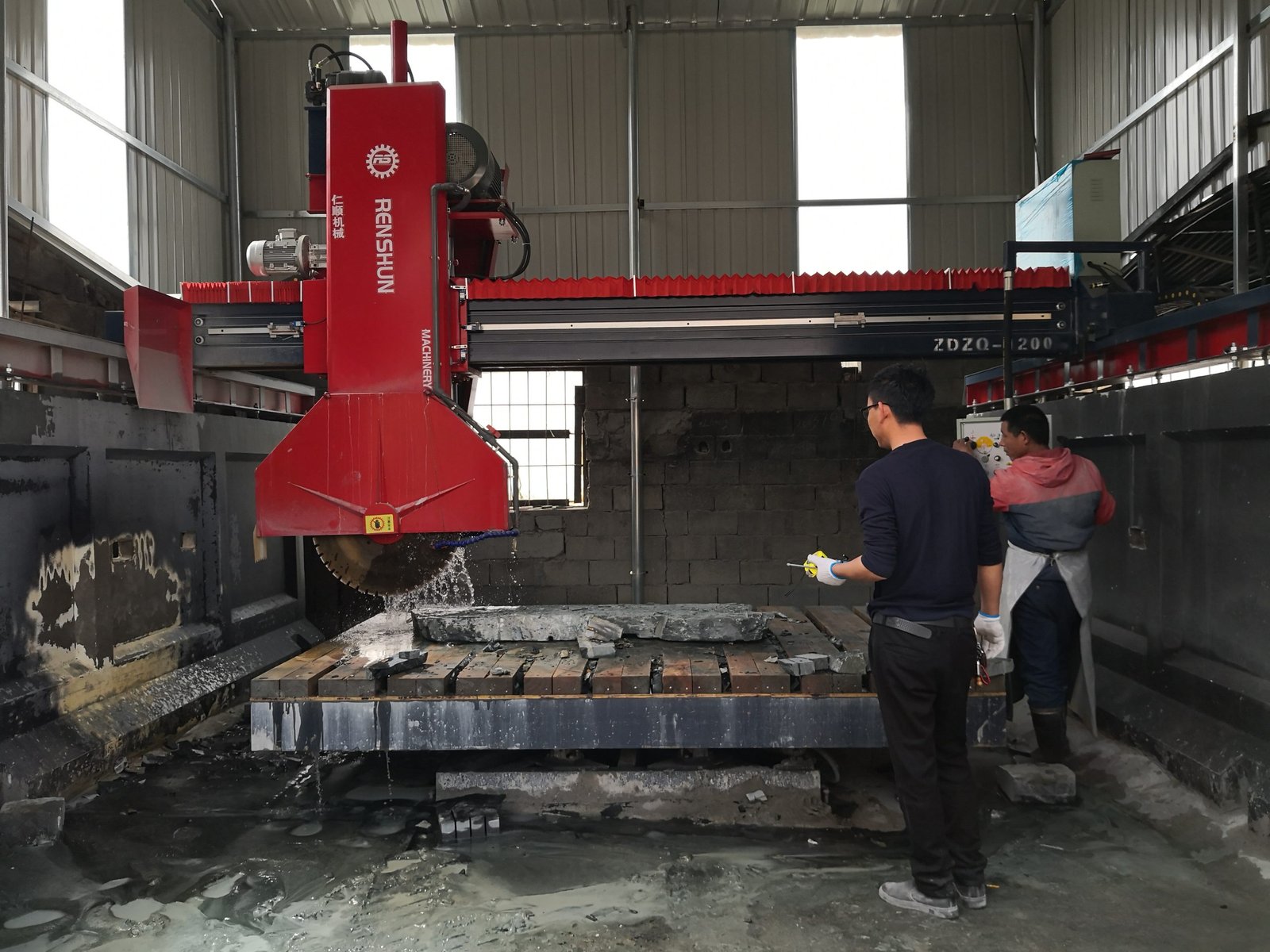
Cutting method matters more than anywhere else. A hand-split or guillotined face follows the stone’s natural fracture plane, which is beautiful and irregular by design. A sawn face follows the blade. Infrared CNC diamond-blade cutting takes the saw path one step further: the blade position is controlled against a laser reference, so every strip leaves the machine within a hair of the programmed thickness. That is the difference between ±1 mm and ±3 mm on the same quarry block.
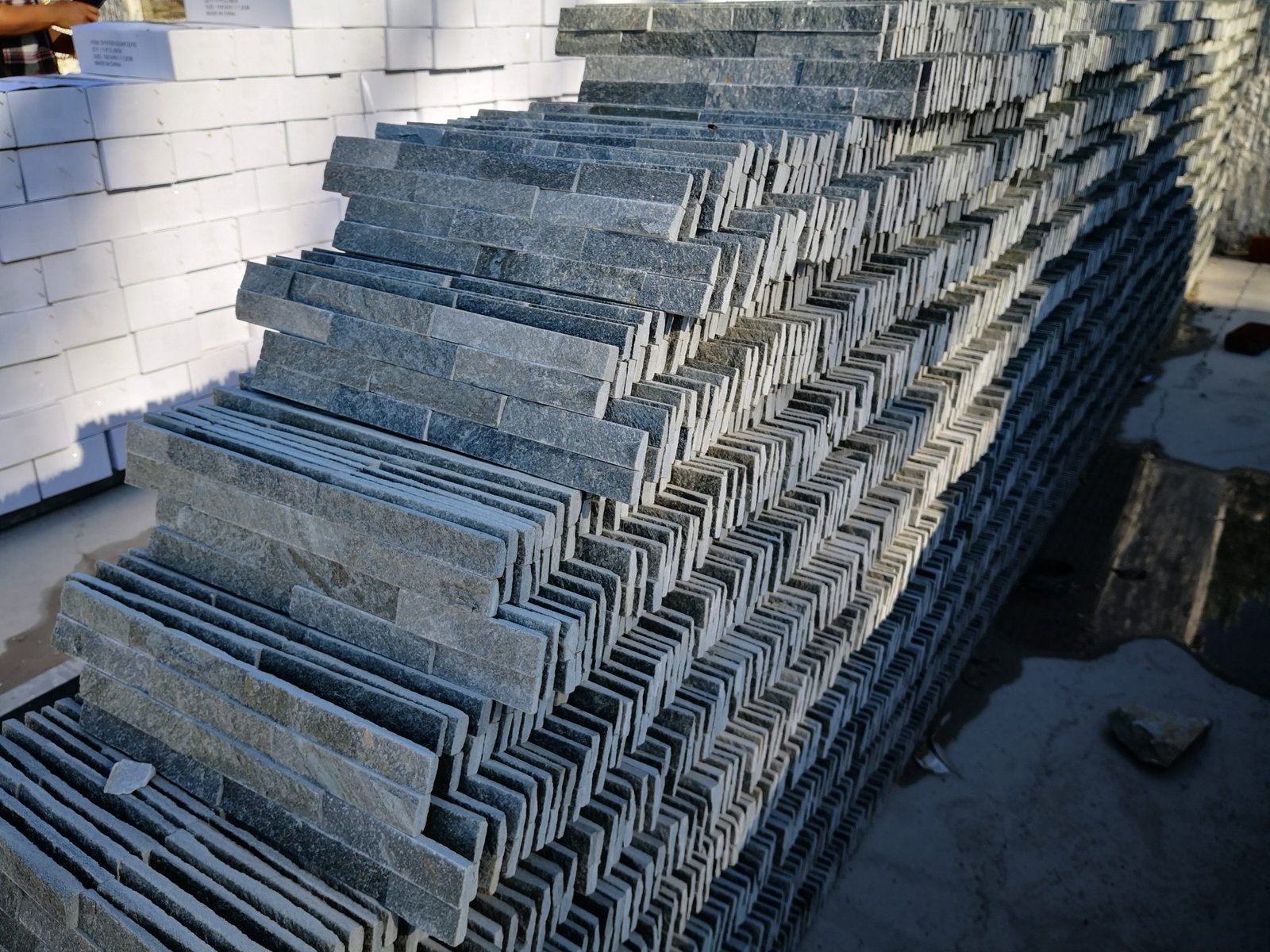
None of this shows in photos. A strip looks identical at 19 mm and 23 mm in a catalogue image. The place to see it is the production floor: whether the factory grades incoming blocks by vein, what cutting technology it runs, and whether it gauges thickness during assembly. If a supplier cannot show you its in-process gauging step, assume the tolerance is whatever the stone decides.
How to Verify Thickness at Goods-In
You do not need a lab to verify tolerance. You need a digital caliper, a clipboard, and about an hour per pallet. The procedure below is the same one a third-party inspector runs, and it gives you a pass/fail number you can put in front of a supplier.
- Pick the sample. Open 10% of the cartons across the container, spread across pallets, not the first two layers. If the batch is one product line and one color mix, a 10% random sample is proportionate.
- Set the caliper to millimeters. Measure every panel at five points: four corners and the panel center. Write the readings down; do not average in your head.
- Record the spread. For each panel, note max minus min. On a ±1 mm calibrated order, the five readings on a single panel should sit inside a 2 mm window.
- Check the average against nominal. Average the center readings. The average should land on the nominal thickness, not drift 2 mm thin, which is the classic jacking of material yield.
- Photograph the failures. Any panel outside the band gets a number flagged on the pallet map and a photo with the caliper reading visible. Send that evidence to the supplier before unloading.
One warning on samples. A supplier’s express sample, sent in 1 to 3 days, is a single point of truth, not a distribution. When you qualify a factory, match the sample reading to the batch report, then trust the goods-in check you run yourself. The sample evaluation checklist covers the rest of what to inspect on that first piece.
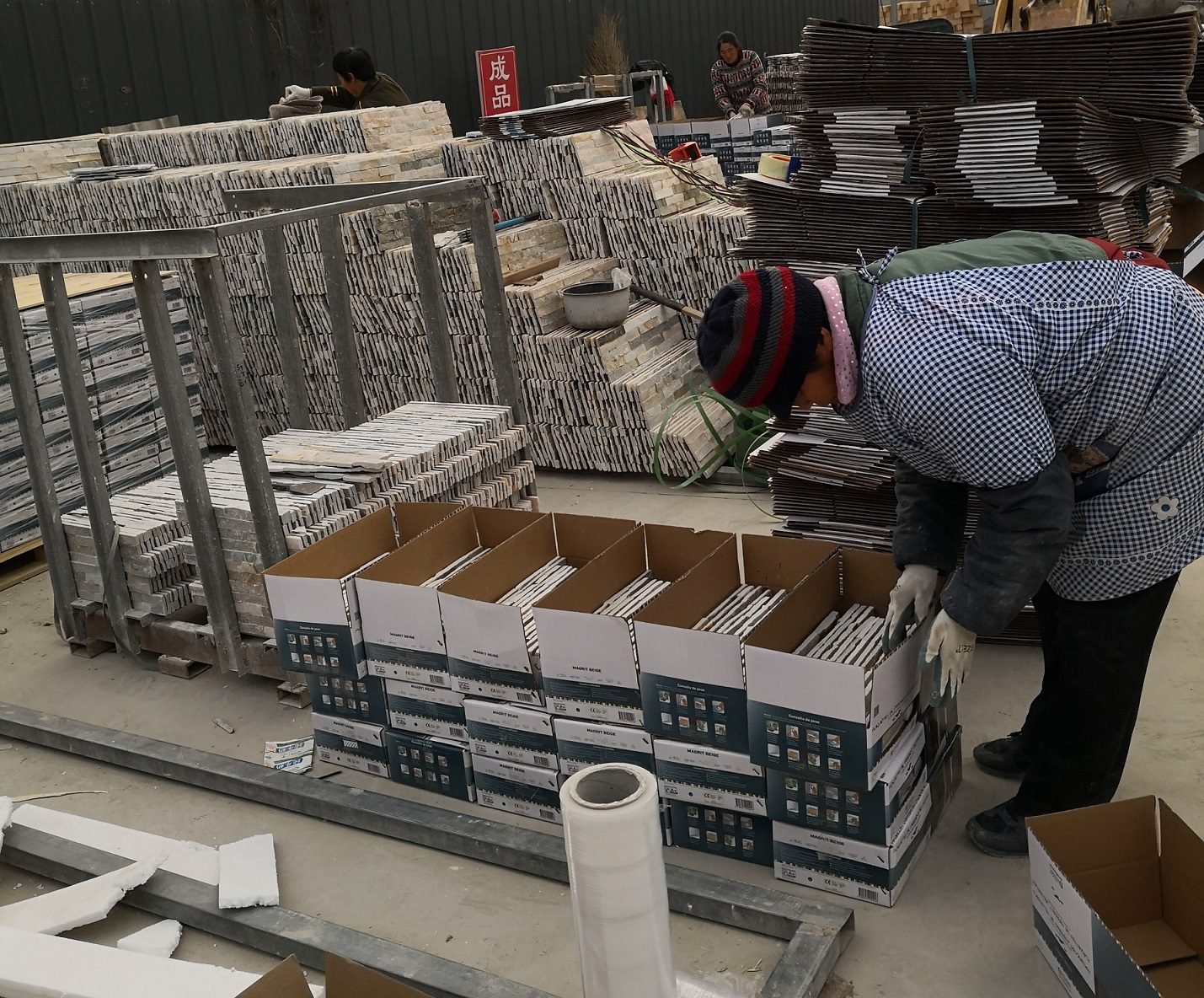
If the order includes color mixing, thickness is not the only random variable. Vein sorting keeps the panel-to-panel color story tight while the caliper keeps the geometry story tight; run both checks on the same sample. Day 12’s batch color consistency guide explains the color side of the audit.
Writing the Tolerance Into Your Purchase Order
Tolerance disputes are settled at the contract, not at the container. A PO clause that names the nominal, the band, and the measurement method converts a vague quality complaint into a documented rejection. Below is a clause that works with most stone suppliers and gives both sides an objective reading.
“Face stone thickness: [nominal] mm per approved sample. Permitted deviation: ±1 mm on CNC-calibrated product, ±3 mm (±1/8 in) on split-face or full-thickness product. Measurement method: digital caliper, five points per panel, random 10% sample across all cartons. Rejection: any panel exceeding the band, or an average center reading outside nominal, documented by photo and rejected before unloading.”
Three details make this clause enforceable. First, anchor the nominal to the approved sample, not to a catalogue page; the sample is the physical reference both sides signed off. Second, name the layer; measure face stone, and say so. Third, say who inspects and when; if the clause gives the buyer the right to appoint a third-party inspector at the factory before loading, you catch the problem before the container moves, not after 8,000 miles.
Pre-shipment inspection is the cheapest place to enforce tolerance. The factory’s 3-step QC already produces measurement records, photos, and video for its own gate; your contract should require the same evidence set, pre-marked with the sampling rule above. The factory capacity and QC guide shows how those records are generated at scale.
How Top Stone Panels Holds a One-Millimeter Band
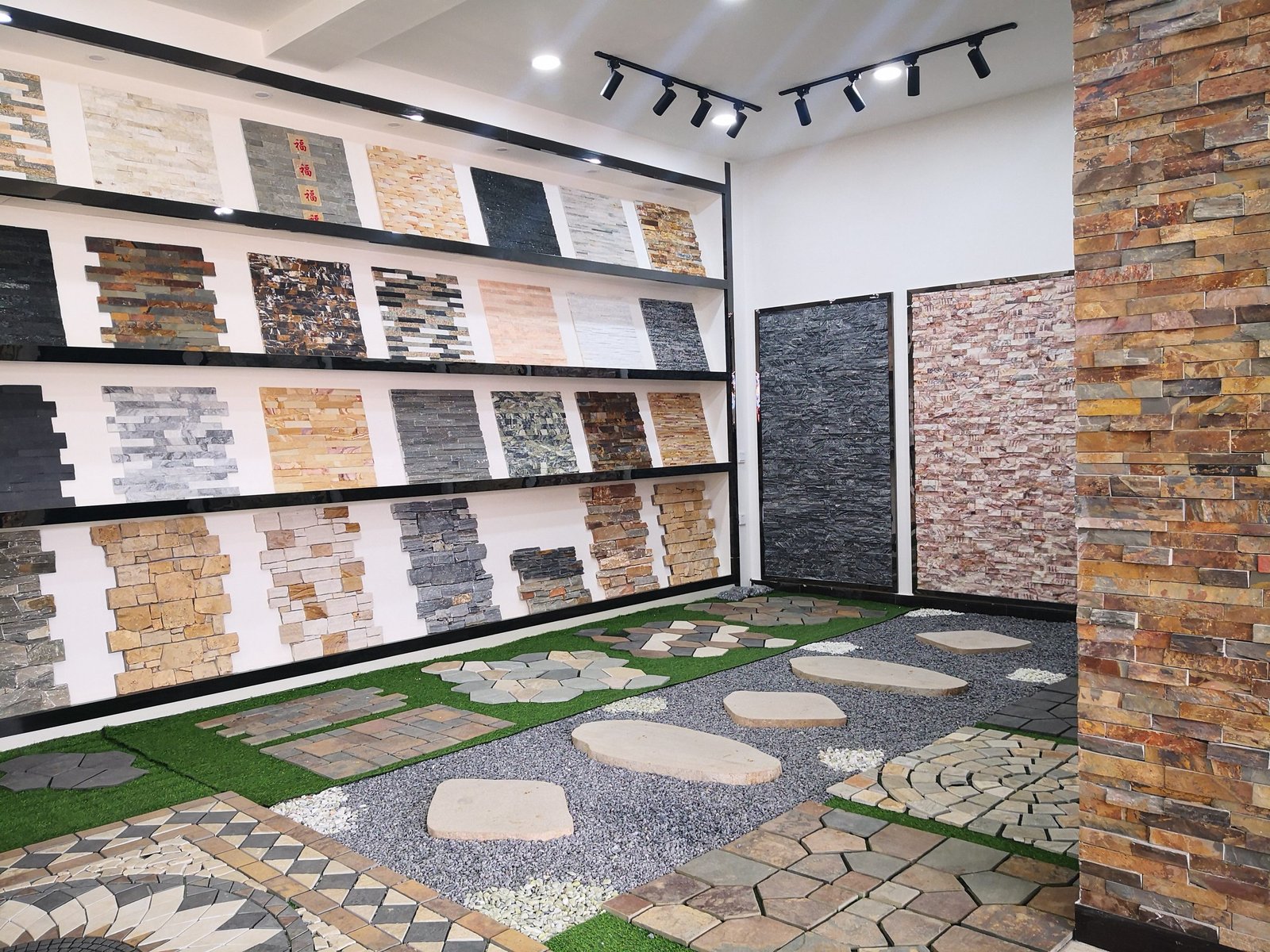
Top Stone Panels is a direct-from-quarry factory in Yixian, Hebei, shipping 220+ containers a year. The factory’s thickness story starts before cutting: blocks are graded and matched by quarry vein so the material entering CNC calibration is uniform. Then the infrared CNC diamond-blade equipment holds face stone to ±1 mm on calibrated strips.
That precision shows up in three places buyers see. Panels arrive flat enough that the joints run straight with minimal shimming. The L-corner pieces match the field joint line, so outside turns do not need field-built miters. And the on-site cutting waste drops by about 20% because the geometry is predictable; the installer cuts for layout, not for repair.
The factory backs the cutting tool with a 3-step QC gate: raw material grading, in-process recheck during panel assembly, and a pre-shipment final inspection with random sampling, measurement records, and video documentation. Buyers who want to see the caliper numbers before loading can request the inspection report with the container photos, or book a third-party inspector at the plant. MOQ is one 20GP container per product line, express samples ship in 1 to 3 days, and standard bulk production runs 20 to 25 working days on a 30/70 T/T, FOB Xingang basis.
Frequently Asked Questions
What thickness tolerance should a stone panel supplier hold?
For calibrated, CNC-cut face stone the workable commercial standard is ±1 mm. Split-face product and full-thickness slabs run looser; the customary figure written into dimension stone slab contracts is about ±3 mm (±1/8 in).
How do I measure stone panel thickness at goods-in?
Use a digital caliper and read every panel at five points: four corners and panel center. Record the spread. On a ±1 mm calibrated order, reject any panel whose readings differ by more than 2 mm across those points.
Does the backing change the tolerance I should expect?
Yes. Face stone on mesh backing flexes with the substrate; cement-backed and epoxy-bonded panels are rigid. The tolerance you cite in the PO should target the face stone, then confirm the backing thickness separately.
Why do natural stone panels vary in thickness from the same quarry?
Stone density and bedding vary vein to vein, and hand-split faces are rougher than sawn faces. That is why factories calibrate with infrared CNC diamond-blade cutting and grade blocks by vein before cutting.
What should the thickness clause in my purchase order say?
State the nominal thickness, the permitted deviation, and the sampling rule. A clause such as “face stone thickness 10-25 mm per approved sample, deviation ±1 mm, checked with a five-point caliper reading on a random 10% sample” protects both sides.
Conclusion
Thickness tolerance is the quiet number that decides whether a stone panel order installs clean or costs you shims, grinding, and a wall that reads wavy. Calibrated CNC-cut face stone holds ±1 mm; split-face and slab product run closer to ±3 mm. The standards frame the measurement, and the PO clause sets the rule.
Buyers who take one habit away from this guide should take the five-point caliper check. Run it on a random 10% sample at goods-in, photograph the outliers, and send the evidence before unloading. When you want a factory that has already done the measuring, request the inspection records before the container moves.
To spec an order against a measured ±1 mm band, ask Top Stone Panels for the current QC report and container loading video on your product line.