A contractor ordering stone cladding by the container is not choosing an adhesive; he is choosing an installation system that decides how many walls a crew finishes per week and what rework costs when a bond line fails years into a facade’s life. Those are procurement decisions, made before the first crate opens.
This comparison frames the main bonding families — mortar beds, thinset beds, and factory-applied structural bonds — as operating systems, then shows how backed and interlocking panels change the specification. For facades, lobbies, or villa work at container scale, the distinction between bonding stone to a wall and bonding stone to a backing is where the money moves.
- Mortar levels a bad wall; thinset bonds a true one; structural glue removes the bond line from the site.
- ASTM C0270-19 types M, S, N reference 2500, 1800, and 750 psi at 28 days; psi never decides a facade alone.
- A backed panel or interlocking Z-panel changes the equation: backing and edge hold the plane, so the setting material only bonds.
- Interlocking Z-panel cladding in 20x55cm and 15.2x61cm self-aligns, hides vertical joints, and holds -30C on cement or mesh backing.
- Factory-applied marine-grade epoxy on stacked stone panels is tested for 26.5-ton heavy-load sea freight and -30C to +50C cycling with 100 percent zero pop-off.
- Container-scale bond failure is systemic: strip panels, patch substrate, chase batch-specific vein selection for a match that never lands.
Why the Bond System Is a Procurement Decision
Residential advice treats bond choice as a last-minute site call. That works for one wall, but collapses at container scale: an importer commits to a bonding strategy weeks before the first panel ships, embedded in the product line.
Every factory-made cladding product ships with a bonding assumption built in. Loose stone assumes the site levels every piece with a bed. A backed panel assumes a flat substrate that only needs bonding. An interlocking panel assumes the edge carries alignment and the setting material carries adhesion alone. When product and job-site reality disagree, the bond line is asked to do work it was never sized for.
Mortar, Thinset, and Glue, Defined
Mortar beds. Mortar is the traditional setting material for adhered masonry, its classes defined under ASTM C0270-19, the standard specification for mortar for unit masonry. Widely cited manufacturer values put Type M around 2500 psi, Type S around 1800 psi, and Type N around 750 psi at 28 days — useful for framing, too coarse to sign off a facade, because an over-specified mortar cannot compensate for a wet backing plane. What a mortar bed does uniquely well is level; thick beds absorb uneven substrate, which is why the system survives renovation sites. Its cost is tempo: open time, cure time, and a temperature window that stops the wall on cold weeks.
Thinset beds. Thinset is the thin-bed bonding family the tile trade standardized, with guidance living at bodies such as TCNA, the Tile Council of North America. A notched trowel comb is drawn across a flat substrate and the unit set into the ridges, so the material bonds rather than levels — the right tool for factory-backed panels and the fastest way to cover large true walls. The buried assumption is a quality substrate: unpainted cement board, plastered block, or a prepared screed.
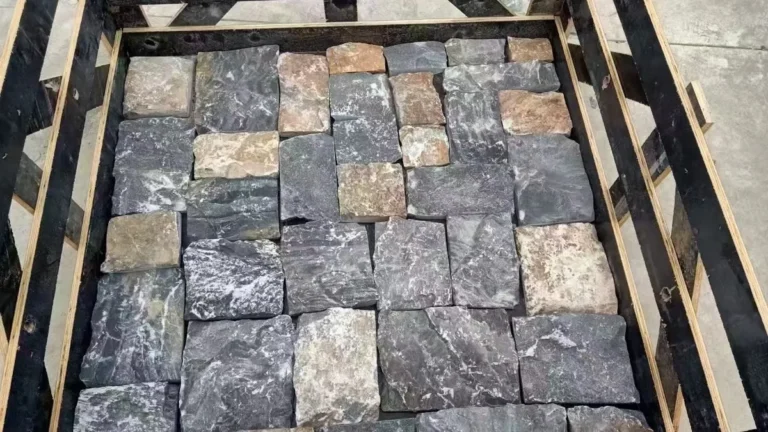
Structural glue and factory bonds. The factory-bond family is adhesive technology applied mostly off-site. Top Stone Panels assembles its stacked stone standard ledger panels — 15x60cm and 15x55cm — with a marine-grade epoxy bond rated for 26.5-ton heavy-load sea freight and -30C to +50C thermal cycling, 100 percent zero pop-off in factory testing: proven under vibration and thermal movement that shear site-bonded walls. Pre-made L-corners follow the same logic, cutting roughly 20 percent of material waste and more than half of on-site labor because no crew field-miters 45-degree returns. The marine-grade epoxy bond assembly is where the factory moves risk out of the site’s hands.
Read those paragraphs as delivery models, not a taste test. Mortar sells the site the ability to level; thinset sells speed on prepared surfaces; a factory bond sells a proven bond line at the cost of specifying the product line that carries it.
Adhesive Systems Side by Side
The table maps the systems against the axes that decide a container project: substrate tolerance, strength context, tempo, cost structure, and failure mode. Your walls, crew, and climate decide the winner.
| Decision axis | Mortar bed | Thinset bed | Structural glue / factory bond |
|---|---|---|---|
| Substrate fit | Rough, patched, out-of-plumb walls tolerate a thick bed | Needs a flat, sound surface; the comb does not level | Bond is made in the factory; the site sees a finished panel |
| Strength context | Type M, S, N at 2500, 1800, 750 psi per manufacturer references | Adhesion to the substrate face, not leveling strength | Marine-grade epoxy rated for 26.5-ton freight, -30C to +50C cycling |
| Tempo | Open time and cure windows pace the crew; cold weeks stop walls | Fast when the substrate is ready; little wait between batches | No setting-material tempo on site at all |
| Cost structure | Cheap material, expensive labor hours and waiting | Modest material, prep hours move to the substrate budget | Higher panel cost, labor moved into the factory price |
| Failure mode | Wet backing plane, freeze-thaw damage, cold-weather skips | Bond line asked to level; lippage and voids under panels | Rare, but replacement means stripping a factory-made unit |
Two cells deserve a pause. On tempo, mortar is the only system where a crew can fill a shift and finish nothing — a wall pressed onto green beds runs out of working area. On failure, each system fails in a different currency: mortar through moisture and temperature, thinset through substrate honesty, a factory bond only at the rarest and most expensive end. The real differentiator is the preparation bill — substrate preparation across plywood, cement board, and metal lath — not the label on the bag.
Backed Panels Change the Equation
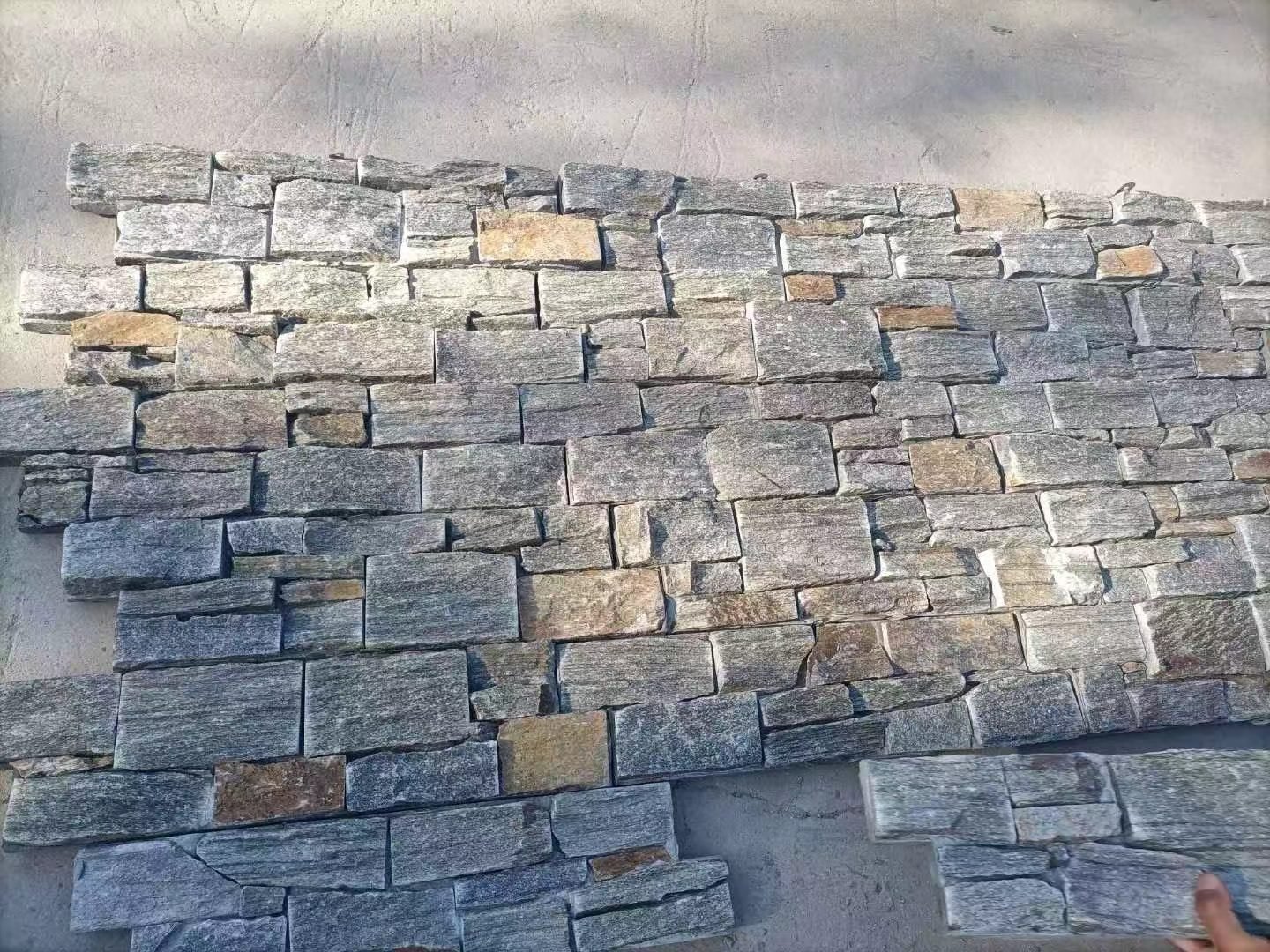
A stacked stone panel is not a collection of stones waiting for a bed; it is a stone-faced composite unit with a bond line already proven off-site. Standard ledger panels run 15x60cm and 15x55cm on glued or mesh backing, epoxy factory-verified against 26.5-ton heavy-load sea freight and -30C to +50C cycling with 100 percent zero pop-off. A site mortar bed has no freight test, no thermal-cycle test, and no quality protocol beyond the mixer and trowel. The factory can audit a bond line; a crew never does. That asymmetry — not the psi value of either material — is the real engineering argument for backed construction.
Backing also moves the material math upstream. The 3-Step QC protocol on every order — batch-specific quarry vein selection, in-process checks, pre-shipment inspection with precision CNC-diamond cutting — treats the bond as a manufactured dimension with a tolerance. Loose stone cannot be quality-checked that way, because its bond is built on site.
And the cost line flips. A factory-backed panel prices higher than loose stone and installs lower, because the heaviest labor — buttering, leveling, and aligning individual stones — leaves the site. The same logic runs through the epoxy bond versus cement backing trade-off: the factory bond lets a distributor sell a wall that installs markedly faster than loose-stone work.
How Interlocking Panels Rewrite the Specification
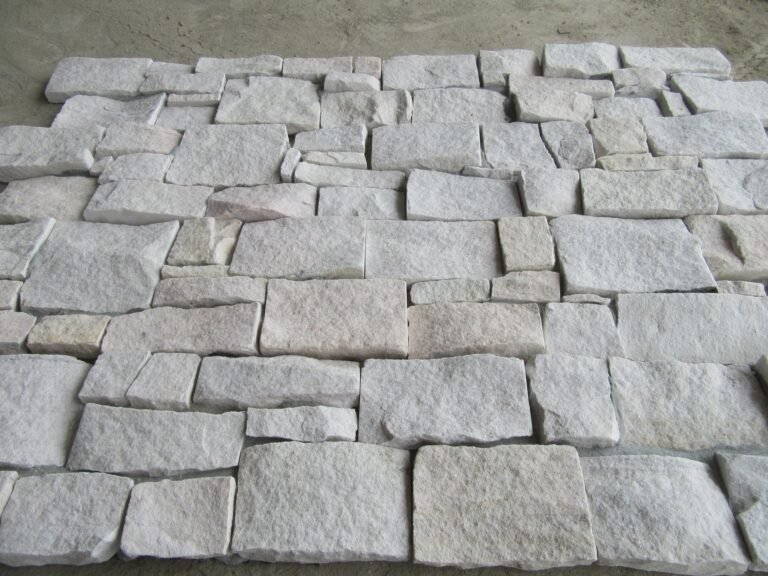
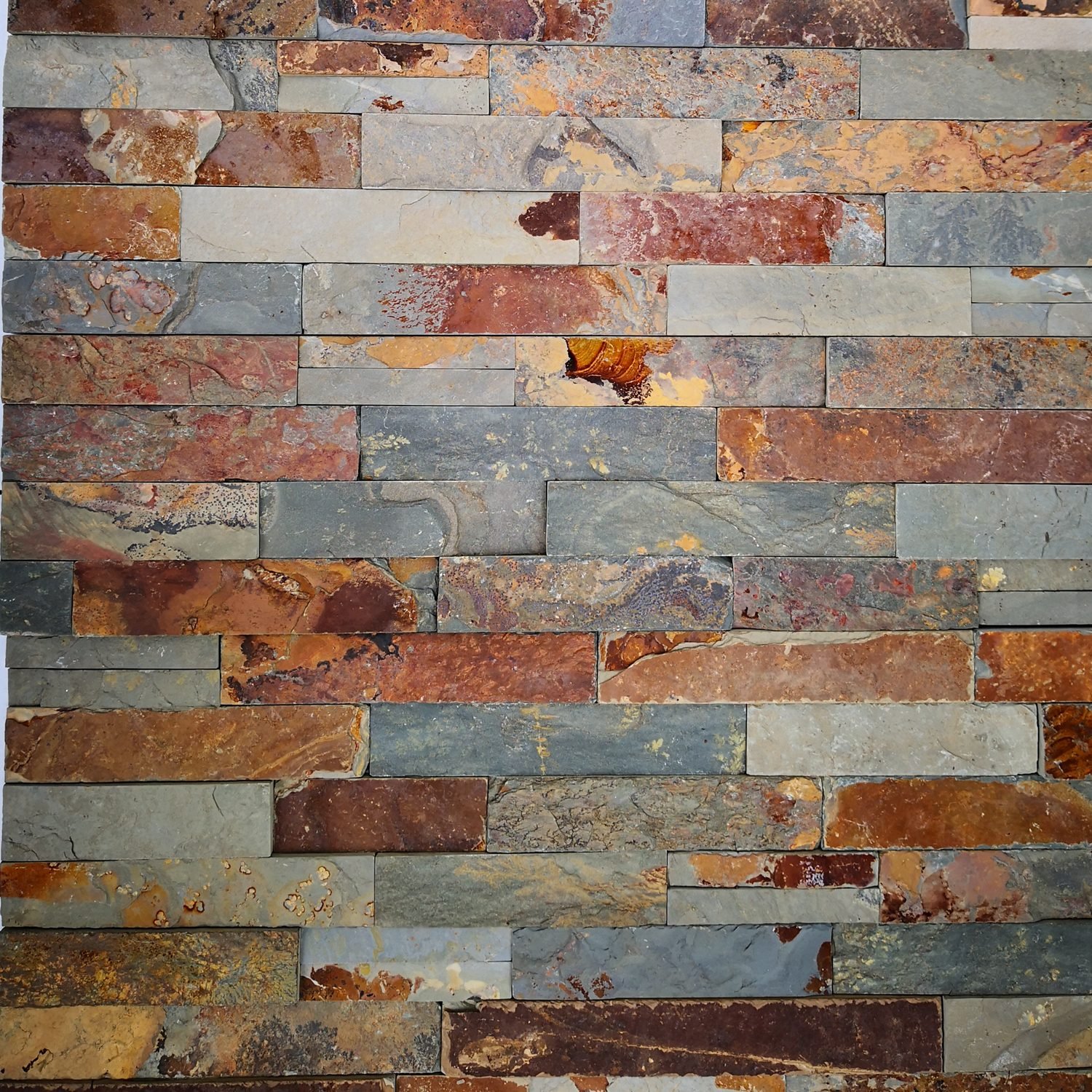
Backed panels change the conversation; interlocking panels end it. Top Stone Panels Z-panels are manufactured in 20x55cm and 15.2x61cm formats, cement-backed or mesh-back, with a Z-shape, S-shape, or Puzzle male-female edge. When a course seats, the edge locates it: line, level, and reveal come from panel geometry rather than the trowel, and the system holds -30C on the rigid plane the cement backing gives the joint.
For the bonding specification this is a quiet revolution: no setting material is ever asked to level anything, so the debate about mortar type and bed thickness collapses into one question — is the substrate clean, flat, and sound? The cement-backed interlocking Z-panel cladding system exists precisely because it converts an adhesion problem into a substrate problem, and substrates are auditable before a single panel is set. Since the male-female edge hides vertical joints and self-aligns course to course, the thick-bed failure modes — voids, lippage, cold-week skips — no longer exist.
Where it buckles is worth naming: on a wavy or out-of-plumb wall the profile stops seating and the crew gains the troubleshooting time it saved. Interlocking trades a guaranteed bond line for substrate discipline. The installing interlocking Z-panels on exterior walls sequence assumes a prepared plane — on a retrofit, that preparation line, not the adhesive, is the line to budget.
Container-Scale Failure Costs
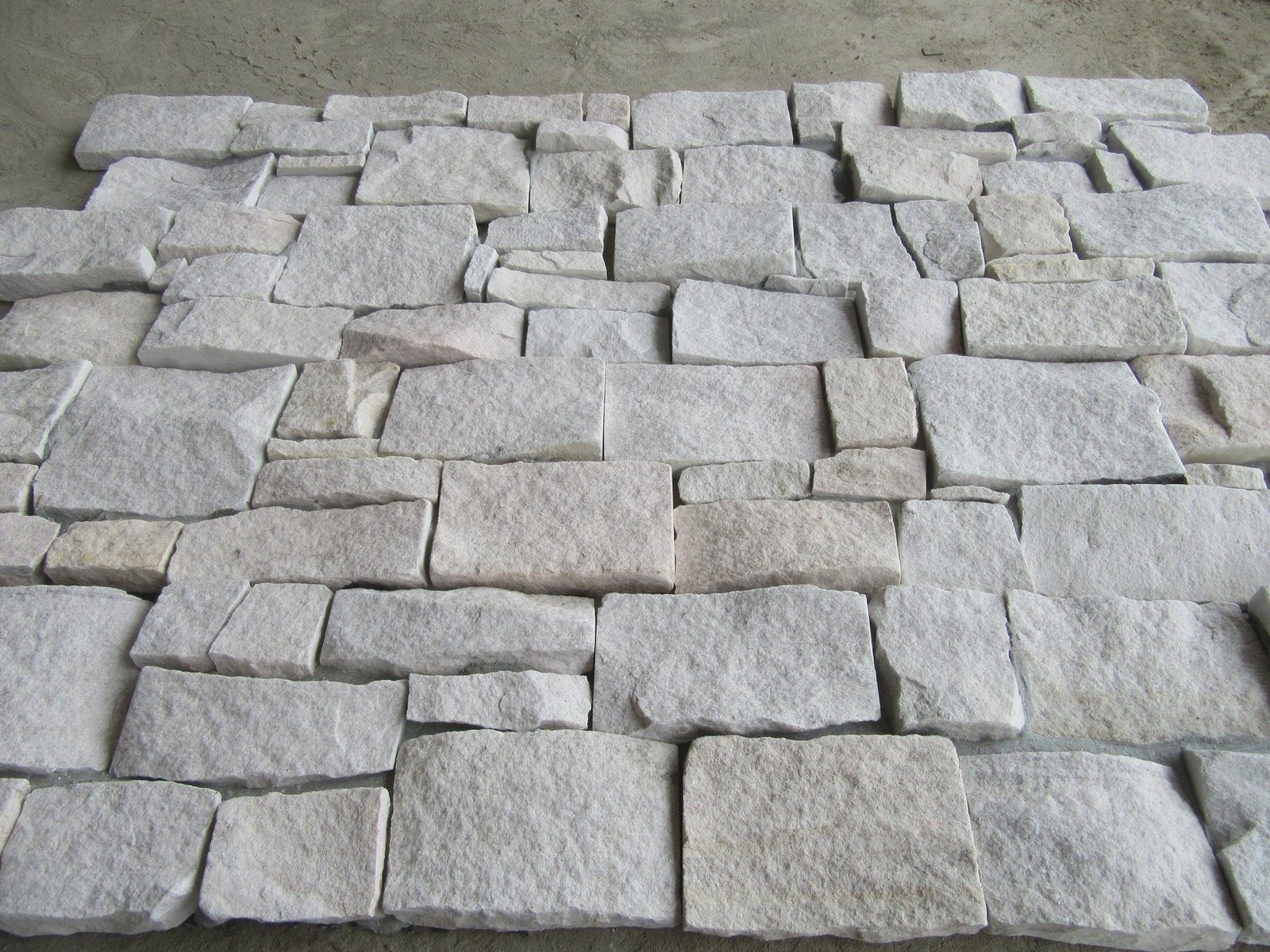
Bond failure on a single wall is an inconvenience; at container scale it is an accounting event. Panels come off in section, the substrate gets patched, the schedule eats days, and the replacement batch arrives from a different part of the quarry. Batch-specific vein selection holds color harmony at 95 percent or better within a shipment — precisely why a replacement never quite matches.
Buyers who move containers verify the bond before the container closes: the 3-Step QC protocol, batch records, and a pre-shipment package with a Loading & Packaging Inspection Video and layout photographs for balance approval — available before shipment, not after a claim. ASTM C1780-20 exists because adhered masonry fails as a system; the standard for cement-based adhered veneer installation practice under ASTM C1780-20 frames the substrate, lathing, and setting-material expectations the site has to honor.
No psi value alone ever decided a facade. A container-scale bond failure is almost never a materials failure: it is a wet backing plane, a cold-weather skip, a substrate never prepared, or a setting material asked to level a wall that should have been framed. Each is a system decision made upstream — which is why the requirement belongs in the purchase order that also carries the 220+ containers of annual export capacity and the 18+ years of quarrying behind the shipment.
Choosing a System for Your Job Mix
Match the system to the wall types your market actually delivers, and the specification writes itself. A few checks decide it:
- Substrate truth. New-build facades on plastered block fit thinset with backed panels; renovations over patched render earn a mortar bed’s slower tempo because it levels what the wall cannot.
- Winter rhythm. Mortar and wet setting stop on cold weeks; a factory-bonded or interlocking line keeps the schedule moving because the setting material does less work.
- Repair appetite. Walls opened later for services, or retail spaces that change tenants, want a system where one unit lifts out cleanly.
For a crew new to these systems, the skill gap is smaller than the industry expects — alignment is designed in — but the discipline gap is real: flat substrates and straight setting-out lines become the non-negotiables.
Verify before you buy: order physical samples, build a mock-up on the substrate your market uses, and time the same crew on each system before a container is committed. The factory’s own protocol, including how mortar is meant to be applied to stone veneer panels on the products that take it, is part of what a serious buyer requests with the first order.
Frequently Asked Questions
Which bonding system is stronger — mortar, thinset, or glue?
Strength is contextual. Manufacturer reference values put Type M, S, and N mortar at 2500, 1800, and 750 psi at 28 days, but facade failures come from the substrate and drainage interface, not the psi class. A factory-applied marine-grade epoxy bond is verified under -30C to +50C thermal cycling with 100 percent zero pop-off, which is a better proxy for a cladding application than a compressive value.
Can thinset bond factory-backed stone panels?
Yes. Backed panels — stacked stone ledger units on 15x60cm and 15x55cm, and interlocking Z-panel cladding on 20x55cm and 15.2x61cm — are made for a thin bed on a flat substrate, because the backing carries the plane and the factory bond line no longer has to level individual stones.
How does an interlocking panel change the adhesive specification?
The male-female edge locates each course, so the setting material bonds the panel to the substrate instead of leveling it. That moves the decision from mortar type and bed thickness to a shorter question: is the substrate clean, flat, and sound?
What does a failed bond cost on a container project?
Panels are stripped in section, the substrate is patched, the schedule eats days, and the replacement batch no longer matches the original because vein selection is batch-specific — color harmony is held at 95 percent or better within a shipment. That is why pre-shipment verification of the bond matters more than any warranty line.
Why is bond selection a system decision for B2B buyers?
Because failure modes are systemic. A wet backing plane or an out-of-plane substrate fails regardless of the psi value signed off, so the specification has to cover substrate, backing, and setting material together — which is why the decision belongs in the purchase order, not on the trowel.
Conclusion
Mortar, thinset, and glue answer different questions: who carries the leveling, who carries the adhesion, and who pays when the wall disagrees. A mortar bed carries the leveling and charges crew hours. A thinset bed carries the adhesion on a substrate prepared to meet it. A factory structural bond carries both, proven under freight and thermal cycling, and hands the site a finished unit — with interlocking edges carrying the geometry on top of it.
Key takeaways:
- Specify the system, not the bag: substrate truth, tempo, and repair appetite should decide between mortar, thinset, and factory bond.
- Do not inflate the mortar class to fix a wall problem; a wet backing plane fails any psi value.
- Backed panels move the bond line into the factory, where a 3-Step QC protocol audits it; loose stone asks the site to be the factory.
- Interlocking Z-panels convert adhesion into a substrate question and make thinset the honest choice, stable to -30C.
Top Stone Panels builds stacked stone, thin stone veneer, and interlocking Z-panel cladding from the same quarry-direct base, with 18+ years of export and 220+ containers of annual capacity, so the bonding strategy can match the market’s walls instead of fighting them. Start the vendor conversation before the container is committed — request samples and an installation wall mock-up, and let the crew time both systems on the substrate you actually build on.