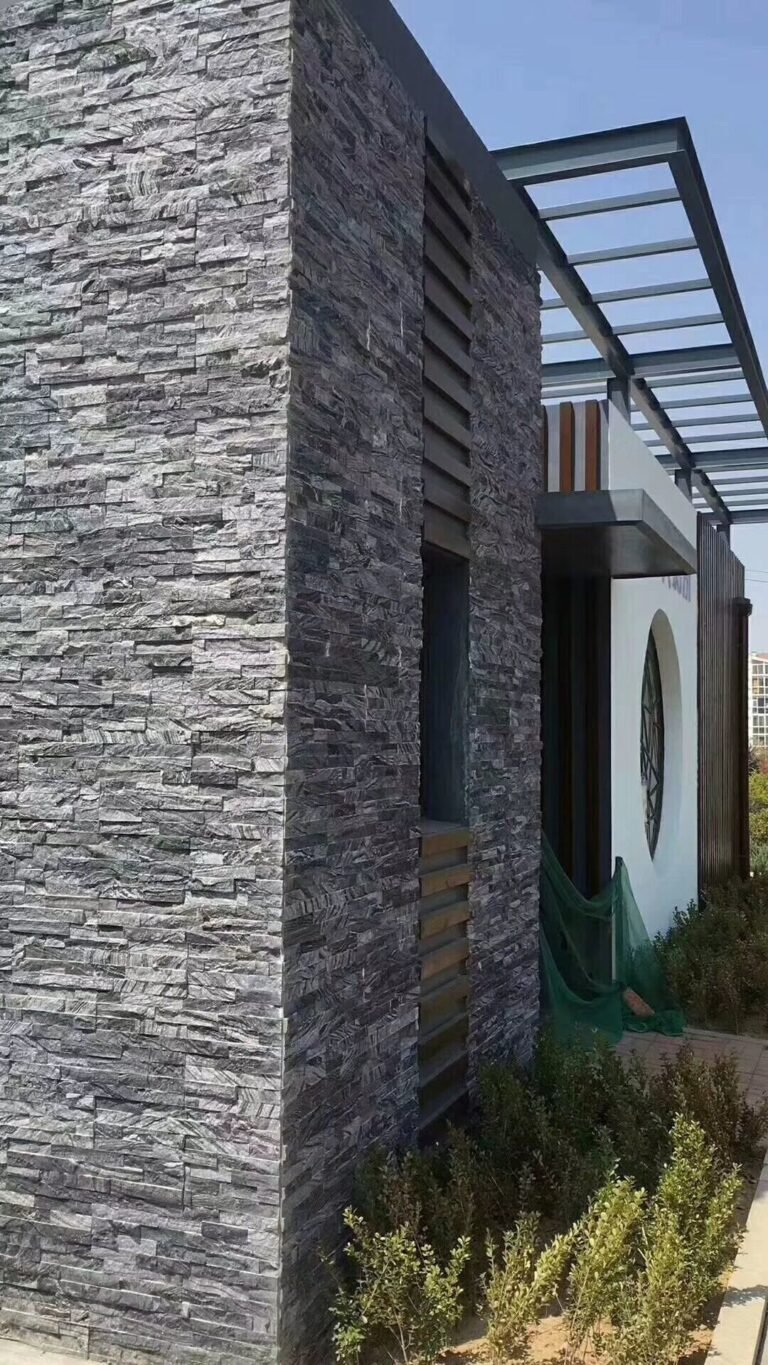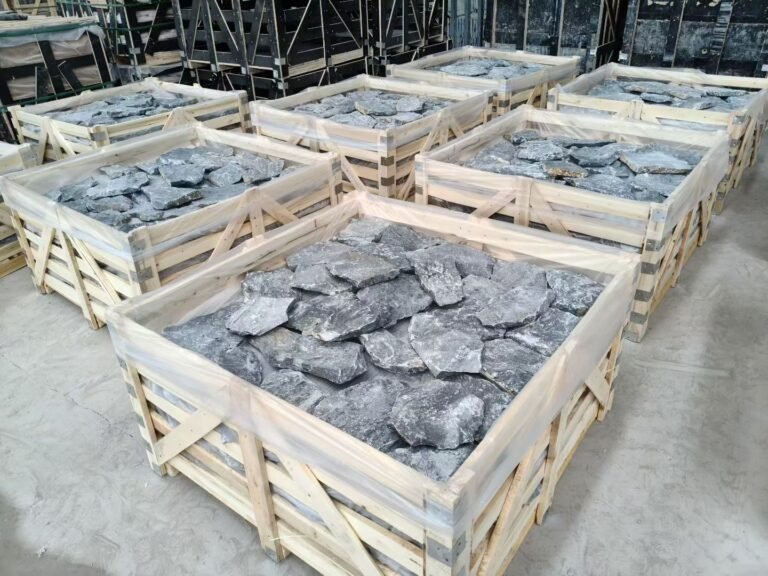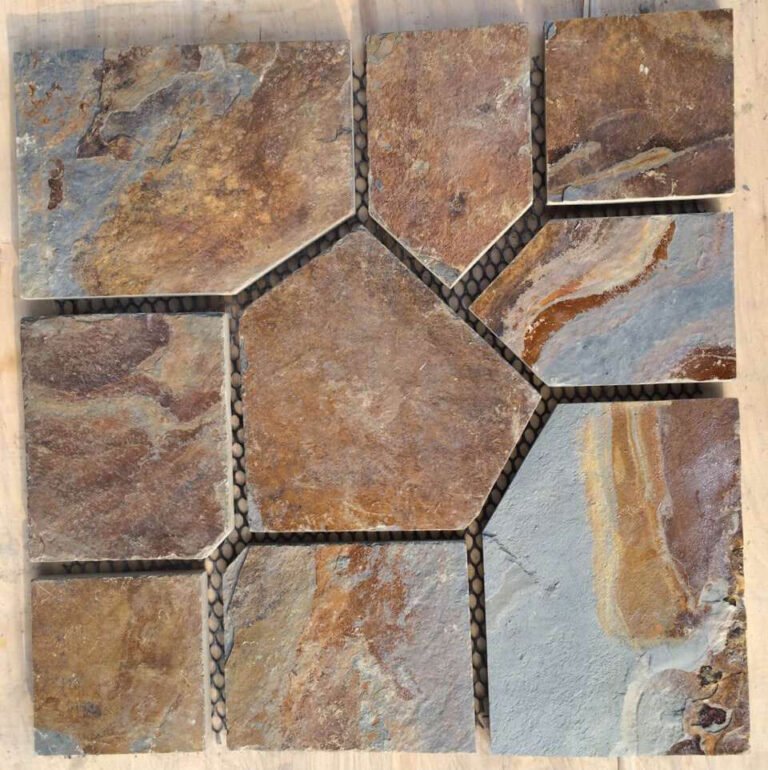
Few facades stay current as long as a white one. Dark cladding trends come and go with the decade; white stone panels carry a different history. They read modern in a mid-century elevation, contemporary on a new villa, and timeless on a courthouse. The reason is material, not fashion: pale natural stone is a tone, not a trend, and its brightness survives because the color lives in the rock, not in a coating.
This collection walks five facade directions that keep working for white and cream stone panels, from the minimal box to the layered material mix. Each entry says what makes it different, what it costs in execution care, and where it shines. The products behind these designs are real quarry-direct lines — white and cream quartzite, light slate — sold wholesale with a one-20GP MOQ, and every image and reference tracks the same factory supply chain.
- White facades stay current because pale natural stone is UV-stable — the tone lives in the rock, so it does not fade or gray like paint.
- White quartzite and cream quartzite are the workhorse panel choices: pale tone with metamorphic density, low absorption, and freeze-thaw and salt-spray resistance.
- Pale cladding reflects solar heat better than dark cladding, which keeps the surface cooler on the same sun exposure; treat it as one input in energy design.
- The five directions share details, not formulas: corners, reveals, and shade differences do the work, so pre-made L-corners and batch-consistent tone matter.
- Wholesale supply is standard: one 20GP container MOQ, 1-3 day samples, 20-25 working day production from quarry-direct stock.

Design 1: The Minimal White Box
Full-cover white quartzite, no accents, no secondary material: the whole elevation reads as one pale monolith. This is the hardest direction to execute and the clearest in result. What saves it from being a blank warehouse wall is the natural split-face relief — light breaks across hundreds of small shadows, so the wall is never flat even when the palette is uniform.
The discipline is detail. Corners must be crisp, so pre-made L-corner pieces carry the turn without a visible joint line. Windows and doors need clean reveals and a consistent stone depth so the pale surface reads as a skin, not a patchwork. The tone must hold across the entire facade, which is exactly what batch-specific vein selection controls at the quarry. The batch color consistency guide explains why the same white block matters on a large pale wall.
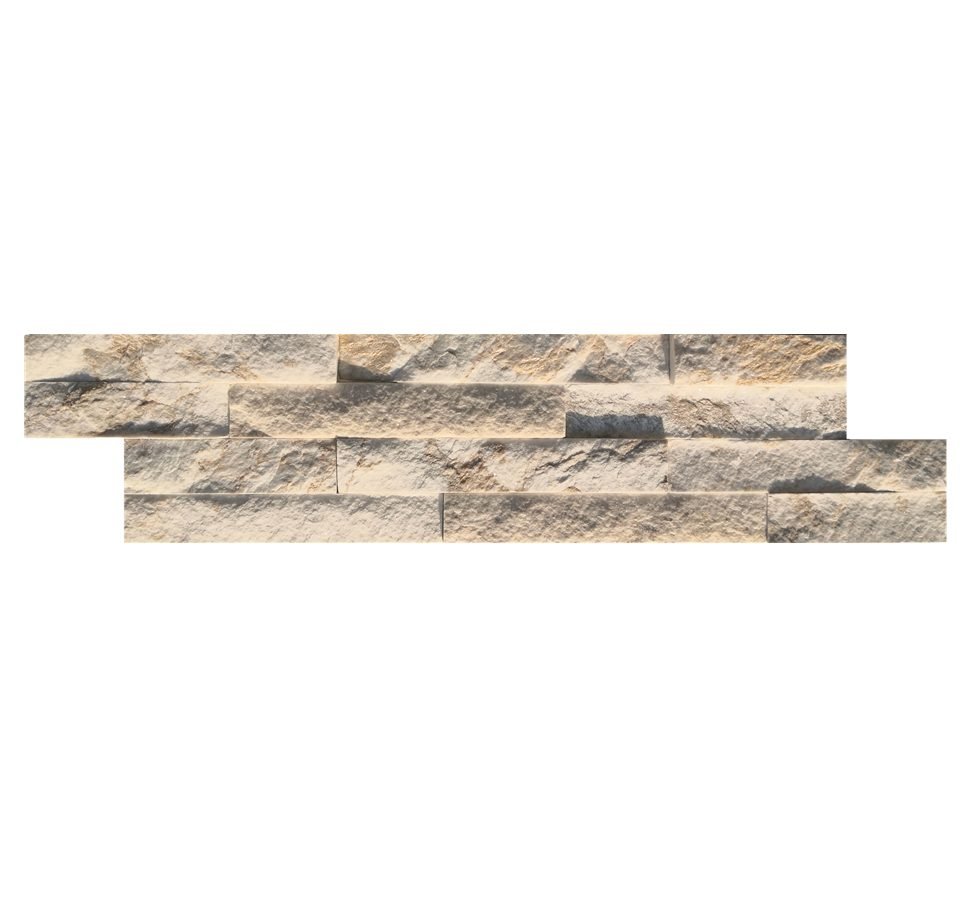
Where it fits: modern villas, pavilions, retail flagships, and any composition that wants one uncompromising surface. Execution care: highest — tone consistency, corner detailing, and joint discipline decide everything. Landscape help: green hedges and warm wood gates lift the white mass into a home rather than a sculpture.
Design 2: White with a Wood-Heat Mix
Pair white stone with wood — cedar battens, warm timber soffits, a wood entry door — and both materials improve. The white stays the structure, the wood becomes the warmth, and the contrast ages well because neither tone fights the other. This is a repeatable, specifier-friendly language: the stone coverage carries the investment, the wood accent carries the personality.
Wood brings one care: maintenance. Cedar and similar species weather to silver if left, or hold warm tones if coated, and the coating cycle is a client conversation at bid time. The white stone side is nearly maintenance-free, which is the trade that makes the pair attractive to property owners: a low-maintenance timeless skin with a warm accent they can refresh without touching the facade.
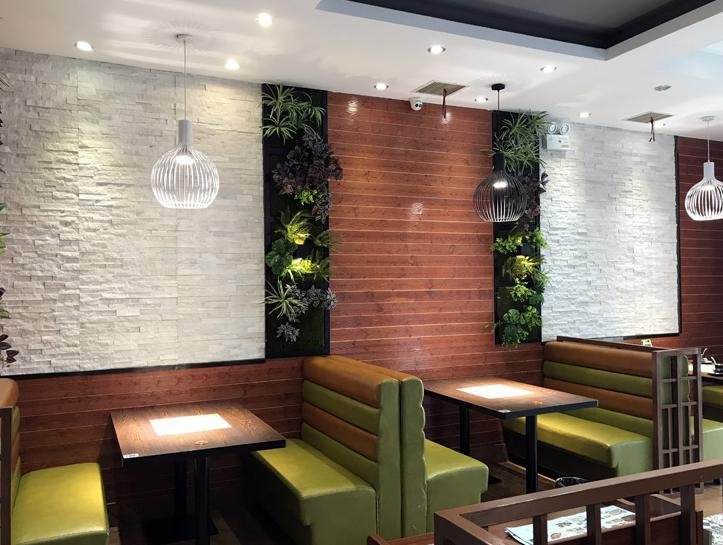
Where it fits: residential homes, boutique hotels, hospitality entrances, mountain and coastal retreats. Execution care: medium — the stone-to-wood junction wants a clean shadow gap or metal transition. Material choices: white quartzite panels, cream quartzite, or light slate panels against western red cedar, ipe, or thermowood.
Design 3: The Layered Ledger Facade
Not every white facade must be a flat wall. A ledger format — narrow horizontal strips in a staggered course — turns the facade into a layered composition that catches light in long horizontal shadows. Thin ledgestone panels read as elegant linear texture from a distance and as genuine stone relief up close, and the conversation between linear, random, and ashlar layouts decides the rhythm of the surface.
The white ledger facade works especially well on two-story elevations and around large glazing. The horizontal lines both tie the composition together and visually widen a narrow site. Because the strips are thin — the ultra-thin format is 10x36cm — they load efficiently per container, which helps the wholesale price per square meter on big elevations.
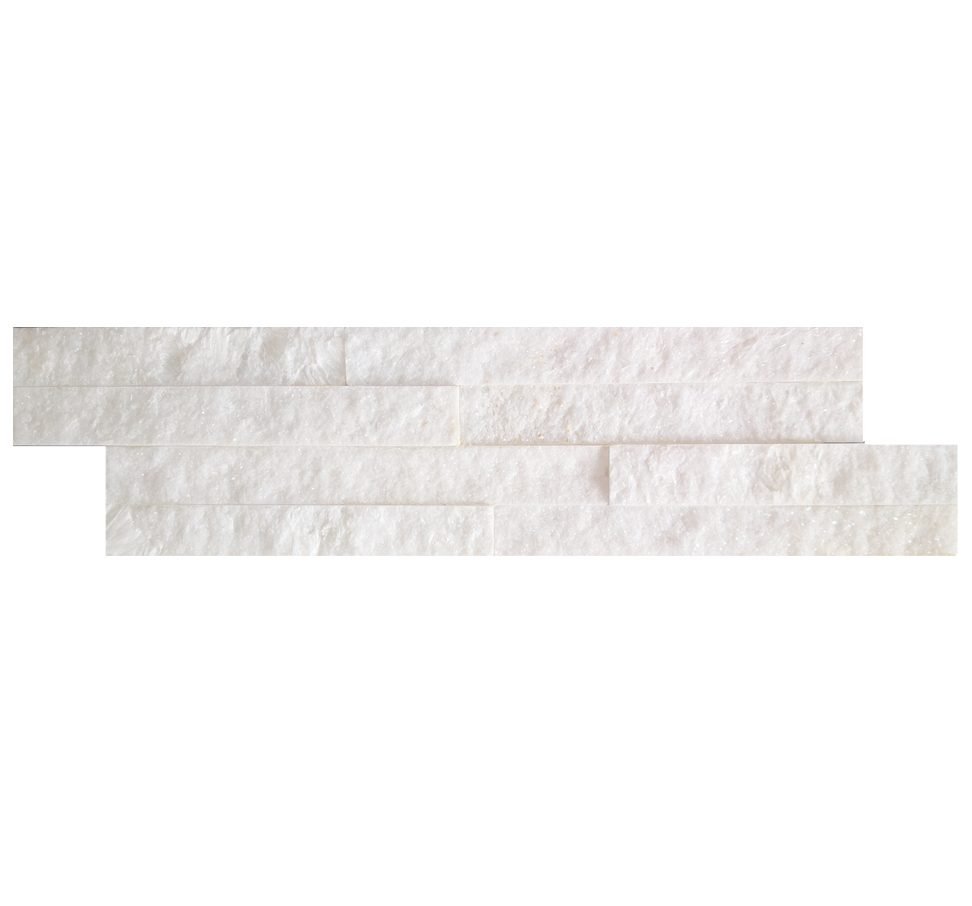
Where it fits: two-story homes, gable elevations, feature strip above shopfronts, commercial facades with big glazing. Execution care: medium-high — the horizontal joint line must stay level course over course. Why it dates well: a linear material keeps a modern geometry without committing to a trend.
Design 4: White Stone and Black Frames
Dark metal frames against pale stone is a pairing that has survived every design cycle since minimalism arrived. The black window frame, black gutter, black gate, and black guardrail draw crisp lines across the white field, and the contrast does the design work — a contemporary look with a small color budget. The stone provides the permanence; the black metal provides the edge.
The discipline is honesty in the frames. Powder-coated aluminum and steel in a dark graphite or matte black read cleanly; cheap plastic frames gray and degrade the contrast. The junction between white stone panel and black frame benefits from a consistent reveal — the depth of the recess around each opening should repeat across the facade. Entrance and pillar combinations show how the black-plus-white language carries from windows to entry portals.
Where it fits: urban houses, infill projects, offices, wineries, architectural entries. Execution care: medium — coordination between stone installer and window installer decides the reveals. Budget note: the black accents concentrate spend on openings, not on extra cladding area.
Design 5: Courtyard-Scale Bindings
The fifth direction steps off the main facade onto the boundary wall, the courtyard wall, and the garden planter: white stone as a binding material that ties a site together. When the house face is white stone, repeating the same panel on the perimeter wall and the entrance pillars makes the whole site read as one composition — the curb appeal language of repetition at scale.
Perimeter walls and garden structures are a lower-cost use of a premium material if you choose them deliberately: the same white quartzite panels in a simpler format, off-the-shelf sizes, and standard corners. The material continuity is the design, and it keeps the white facade from floating as an isolated element in a hardscaped site.
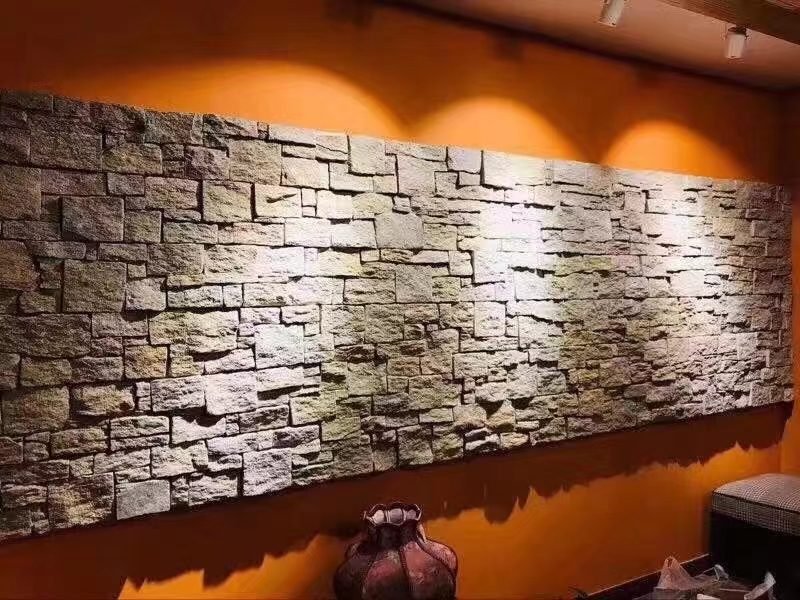
Where it fits: villa estates, gated communities, hospitality grounds, compound walls at grade. Execution care: low-medium — simpler topology, standard pieces. Why it works: the repetition builds a site, not just a wall, and the material stays consistent for years.
Choosing the Right White Stone Panel
White is not one stone. The panel decision is a three-part call: material, format, and tone. Material first: white and cream quartzite are the workhorse choices because they pair a pale face with metamorphic density and low absorption — the physicals that keep a facade bright and weatherproof in freeze-thaw and coastal zones. Light slate is the alternative where a cooler grey-white and tighter texture are preferred.
| Direction | Stone call | Format | Effort |
|---|---|---|---|
| Minimal white box | White quartzite | Stacked panels + L-corners | Highest |
| White + wood | White/cream quartzite | Stacked or thin veneer | Medium |
| Layered ledger | Sparkle white / cream quartzite | Ledger strips, 10x36cm | Medium-high |
| White + black frames | White quartzite / slate | Panels or strips | Medium |
| Courtyard binding | White quartzite panels | Standard panels, gate walls | Low-medium |
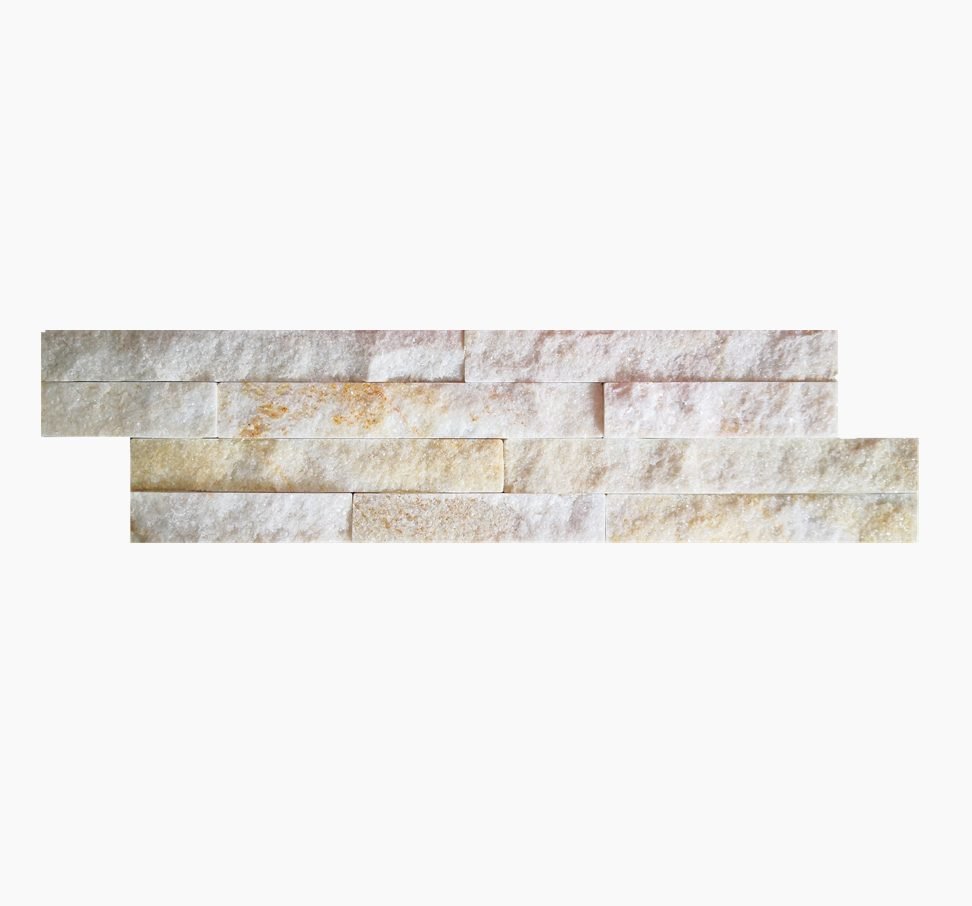
Tone is the third dimension. A pure bright white reads crisp and modern; a cream quartzite reads warmer and more traditional; a faint grey-white slate sits in between. Order samples from your shortlist and check the tone on the actual site at morning and afternoon light — that single test settles the design faster than any render. The ledgestone explainer and the slate panel guide cover the panel families in detail.
Light, Weather, and Color Longevity
White cladding earns its keep in three outdoor conditions that punish other finishes. In high-sun regions, pale stone reflects more solar heat than dark stone, so the face runs cooler on the same exposure — a directional energy input, not a guarantee, but a real one for west elevations and tropical facades. The physical basis is albedo: lighter surfaces reflect a larger fraction of incoming solar radiation, which is why pale roof and wall products are specified in cooling-dominated climates. In coastal air, the dense white quartzite and slate programs carry the factory’s documented -30°C to +50°C envelope and salt-spray resistance, which is why pale facades stay bright on seaside houses where darker cladding would be fighting mildew and salt bloom.
Over years the difference is UV. Painted and coated surfaces fade because their color lives in pigment carried by the sun’s UV rays. Natural stone is UV-stable: the tone is mineral, so it does not gray or bleach with exposure. The UV stability guide documents why slate and quartzite keep their color, and the same mineral permanence is the reason a white quartzite facade still reads bright in year ten. The maintenance real talk: white shows airborne dirt more than dark stone, so damp climates ask for periodic washing with a stone-safe cleaner — the same care schedule detailed in the stone maintenance guide.
FAQ
Are white stone panels a good choice for exteriors?
Yes. White and cream quartzite panels are dense, low-absorption stone that resists freeze-thaw and salt spray, and natural stone is UV-stable, so the white does not fade or gray the way painted or coated surfaces do.
Do white stone panels need more maintenance than dark stone?
Modest regular washing, mostly in wet climates. White cladding shows airborne dirt more readily than dark stone, but a dense honed or split surface cleans with standard stone treatments, and UV-stable material keeps the base tone bright.
What natural stone looks white on a facade?
White quartzite, cream quartzite, white marble, and light grey slate. For cladding panels, white and cream quartzite are the workhorse choices because they combine pale tones with metamorphic density and low absorption.
Do white stone facades stay white over years?
Yes, because natural stone is UV-stable. Water staining, moss, and surface dirt can dull the tone if neglected, but the stone itself does not fade; periodic cleaning restores the original color.
Is white stone cladding available wholesale?
Yes. White quartzite and cream quartzite panels ship wholesale with a one-20GP container MOQ, 1-3 day sample turnaround, and 20-25 working day production from quarry-direct stock.
Does white cladding reduce building heat?
Pale surfaces reflect more solar heat than dark surfaces, so a white facade runs cooler on the same wall on a sunny day; exact numbers depend on assembly, and the effect is one input into energy design, not a single-figure guarantee.
Conclusion
White stone panels never date because the tone lives in the rock. Whether the direction is the minimal box, the wood-warm mix, the layered ledger facade, the black-framed contrast, or the courtyard-scale binding, the material does the lifting and the details do the finishing.
- Match the white to the site: bright white quartzite for crisp modern, cream for warmth, light slate for grey-white neutrality.
- Verify tone on physical samples in real site light before committing a facade budget.
- Protect pale facades in damp climates with clean detailing and periodic washing, not with coatings that gray over.
- Anchor the cost in the container: one 20GP MOQ, 1-3 day samples, and 20-25 working day production from quarry-direct stock.
If a white facade is on your desk, order white and cream quartzite samples side by side and read the tones under real light — Top Stone Panels ships samples in 1-3 days from quarry-direct stock.