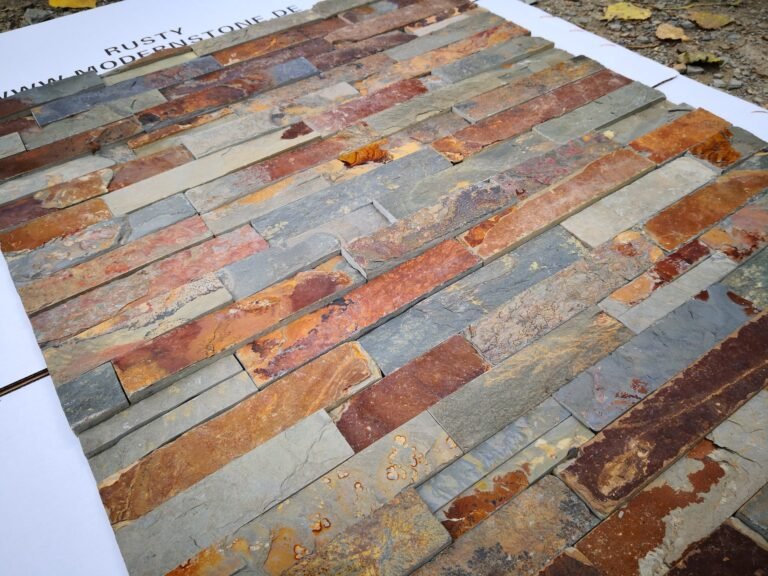
The adhesive holding a stone veneer panel together is the single component most likely to cause a callback. Not the stone — natural slate and quartzite outlast the buildings they clad. Not the backing board, the mesh, or the fasteners. The bond line between the stone face and whatever substrate carries it. When that bond fails, panels delaminate, corners lift, and the installer gets a phone call at 7 AM on a Saturday.
Two adhesive systems dominate stone panel assembly: marine-grade epoxy bond and Portland cement-based mortar. Both have legitimate applications. But they are not interchangeable, and the wrong choice in the wrong climate creates expensive failures within a single season.
This guide explains what marine-grade epoxy bond actually does inside a stone panel, where it outperforms cement, where cement is the better option, and how B2B buyers can verify the adhesive specification before placing a container order.
What Marine-Grade Epoxy Bond Actually Is
Marine-grade epoxy is a two-part thermosetting resin — a base resin mixed with a hardener — originally engineered for boatbuilding. In that environment it has to survive constant saltwater immersion, hull flexing, and UV exposure without losing grip on fiberglass, wood, or metal substrates. Those same properties translate directly to stone panel assembly.
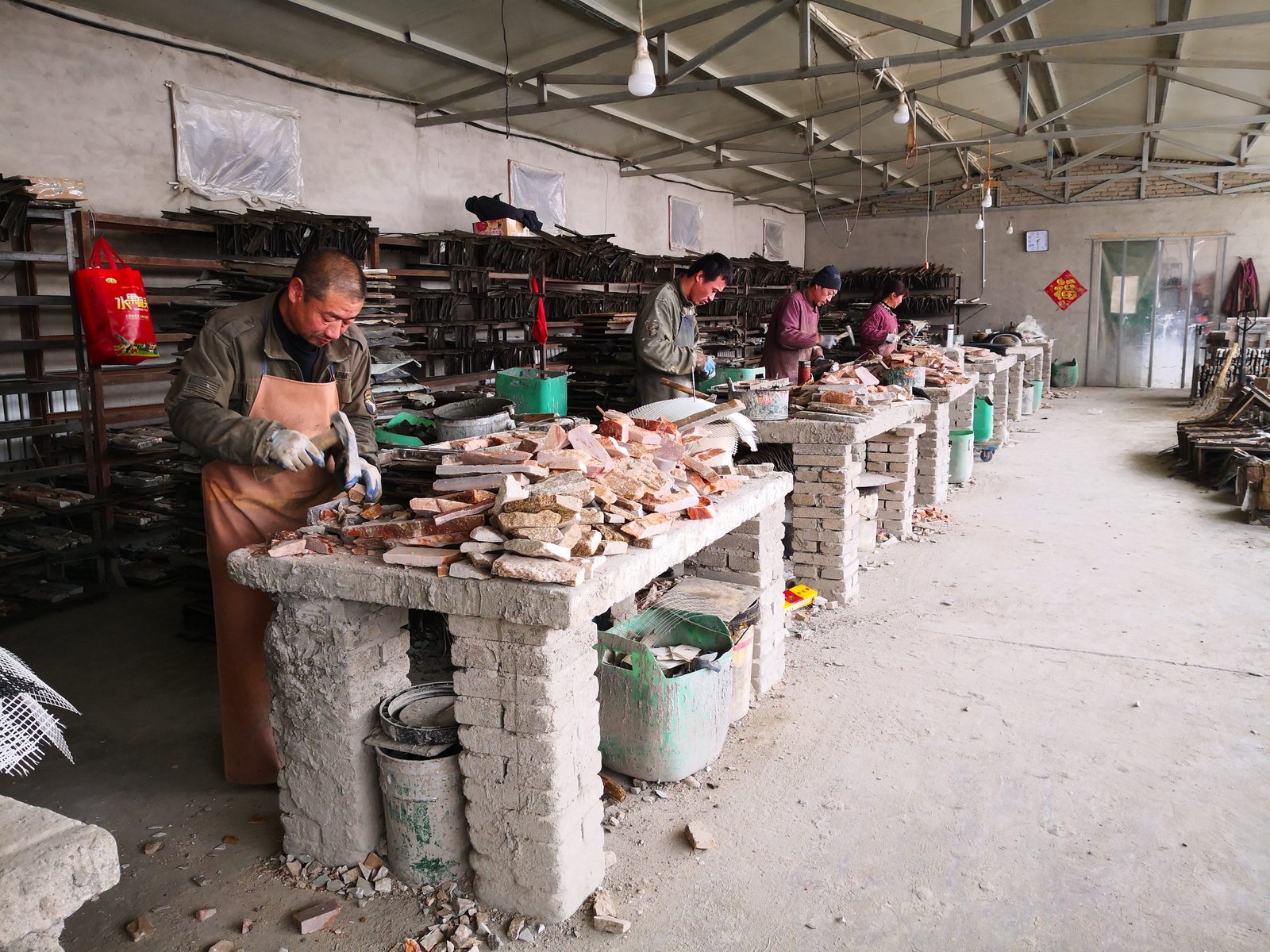
In a factory setting, the epoxy is dispensed onto the back of a split-face stone sheet and pressed against the backing material — cement board, metal mesh, or a fiberglass grid. The two components cross-link during curing, forming a bond that is simultaneously:
- Chemical — the resin penetrates the microscopic pores of the stone surface and the backing substrate, locking at a molecular level
- Mechanical — the cured epoxy fills voids and surface irregularities, creating a large contact area
- Flexible — the bond line retains a small degree of elongation (typically 3–6%) after full cure
That third property — flexibility — is where epoxy separates itself from cement, and it is the reason epoxy-bonded panels survive conditions that crack cement-bonded ones.
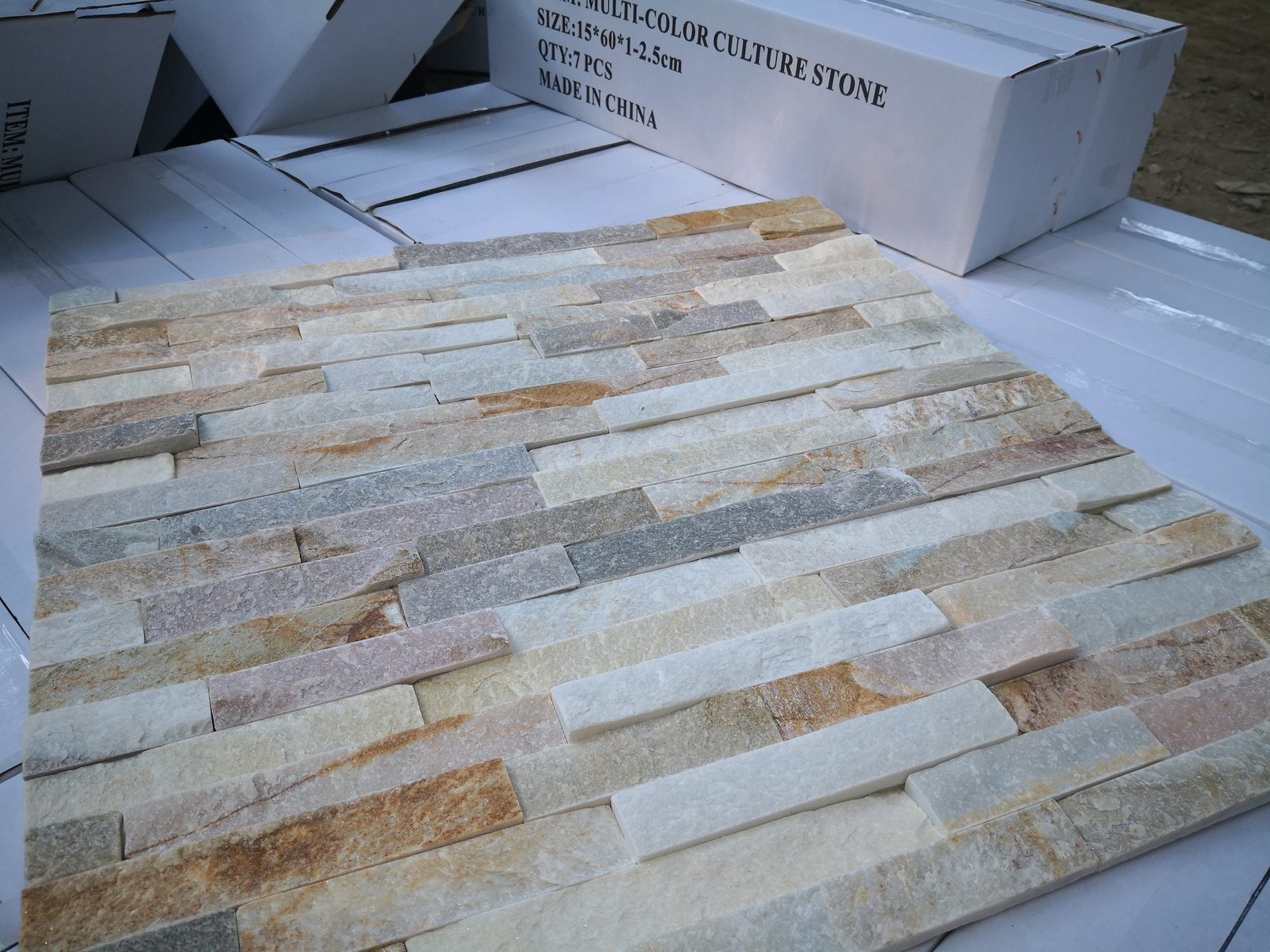
Epoxy vs Cement: Performance Matrix for Stone Panels
The table below summarizes how each adhesive system performs across the metrics that matter most in exterior stone cladding. These are not theoretical values — they reflect field behavior observed across thousands of square meters of installed panels.
| Performance Metric | Marine-Grade Epoxy Bond | Cement-Based Mortar |
|---|---|---|
| Tensile bond strength | 4–8 MPa (depending on stone porosity) | 1–3 MPa |
| Elongation at break | 3–6% | Less than 0.5% |
| Freeze-thaw cycling (100 cycles) | Bond line intact, no delamination | Micro-cracks propagate from cycle 40+ |
| Salt spray exposure | No degradation (marine-rated) | Efflorescence and bond erosion |
| Thermal shock resistance | Absorbs differential expansion | Transfers stress to stone face |
| Water immersion (72-hour soak) | No strength loss | Strength reduction 20–40% |
| Cure time at factory | 4–8 hours (accelerated with heat) | 24–48 hours |
| Weight contribution per m² | ~0.3 kg | ~2–4 kg |
| Cost per m² (adhesive only) | Higher (~2–3× cement) | Lower |
The cost row is the one that gets attention. Epoxy adhesive costs more per square meter than cement mortar. But adhesive is a small fraction of the total panel cost — the stone, the cutting, the QC, the packing, and the shipping dominate the budget. A 2× adhesive premium that eliminates delamination callbacks pays for itself on the first container.
Why Flexibility Matters More Than Raw Strength
Engineers and buyers often fixate on bond strength numbers. Higher MPa must be better, right? In stone panel assembly, it is the elongation — the ability to stretch without breaking — that determines long-term survival.
Here is why. Natural stone and its backing material expand and contract at different rates when temperature changes. Quartzite has a linear thermal expansion coefficient of roughly 6–8 × 10⁻⁶/°C. Cement board expands at about 10–12 × 10⁻⁶/°C. On a wall that swings from -10°C overnight to +30°C in afternoon sun, that 40°C differential creates measurable movement between the two layers.
A rigid cement bond line cannot accommodate that movement. It transfers the differential stress directly into the stone or the bond interface. Over hundreds of daily cycles, micro-cracks form and propagate. The panel does not fall off the wall on day one — it delaminates slowly, starting at the corners and edges, and the failure shows up months or years after installation.
An epoxy bond line with 3–6% elongation absorbs that same movement without cracking. The resin flexes. The stone stays attached. This is the same reason marine epoxy holds boat hulls together through wave impacts that would shatter rigid adhesives.
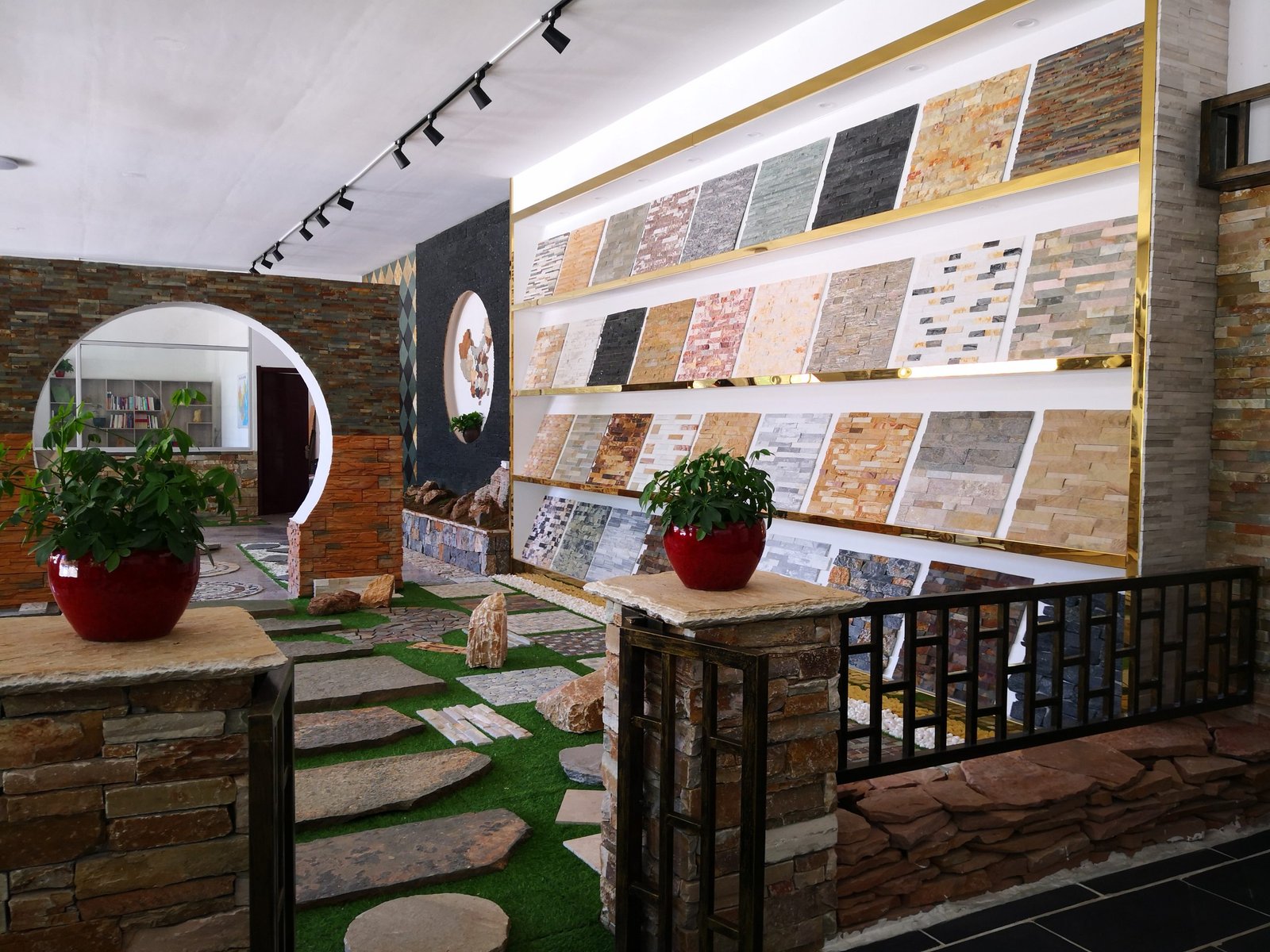
Freeze-Thaw Performance: Where Cement Loses the Argument
Freeze-thaw cycling is the most punishing environment for any bonded stone panel. Water enters the bond line through micro-cracks or porous stone edges. When that water freezes, it expands roughly 9% by volume. In a rigid cement bond, that expansion pressure has nowhere to go — it pushes the stone away from the substrate.
Testing protocols typically run panels through 50–100 freeze-thaw cycles, soaking them in water between each freeze. Epoxy-bonded panels consistently pass 100+ cycles with no measurable bond degradation. Cement-bonded panels typically show the first signs of delamination between cycles 40 and 60, depending on the stone density and the quality of the original cement application.
For buyers sourcing stone panels for projects in Canada, northern US states, Scandinavia, or any region where temperatures cross the freezing point regularly, this is not a marginal concern. It is the difference between a 20-year cladding system and a 5-year one.
Top Stone Panels factories use marine-grade epoxy bond across the full stacked stone and thin ledgestone product lines specifically because these panels ship to cold-climate markets. The freeze-thaw resistance of natural stone only matters if the bond line holding it to the wall survives the same cycles.
Salt Spray and Coastal Exposure
Coastal projects add salt to the equation. Saltwater penetrates cement-based bonds and triggers efflorescence — crystalline deposits that build pressure inside the bond line. Over time, that pressure weakens the cement matrix and the bond separates.
Marine-grade epoxy is, by definition, designed for this. The resin does not absorb water and does not react with dissolved salts. Panels bonded with marine epoxy have been installed on beachfront hotels, harbor-side commercial buildings, and pool surrounds where salt-laden splash is constant. The bond line remains intact because neither water nor salt can reach the adhesive interface in meaningful quantities.
This is not a theoretical advantage. It is the reason boatbuilders stopped using cement-based adhesives below the waterline decades ago. The chemistry transferred cleanly to building materials.
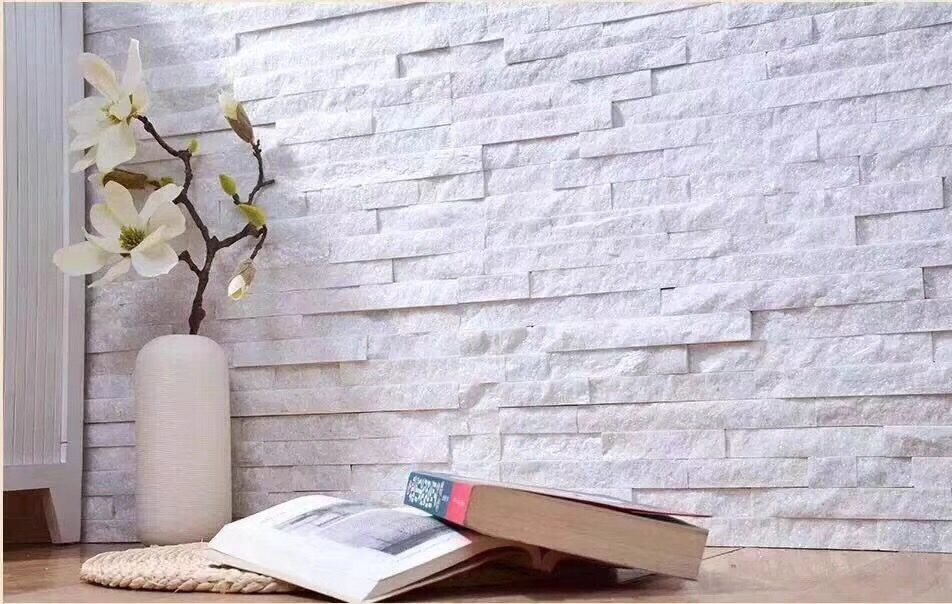
Thermal Shock: The Problem Nobody Talks About
Thermal shock happens when a surface temperature changes faster than the substrate beneath it. A dark stone panel on a west-facing wall can jump from 5°C to 45°C in two hours on a winter morning when the sun hits it. The backing wall — concrete, stud framing, or insulation board — lags behind.
That temperature gap creates immediate stress at the bond line. The stone wants to expand. The backing does not. A rigid cement bond transfers the full force of that differential to the interface. An epoxy bond flexes and absorbs it.
Thermal shock failures are particularly common in desert climates and in buildings with large dark-colored stone facades. The panels that fail are almost always the ones at the top of the wall, where solar gain is greatest and the backing structure is least massive. Epoxy bond eliminates this failure mode for any panel format up to standard stacked stone and ledgestone sizes.
Weight and Installation Speed: The Hidden Advantages
Epoxy-bonded panels are lighter than cement-bonded equivalents. The epoxy layer weighs roughly 0.3 kg per square meter. A cement mortar bed adds 2–4 kg per square meter. On a 200 m² facade, that is a difference of 400–740 kg — meaningful for structural calculations, shipping weight, and installer fatigue.
At the factory, epoxy cures in 4–8 hours (faster with heated pressing), compared to 24–48 hours for cement. That cuts production cycle time and allows the factory to turn orders faster. For B2B buyers ordering by the container, shorter production cycles mean shorter lead times. A well-planned import timeline depends on production speed as much as shipping schedules.
On site, the lighter panels are easier to handle, especially on upper floors and scaffolding. Installers can work faster with less physical strain, and the reduced weight lowers the load on mechanical fixings — a secondary benefit that compounds the primary bond advantage.
When Cement Backing Is the Right Choice
Cement is not the wrong answer in every scenario. It is the right answer for specific applications, and buyers should understand when:
- Large-format interlocking panels — Z-panel systems (typically 20×55 cm or 15.2×61 cm) often use cement backing because the panel format is large enough that the weight difference per unit is manageable, and the interlocking connection provides additional mechanical support. See our Z-panel installation guide for the details.
- Interior and sheltered walls — When the wall will never see rain, freeze-thaw, or salt spray, cement performs perfectly well at lower cost. Feature walls in lobbies, fireplaces in climate-controlled rooms, and retail displays are all cement-friendly applications.
- Thick-bed applications — Where the stone is set into a thick mortar bed on a concrete or masonry substrate (traditional stone masonry), cement-based bonding is the standard method and works as intended.
The mistake happens when cement-bonded panels are specified for exterior walls in demanding climates because the buyer did not realize the adhesive system was different. Always confirm the bond type before ordering, especially for projects in freeze-thaw or coastal zones.
How to Verify the Epoxy Specification in a Supplier Quote
Not every factory that says “epoxy bond” uses marine-grade resin. Some use standard construction epoxy, which has lower elongation and a narrower temperature service range. Here is how to verify what you are actually getting:
- Request the adhesive TDS — The Technical Data Sheet should name the product, the manufacturer, the mixing ratio, and the cured properties. Look for elongation at break (minimum 3% for exterior use) and service temperature range (minimum -30°C to +80°C).
- Ask for a peel-test report — Reputable factories run peel tests as part of their 3-step quality control process. The report should show the bond strength and the failure mode (adhesive failure vs cohesive failure — cohesive means the bond is stronger than the stone).
- Check the MSDS/SDS — The Safety Data Sheet confirms the chemical composition. Marine-grade epoxy is typically a bisphenol-A or bisphenol-F resin with an amine hardener.
- Request an aged sample — Ask the factory to send a panel sample that has been through accelerated aging (heat, moisture, freeze-thaw) and inspect the bond line yourself. Pull the backing — if the stone separates cleanly from the epoxy, the bond was weak. If the stone breaks before the bond, the adhesive did its job.
This verification process takes a few days and prevents container-sized mistakes. For a complete checklist on evaluating samples, see our stone panel sample evaluation guide.
Common Mistakes Buyers Make with Bond Specification
Three errors show up repeatedly in container orders:
Mistake 1: Assuming all “epoxy” is the same. Construction-grade epoxy has 1–2% elongation and a service range of -10°C to +60°C. Marine-grade epoxy has 3–6% elongation and covers -30°C to +80°C. The difference matters in every climate outside the tropics.
Mistake 2: Specifying cement-backed panels for exterior use because the price was lower. The savings on the adhesive line (typically $0.50–$1.00 per m²) vanish the first time a panel delaminates on site and needs replacement. Factor in the shipping cost of a replacement panel from China and the savings become a loss.
Mistake 3: Not checking bond compatibility with the substrate. Some epoxy formulations bond poorly to certain metal meshes or fiberglass grids. The factory should be testing bond strength on the exact backing material used in production, not a generic test substrate.
What Bond Failure Looks Like in the Field
Understanding failure modes helps buyers and installers recognize problems early, before they become safety issues or expensive remediation jobs.
Edge delamination is the most common first sign. The bond line at the panel perimeter separates, creating a visible gap or a hollow sound when tapped. This happens because edges experience the greatest thermal differential — they are exposed on two sides instead of one. Epoxy-bonded panels resist edge delamination because the flexible bond absorbs the higher stress concentration at the perimeter.
Corner lifting follows edge delamination if left untreated. Once the edge bond separates, wind and rain enter the gap and accelerate failure along the full panel length. This is why pre-made L-corner pieces are a critical complement to the bond system — they eliminate the field-mitered joint that is often the first point of bond failure on a standard flat panel installation.
Map cracking appears as a network of fine cracks across the stone face. It is not a stone defect — it is the signature of a rigid bond line transferring cyclic stress into the stone. The stone cracks because the cement bond will not flex. Epoxy-bonded panels almost never show map cracking because the stress is absorbed by the bond line, not transferred to the stone.
If any of these signs appear within the first year of installation, the adhesive specification should be investigated. In most cases, the panels were ordered with cement bonding for an exterior application that required epoxy.

Specifying Epoxy Bond Across Product Lines
Not every product line in a stone panel factory uses the same bond system. Here is how the adhesive choice typically maps across the major product categories:
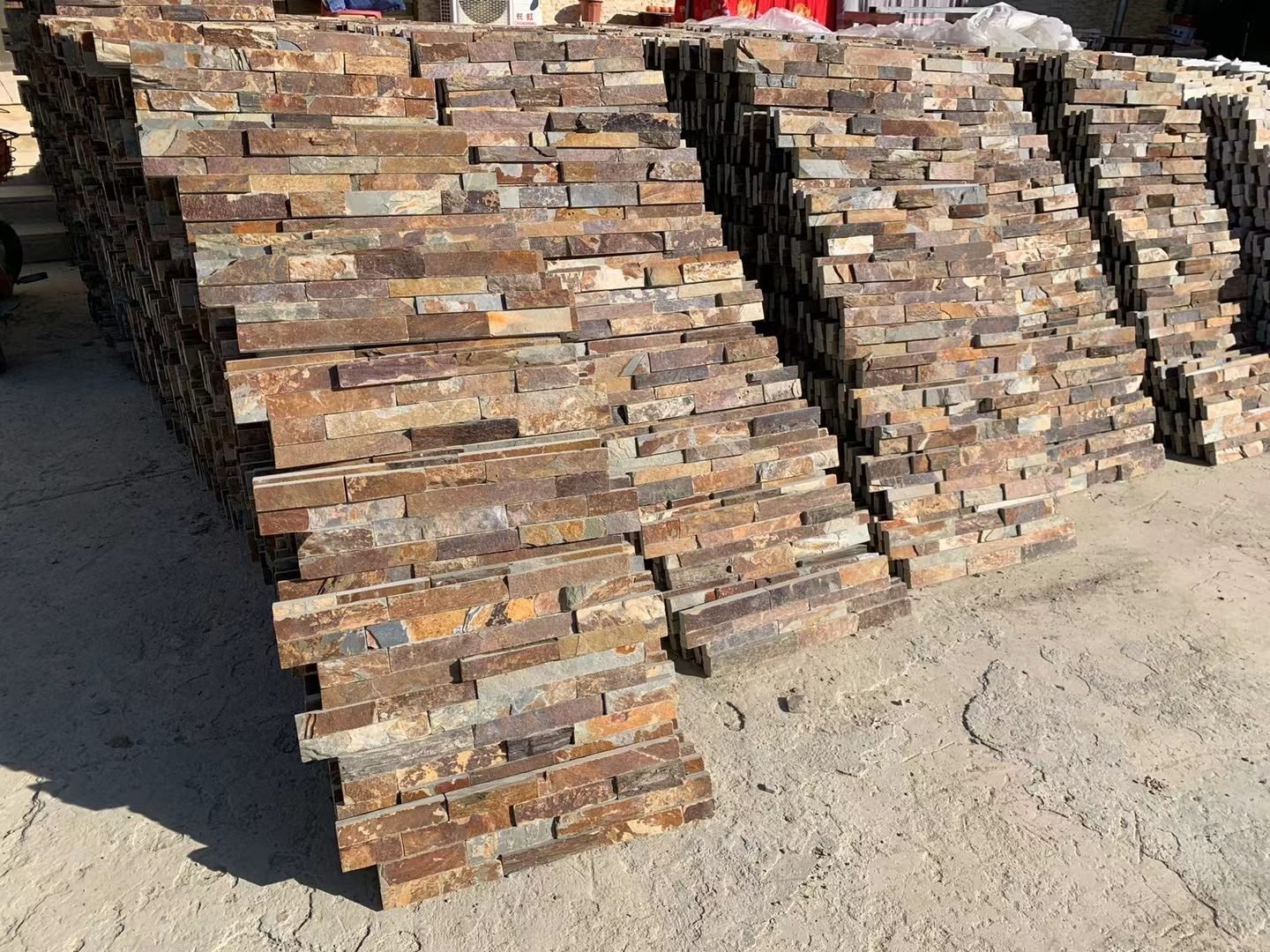
- Stacked stone panels (15×60 cm, 15×55 cm) — Marine-grade epoxy bond is standard for all exterior-rated production. The panel format is small enough that the epoxy cost per unit stays low, and the bond performance is critical for the split-face texture that defines the product.
- Thin ledgestone panels (36×10 cm) — Epoxy bond is standard. The ultra-thin format (typically 10–15 mm stone thickness) leaves no room for a thick cement bed, and the high surface-area-to-weight ratio makes the chemical bond of epoxy particularly effective.
- Z-panels and stone cladding (20×55 cm, 15.2×61 cm) — Cement backing is standard for these larger-format interlocking panels. The panel weight and the male-female connection system provide mechanical support that reduces reliance on the adhesive bond alone.
- Stone columns — Epoxy bond is used for the individual stone sheets that wrap the column form. The curved application and the multi-directional stress on a column make the flexible bond essential.
When ordering a mixed container — and most B2B buyers do — confirm the bond type for each product line separately. A mixed container order that includes both stacked stone and Z-panels will ship with two different bond systems in the same shipment, and the packing list should reflect that.
Frequently Asked Questions
What is marine-grade epoxy bond in stone panel assembly?
Marine-grade epoxy bond is a two-part resin adhesive originally formulated for boatbuilding that stone panel factories use to laminate split-face stone to a backing substrate. It cures to a flexible, waterproof bond that resists temperature cycling from -30°C to +50°C, salt spray, and alkaline conditions — environments where standard cement-based adhesives crack or delaminate.
Why does epoxy bond outperform cement in exterior stone panels?
Epoxy bond outperforms cement because it stays slightly flexible after curing, absorbing the thermal expansion difference between stone and the backing material. Cement hardens rigid and transfers stress directly to the stone, causing micro-cracks over freeze-thaw cycles. Epoxy also bonds chemically to both surfaces rather than relying on mechanical grip alone, which gives it higher tensile and shear strength under cyclic loading.
When should I choose cement backing over epoxy for stone panels?
Cement backing works well for large-format panels installed on interior or sheltered walls where temperature swings stay mild. It also serves as a structural base for interlocking Z-panel systems on commercial facades. For exterior walls in freeze-thaw climates, coastal zones, or any surface that sees direct rain and sun, epoxy bond is the safer specification.
How do I verify that a stone panel uses genuine marine-grade epoxy?
Ask the supplier for the adhesive technical data sheet showing the product name, manufacturer, tensile strength at break, elongation percentage, and temperature service range. Marine-grade epoxy typically shows elongation above 3% and a service range covering -30°C to +80°C. Request a peel-test photo or video from the factory QC report showing the bond line intact after accelerated aging.
Does epoxy bond affect the fire rating of stone panels?
The stone face itself carries the fire rating — natural slate and quartzite are Class A1 non-combustible. The epoxy bond sits behind the stone and is encapsulated by the backing material, so it does not change the surface fire classification. For code compliance, confirm that the complete panel assembly has been tested to the relevant standard for your jurisdiction.
Bottom Line for Specifiers and Buyers
The bond line is the most stressed component in any stone panel assembly, and it is the one buyers inspect least. Marine-grade epoxy bond costs more per square meter than cement, but it is the only adhesive system that reliably survives freeze-thaw cycling, salt spray exposure, and thermal shock across the full service life of an exterior cladding installation.
For interior walls, sheltered facades, and large-format interlocking panels, cement backing remains a sound and cost-effective choice. For everything else — particularly in cold climates, coastal zones, and high-solar-exposure orientations — epoxy bond is the specification that prevents callbacks.
Verify the adhesive TDS before placing the order. Check elongation, service temperature, and peel-test results. A factory audit that includes bond-line inspection is the most reliable way to confirm what is actually going into your panels.