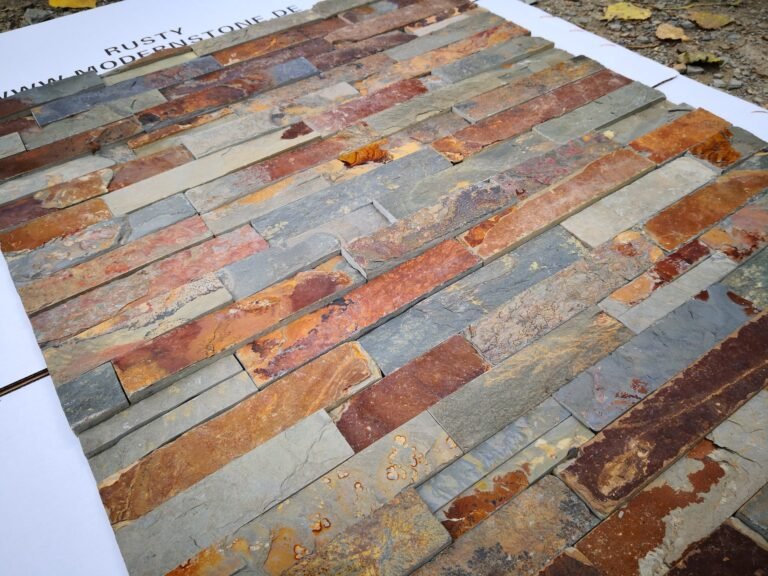
A factory that ships 220+ containers a year does not have a capacity problem. It has a consistency problem. Any plant can run a single container of stacked stone panels and hand-pick every piece. The real test is whether the fiftieth container in a rolling order looks like the first — same thickness, same vein color, same bond line, same corner fit.
Large-volume stone panel orders fail in predictable places. Color drifts halfway through a production run. Thickness tolerance widens when the cutting line speeds up to hit a sailing date. QC sampling thins out at exactly the moment it should thicken. None of these are mysteries; they are the known failure modes of scale, and a serious factory designs against them. Performance test methods referenced below follow ASTM International standards, and paving-format guidance follows Concrete Masonry & Hardscapes Association practice.
This guide breaks down how a quarry-direct operation actually handles volume: the capacity numbers by product line, where the true bottleneck sits, how the 3-step QC system adapts when the order climbs from one container to ten, and what you should verify in writing before you commit real capital to a multi-container buy.
What Large-Volume Really Means in Stone Panels
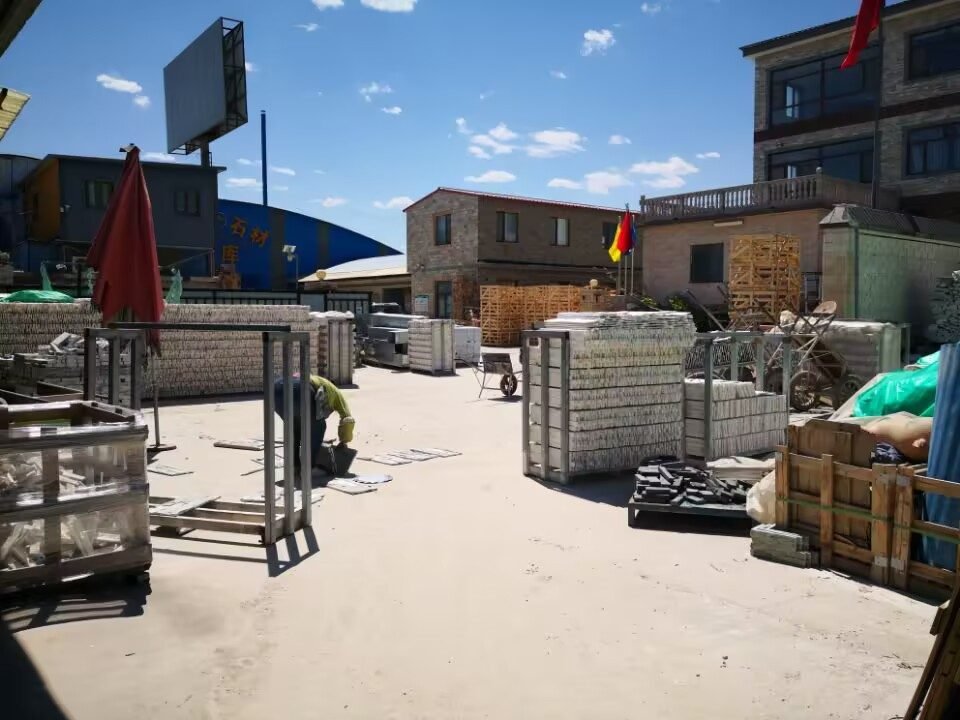
“Large volume” is relative, and the stone trade has its own scale. Every product line at Top Stone Panels carries a minimum order quantity of one 20GP container. A single distributor order might be one container of a single format. A developer cladding a housing project might order six containers split across three product lines. A national building-material chain placing a rolling annual program might take twenty or more containers across a year.
The factory’s stated annual throughput is 220+ containers, which works out to roughly eighteen containers leaving the yard every month, every month, without a slow season. That figure matters more than any single capacity claim because it proves the operation runs at volume as a normal state, not as an occasional sprint. A plant that ships eighteen containers a month has already solved the scheduling, packing, and QC problems that break a factory on its third big order.
Volume also changes what “quality” means. On a small run, an inspector can reject any panel that looks slightly off. On a 40,000 m² run, quality is a statistical property — a thickness tolerance held across thousands of panels, a color band that stays inside an agreed range, a breakage rate that stays near zero through ocean transit. The systems below exist to keep those numbers stable when the quantity is anything but.
Production Capacity by Product Line
Capacity is never a single number. It differs by product line because each format runs on different equipment at a different speed. Thin ledgestone moves faster per square meter than a heavy Z-panel; columns are counted in sets, not meters. The figures below are representative monthly capacity across the six lines, drawn from the factory’s published production data and shared as a planning baseline rather than a guaranteed ceiling.
| Product Line | Standard Format | Monthly Capacity | MOQ |
|---|---|---|---|
| Stacked Stone Panels | 15×60 cm / 15×55 cm + L-corners | 80,000 m² | 1×20GP |
| Thin Ledgestone | 36×10 cm ultra-thin | 60,000 m² | 1×20GP |
| Z-Panels / Stone Cladding | 20×55 cm / 15.2×61 cm | 50,000 m² | 1×20GP |
| Thin Stone Veneer | random split-face loose stone | 40,000 m² | 1×20GP |
| Flagstone & Crazy Paving | mesh-backed random slabs | 30,000 m² | 1×20GP |
| Stacked Stone Columns | custom sections 40×40 / 50×50 cm | 10,000 sets | 1×20GP |
Add the five panel lines together and combined capacity is on the order of 260,000 m² per month, with column kits running on a separate track. That is a planning baseline, not the committed load — a healthy factory keeps headroom so a rush order does not push out the customers already in the queue. When you request a production slot, ask which line your order runs on and how much of that line’s monthly capacity your order consumes. An order that eats ninety percent of a single line’s month is a scheduling risk for both parties.
The capacity figure also tells you whether a mixed container is realistic. Because each line runs independently, a factory with this spread can build a mixed container across several product types without halting any one line. A smaller plant with a single line cannot, and will push you toward a full container of one format.
Quarry Control Is What Makes Scale Possible
Capacity numbers mean nothing if the raw stone runs out or changes color mid-order. This is where quarry ownership separates a manufacturer from a trading company. Top Stone Panels draws slate and quartzite from its own quarry source in Yi County, Hebei — the heart of China’s slate and cultured-stone region — with eighteen years of extraction behind it.
Owning the source does two things for a large order. First, it guarantees supply continuity: the factory is not competing on the open block market, where a single big buyer can absorb the available material and leave everyone else short. Second, it enables batch-specific vein selection — the practice of pulling all the stone for one order from a consistent section of the quarry face so the color and veining stay uniform from the first pallet to the last.
Vein selection is the single most important defense against color drift, and color drift is the most common complaint on large natural-stone orders. Two containers from different quarry faces can look like two different products under the same SKU. The batch color consistency process explains how factories map and segregate vein material; at volume, that discipline is what keeps a 40,000 m² run visually coherent.

The Real Bottleneck Is Cutting, Not Stone
Buyers assume the constraint on a big order is raw material. It almost never is. The pace of production is set by two downstream stages: precision cutting and hand assembly.
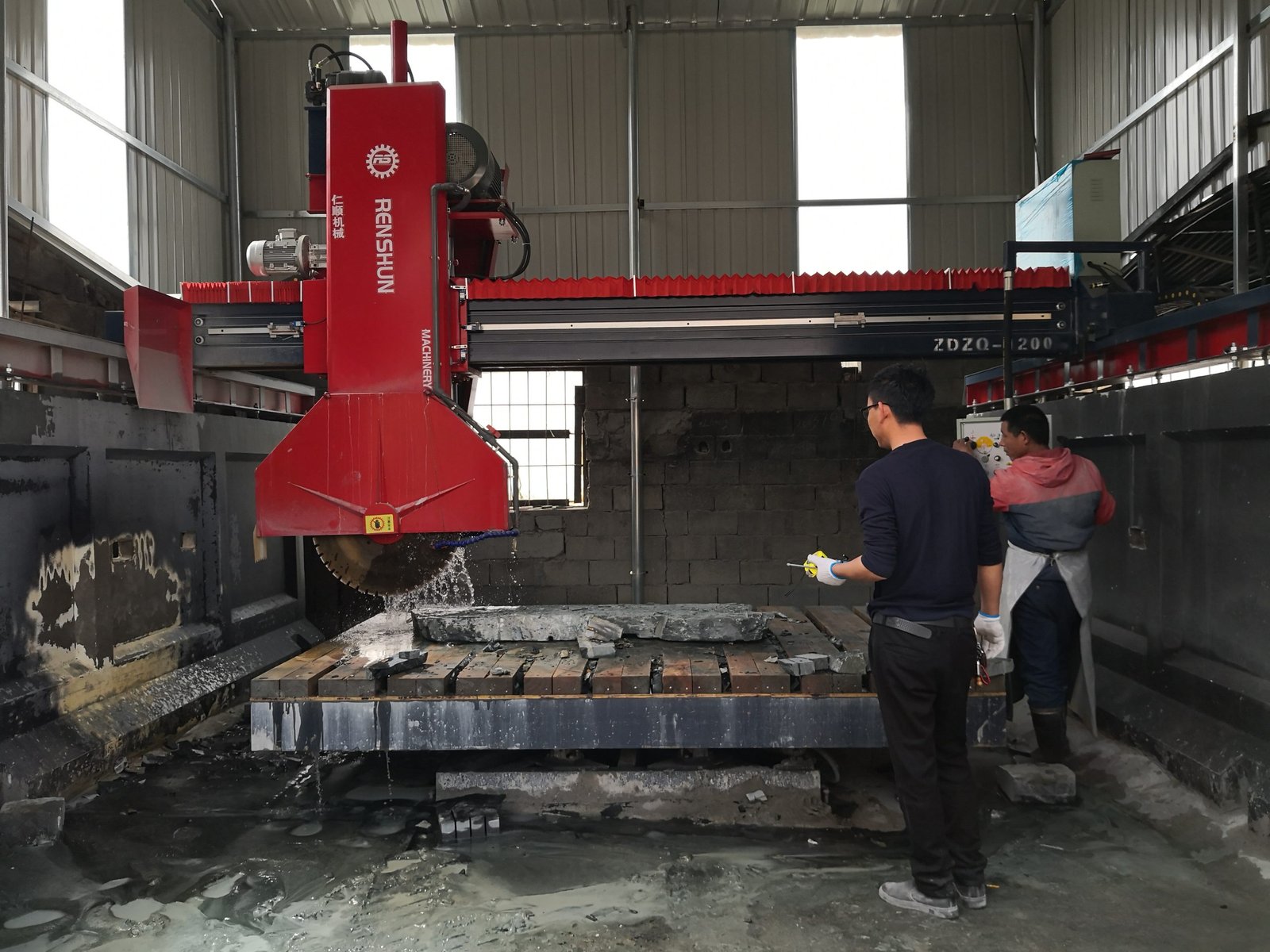
Every panel edge is cut on infrared-guided CNC diamond blades. Infrared cutting keeps dimensions exact and reduces on-site waste by around twenty percent, which is why contractors specify it — but it is also a rate-limiter. A diamond blade cuts at a fixed speed, and each machine can only run so many linear meters per shift. When three large orders land in the same month, they queue for cutting time, not for stone.
Assembly is the second constraint and the one buyers overlook. Split-face panels are laid by hand — workers set the stone pieces, align the texture, and bond them to the backing. This is skilled, physical work that does not speed up proportionally with headcount. You can add benches, but you cannot compress the curing time of a marine-grade epoxy bond, which needs hours to set before a panel can be handled and packed.
The practical consequence: a factory with a huge quarry but a small cutting and assembly floor will still miss your deadline. When you evaluate capacity, ask how many cutting lines and assembly benches run per shift, and whether your order will share them with other production. The infrared CNC cutting process is worth understanding before you ask, because the answer tells you a great deal about how the plant is built.
Scaling QC Without Losing Consistency
Quality control at volume is a different discipline from QC on a sample. The factory runs a 3-step system — raw-material selection, in-process re-inspection, and pre-shipment final inspection — and each step changes character as the order grows.
| QC Step | What Is Checked | How It Adapts at Volume |
|---|---|---|
| 1. Raw-material selection | Vein color, density, hidden fractures at the block | Batch-specific vein selection locks one quarry face to the whole order |
| 2. In-process re-inspection | Thickness tolerance, cut quality, bond-line integrity | Sampled per pallet as line speed rises, with caliper checks at set intervals |
| 3. Pre-shipment final inspection | Flatness, color match, packing integrity | Full-container review plus a loading video before the balance is paid |
Step one is preventive. By the time stone is cut, color corrections are impossible, so the raw selection stage does the heaviest lifting — rejecting fractured blocks and segregating vein material before it ever reaches the line. Step two catches process drift: a blade that has worn past tolerance, a bond line applied too thin, a panel that has warped during curing. At volume this becomes statistical sampling rather than one-hundred-percent inspection, which is exactly why the sampling interval has to be fixed in writing.
Step three is the last gate and the buyer’s best protection. A full-container review before sealing, documented with high-resolution layout photos and a loading video, lets you confirm the order matches the approved sample. The balance payment is structured to clear only after this inspection — thirty percent deposit up front, seventy percent against the pre-shipment evidence. The 3-step quality control process covers each gate in detail; at scale, the difference is documentation, not diligence.
Holding Thickness Tolerance and Color Across the Run
Two specifications break first when volume climbs: thickness tolerance and color band. Both are measurable, and both should be pinned down in the purchase specification before production starts.
Thickness tolerance matters because panels of uneven depth do not sit flat on the wall — the installer either shims every high spot or the finished surface reads as wavy. On a small run, an inspector pulls the odd thin panel. On a 40,000 m² run, a worn cutting blade can push an entire pallet out of tolerance before anyone notices, which is why the in-process caliper checks run at set intervals rather than at the end. Natural stone also carries inherent thickness variation by format — ultra-thin ledgestone sits around 0.7–1.2 cm, while standard stacked stone runs thicker — so the tolerance you agree has to match the product.
Color band is the subtler of the two. Natural slate and quartzite vary by geology, not by dye lot, so “consistent color” means “inside an agreed range,” never “identical.” Batch-specific vein selection keeps that range tight. If your project spans multiple containers ordered months apart, say so up front: the factory can reserve vein material or note the batch so a reorder matches the original run rather than pulling from a fresh quarry face.
These are the two numbers a specifier should write into the contract. The purchase specification template shows where tolerance and color band belong; the ASTM test standards define how thickness and physical properties are measured if you want third-party backing.
How a Large Order Is Scheduled
Lead time is the number buyers quote at each other, and it is usually quoted wrong because it collapses several distinct stages into one. Here is how the timeline actually breaks down.
| Stage | Standard Lead Time | What Drives It |
|---|---|---|
| Sample production | 1–3 days | Physical samples couriered for lab testing |
| Bulk production (repeat order) | 20–25 working days | Cutting and assembly slot after deposit clears |
| First order | 25–30 days | Custom carton and color-box setup added |
| Pre-shipment inspection + docs | Before balance payment | Loading video, COO, ISPM 15 as required |
Read the table against your own calendar and the risk becomes obvious. The twenty to twenty-five working days is production only. Add ocean transit from Tianjin Xingang, port handling, and inland delivery, and a container ordered today is on a job site in seven to ten weeks. A first order adds setup time. None of this is negotiable by paying more, because the constraint is cutting-line time and curing, not effort.
For a multi-container program, the scheduling question is whether the factory will hold your production slot across the whole run or release capacity between shipments. A rolling order of ten containers should be planned as a sequence with reserved slots, not as ten separate purchases that each re-enter the queue. The import lead-time and scheduling guide walks through how to build that timeline backwards from your delivery date.
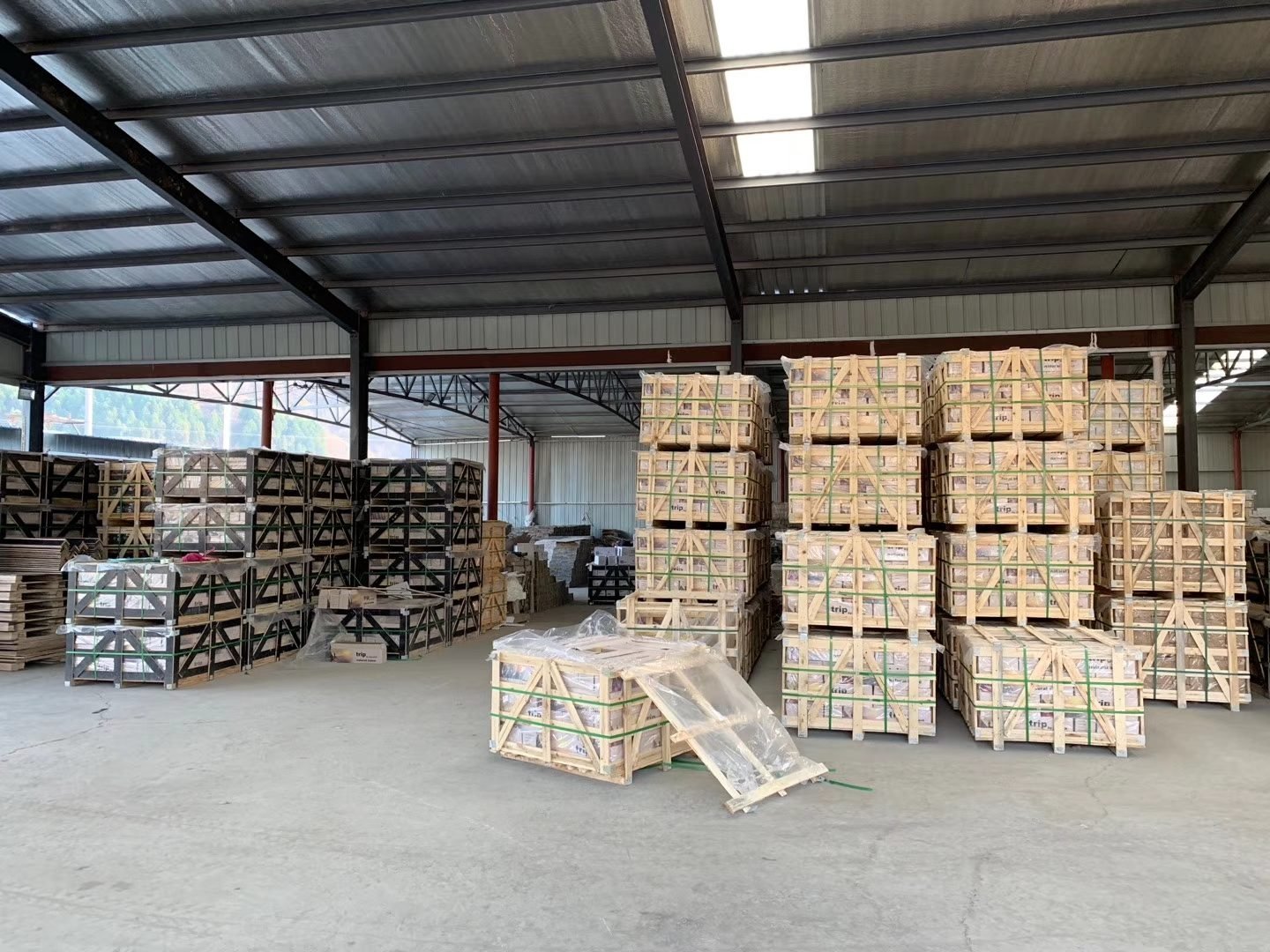
Zero-Breakage Packing for 220+ Containers
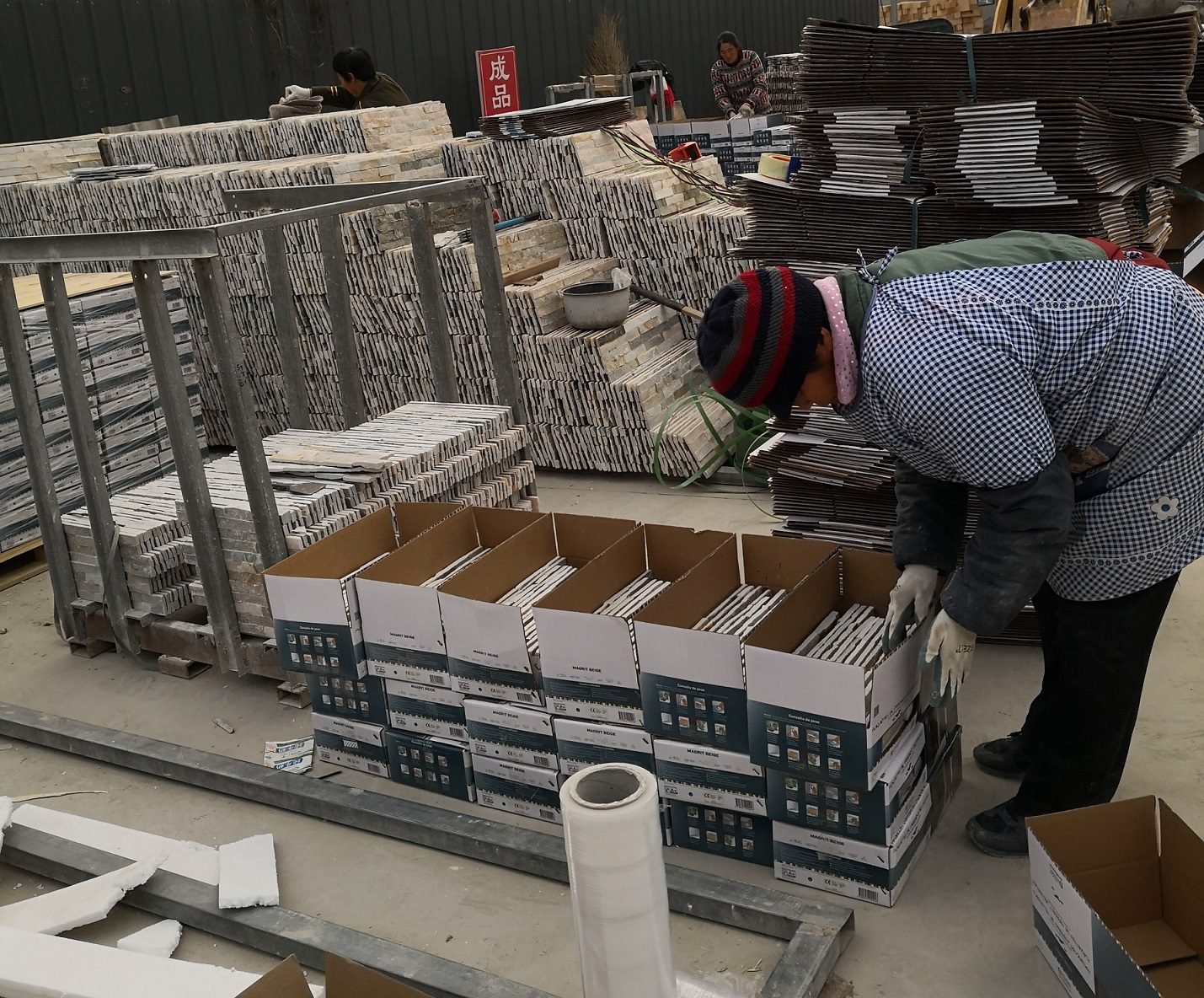
Stone is heavy, brittle, and shipped across an ocean. At volume, packing is not an afterthought — it is a discipline, and the breakage rate is a number a distributor should ask for directly. The factory runs a Zero-Breakage Packaging Protocol that ships 220+ containers a year, which means the method is proven at exactly the scale you are buying at.
The protocol has four layers. Panels go into three-to-five-layer hardened corrugated cartons. Cartons are stacked on fumigation-free solid wood or plywood pallets — fumigation-free because export pallets must clear ISPM 15 without a treatment delay. Four to six high-tensile steel straps bind each load. Inside the container, industrial airbags fill the voids so nothing shifts in transit. A loaded container carries roughly 26.5 tons, and at that weight a shifting pallet does not just damage itself — it damages everything around it.
This is where a large order tests the packing line hardest. A single container can be packed carefully by hand. Twenty containers in a month require the packing process to be repeatable, fast, and identical every time. Ask for the breakage rate and ask to see the loading video before your balance payment — both are standard here. The container loading and packaging guide breaks down the full protocol and what a loading video should show.
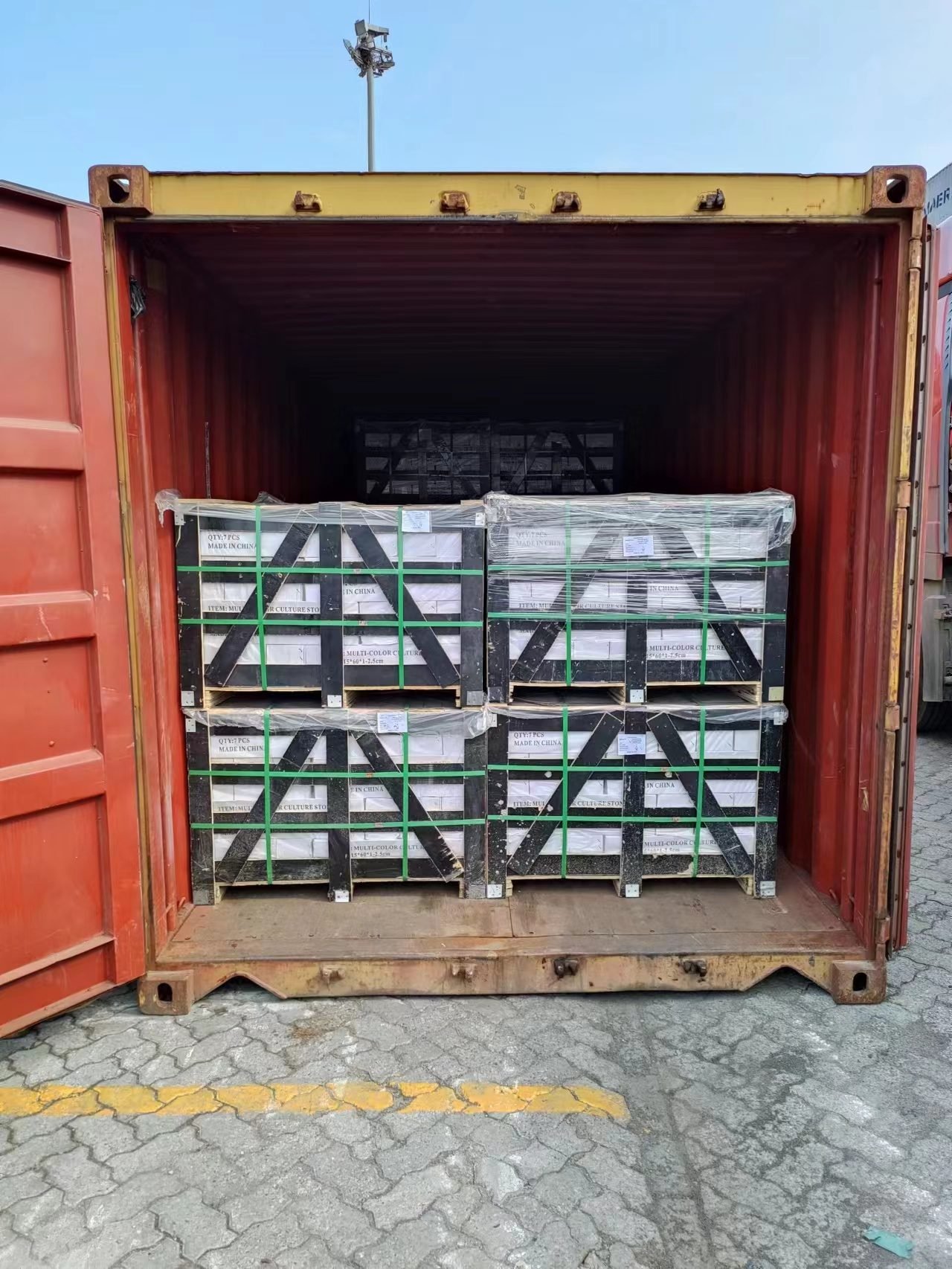
What Goes Wrong at Volume, and the Preventive Fix
Every large-order failure maps to a specific gap, and each gap has a known countermeasure. Naming them is more useful than promising they never happen.
Color drift mid-order. The first three containers match the sample; the fourth pulls from a different quarry face and reads warmer. Fix: batch-specific vein selection agreed before production, with the batch noted on the paperwork so reorders trace back to the same material.
Capacity overcommit. A factory takes your order to win the business, then quietly slots it behind larger customers. Your twenty-five-day production window stretches to forty. Fix: a written production slot, a deposit that reserves it, and a pre-shipment inspection date you can hold them to.
QC sampling gaps. Under deadline pressure, the in-process checks get skipped on the pallets loaded last before a vessel cutoff. Fix: agree the sampling interval in the specification and require the inspection evidence — photos, caliper readings, the loading video — before the balance clears.
Transit breakage on the last container. The packing line rushes the final load and skips the airbags. Fix: the loading video, reviewed before payment. It takes five minutes and catches exactly this.
None of these are reasons to avoid a large order. They are reasons to put the controls in writing. A factory that runs 220+ containers a year has seen all four and should have no reluctance to commit to the countermeasures.
How Buyers Should Verify Capacity Before Committing
Verification is cheap before an order and expensive after. Run these checks against any factory you are about to trust with a multi-container program.
- Request capacity data by product line. Not one headline number — the monthly m² for the specific line your order runs on. A real manufacturer knows it; a trading company will not.
- Order a physical sample and test it. Samples ship in one to three days. Put it through the sample evaluation checklist, and if your project warrants it, send it to a lab for freeze-thaw and absorption testing.
- Ask for the pre-shipment inspection video. Make it a condition of the balance payment. A factory confident in its packing has no reason to refuse.
- Confirm the QC checkpoints in writing. Sampling interval, thickness tolerance, color band, and the documentation you receive at each of the three steps.
- Run a factory audit. In person or by live video, covering the cutting line, the assembly floor, the packing area, and the quarry source. The supplier verification checklist structures the visit.
Hesitation on any of these is information. A quarry-direct factory with eighteen years of export history and 220+ containers a year should welcome the scrutiny, because the scrutiny is where it wins. The one that deflects is telling you something about how it will handle your order when the volume arrives.
Frequently Asked Questions
What is the monthly production capacity of a stone panel factory?
Capacity varies by product line because each format runs on different equipment. A quarry-direct factory such as Top Stone Panels runs on the order of 260,000 m² per month combined: roughly 80,000 m² of stacked stone, 60,000 m² of thin ledgestone, 50,000 m² of Z-panels and stone cladding, 40,000 m² of thin stone veneer, and 30,000 m² of flagstone and crazy paving, plus around 10,000 column sets. Annual shipment exceeds 220 containers.
How long does a large-volume stone panel order take to produce?
Samples ship in 1–3 days. A repeat bulk order runs 20–25 working days after the deposit clears. A first order takes 25–30 days because the factory sets up custom cartons and color boxes. Pre-shipment inspection and export documents are completed before the balance payment is due.
How do factories keep quality consistent across a big production run?
Through a 3-step QC system: raw-material selection locks one quarry vein per order, in-process re-inspection checks thickness tolerance and bond line as panels come off the line, and pre-shipment final inspection reviews flatness, color match, and packing before the container is sealed. Batch-specific vein selection is what stops color drift mid-order.
What is the bottleneck in large-volume stone panel production?
Cutting and hand assembly, not raw stone. Infrared CNC diamond cutting sets the pace because every panel edge must be dimensionally exact, and split-face panels are still laid by hand. A quarry with ample block supply can still miss a deadline if the cutting lines and assembly benches are already committed to other orders.
How should a buyer verify factory capacity before a multi-container order?
Ask for capacity data by product line, request a pre-shipment inspection video, order a physical sample for lab testing, and confirm the QC checkpoints in writing. A factory audit — in person or by video — should cover the cutting line, the assembly floor, the packing area, and the quarry source. Hesitation on any of these is a warning sign.
Bottom Line for Buyers Planning Volume
Scale is not the hard part of a large stone panel order — consistency at scale is. The factories that handle volume well are the ones that control the quarry, know their true cutting and assembly throughput, run the 3-step QC system with fixed sampling intervals, and pack to a protocol proven across 220+ containers a year. The factories that fail at volume are the ones that quote a capacity number they cannot schedule against.
Before you commit capital to a multi-container program, pin down the specifics:
- Capacity by line, not in total — know how much of your product line’s monthly output your order consumes, and whether the factory keeps headroom.
- Vein selection and tolerance in writing — batch-specific color control and a stated thickness tolerance are the two specs that break first at volume.
- A reserved production slot — twenty to twenty-five working days is production only; plan transit from Xingang on top of it and reserve your slot for a rolling program.
- Inspection evidence before balance payment — the loading video and pre-shipment photos are your last gate, and the 30/70 payment terms exist to give you leverage at exactly that moment.
Get those four commitments in the purchase specification and a large order becomes a routine transaction rather than a gamble. If you are still choosing between suppliers, the factory audit checklist and the pricing negotiation guide are the natural next steps — because capacity you can verify is capacity you can also price against.