Natural stone and porcelain stone-look tiles compete for the same strip of facade, and the surface of each is doing the same thing at arm’s length: it reads as stone. Step within a meter and they separate fast. Porcelain is a manufactured ceramic product, pressed and fired to copy a pattern. Natural stone is a quarried, split, and shaped rock. For a facade specifier the difference is not decoration — it decides weight on the structure, joint design, fire rating, freeze-thaw survival, and what the wall says about a building five years after handover.
This comparison covers the physical numbers behind both materials, the installation realities, and the project conditions that make one a defensible specification over the other. It closes with the which-fits-whom table a specifier can hand to a client without apology. The commercial context is B2B wholesale: the numbers here are the ones distributors and contractors need before they commit a facade budget, drawn from a quarry-direct panel factory with 220+ containers a year of shipping history.
- Porcelain tiles are classified under ISO 13006 / EN 14411; the porcelain (Bla) group holds water absorption at 0.5% or below, which supports exterior use.
- Dense natural stone panels deliver the same exterior envelope – freeze-thaw resistance, UV stability, salt-spray resistance, A-class fire – with a surface depth no print can reproduce.
- Weight is the first engineering number: a thin porcelain tile is roughly 16-40 kg/m², while natural split-face veneer panels run about 40-55 kg/m² depending on stone family.
- Porcelain is repeatable and flat; natural stone is unique per piece with mineral variation, so joint work, sourcing, and color approval follow different disciplines.
- For wholesale buyers, MOQ, sample turnaround, and container economics matter as much as material data: one 20GP container, 1-3 day samples, 20-25 working day production.

- What Each Material Actually Is
- Natural Stone vs Porcelain Tiles: Head-to-Head
- Texture and Surface Depth: The Physical Difference
- Weight, Thickness, and Structural Cost
- Freeze-Thaw, Salt Spray, and Fire Behavior
- Installation and Joint Story
- Sourcing and Wholesale Economics
- Which Should You Specify?
- FAQ
- Conclusion
What Each Material Actually Is
Porcelain tiles begin as crushed clay and minerals, pressed at high pressure in a mold, then fired in a kiln at temperatures above 1,200°C. The porcelain group in the tile standards — ISO 13006 and EN 14411 — defines the body by water absorption at or below 0.5%. The stone look is then printed onto the surface with a repeating pattern. The result is a thin, hard, uniform sheet, typically 8-20mm thick on facades.
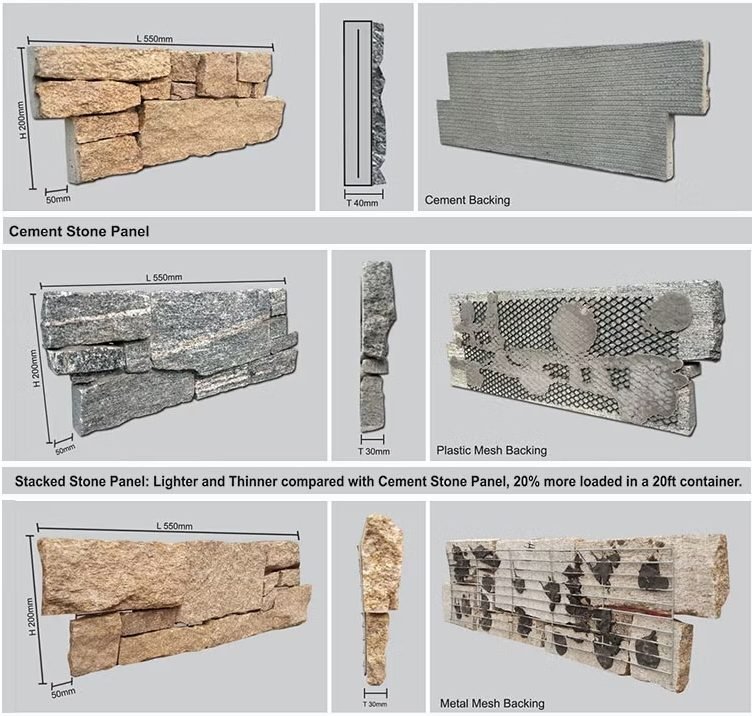
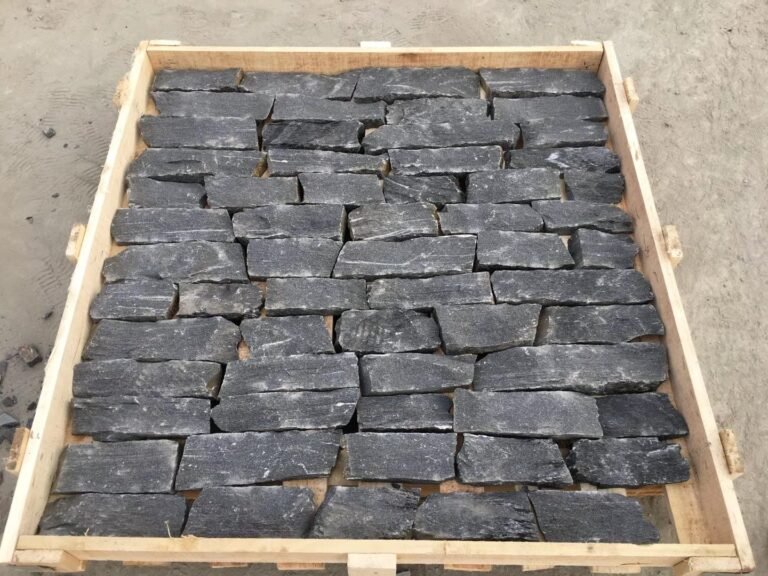
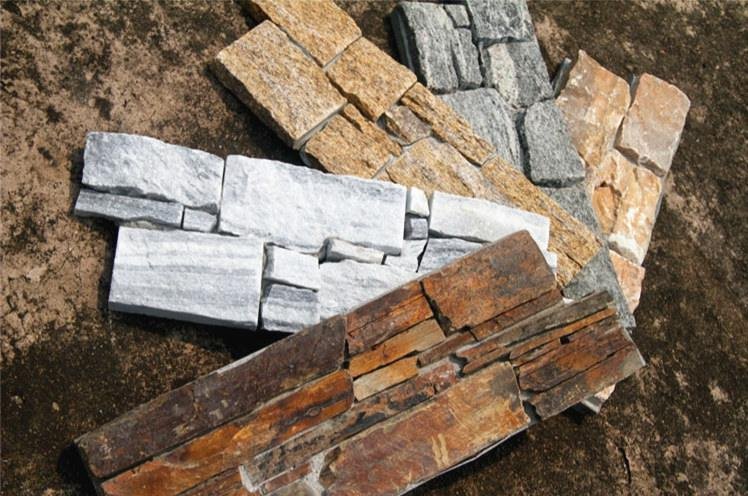
Natural stone cladding is rock: slate, quartzite, sandstone, or other quarried families, split along natural cleavage planes and cut into panels. Nothing is pressed, printed, or fired. A split-face quartzite panel keeps the crystalline structure of the mountain it came from, and no two pieces carry the same color and veining sequence. Panel programs range from ultra-thin ledger strips around 15mm to standard stacked panels up to 40mm, and the stone veneer thickness guide breaks out the range in detail.
The material class difference drives everything below. Porcelain is a factory product with a tolerance sheet and a repeatable image. Natural stone is a natural material with a quarry report and per-block variation. Neither is “better” in a vacuum — each has disciplines a specifier must honor.
Natural Stone vs Porcelain Tiles: Head-to-Head
| Property | Porcelain Stone-Look Tile | Natural Stone Cladding |
|---|---|---|
| Material | Fired pressed clay, printed pattern | Quarried rock, split natural face |
| Water absorption | Porcelain (Bla) group at or below 0.5% | Dense slate and quartzite under ~0.5%; depends on quarry bed |
| Typical thickness | 8-20mm on exterior facades | 15-40mm thin veneer to standard panels |
| Weight per m² | Roughly 16-40 kg depending on thickness | Roughly 40-55 kg for split-face veneer formats |
| Surface variation | Repeating printed pattern; flat even face | One-of-a-kind mineral variation and relief |
| Fire behavior | Non-combustible ceramic body | A-class fire behavior, 100% natural stone |
| Color consistency | Consistent batch to batch by design | Per-block variation; controlled by batch vein selection |
| Origin proof | Factory certificate of product origin | Quarry source, COO, batch traceability |
| Wholesale format | Palletized tile boxes, often mixed SKUs | Panelized or loose veneer, one 20GP container MOQ |
The table summarizes, not settles. The decisive numbers on a given project are weight on the substructure, the joint system, and the client’s tolerance for natural variation. Everything else is negotiable.
Texture and Surface Depth: The Physical Difference
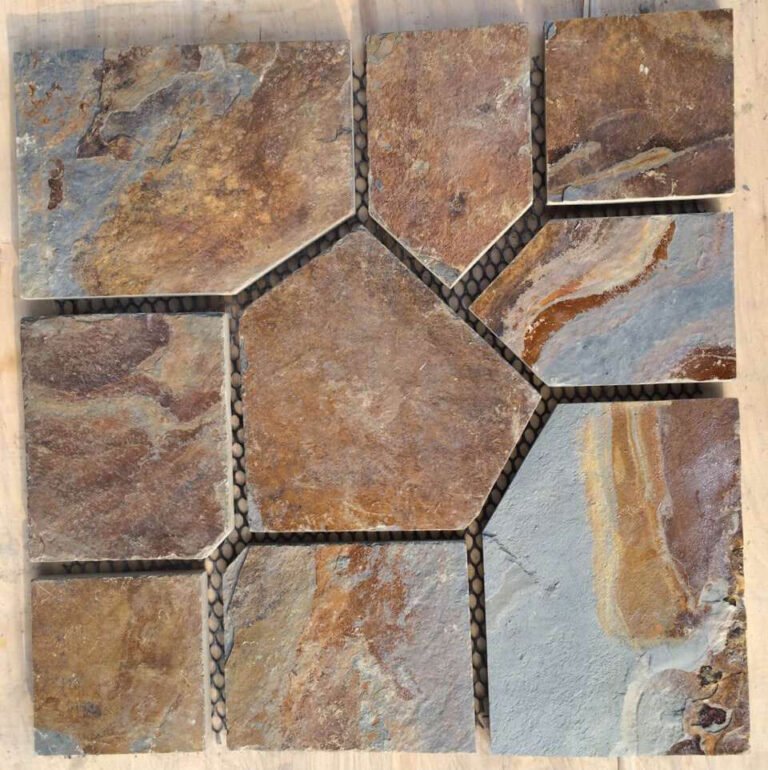
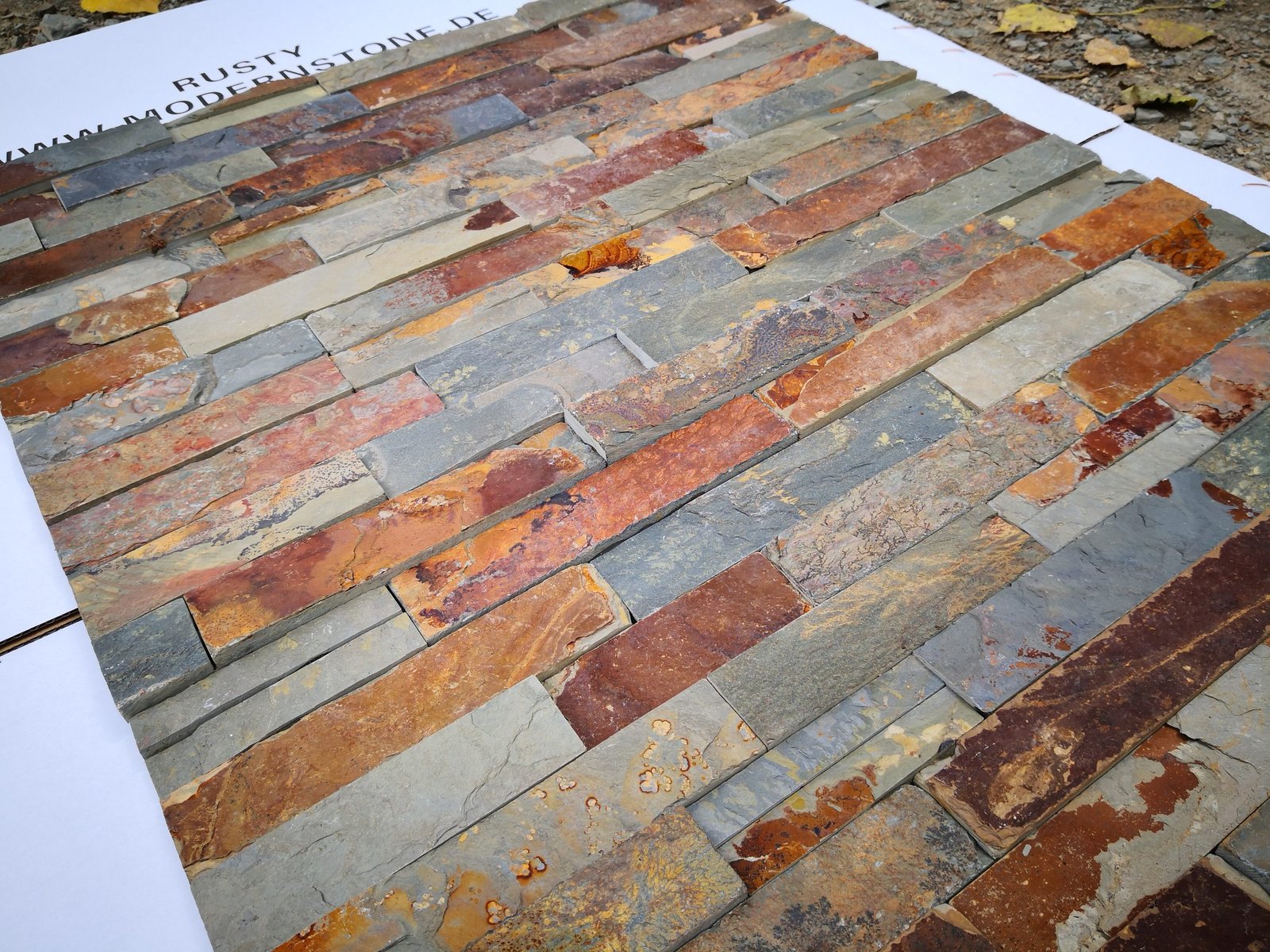
Printing a photograph of stone onto a flat ceramic surface captures color. It does not capture relief. A split-face natural stone panel has a surface that changes as light moves across it: each chip, cleavage plane, and mineral grain catches the sun at a different angle. That is the texture gap no printed pattern closes, and it is why adjacent stone veneer panel types are chosen for depth, not just tone.
The practical consequence is in the shadow line. A flat porcelain tile reflects light evenly across the wall; a split-face stone wall breaks light into thousands of small shadows. On a large facade that difference reads from the street, and it compounds over time. Printed tiles can wear at traffic height, while a dense stone face ages by patina rather than pattern loss.
For distributors this is a specification conversation, not a taste conversation. When a client wants the material-story wall — the entrance, the feature elevation, the building where tactility is the point — natural stone carries an argument porcelain cannot meet with data. When the client wants a flat, uniform, repeatable surface, porcelain is the honest answer and saves the weight.
Weight, Thickness, and Structural Cost
Weight is the first number an engineer asks for. A thin porcelain tile on a facade typically weighs 16-40 kg/m² depending on bed thickness. A split-face natural veneer panel runs roughly 40-55 kg/m² in comparable formats — about double. Thick flagstone or full-bed installations weigh more again; the stone panel weight calculator works the shipping and structural numbers by format.
The weight difference changes three budgets: the substructure, the fixing system, and freight. Lighter porcelain permits lighter framing and mechanical or adhesive fixing on more substrates. Heavier stone demands proper lath, mortar key, and in some cases mechanical anchors — the substrate preparation guide covers the assembly rules. On a high-rise, weight compounds per floor and can decide the frame; on a low-rise villa, the same weight rarely moves the cost of the wall.
The trade-off is not one-directional. Porcelain’s thinness means its structural performance lives in the ceramic body and the fixing; if a tile is damaged, the fix is local replacement with a matching factory batch. Natural stone’s extra mass buys impact resistance and behaves as a veneer skin on a competent substrate, and the panelized programs mean damaged pieces are replaced from the same quarry allocation.
Freeze-Thaw, Salt Spray, and Fire Behavior
Both materials earn a place on exterior walls technically. Exterior-grade porcelain, with absorption at or below 0.5%, survives freeze-thaw cycling when fixed with proper movement joints. Dense natural stone, at comparable absorption values, passes the same freeze-thaw regime for the reason spelled out in the freeze-thaw resistance guide: frost damage tracks absorbed water, not material name. The verification tool is the test report in both cases.
Salt spray is the coastal discriminator. Wind-blown salt crystallizes inside any open pore and pushes material apart from within. Porcelain’s dense fired body handles this well if the tile body is vitrified to the specification. Natural stone handles it when the quarry bed is dense and low-absorption — the documented envelope for Top Stone Panels’ slate and quartzite programs is -30°C to +50°C with salt-spray resistance built into the rating, the same discipline covered in the coastal salt-spray guide.
Fire behavior is a fast answer: porcelain is a fired ceramic and does not fuel a fire; natural stone is A-class, 100% non-combustible rock. The natural stone fire rating page documents why dense slate and quartzite satisfy building-code fire requirements. Neither material is a fire liability; the wall assembly, insulation, and penetrations decide the real fire story.
Installation and Joint Story
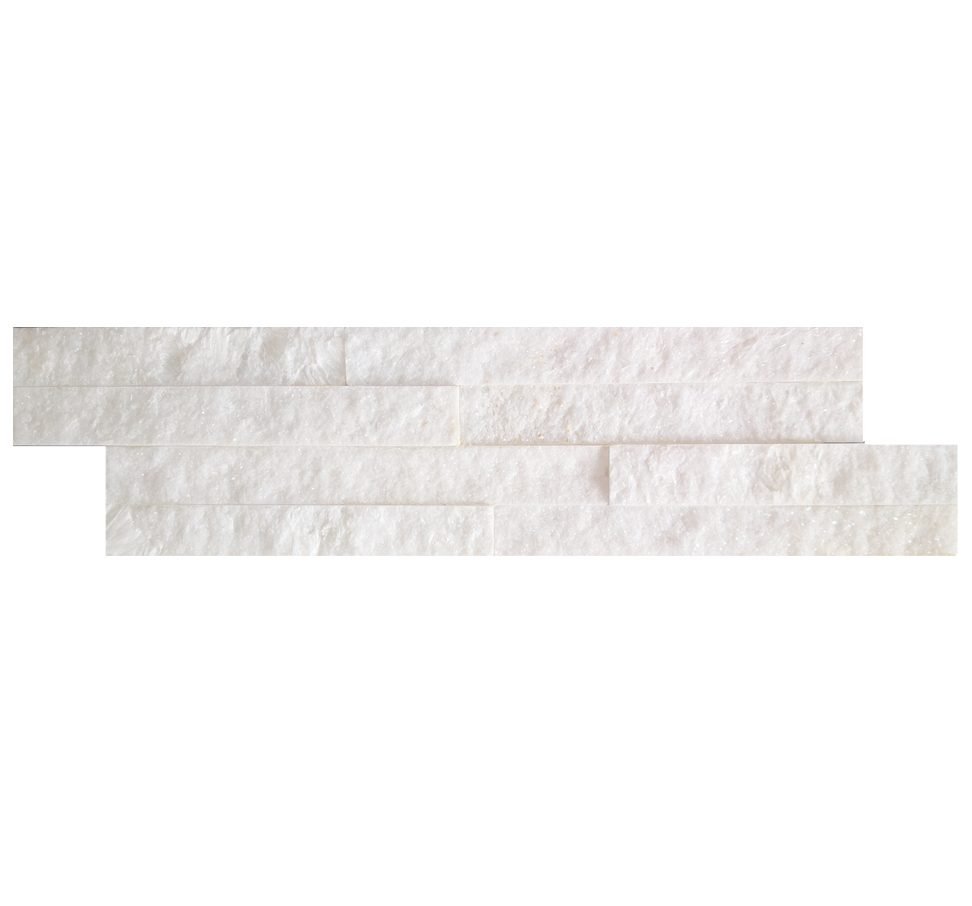
Installation discipline separates the two more than the material does. Porcelain goes up as flat, precise units. Grout lines are thin and uniform by design, and a straight-joint grid is easy to hold because every tile is exactly the same size. Stone veneer plays by looser rules: product is sized in random, linear, or ashlar patterns to short, staggered courses, and installers read the pieces rather than mount a grid. Both systems are well-understood by pros, but they are different trades on the same wall.
Corners and openings draw the line. Porcelain corners want trim profiles or mitered porcelain pieces, a commercial detail but one that introduces an obvious joint at the turn. Stone veneer has a native answer: pre-made L-corner pieces that wrap the corner with staggered joints and no on-site miter — the labor-saving detail covered in the L-corner guide for stacked panels.
For a specifier the real cost is coordination. With porcelain, the design team controls the grid and the pattern sequence from the drawing. With natural stone, the design team controls the color and format direction, then trusts the installer’s dry-lay and the factory’s batch selection to land the look — the same philosophy as the dry-fit layout guide. One is control through precision; the other is control through curation.
Sourcing and Wholesale Economics
Wholesale sourcing is where the two materials stop being equal. Porcelain is manufactured to order in enormous runs; a container buys a large, consistent batch of identical, printed units. Natural stone is quarried and allocated per block, so buyers approve physical samples, work through batch color control, and plan reorders around the same quarry allocation — the process behind batch color consistency.
The operational rhythm at a panel factory is built for this. Samples ship in 1-3 days; a first production order with custom packaging runs 20-25 working days; wholesale MOQ is one 20GP container; and container loading follows the zero-breakage packaging protocol under pre-shipment inspection. Those are the same numbers a tile importer quotes, but the unit economics differ: a stone container is a curated palette of panel products and corners, while a tile container is a repeat count of identical SKUs.
Cost staging is honest about the range. Natural stone spans cheap dense workhorses to premium exotic material, so a fair comparison pits a workhorse slate or quartzite panel program against premium porcelain, not against bargain tile. When freight, substructure, and install are added, the gap narrows; the cladding cost breakdown shows how FOB, sea freight, and landed cost stack for wholesale buyers.
Which Should You Specify?
| Project situation | Recommended call | Why |
|---|---|---|
| Feature wall where texture is the point | Natural split-face stone | Relief and mineral depth a print cannot copy |
| High-rise where weight rules the frame | Thin porcelain | 16-40 kg/m² vs roughly 40-55 kg/m² saves structure per floor |
| Coastal or freeze-thaw climate | Either, verified by test report | Both pass when absorption is low and assembly is detailed |
| Uniform flat grid, corporate repeat building | Porcelain | Repeatable pattern and thin consistent joints across locations |
| Entrance, hospitality, material-story building | Natural stone panels | Authentic material with L-corners and batch-controlled color |
Specify by the building’s actual problem. Where thinness, light weight, and repeatability win, porcelain is the professional answer. Where depth, authenticity, and material story win, natural stone carries the argument — and dense, low-absorption stone keeps the exterior performance porcelain bought with its fired body.
FAQ
Which is better for a facade, natural stone or porcelain tiles?
It depends on the building. Natural stone wins where one-of-a-kind texture, deep relief, and material authenticity matter, and it carries A-class fire behavior and freeze-thaw resistance in dense grades; porcelain wins where thinness, low weight, and a flat repeated pattern are priorities.
Is porcelain tile more durable than natural stone?
Porcelain is very hard and resists staining, but durability is not one material winning outright. Dense slate and quartzite veneer panels are also extremely durable, and thick natural stone absorbs impact and scratch differently than a thin glazed tile surface.
Can porcelain tiles be used outside on facades?
Yes, exterior-grade porcelain, rated for freeze-thaw and slip resistance, is widely used, but it must be fixed with proper detailing and movement joints. Dense natural stone panels are equally suitable when the test report shows low water absorption.
Why does natural stone cost more than porcelain tiles?
Quarrying, block selection, and splitting stone into panels is more labor- and resource-intensive than pressing and firing clay tiles, and each piece is unique rather than printed. Dense workhorse slate and quartzite panels sit closer to premium porcelain than most buyers assume.
Is porcelain tile heavier or lighter than natural stone?
Lighter. A typical 8-20mm porcelain tile runs roughly 16-40 kg/m², while natural split-face veneer panels run about 40-55 kg/m². The weight difference changes substructure and freight cost, so thickness and format choices deserve engineering review.
Can I buy natural stone cladding wholesale for a porcelain-style facade budget?
Yes. Quarry-direct slate and quartzite panels ship wholesale with a one-20GP container MOQ, 1-3 day samples, and 20-25 working day production. Request physical samples to compare tone and texture against the tile reference before allocation.
Conclusion
Natural stone and porcelain stone-look tiles occupy different engineering and aesthetic rooms in a facade specification. Porcelain delivers thinness, uniformity, and a flat repeatable face. Dense natural stone delivers depth, authenticity, and a material story that no printed surface reproduces.
- Compare by the numbers that drive the wall: weight per m², absorption, fire rating, joint system, and batch control.
- Choose porcelain where thin, light, repeatable units rule; choose natural stone where texture and material story rule.
- Verify weather performance in the climate by test report — absorption, freeze-thaw, salt spray — not by material name.
- For wholesale, anchor cost in the container: one 20GP MOQ, 1-3 day samples, and 20-25 working day production from a quarry-direct factory.
If you are weighing the two for a facade program, request physical samples of dense slate and quartzite panels and compare them against the tile reference under real light — Top Stone Panels ships samples in 1-3 days from quarry-direct stock.