The most dangerous stair on a property is rarely the tallest. It is the entry step with a too-shallow tread, a polished face, and no drainage. Grass and builders call it normal until winter turns it into an ice ramp. Natural stone does not fix a badly proportioned stair, but the right stone, cut to the right thickness, with the right surface, takes the two failure modes buyers complain about — slick wet treads and spalling after two winters — off the table. This guide covers the sizing, slip-resistance, and sourcing decisions behind Top Stone Panels flagstone and quartzite step products, so the steps you specify outlast the building they serve.
Natural stone is a heavy material that behaves predictably when the details are right. A 220-plus-container annual export record and a fixed 20GP container MOQ are not the interesting part of the step business. The interesting part is that the same factory cuts paving stone for pool decks and treads for public walkways, and the QC line treats both as structural products, not garden extras. Three checks govern every order: raw material selection from the quarry vein, mid-production recheck, and a pre-shipment final inspection. Measurements matter more for steps than for wall cladding, because a human body depends on the geometry of every single rise.
- Code is the floor: cap risers near 196 mm (7.75 in) and keep tread depth at 254 mm (10 in) minimum for residential stairs, per common U.S. IRC application.
- Choose low-absorption quartzite or dense slate for cold climates; porous sandstone spalls after repeated freeze-thaw cycles.
- Riven, cleft, or sandblasted surfaces resist slipping; avoid polished faces on exterior steps in wet regions.
- Cut treads for foot traffic usually run 25-50 mm thick; treads over 50 mm suit heavy loading or long spans.
- Water is the enemy: build drainage and joint details so water never ponds on a tread or behind a riser.
- Wholesale flagstone and crazy paving steps ship from one 20GP container with 20-25 working days production and 3-step factory QC.
- Why Natural Stone Outperforms Concrete and Timber Steps
- Stair Sizing Rules That Keep Steps Safe
- Step Tread Thickness and Formats
- Slip Resistance and Surface Finish
- Freeze-Thaw Performance in Cold Climates
- Base Preparation and Drainage for Stone Steps
- Caps, Edges, and Transition Details
- Sourcing Stone Steps for Wholesale Projects
- FAQ
- Conclusion
Why Natural Stone Outperforms Concrete and Timber Steps
Timber steps rot at the ground contact point, and concrete spalls where de-icing salt meets moisture. Both failures happen inside the first decade on exterior stairs. Natural stone, when dense enough, skips the chemistry that drives those failures. Slate and quartzite are igneous and metamorphic products with low water absorption, so freezing water has no pore network to expand into and salt has no matrix to attack. The practical result: a stone step installed on a drained base often outlives a concrete stair poured in the same project.
Weight is an advantage once the base is engineered, not a penalty. A 600-mm-wide quartzite tread with a 25-40 mm thickness sits solidly under foot, resists racking, and does not amplify footfall noise the way hollow timber treads do. The material also reads as permanent to a buyer, which is why stone entry steps carry curb appeal value that pavers and poured concrete rarely match. Projects that need the heaviest durability still get it: solid stone stair sections are fabricated per project, while veneered treads put the stone face over a concrete or steel structure at lower cost.
The buying context matters as much as the material. Distributors stock step products that serve a spread of projects: irregular crazy paving for garden paths, cut flagstone for entry stairs, and dimensional quartzite for public walkways. A factory with one quarry source can match the vein across all three formats, which keeps color consistent across a single delivery. The flagstone buyer’s guide shows how the same quarry output divides into those product families. The flagstone product line covers the sizes distributors order for step and paver programs.
Stair Sizing Rules That Keep Steps Safe
The first spec decision is geometry, and it is not negotiable. Building codes exist because a 203-mm rise with a 254-mm tread feels fine for a fast-moving adult and uncomfortable for everyone else. Common U.S. residential practice under the International Residential Code caps risers at about 196 mm (7.75 in) and requires at least 254 mm (10 in) of tread depth, measured excluding the nosing, per the stair requirements summarized by Wikipedia’s stair construction reference. Commercial work under the International Building Code pushes tread depth to approximately 280 mm (11 in). Verify the local amendment on every project; a county overlay can tighten the numbers.
The rise-and-run formula matters more than the absolute numbers. A common rule: rise plus run should land between 430 and 457 mm (17-18 in), with the run at least as large as the rise. Stairs built to that ratio feel natural; stairs built outside it produce the tripping pattern people blame on the material. When you cut stone treads to a code-compliant run, you eliminate the most common cause of slip-and-fall claims on outdoor stairs — not the surface, the geometry.
| Stair type | Riser height (typical) | Tread depth (typical) | Best stone format |
|---|---|---|---|
| Residential entry (IRC practice) | Max ~196 mm (7.75 in) | Min 254 mm (10 in) | Cut flagstone treads 25-40 mm |
| Commercial / public (IBC practice) | Max ~178 mm (7 in) | Min ~280 mm (11 in) | Dimensional quartzite or slate |
| Garden / casual steps | 150-180 mm | 300-450 mm | Crazy paving or random flagstone |
Garden steps relax the code numbers because they carry light traffic and slow walking. A 150-mm rise with a 400-mm tread doubles as a seating ledge and drains naturally. The screwdriver detail is the first and last step: the first step sets the rhythm for the whole stair, and the last step must land flush with the finished grade, or water pools at the base and frost heaves the bottom tread. Measure both before cutting anything.
Step Tread Thickness and Formats
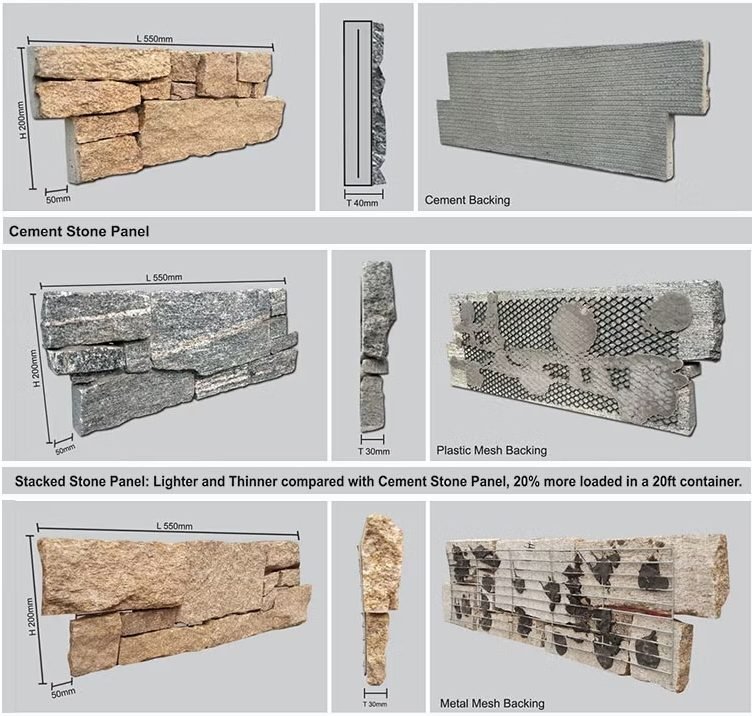
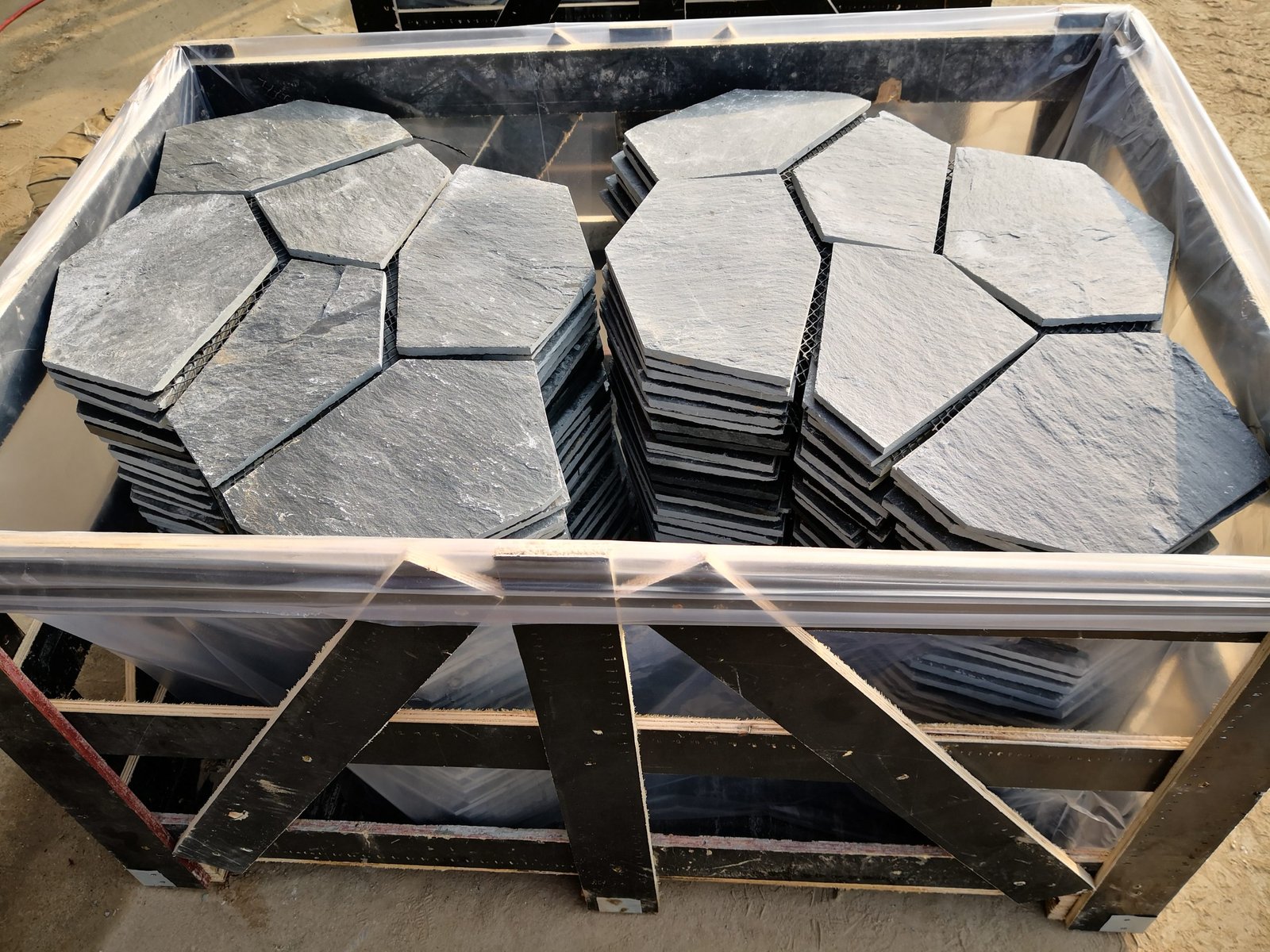
Thickness is the variable buyers under-order first. A 15-mm wall veneer panel is perfect for a facade and wrong for a step. Foot traffic on a tread creates point loads that thin stone cannot resist, so the practical floor for cut treads is 25 mm, with 30-40 mm the common range for entry stairs, and 50 mm for driveways or heavy commercial use. Solid stone stair sections, where the tread and riser are one block, are fabricated thick enough to carry the stair structure itself.
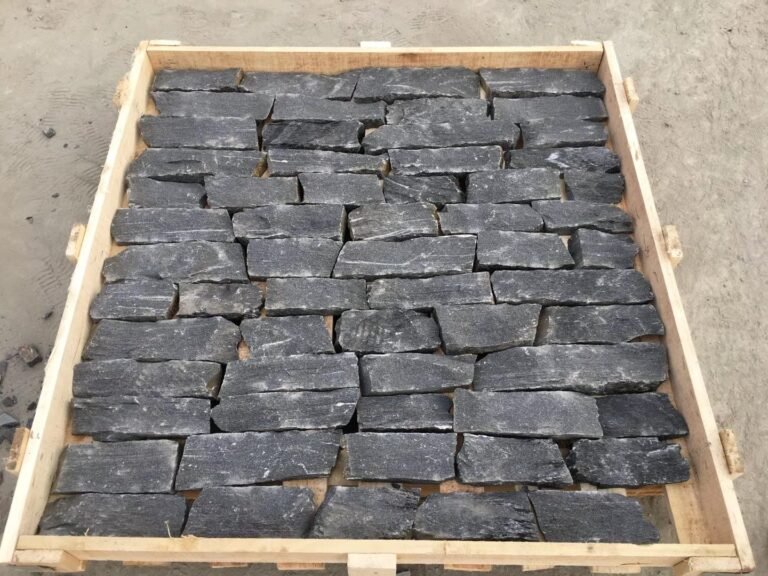
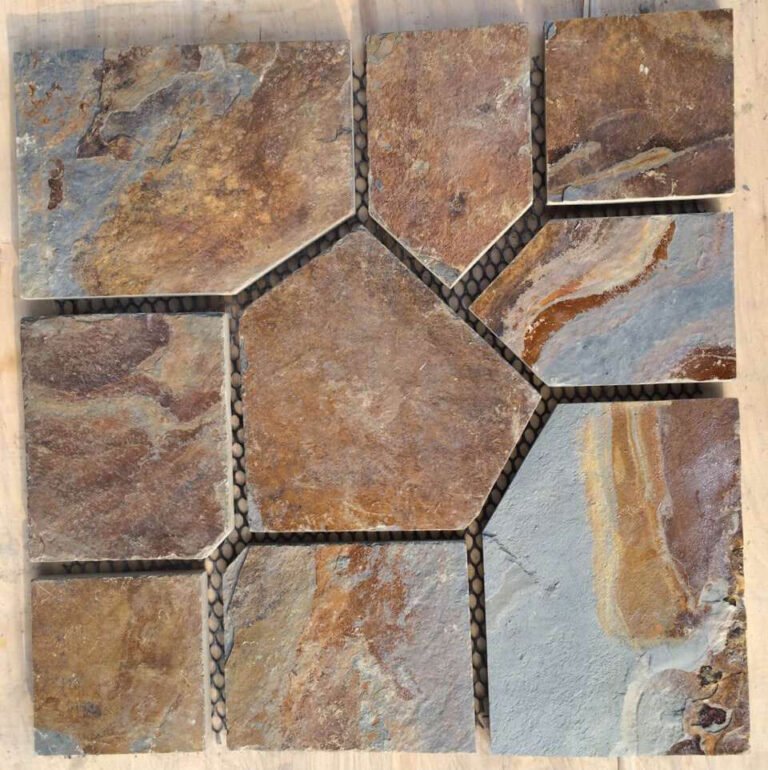
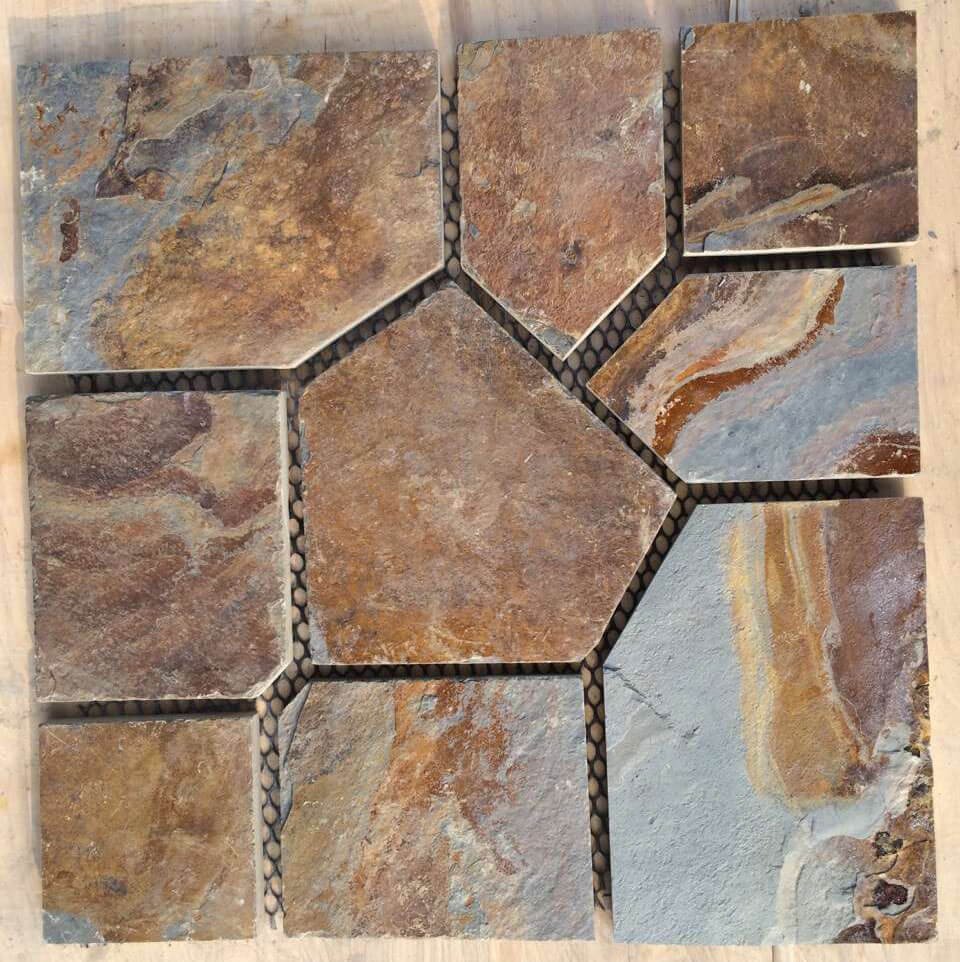
Format follows installation. Cut-to-size rectangular treads give constant joint lines and geometric precision — the right choice for modern residential and commercial stairs where the square edge is the design. Random flagstone and crazy paving pieces suit garden steps and naturalistic paths, where the pattern hides variation and the irregular edge beds into the ground. The panel factory formats at Top Stone Panels give both: dimensional flagstone for clean lines and crazy paving mesh or random pieces for rustic layouts. The crazy paving vs flagstone steppers comparison walks through which fits which path.
| Application | Typical thickness | Format | Notes |
|---|---|---|---|
| Veneered treads over concrete or steel | 15-25 mm | Cut-to-size slabs | Bonded to a structural stair |
| Residential entry steps | 25-40 mm | Cut flagstone treads | Standard wholesale range |
| Driveway or heavy commercial | 40-50 mm | Dimensional quartzite or slate | Vehicle loads or long spans |
| Garden paths and casual steps | 30-50 mm random | Crazy paving / random flagstone | Bedded on compacted base |
Buyers should ask the factory for the exact thickness tolerance before ordering. Thickness consistency affects leveling time on site: a batch with a 5-mm spread forces shims on every tread. The flagstone pavers guide details the size families and tolerances distributors stock, and the same QC logic applies to step products. If the supplier cannot state the tolerance in writing, the order is a gamble.
Slip Resistance and Surface Finish
Slips happen on wet stone when the coefficient of friction drops below safe limits. A dry riven surface is grippy, but the test that matters is the wet one. Most exterior step specifications in North America target a wet coefficient of friction of 0.6 or higher, and a naturally cleft or riven surface delivers that where a polished face fails. Sandblasting and bush-hammered finishes add grip on top of the natural surface. The cheap specification trick — choose a rough finish — is also the durable one: texture is part of the material, not a coating that wears off.
The nosing detail decides where the grip is needed most. The front edge of the tread takes the load and the slip, so many commercial specs require a contrasting nosing or a deeper profile on the first 25-50 mm of the tread. On natural stone, a bullnose or chamfered edge with the riven face carried around the corner gives that tactile transition without a separate product. Natural Stone Institute guidance on exterior paving recommends specifying the finish and the slip test together, because a finish name alone does not guarantee a number.
Veneer versus solid changes the slip equation. Veneered treads on concrete take the surface of the stone face, so the finish matters exactly as much as it does on solid stone. What changes is the edge detail: a veneer edge must be returned or wrapped, or the hard concrete corner peeks through and becomes a trip hazard when the stone chips. Specify L-shaped or returned edges for veneered steps to keep the visible face continuous.
Freeze-Thaw Performance in Cold Climates
Cold-climate steps fail when water gets into the stone and expands on freezing. The fix is density, measured as water absorption. Low-absorption quartzite and dense slate absorb little moisture, so freeze-thaw cycles simply pass through the material. Porous sandstone in the same stair soaks up rain, freezes, and spalls the surface layer within a few winters. The freeze-thaw resistance guide for natural stone explains the mechanism in detail.
Top Stone Panels rates its slate and quartzite panels for -30°C to +50°C swings, a range that covers northern U.S. and Canadian winters and the summer heat that follows them. That rating is why the same material serves both facade cladding and exterior steps. Ask the supplier for the freeze-thaw test report before ordering treads for a cold site; a stone that passes hundreds of freeze-thaw cycles with no mass loss is a stone you can expect to hold up in the field.
De-icing salt is the second winter killer. Salt lowers the freezing point of surface water, forcing it deeper into any crack before it freezes, and salt crystallization itself can push grains apart. Dense stone shrugs off both mechanisms; material with microcracks does not. For entry steps on salted walkways, specify the densest stone in the range and seal the top surface with a breathable penetrating sealer to buy extra margin.
Base Preparation and Drainage for Stone Steps
A stone step is only as good as its base. On a properly compacted granular base, a 30-mm quartzite tread stays level for decades. On a clay base that moves with moisture, the same tread cracks or heaves within two seasons. The standard recipe: excavate to frost depth or a stable grade, lay 100-150 mm of compacted crushed stone, and set the treads on a 25-mm mortar bed or compacted sand. The sand-base installation guide covers the walkway version of this sequence.
Drainage beats sealing. Water should leave the stair quickly: slope each tread 1-2% toward the front edge, keep joints open or semi-open so water drops through to the base, and put a drain course of gravel beneath the stair so the water exits sideways instead of pooling. A step that sheds water needs less sealing, less maintenance, and fails slower. The compacted base doubles as the drainage layer when the gravel spec is right. The flagstone base and jointing guide gives the layer-by-layer numbers.
Every major step gets a warning: never pour a solid concrete pad with no slope and set stone level on it. The ponding water freezes against the stone face, and the frost heave lifts the whole stair. A level step looks correct at installation and fails at first thaw. Drain the stair in the design, not in the maintenance plan.
Caps, Edges, and Transition Details
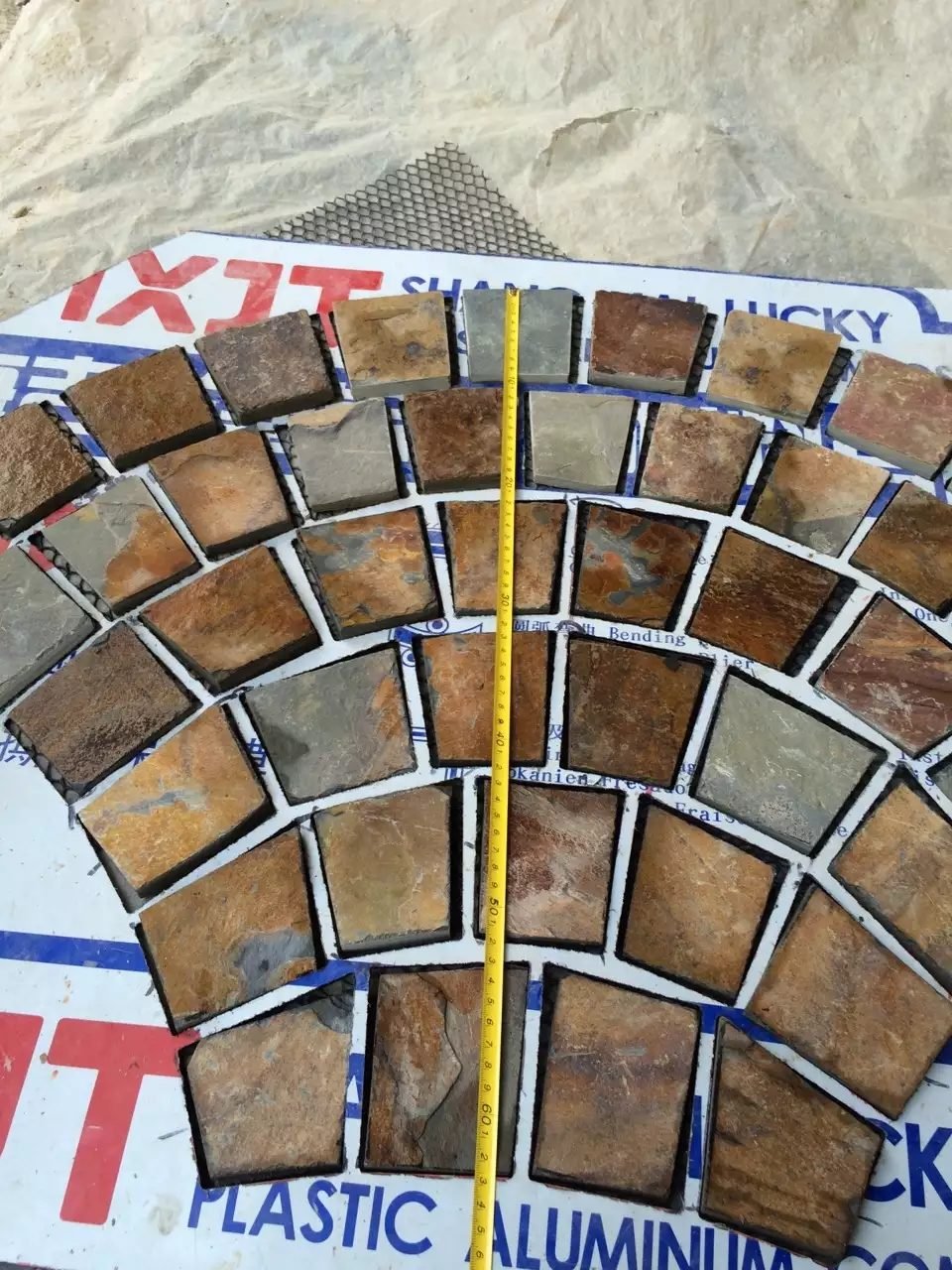
The edges of a stone stair carry the same water risk as the treads. The top step transitions from the stair to the entry landing, and that transition joint is where water migrates behind the stone. A cap stone or coping that overhangs the stair face by 15-25 mm keeps runoff off the riser below. The caps and coping guide covers the profile choices for this exact detail.
Riser joints are the leak point people forget. If the riser stones are flush with the tread, water runs straight down the face — good. If the riser sits behind, water pools on the tread and wicks into the joint. Keep risers flush or slightly recessed, bed joints fully, and use a flexible sealant at the tread-to-riser intersection on veneered stairs so movement does not crack the joint. Movement joints every 6-9 m on long stair runs absorb thermal expansion.
Transitions to adjacent paving deserve the same care. A flush landing edge avoids the tripping step that injury claims are built on. When the stair meets a flagstone patio or path, match the top of the last tread to the finished paving height, or specify a transition strip that carries the slope. The detail is small; the liability is not.
Top Stone Panels supplies cut flagstone treads, dimensional quartzite, and crazy paving step material rated for -30°C to +50°C, with batch-matched color and 3-step factory QC. Wholesale orders start at one 20GP container.
30,000 m²/month flagstone capacity | 20-25 day production | Zero-breakage packing
Sourcing Stone Steps for Wholesale Projects
Distributors source step products the same way they source any container program, with three documents that matter: the specification of the tread size and thickness tolerance, the freeze-thaw and water absorption test reports for the stone type, and the packing protocol. A factory that can produce dimensional treads to a stated tolerance and back it with test data is a factory that can serve repeated orders. A factory that sells “step stone” as a category without tolerance data is selling a gamble.
Capacity and lead time set the orderable quantities. Flagstone and crazy paving run at 30,000 m² per month at Top Stone Panels, and standard production takes 20-25 working days after sample approval. A single 20GP container is the entry order, and mixed containers — treads plus pavers plus wall panels — let distributors consolidate a step program with one shipment. The stairs and riser installation article shows how the same thin veneer format used on walls applies to stair faces, expanding the product mix per container.
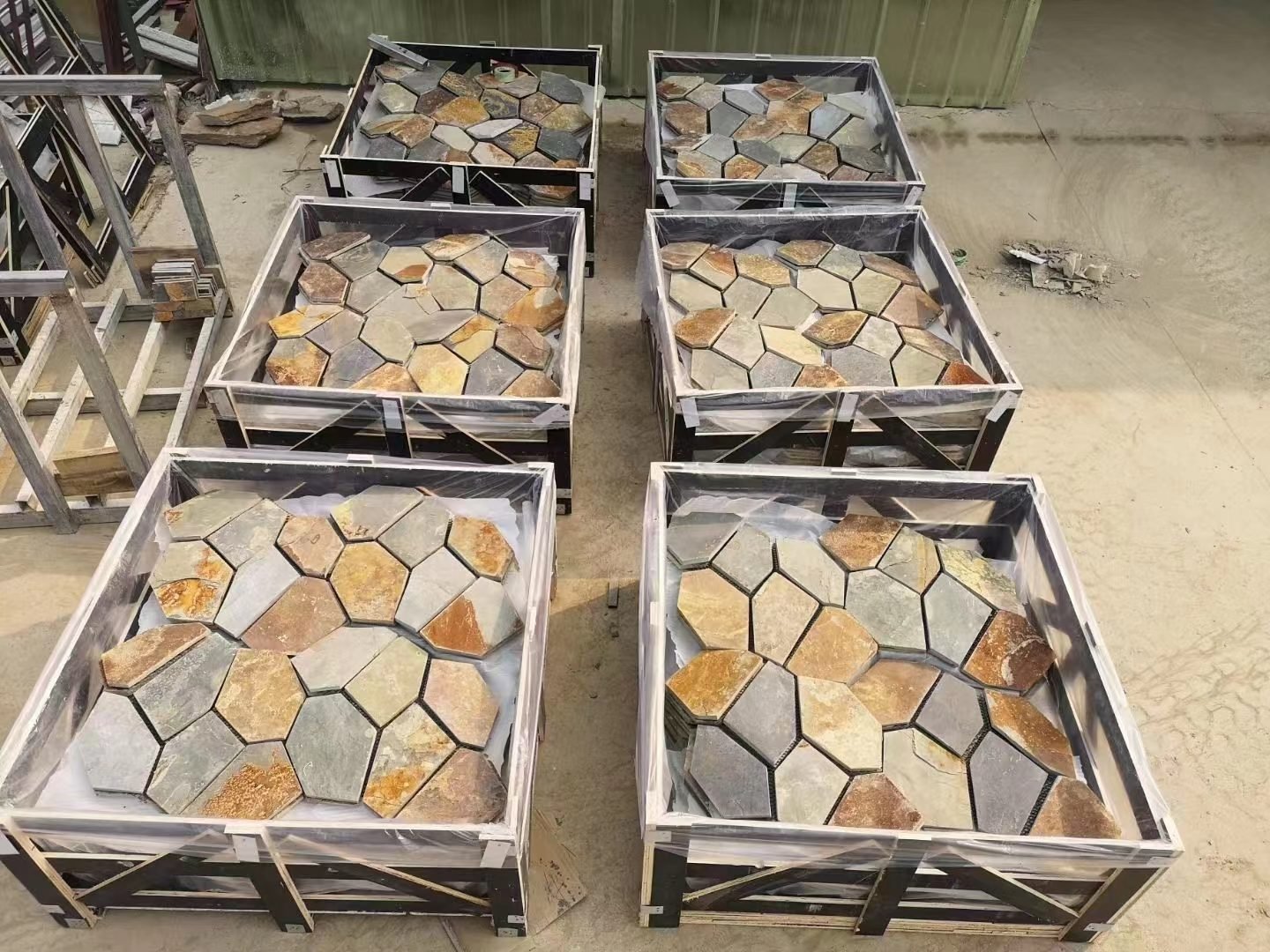
The shore-side pack protects the stone. Zero-breakage packaging at Top Stone Panels uses reinforced cartons, pallet dunnage, steel banding, and container air bags. A chipped tread edge fails the same aesthetic inspection as a broken panel, so the packing standard is part of the product spec. Workmanship samples ship in 1-3 days for lab testing, which lets the QC team confirm surface, edge, and thickness against the approved master before the production run starts.
FAQ
What is the difference between a step and a tread?
A tread is the flat horizontal surface you step on. A step is the full unit of tread plus riser, the vertical face between treads. Stone step products are usually sold as treads, riser pieces, or both.
How thick should natural stone steps be?
For foot traffic, 25-40 mm is the standard range, with 40-50 mm for driveways or heavy use. Veneered treads over concrete or steel use 15-25 mm stone bonded to the structure.
Are natural stone steps slippery when wet?
Riven, cleft, and sandblasted surfaces stay grippy when wet. Polished or honed faces slip. Specify a wet coefficient of friction above 0.6 and avoid smooth finishes on exterior stairs.
What stone is best for outdoor steps in cold climates?
Low-absorption quartzite and dense slate survive freeze-thaw cycles that spall porous sandstone. Check the water absorption and freeze-thaw test reports before ordering for a cold site.
Can I order flagstone steps in a mixed container?
Yes. A 20GP container can mix treads, risers, pavers, and wall panels from the same quarry vein. Production runs 20-25 working days after sample approval, with a 1-3 day sample turnaround.
Conclusion
Surface finish and geometry decide whether a stone stair is an asset or a liability. Size the risers and treads to code, cut the thickness for the load, keep the surface rough, and drain the assembly so water never sits on the stone. Dense material selection — low-absorption quartzite or slate in cold climates — closes the freeze-thaw loop, and the edge details handle the transitions where most moisture damage starts.
Key takeaways:
- Cap risers near 196 mm and hold tread depth at 254 mm minimum for residential stairs; confirm the local code before cutting.
- Order 25-40 mm cut treads for foot traffic and push to 40-50 mm for driveways or commercial loads.
- Specify riven or sandblasted surfaces and target a wet coefficient of friction above 0.6.
- Choose low-absorption stone with documented freeze-thaw performance for cold sites.
- Drain every tread and joint; water removal is worth more than any sealer.
- Buy step programs from a factory that states tolerances, supplies test reports, and packs to a zero-breakage protocol.
Review the material data sheet on your next step order before you sign it. For cut-to-size treads, dimensional quartzite, or crazy paving step material with test documentation, contact Top Stone Panels, or start with the flagstone product line and confirm formats against your stair layout.