Ask a North American importer where their stone panels come from and you get two answers. Some buyers work directly with the factory that quarries and cuts the stone. Others buy through a sourcing agent or trading company that coordinates factories on their behalf. Both channels move tens of thousands of containers out of China every year, and both are legitimate; the mistake is choosing one without understanding what the other actually controls.
This comparison lays out the two channels for natural stone cladding: what a direct manufacturer controls, what an agent provides, and which buyer profile each fits. It uses Top Stone Panels, the quarry-owning exporter in Yixian County, Hebei, as the manufacturer example. Agent fees and service levels are shown as a range because they vary from firm to firm.
- A manufacturer owns the quarry and factory: price, production slots, QC, and batch veins sit under one roof. An agent coordinates factories and can consolidate small multi-line orders.
- Direct factory buying usually means container-size commitments: at Top Stone Panels, one 20GP per product line, with samples in 1-3 days and production in 20-25 working days.
- The agent’s value is breadth and local execution, not price; expect a fee or margin added on top of factory prices.
- For one-line volume buyers the math favors the factory; for multi-category small orders the agent can win on coordination.
- Both channels need the same verification: three-step QC evidence, pre-shipment inspection, and documents such as COO and ISPM 15.
1. The Channel Decision You Make Twice
Most buyers think of the channel as a one-time choice made at the first order. In reality they decide twice: once when testing a category with a small order, and again when the line proves itself and needs container volume. The right answer at test scale is often the wrong answer at volume scale, so the decision has two rounds.
Round one favors whoever can get you a verified sample and a small order without locking you into a production queue. Round two favors whoever controls the production slot, because once a color line sells through four times a year, the buyer’s real need is a predictable factory clock. Buyers who score both rounds on a single criterion, usually “best unit price,” pick the wrong lane in one of the two.
Our B2B stone buying channels guide covers the full route market, from importers and distributors to retail display and supplier-fulfilled models. The channel comparison below is the narrower question: who holds the production and at what price.
2. What a Sourcing Agent Actually Provides
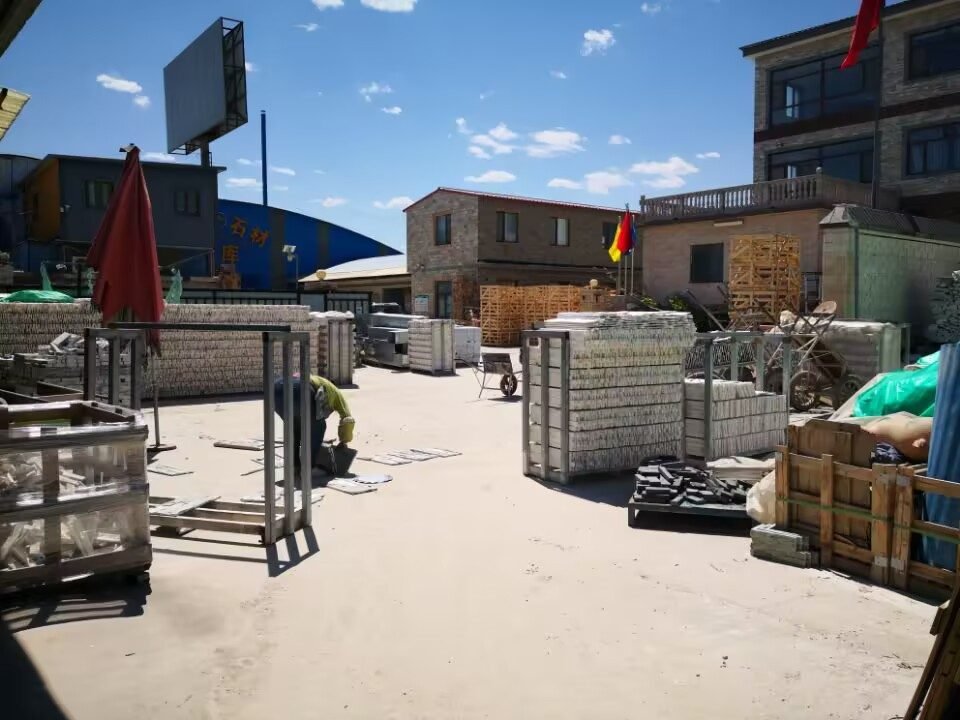
A sourcing agent sits between the buyer and several factories. Agents exist because the Chinese stone industry is thousands of workshops deep, and a foreign buyer cannot realistically audit a different factory for every product line. The agent’s job is breadth: they hold the shortlist of factories that match your spec, coordinate quotes, and handle follow-up.
That service has a cost. Agents work on a commission or a marked-up margin, commonly in a low to mid single-digit range on the goods, plus separate fees when they organize freight, inspection, or compliance documents. For a container that costs tens of thousands of dollars the fee is real money, which is why the channel decision has a math component.
Where agents earn their fee: small orders that no factory will schedule well, mixed containers across product types, and buyers without Chinese-language staff. They also handle follow-up work like chasing production photos or rescheduling a missed inspection. The guide to working with Chinese stone factories explains how a buyer-agent-factory relationship is managed when an agent is in the middle, including which documents stay with the buyer.
The limit of the agent model is control. An agent does not own the quarry, the cutting line, or the batch selection, so when a color drifts or a production slot slips, the agent’s answer depends on what the factory tells them. That is not dishonesty; it is the structural gap between coordinating a process and owning it. The buyer still needs factory-level evidence, which an agent can relay but cannot replace.
3. What a Direct Factory Controls
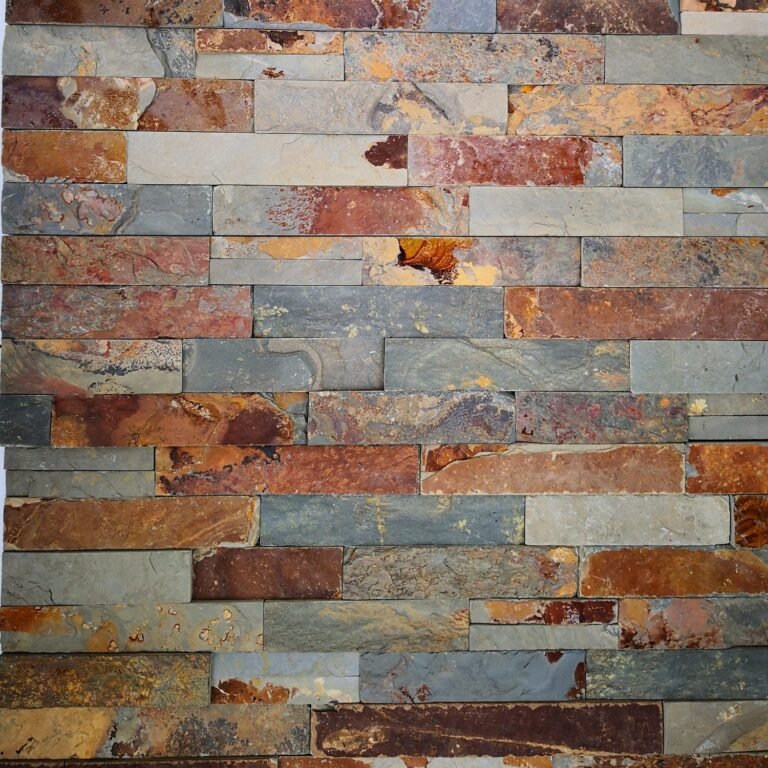
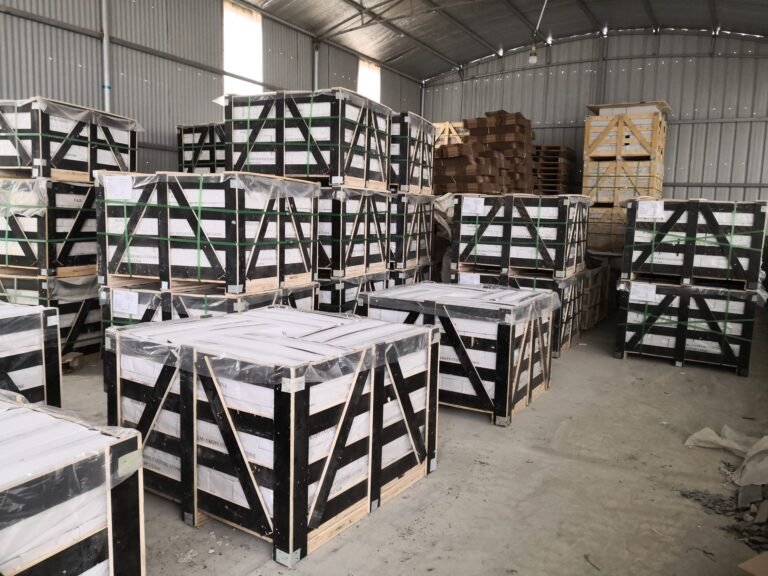
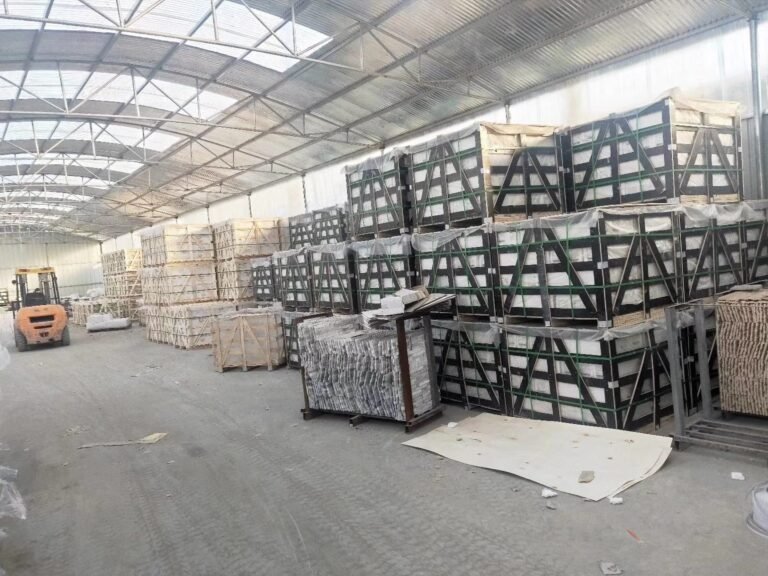
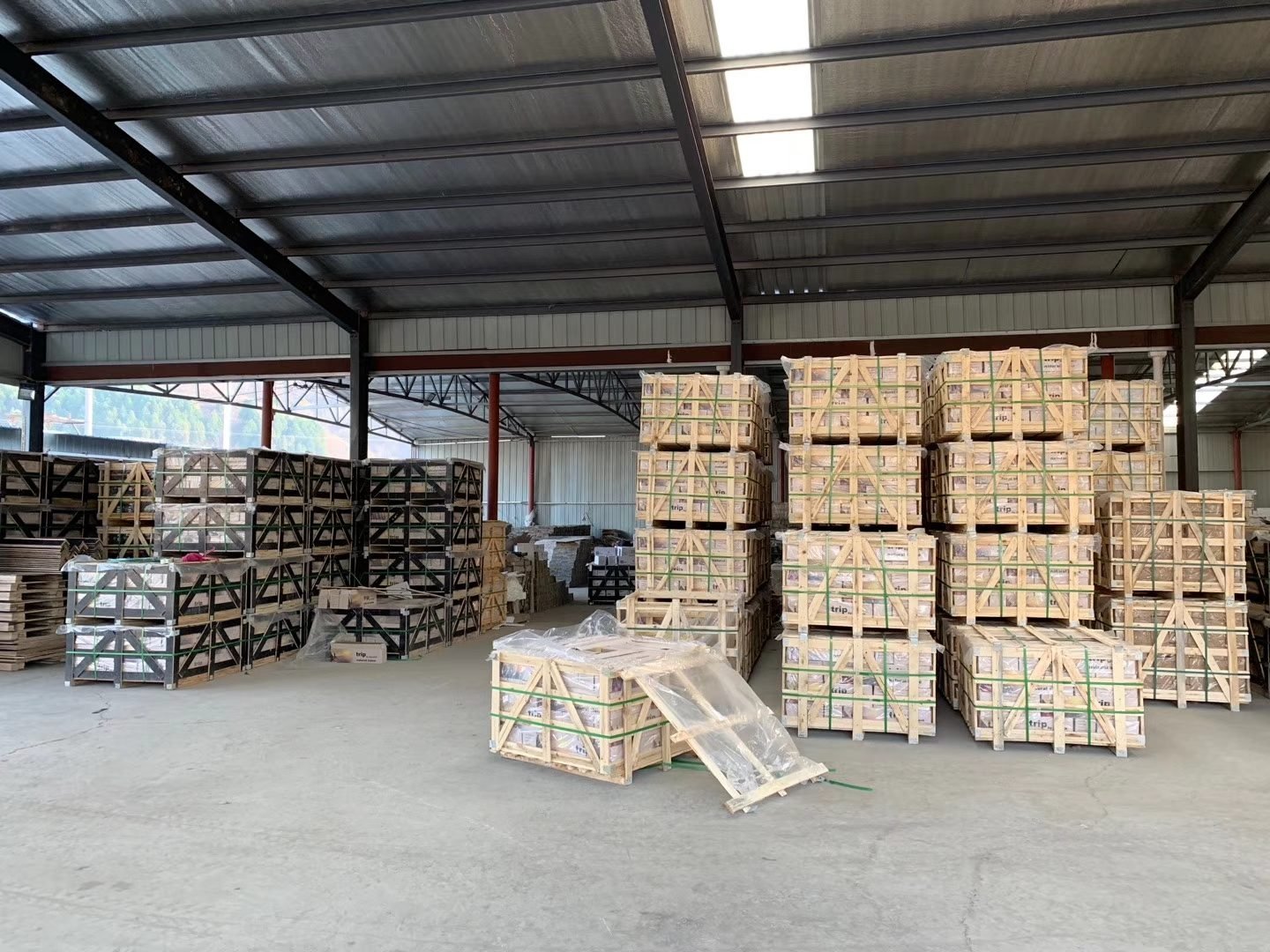
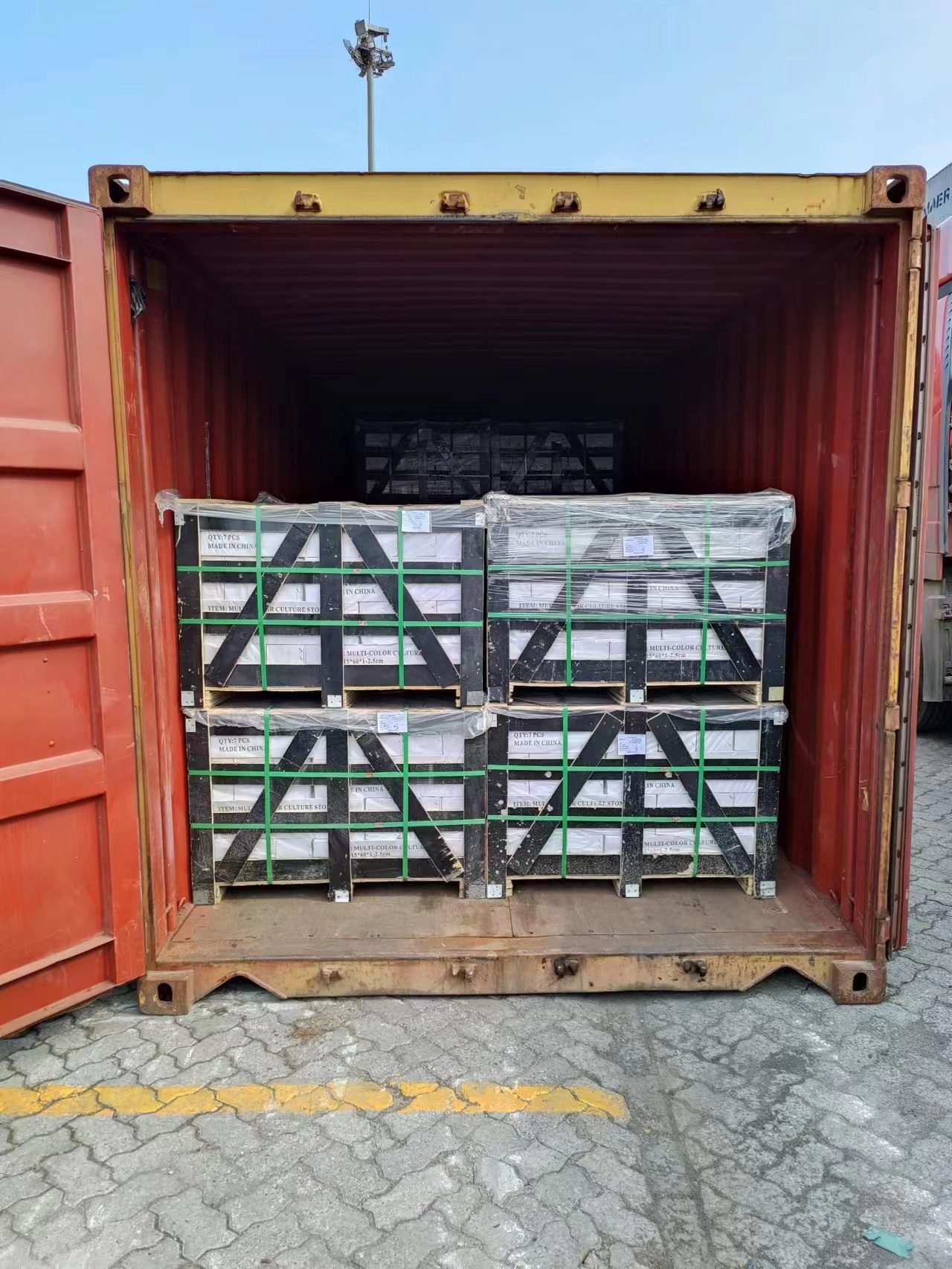
A direct manufacturer like Top Stone Panels controls the whole vertical chain. The quarry sits in Yixian County, Hebei, the cutting and assembly lines run in the same facility, and the factory ships from Tianjin Xingang. That means production questions get answered at the source: batch vein selection, thickness tolerance, packing, and the container date.
| Capability | Direct factory example (Top Stone Panels) | What it means for the buyer |
|---|---|---|
| Quarry control | Own slate and quartzite sources | Batch veins stay matched across reorders |
| Capacity | 80,000 m²/month stacked stone; 220+ containers a year | Production slots survive demand spikes |
| QC | 3-step: selection, processing, pre-shipment | Color and dimension checks before sealing |
| Trade terms | FOB Xingang / EXW / CIF / DDP | One supplier owns the freight outcome |
| Documents | COO, ISPM 15, pre-shipment video | Export paperwork issued at source |
Factory-direct has a cost too: focus. A single factory is excellent at its own product lines and less useful when your order spans six unrelated categories. The factory’s minimum order also locks you into container-sized thinking, which matters more in round one than round two.
Before qualifying any factory, run the verification routine in our factory audit and verification guide. Confirm the quarry, check the cutting line, see QC records, and talk to the sales engineer who answers technical questions. A direct supplier should answer these directly, and that pressure test is where the channel shows its real shape.
4. Factory vs Agent Side by Side
| Dimension | Direct manufacturer | Sourcing agent |
|---|---|---|
| Unit price | Factory price, no middle margin | Factory price plus fee or margin |
| MOQ | One 20GP per product line | Flexible, can consolidate small lots |
| Production control | Owns the schedule and the crop | Depends on factory partner |
| Batch and color control | First-party vein selection | Relays factory records |
| Inspection access | Factory floor, QC records, video | Coordinated visits and reports |
| Product range | Own lines: six panel families typical | Many factories, any category |
| Accountability | Single point for quality and terms | Split between agent and factory |
Read the table honestly before picking a lane. The factory row wins on price, control, and accountability for the product; the agent row wins on flexibility, range, and small-order access. Neither column is a free lunch, and the buyer who claims their channel does everything is paying a hidden cost they have not identified yet.
When you qualify a supplier in either lane, the industry references US buyers cite trace to the Natural Stone Institute, the trade body that publishes technical and buying guidance for natural dimension stone. Matching your expectations to those published standards gives both the factory and the agent the same checklist to meet.
5. Which Buying Channel Fits Whom
| Buyer profile | Channel that fits | Why |
|---|---|---|
| One-line volume distributor | Direct manufacturer | Container MOQ matches their buying cadence |
| Multi-category importer | Agent or multi-factory plan | Consolidates small lots across categories |
| First-time importer | Agent for round one | Guards against unknown factory risk |
| Project-based buyer | Direct factory with sample proof | Batch control matters most for facades |
| Private label / OEM | Direct manufacturer | Custom carton and spec work needs the factory |
The pattern behind the table: channel fits volume. The moment a product line earns container-size reorders, the factory channel starts paying for itself even with the MOQ commitment. The moment an order spreads across five unrelated categories, the agent’s coordination looks cheap next to the buyer managing five factory relationships.
Two adjacent decisions belong in the same plan. The mixed-container and MOQ guide shows how several factory lines share one box, which narrows the agent’s advantage. And the US import guide covers customs, duty, and compliance regardless of channel, because neither a factory nor an agent replaces the importer of record.
6. Pick a Lane and Verify
Here is the direct answer. If you are a distributor with one or two stone lines that reorder in container quantities, buy direct from a verified manufacturer. The price difference funds the things that matter: a production slot, batch control, and one accountable counterparty. If you are testing a new category, importing small lots, or consolidating many product types, use an agent for that round, and plan the move to direct supply when a line proves itself.
The hybrid pattern is legitimate. Many successful importers use both: an agent for exploration and category trials, a direct factory for the lines that earn volume. What fails is the buyer who behaves like a volume buyer with an agent’s paper trail, or like a small buyer with a factory’s minimum order.
Both channels come with warning signs, and they are easy to mistake for minor friction. Put a name on each one before you commit the 30% deposit, because that deposit is where the buyer’s control over the order starts to ebb.
| Red flag | What it usually means | Check before PO |
|---|---|---|
| Agent cannot name the factory | Order is being brokered twice | Factory name, address, video tour |
| Price 30-40% below every quote | Thinner stock, off-spec, later upcharge | Line-by-line spec and sealed sample |
| No batch or vein records | Color drift coming on reorders | Batch codes and production photos |
| Balance due before verification | Pressure to skip the production check | Hold 70% until loading video or inspection |
| Agent pushes one factory only | Commission favors that supplier | Ask how many factories were quoted |
The verifiers matter because they expose the red flags quickly. A factory that can show the quarry, the cutting line, three-step QC records, and batch vein documentation on demand is hard to fake, with or without an agent in the middle. The same evidence set appears in our factory verification routine, and it doubles as the sampling checklist for evaluating physical samples before you commit a container.
Whichever lane you land in, verification is channel-independent. Demand the same evidence set: a physical sample you keep, a three-step QC record tied to batch vein selection, pre-shipment inspection with an ISO 2859-1 sampling plan for large lots, and export documents from COO to ISPM 15. For stack, ledger, and z-panel supply, the thin stone veneer product line shows what direct factory specs look like on a current page.
Factory-direct means one accountable counterparty.
Top Stone Panels owns its quarry, cutting lines, and three-step QC in Yixian County, and ships 220+ containers a year from Tianjin Xingang. Sample boards in 1-3 days, production in 20-25 working days, OEM and mixed-container planning included.
FAQ
Is a trading company the same as a sourcing agent?
Roughly yes. A trading company or sourcing agent is an intermediary that coordinates factories for a foreign buyer. It can own no factory, one factory, or several, and its price structure reflects the coordination fee.
How much does a stone sourcing agent charge?
Fees vary by firm and service; the common pattern is a commission or margin in the low to mid single digits on the goods, plus separate charges for freight, inspection, or compliance work. Get the full fee schedule in writing before any PO.
Can I order less than a container through a factory?
Factory MOQ is one 20GP per product line, but lines can share a container when the order plan supports it. True sub-container orders usually need an agent or a distributor holding stock.
Do I need an agent to import stone from China?
No. Factories with export experience handle FOB, EXW, CIF, and DDP terms directly and issue COO, ISPM 15, and other documents. An agent helps when you need multi-factory coordination or lack local language and presence.
How do I verify a stone factory without visiting it?
Request the quarry and factory overview, a live video tour, three-step QC records, batch vein documentation, COO and ISPM 15 samples, and a pre-shipment inspection report. Cross-check capacity claims with a third-party inspection.
Which is more reliable: factory direct or agent?
Reliability is a property of the supplier, not the channel. A direct factory answers for its own QC; an agent answers for its coordination. Decide by volume and product range, then verify the same evidence in both cases.
Conclusion
Buy direct from the factory when the order is container-sized and the line matters enough to guard with batch control. Use an agent when the order is small, multi-category, or the market is unproven. Run both lanes on the same verification standard, and re-decide the channel each time a product line grows into a new volume band.
Key Takeaways
- Channel follows volume: factory direct for container-size reorders, agent for small and multi-line orders.
- Price, batch control, and accountability favor the direct manufacturer; flexibility and range favor the agent.
- Verify with the same evidence in both lanes: samples, three-step QC, pre-shipment inspection, COO, and ISPM 15.
- OEM, private label, and batch-sensitive facades push the balance toward a direct factory relationship.
Ready to compare quotes on the same spec? Send Top Stone Panels your target colors, coverage area, and desired trade terms, and get a factory-direct FOB Xingang or DDP quote with batch vein documentation included.