Most stone buyers learn FOB and CIF in their first container and never move past them. That is a gap, because EXW, FCA, and DAP answer a different question than FOB does: who arranges the freight, who clears export, and who carries the risk while the container is still on the ground in China. EXW FCA DAP stone sourcing decisions decide who pays when the truck, the forklift, or the customs broker stalls.
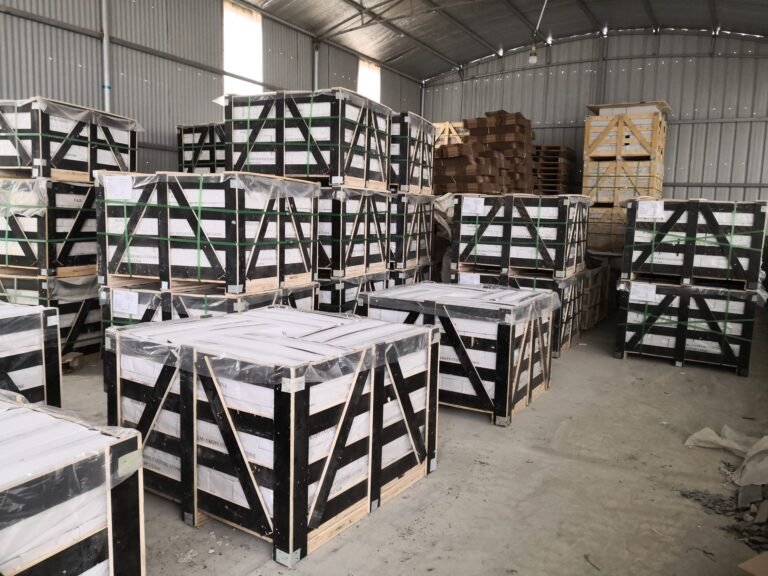
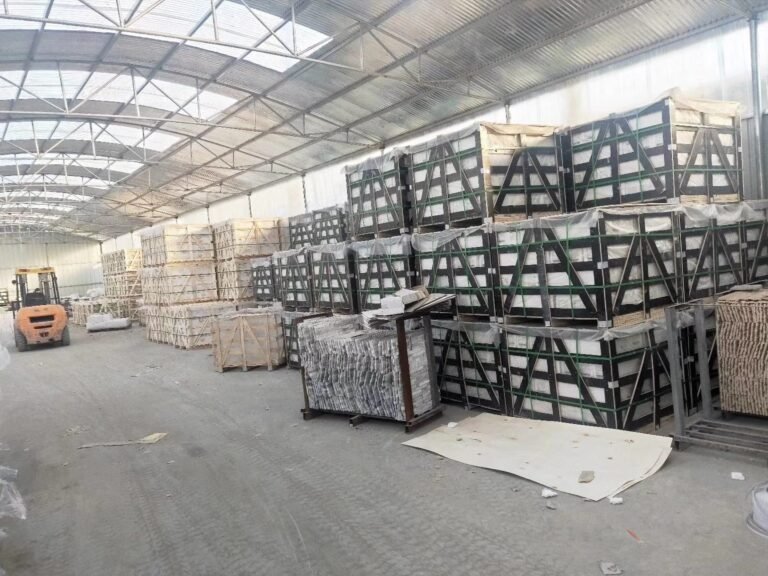
Top Stone Panels quotes FOB Xingang, EXW, CIF, and DDP today and handles FCA or DAP arrangements through the same export logistics desk. The factory ships roughly 220 containers a year from Tianjin Xingang with zero-breakage crating, so these terms are not theory here — they are the difference between a container that costs what you budgeted and one that quietly adds a second layer of freight.
- EXW puts the buyer in charge of everything from the factory gate: loading, export customs, and all carriage. Under FCA the seller loads the goods and clears export. Under DAP the seller pays the main carriage to a named place and the buyer clears import.
- Risk transfers at the factory gate under EXW, at the carrier under FCA, and at the destination place under DAP — so EXW is the riskiest term for a first-time stone importer.
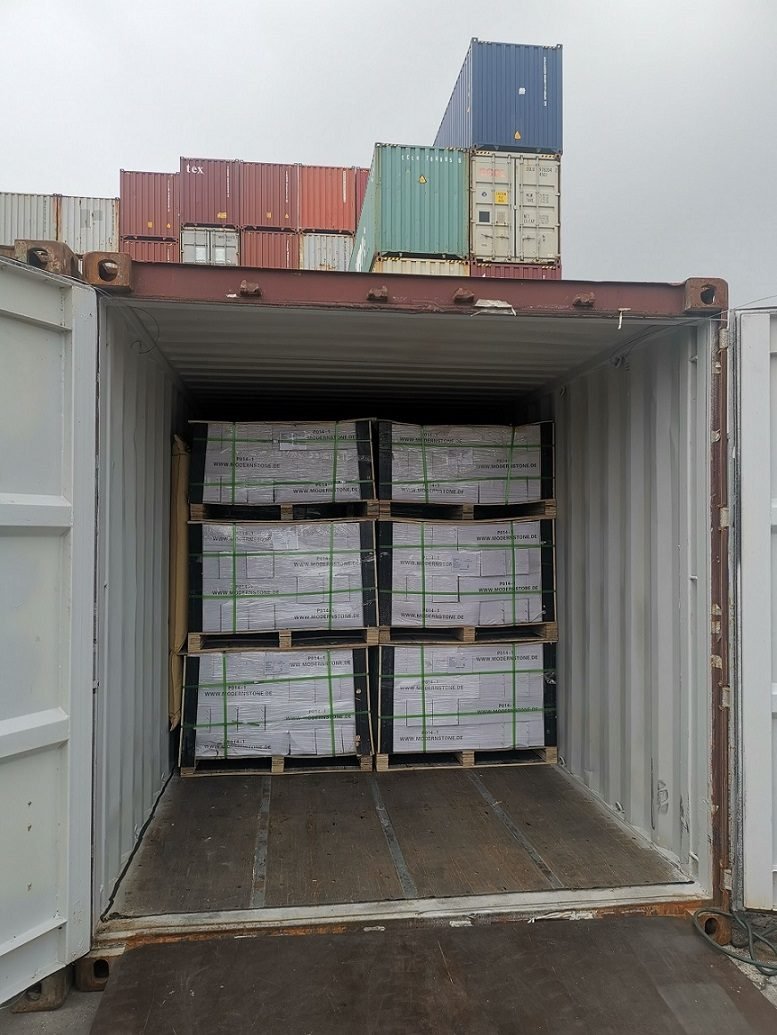
- Stone loads heavy: a 20GP container carries about 26.5 tonnes or 500-530 square meters of panels, and overweight trucking from a factory is a real invoice surprise under EXW.
- FCA fixes EXW’s two weak points: the seller loads the truck and submits the export declaration, while you still control the liner contract and rate.
- DAP is the door-to-door term without import formalities: the seller arranges carriage, you unload and clear customs, and duties and taxes stay on your side.
What EXW, FCA, and DAP Actually Deliver
The Incoterms 2020 rules published by the ICC give buyers eleven terms, and each one pins down two things: the exact point where the seller’s job ends and the exact moment risk passes. EXW, FCA, and DAP sit at three very different points on that line.
Under EXW (Ex Works), the seller places the goods at your disposal at the factory or another named place. The seller’s obligation ends there. You collect the goods, you load them, you clear export, you pay the truck, the ocean freight, the insurance, and the import side. It is the cheapest base price on paper and the most work on the calendar.
Under FCA (Free Carrier), the seller delivers the goods, cleared for export, to a carrier you nominate. If delivery happens at the seller’s premises, the seller must load the goods onto the collecting vehicle. Your freight forwarder takes over the main carriage with a contract you control.
Under DAP (Delivered at Place), the seller pays and manages carriage all the way to a named place — typically your port or warehouse in the destination country — and delivers the goods on the arriving vehicle, ready for unloading. You unload, you clear import, and you pay duties and taxes.
Where the Risk Hands Off
Risk does not follow the money; it follows the goods. The delivery point under each term is the risk hand-off, and for a heavy, fragile product like stone panels it decides who eats the damage claim.
| Term | Risk passes when | Delivered where | Seller arranges |
|---|---|---|---|
| EXW | Goods placed at your disposal | Factory or named premises | Nothing after making goods available |
| FCA | Goods loaded and handed to your carrier | Carrier at named place | Loading, export customs clearance |
| DAP | Goods ready for unloading at destination | Named place in destination country | Carriage, export customs, transit risk |
Read that table the way a claims adjuster would. With EXW, if a forklift drops a crate on the factory floor, the loss is yours. With FCA, the seller’s transfer goes until the crane puts the goods on your nominated truck. With DAP, the seller carries the ocean risk — rough weather, port delays, cargo shifting — until the container arrives at your named place. That difference matters more for 26.5-tonne heavy loads than it does for carton cargo.
Who Pays for What
The cost split is where buyers most often get surprised. A term quoted low on the base price moves costs to another line, and stone has a long line of them: export packing, loading labor, export customs, port charges, ocean freight, insurance, import customs, duties, unloading.
| Cost item | EXW pays | FCA pays | DAP pays |
|---|---|---|---|
| Export packing / crating | Seller | Seller | Seller |
| Loading onto collection truck | Buyer | Seller | Seller |
| Export customs declaration | Buyer | Seller | Seller |
| Inland trucking to port | Buyer | Buyer | Seller |
| Ocean freight and insurance | Buyer | Buyer | Seller |
| Import customs, duties, taxes | Buyer | Buyer | Buyer |
| Unloading at destination | Buyer | Buyer | Buyer |
Two patterns stand out. First, all three terms keep import-side costs with the buyer; only DDP moves duties and taxes to the seller. Second, the three terms differ mostly on the expensive, easy-to-misquote China-side items: loading, export clearance, and inland trucking. That is why the same container can cost radically different totals under EXW versus DAP.
EXW and the Loading Problem
EXW looks like the cheapest deal until your freight forwarder’s truck pulls up to a Hebei factory gate and the driver realizes the load is 26.5 tonnes of crated stone. Under EXW, loading is a buyer obligation, and a collecting truck that cannot load itself needs a forklift, a crew, and time — all billed back to you.
Stone compounds the issue with weight. A standard 20GP container holds about 26.5 tonnes or roughly 500-530 square meters of stacked stone panels at about 50 kg per square meter. Margins between the gross loaded weight and the road legal limit are thin, and an overweight truck from the factory to Tianjin Xingang generates a fine or a re-load that no one budgeted for under EXW.
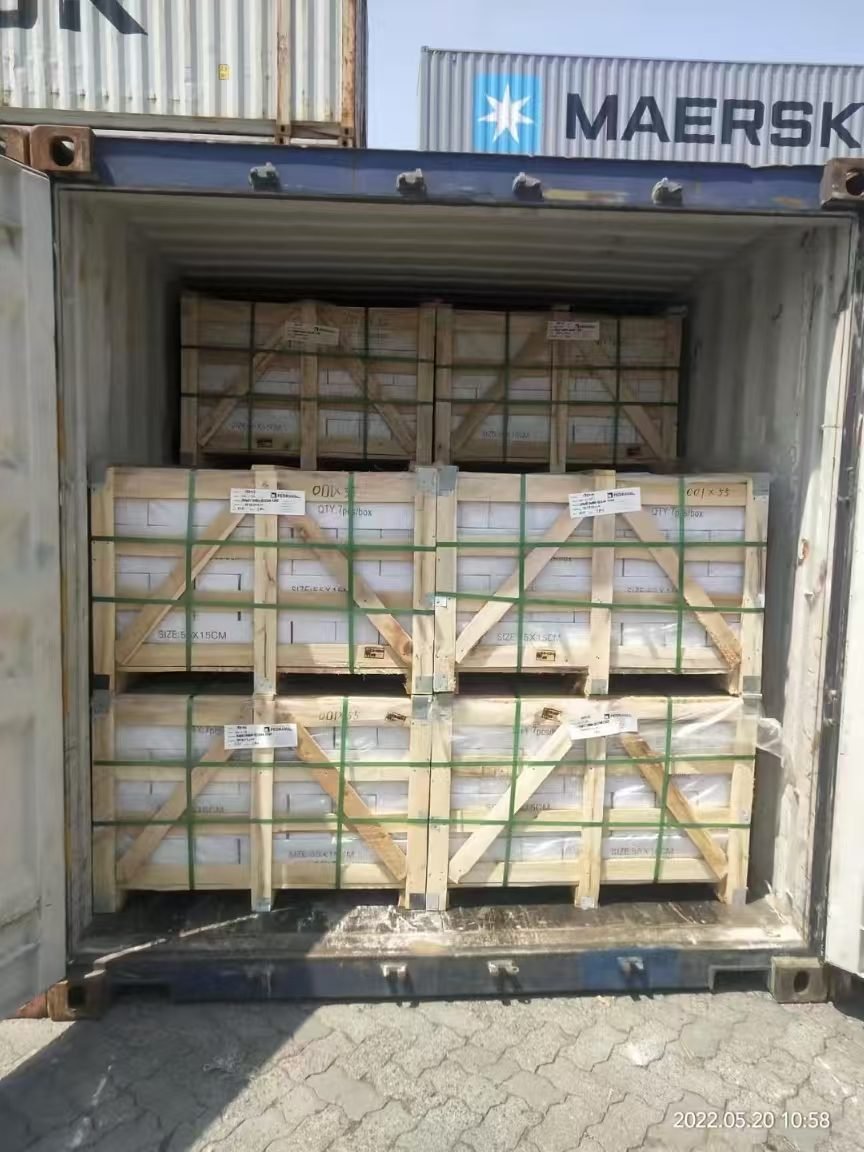
The practical failure is coordination. Under EXW the seller’s obligation ends when the goods are available, so the factory clock stops and your forwarder’s clock starts. Days slip between collection, export declaration, and port arrival, and the sailing you booked sails without your container. The stone shipping transit time guide shows how tight the port side of the schedule is already.
FCA: The Term That Fixes EXW
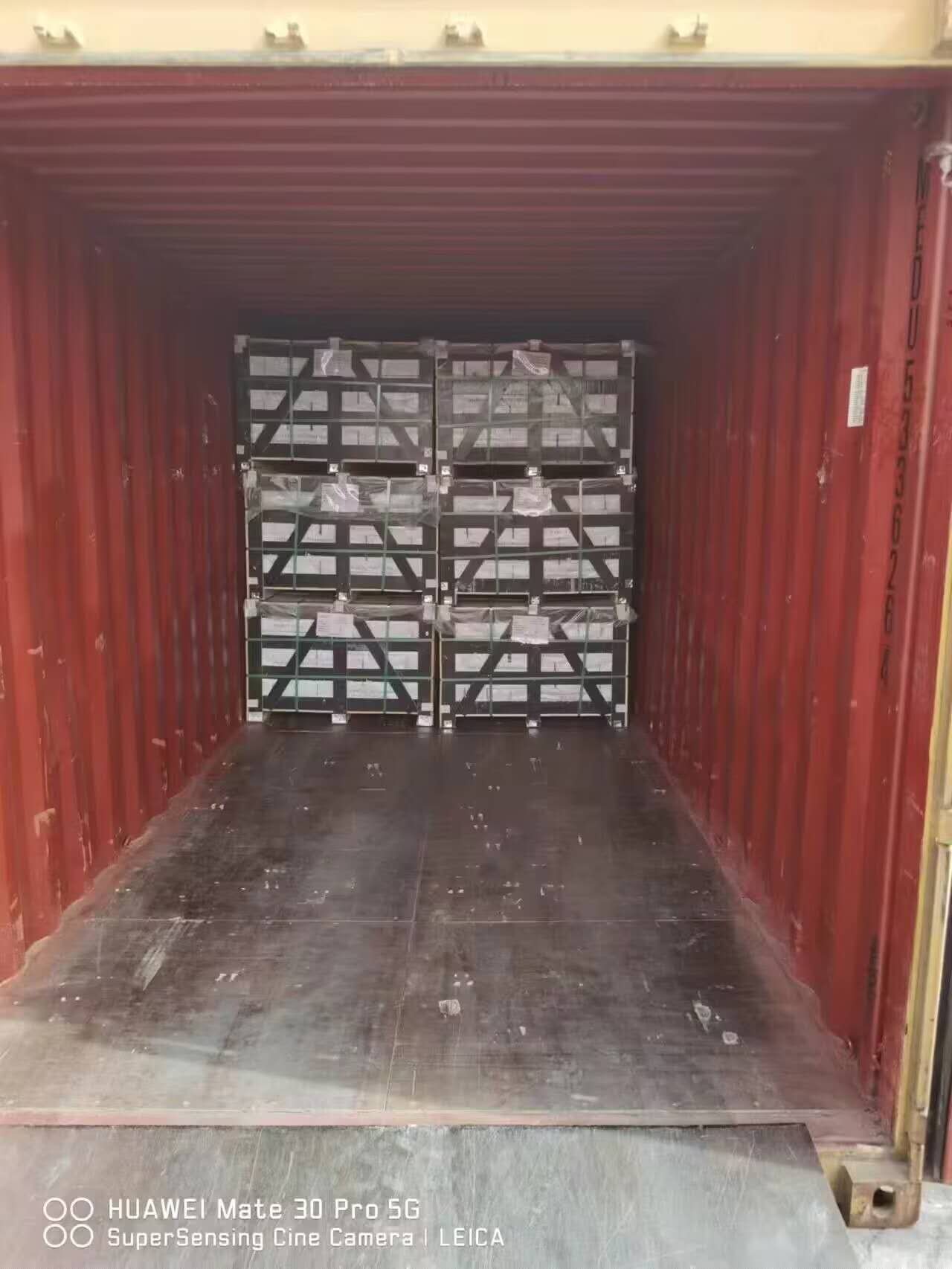
FCA keeps the buyer’s control over the ocean freight contract and moves the problematic China-side steps back to the seller. The seller loads the goods onto the nominated truck and submits the export declaration. Your forwarder still handles inland trucking from the factory or the named place and books the vessel.
That split removes the two worst EXW surprises for stone: the forklift billing dispute and the export customs paperwork. Export clearance under FCA is a seller obligation, and a factory that exports 220+ containers a year has the declaration routine down. The buyer receives the goods plus the export documents needed for the destination side, which the stone export documents guide walks through line by line.
Buyers who already understand FOB Xingang versus CIF destination can think of FCA as the door-to-carrier version of FOB: the seller gets the goods to the carrier with export clearance done, and the buyer keeps negotiating the freight rate. For stone, FCA is the term a forwarder usually means when a buyer asks for “best price collect.”
DAP: Door-to-Door Without Import Formalities
DAP buys the buyer one scarce resource: a single accountable party for almost the entire journey. The seller quotes one landed price that covers crating, inland trucking, ocean freight, and transit risk to your named place. You unload, you clear import, and you pay duties and taxes on your side.
For a stone importer, DAP removes the freight negotiation entirely. Your supplier must hold its own liner contract or work through a freight partner that does, and the price becomes comparable against a DDP quote with one line of difference: import clearance and duty remain on your side. If you want the full door-to-door package with the importer-of-record work included, DDP is the term; DAP is its lighter sibling.
The risk profile changes too. Under DAP the seller carries the ocean risk, so a container delayed by port congestion or a rough crossing is the seller’s problem to manage — not a claim you file after the fact. That fits first-time buyers who want a predictable landed schedule, or buyers in markets where the EU or US import side is already familiar territory.
Which Term Fits Your Order
No term is universally correct. The match depends on who you already trust with the logistics, and that is a “which fits whom” decision, not a pricing one.
| Your situation | Best term | Why |
|---|---|---|
| Established China forwarder with own fleet and export desk | EXW | You buy freight locally and avoid supplier freight markup |
| You book ocean freight yourself; want supplier to load and clear export | FCA | Removes loading and export risk while keeping rate control |
| First container, no China logistics presence | DAP or DDP | One accountable supplier for almost the whole journey |
| You already clear import and hold an importer of record | DAP | Door-to-door carriage without paying seller for import handling |
First orders also carry the MOQ and timing realities of the factory side. Top Stone Panels standard production runs 20-25 working days, first orders with custom carton printing run 25-30 working days, and the minimum order is one 20-foot container. Count the ocean leg on top of that, and a DAP or DDP first order gives you one schedule to manage instead of three hand-offs to chase.
Questions Before You Agree
Before you sign a quote under any of these terms, run five checks. They catch the surprises that never appear in the headline number.
- Ask where “delivery” ends. FCA at the seller’s premises is not the same as FCA at a named terminal; the Incoterms 2020 text changes who loads and where risk passes.
- Ask who loads and how. Stone needs a forklift and a crew. If the term expects you to load 26.5 tonnes, price that labor before you agree.
- Ask who files the export declaration. EXW puts it on your forwarder. FCA and DAP keep it with the factory, which is faster at Tianjin Xingang.
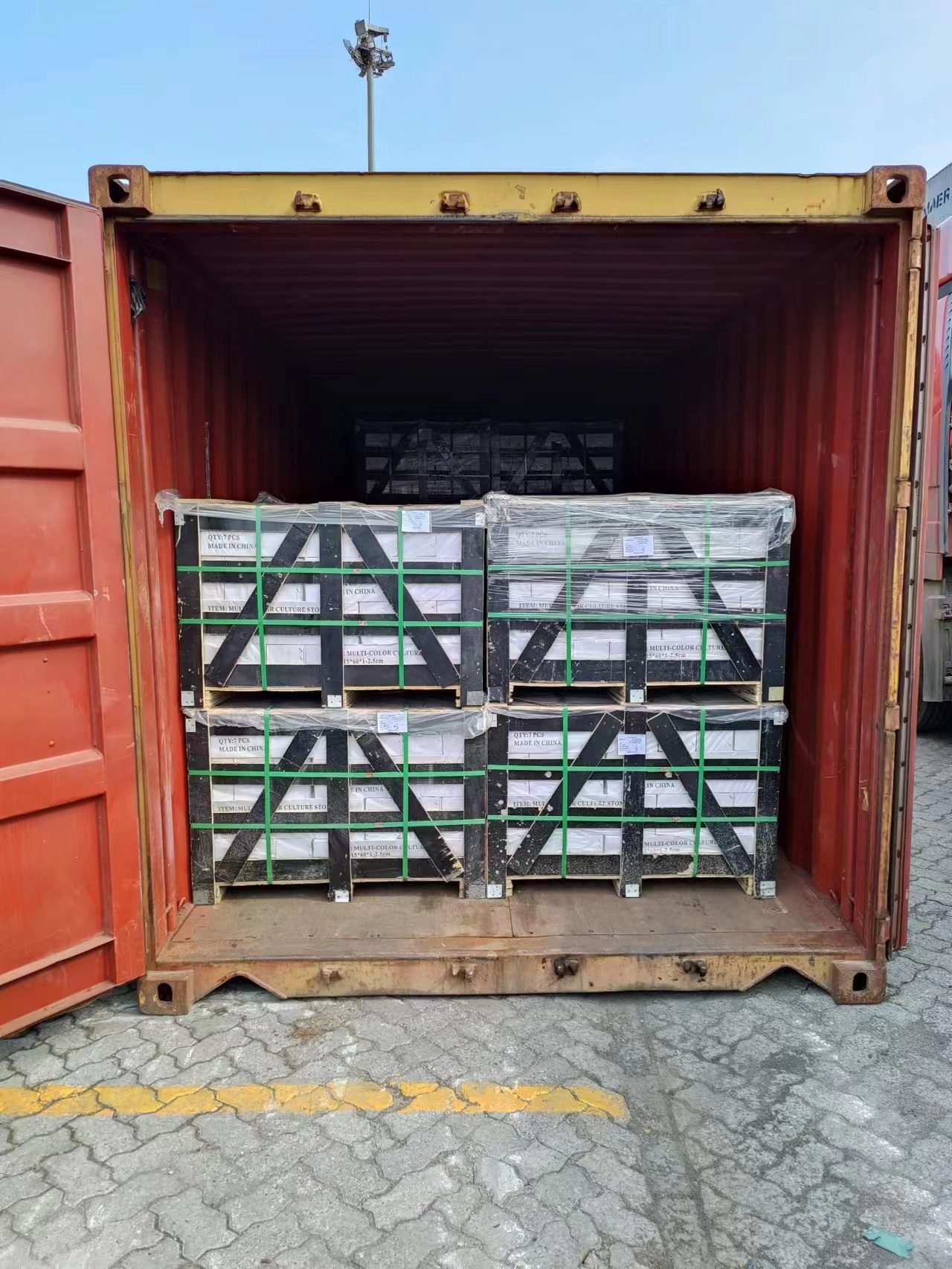
- Ask about packing scope. All three terms assume seller-side export packing, but confirm the crating standard — reinforced wooden crates, four to six strapping bands, and container airbags are what a 26.5-tonne load survives.
- Ask for the container economics first. A 20GP versus 40HQ decision changes the freight per square meter, and the 20GP vs 40HQ container guide shows the weight math.
The same checks apply whether you buy stacked stone panels, thin ledgestone, flagstone, or interlocking Z-panels. The term layers on top of product choice, and getting it wrong erases the margin the right product creates.
FAQ
What is the difference between EXW, FCA, and DAP?
EXW means the buyer collects the goods at the factory and handles loading, export clearance, and carriage. FCA means the seller loads and clears export, then hands the goods to the buyer’s carrier. DAP means the seller arranges carriage to a named destination place and the buyer unloads and clears import.
Is EXW or FCA better for importing stone?
FCA is the safer default for stone. It keeps export clearance and loading with the seller, removes forklift billing disputes, and still lets the buyer negotiate the ocean freight rate. EXW only works when the buyer’s forwarder has its own China trucking and export brokerage.
Who pays for export customs clearance under FCA?
The seller pays and manages export customs clearance under FCA. That is one of the key differences from EXW, where the buyer’s freight forwarder must file the Chinese export declaration and handle any delays on the ground.
Does DAP include import duties and taxes?
No. Under DAP the buyer handles import clearance and pays duties and taxes at the destination. Only DDP moves those obligations to the seller, so DAP quotes are always one decision short of a fully landed price.
Why is FOB more common than EXW for stone from China?
FOB keeps the supplier responsible for loading and port costs up to the vessel, which matches how most Chinese factories operate. EXW shifts all of that to the buyer and suits buyers with their own established China logistics, which is a minority of first-time stone importers.
Can I use DAP for a first container order?
Yes, and it is often the sensible choice. DAP gives one supplier-managed price and schedule for the whole journey, the seller carries the ocean risk, and you only manage unloading and import clearance on your side.
Conclusion
EXW, FCA, and DAP differ more in who owns the China-side logistics than in who owns the product. EXW is a buyer-labor term, FCA is the balanced middle, and DAP is the single-accountability term that stops at the import line. The right choice falls out of one question: who is already set up to handle the freight on the ground in China?
Final checklist for term selection:
- EXW only if your forwarder loads, trucks, and clears export in China.
- FCA when you book the ocean freight and want the factory to handle loading and export customs.
- DAP when you want one landed price and you will clear import yourself.
- Confirm the crating standard and container weight math before you sign any of them.
Top Stone Panels can quote your next container under FOB Xingang, EXW, CIF, or DDP, and structure FCA or DAP with your forwarder. Send the final destination and panel mix and the export desk will come back with the term-by-term numbers.