Stone cladding is one of the few building materials where the distribution business still rewards new entrants. Unlike commodity products where margin has been squeezed to single digits by online price comparison, natural stone panels carry enough visual and technical complexity that buyers want to see, touch, and compare before they commit. That need for physical presence creates space for a distributor who stocks product, runs a showroom, and knows how to talk to architects and contractors.
This guide walks through the practical steps of starting a stone cladding distribution business, from the first market calculation to the day the first container arrives at your warehouse. It is based on the patterns Top Stone Panels has observed across hundreds of distributor partnerships over 18 years of factory-direct export.
Step 1: Size Your Local Market Before Spending a Dollar
The first move is not finding a supplier — it is figuring out whether enough demand exists in your territory to support a distribution operation. Stone cladding demand clusters in specific segments:
- Residential new construction — particularly mid-range to high-end homes where exterior accent walls, fireplaces, and entry features are standard specifications
- Commercial renovation — hotel lobbies, restaurant interiors, retail storefronts, and office feature walls
- Landscape and hardscape — pool surrounds, garden walls, pathway edging, and pillar wraps
- Multi-family development — apartment building facades and common area feature walls
Pull building permit data from your local authority for the past three years. Count the number of residential permits above your market’s median home value. Talk to two or three local architects and ask how often they specify stone veneer. Visit three building material supply yards and check whether they carry stone panels — if they do, note the range, the pricing, and whether the stock looks current or dusty.
A workable market for a startup distributor typically includes at least 200–300 residential building permits per year in the mid-to-high price range, a visible commercial construction pipeline, and no more than two established stone cladding distributors already serving the area. More than two competitors in a single metro usually means the easy margins have already been competed away.
Step 2: Choose Your Business Model
Three models exist for distributing stone cladding, and the right choice depends on your capital, risk tolerance, and existing relationships:
Independent importer-distributor. You source directly from a factory in China, import under your own brand, set your own pricing, and sell to contractors, retailers, and end-users. Highest margin, highest capital requirement, most control. This is the model this guide focuses on.
Exclusive regional distributor for a factory brand. A factory grants you exclusive rights to sell their branded product in a defined territory. You commit to minimum annual volume in exchange for price protection and marketing support. Lower risk than going independent, but your product range is limited to one factory’s catalog.
Sub-distributor under an established national importer. You buy from a larger distributor who already imports, and you focus on local sales and installation support. Lowest margin but lowest startup cost. Good for testing the market before committing to direct import.
Most successful distributors start as sub-distributors to learn the product and the customer base, then move to direct import once they have proven demand and enough capital to fund a container order. Plan your path accordingly.
Step 3: Find and Vet a Reliable Manufacturer
The factory relationship is the backbone of a stone cladding distribution business. A bad supplier means late shipments, inconsistent quality, and customer complaints that destroy your reputation before you build it. A good factory partner makes your operation look professional even when you are still learning.
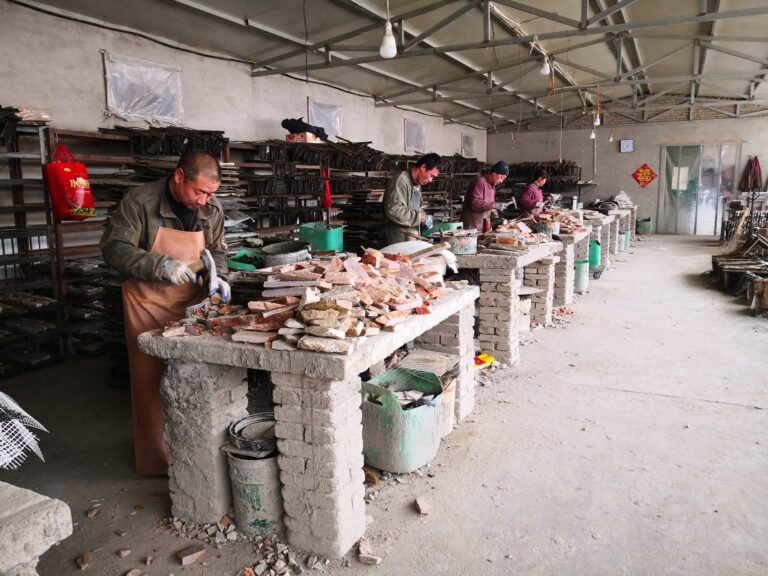
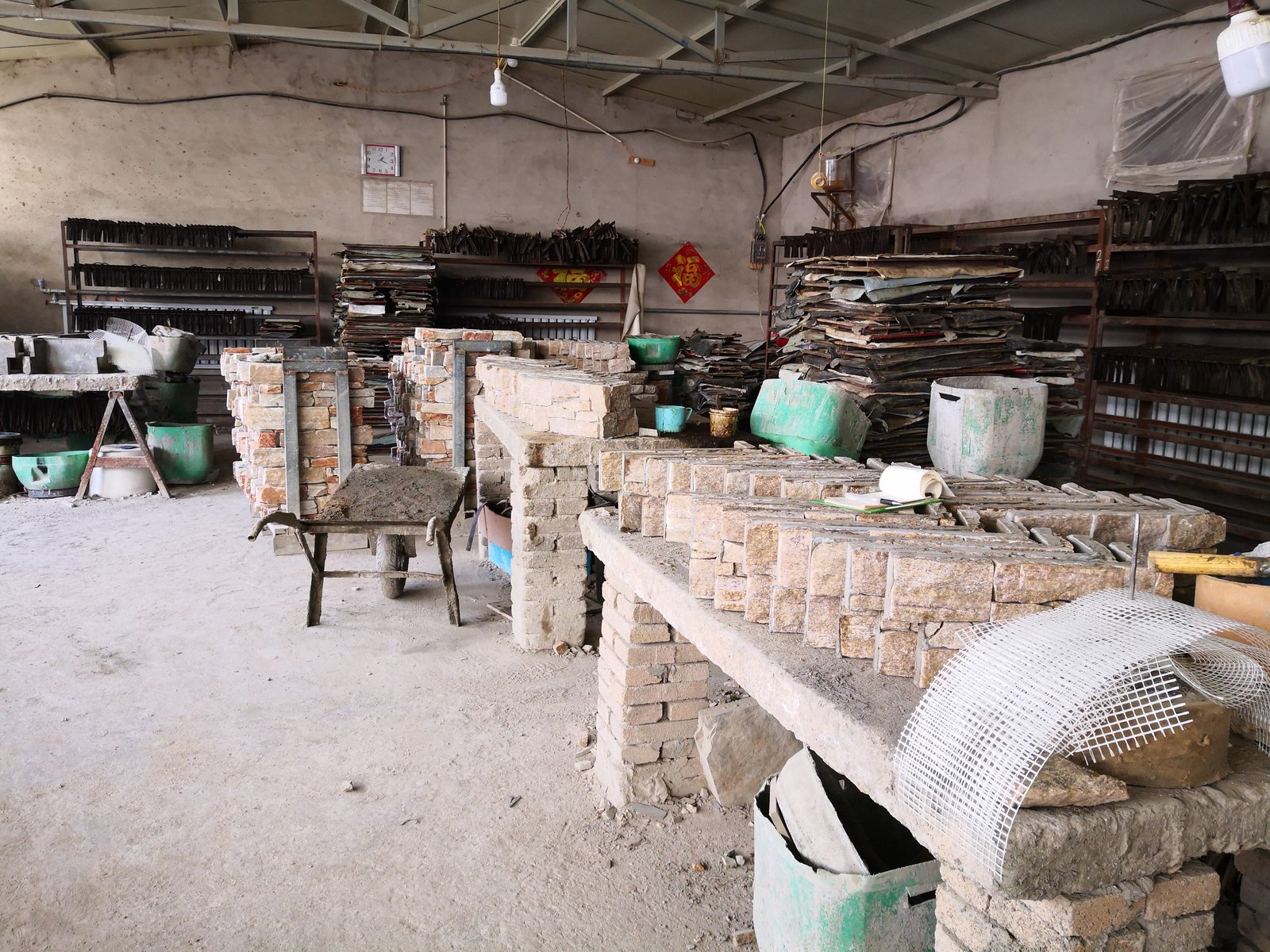
Start by researching Chinese stone cladding suppliers through trade platforms, industry directories, and trade shows. The Yixian region of Hebei Province is the primary production cluster for natural slate and quartzite stone panels in China — factories based there have direct access to quarry material and decades of export experience.
When evaluating a factory, verify these five points:
- Quarry ownership or control. Factories that source from their own quarries control color consistency and supply continuity. Those buying raw stone on the open market are at the mercy of spot availability.
- Export documentation. Confirm the factory can provide Certificate of Origin, ISPM 15 fumigation certificates (for wooden pallets), and test reports. A factory audit checklist helps you verify these systematically.
- Production capacity vs your volume. A factory shipping 220+ containers per year has room for your order. A factory doing 20 containers per year may struggle to prioritize you when demand spikes.
- Quality control process. Ask about their QC workflow — raw material inspection, in-process checks, and pre-shipment final inspection. Request sample QC reports.
- Communication responsiveness. How fast do they reply to inquiries? Do they send detailed quotations or vague estimates? A factory that communicates well before the order will communicate well during problems.
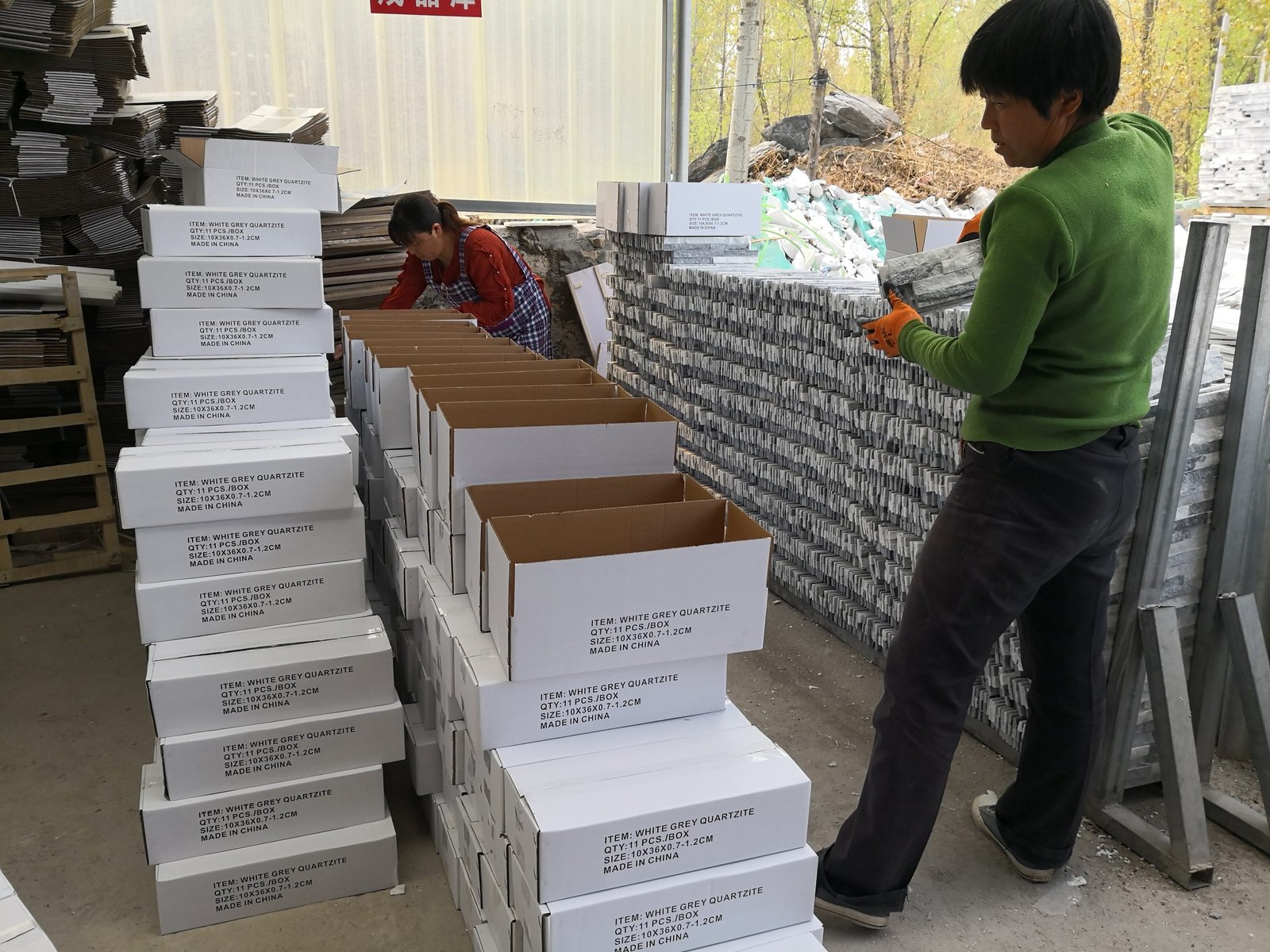
Order physical samples before committing to a container. Evaluate the samples systematically — check thickness consistency, edge quality, color range, and bond integrity. Ship the samples to a local testing lab if your market requires independent certification.
Step 4: Calculate Landed Cost and Set Your Margins
Before ordering, build a complete landed cost model. The FOB price the factory quotes is only the starting point. Your actual cost per square meter includes:
| Cost Component | Typical Range (per m²) | Notes |
|---|---|---|
| FOB factory price | $15–$35 | Varies by stone type, format, and finish |
| Ocean freight (per m² share) | $3–$6 | Based on 20GP container rate ÷ total m² loaded |
| Customs duty | 0–12% | Depends on HS code and country — check your tariff schedule |
| Port handling and trucking | $1–$2 | From destination port to your warehouse |
| Insurance | $0.30–$0.80 | Marine cargo insurance on the shipment value |
| Warehousing overhead | $1–$3 | Monthly storage cost allocated per m² of throughput |
Add these together and you get a landed cost of roughly $22–$55 per m², depending on the product and the shipping route. Your selling price needs to cover this cost plus your operating expenses (rent, staff, marketing, insurance) while leaving enough margin to reinvest in the next container.
Typical distributor pricing structures:
- Wholesale to contractors: Landed cost + 25–40% markup
- Retail to end-users: Landed cost + 50–80% markup
- Project pricing (large orders): Landed cost + 15–20% markup, volume discount
For a deeper dive on the pricing mechanics, our guide on the seven factors that affect FOB pricing explains what drives the factory-side number.
Step 5: Understand Import Logistics and Payment Terms
First-time importers are often surprised by the number of steps between “order placed” and “product on the shelf.” Here is the typical timeline:
- Order confirmation and deposit (Day 1) — You pay a 30% T/T deposit; the factory begins production. Understand payment terms like 30/70 T/T vs LC at sight before committing.
- Production (Days 2–25) — Standard production cycle is 20–25 working days. First orders take 25–30 days if custom packaging is involved.
- Balance payment and shipping documents (Day 25–27) — You pay the 70% balance after reviewing loading photos and shipping documents. The factory releases the Bill of Lading.
- Ocean freight (Days 28–60) — Transit time from Xingang/Tianjin to most North American and European ports runs 25–35 days.
- Customs clearance (Days 60–65) — Your customs broker handles import declarations, duty payment, and release. Have your broker lined up before the ship arrives.
- Local delivery (Days 65–70) — Trucking from port to warehouse.
The total lead time from order to warehouse is typically 10–12 weeks. Plan your cash flow and marketing around that timeline — there is no point advertising product that will not arrive for three months.
Choose your Incoterms carefully. FOB Xingang is the most common term for stone panel exports — you control the freight forwarder and can compare shipping rates. CIF gives the factory control of shipping, which can be simpler but hides the freight margin. DDP (delivered to your door) is the easiest but most expensive option.
Step 6: Set Up Your Showroom and Warehouse
Your physical space serves two functions: selling to walk-in customers and storing inventory for quick delivery. Most startup distributors combine both in a single industrial unit with a customer-facing front section.
Showroom essentials:
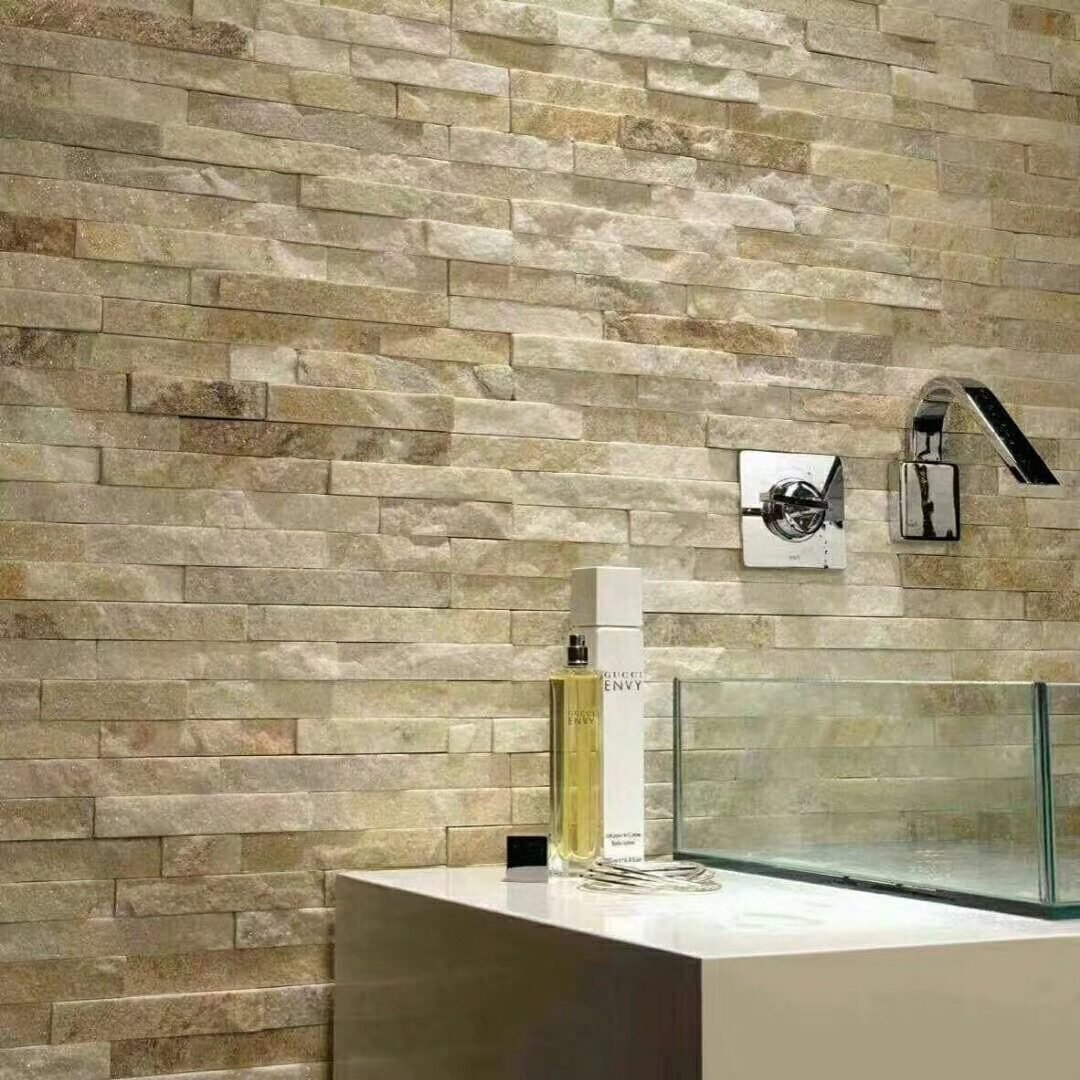
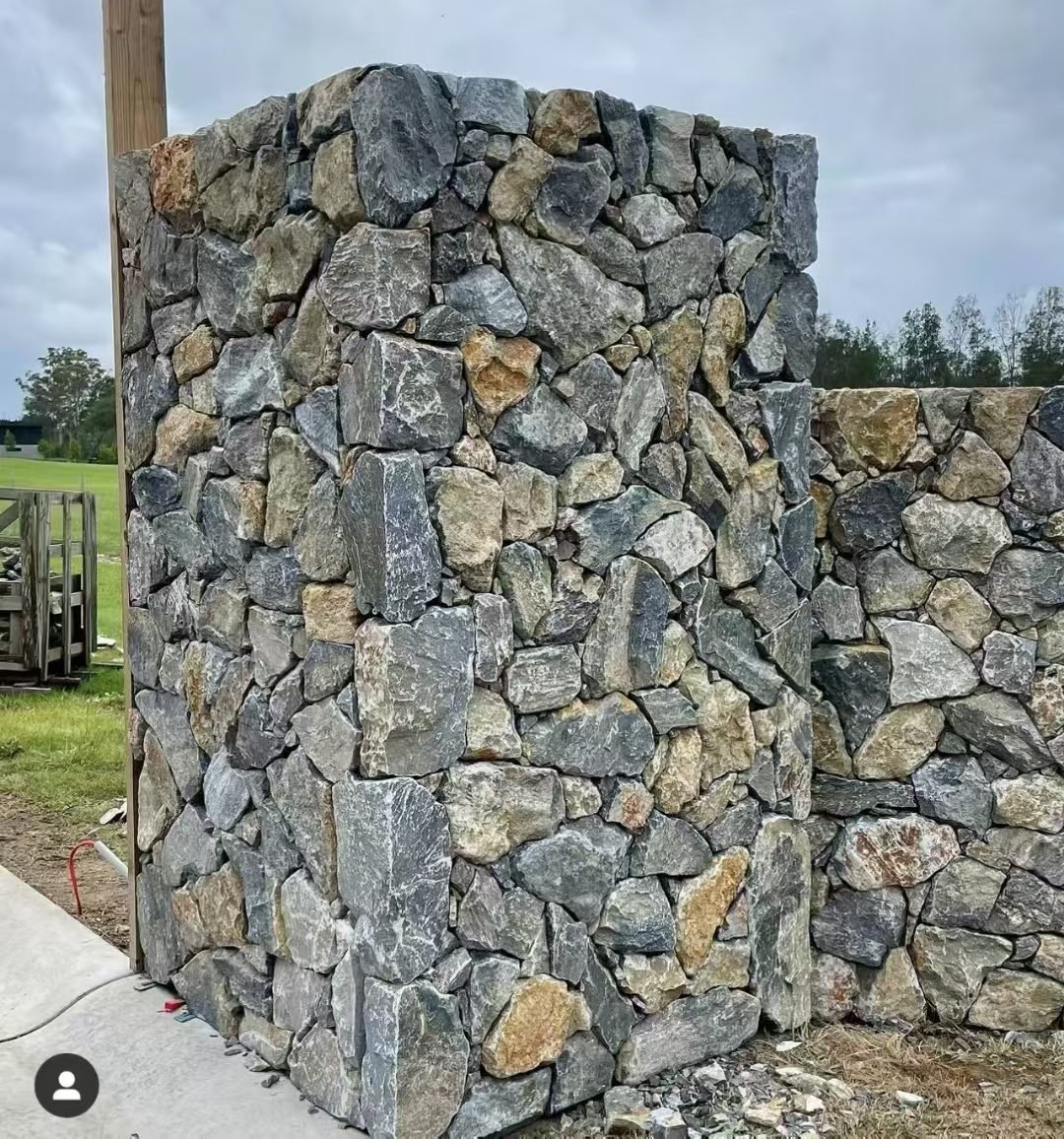
- Display walls showing installed product — at least 2 m × 1.5 m per product type, so customers see the pattern at scale
- Sample racks with take-home samples (15×15 cm or 30×30 cm pieces)
- A meeting table with product catalogs, specification sheets, and a screen for project visualization
- Good lighting — stone colors look different under warm LED vs cool daylight. Use both.
For guidance on building effective display walls, see our stone cladding display wall guide.
Warehouse requirements:
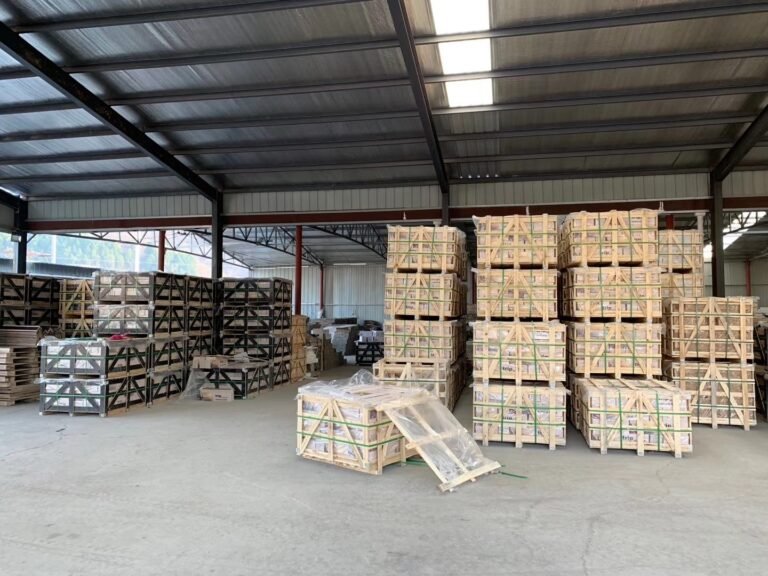
- Minimum 100–200 m² floor space for a startup operation
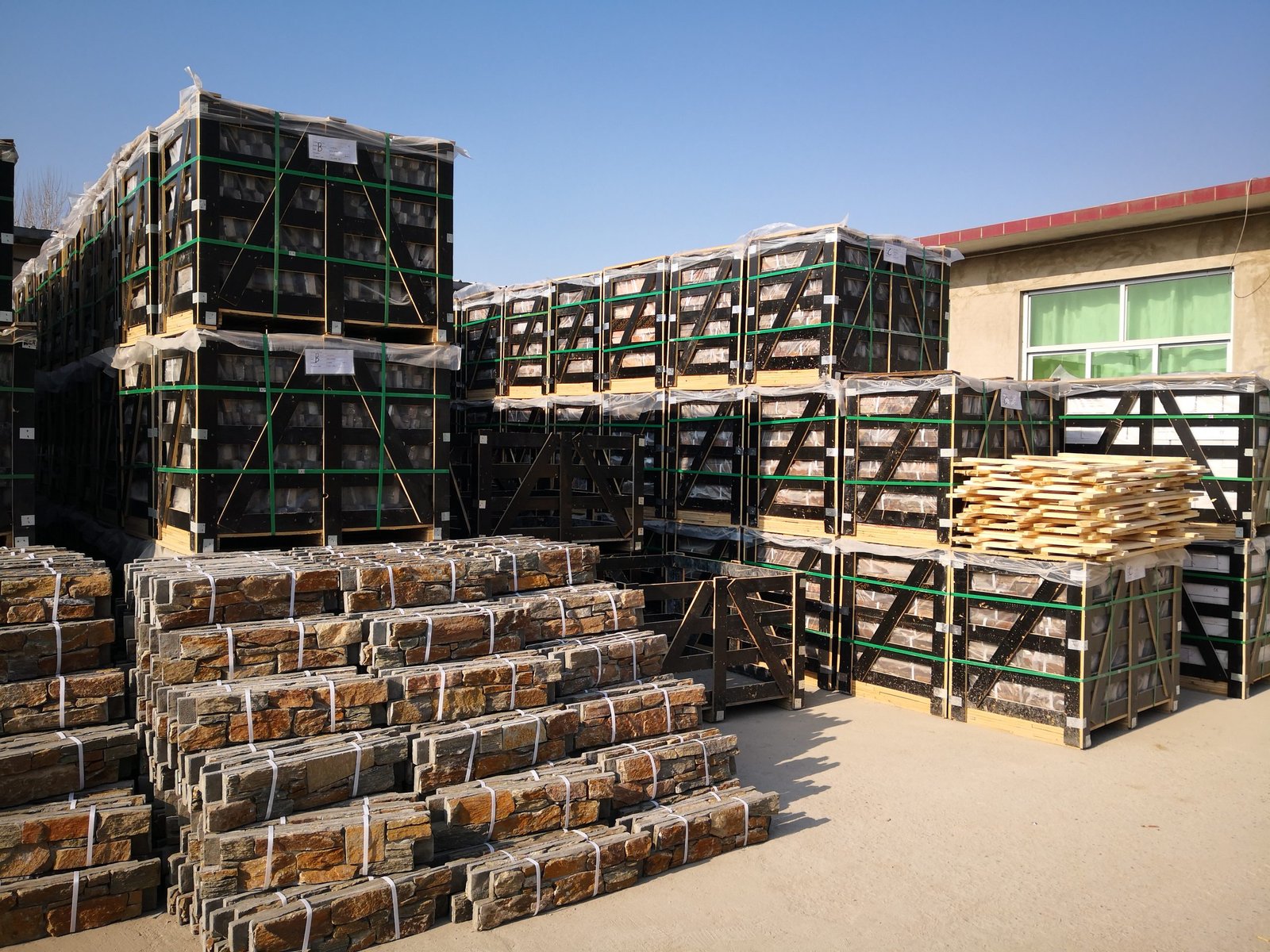
- Forklift or pallet jack for handling crates (a container holds 8–12 pallets)
- Dry, ventilated storage — stone panels are weather-resistant, but cardboard packaging is not
- Ground-floor access or a freight elevator if multi-level
The combined showroom-warehouse model keeps overhead low while giving customers the experience they need to make a purchase decision. Once volume justifies it, you can split into a dedicated showroom in a high-traffic retail area and a separate warehouse in an industrial zone with cheaper rent.
Step 7: Build Your Sales Channels
A distribution business lives or dies on its ability to move product consistently. Four sales channels should be active from day one:
Direct to contractors and installers. This is the volume channel. Build a list of local stone masons, general contractors, and landscape professionals. Visit their job sites with samples. Offer trade pricing and reliable delivery. A contractor who trusts your stock availability and product consistency will buy from you for years.
Architect and designer specification. Get your product into the specification libraries of local architecture firms. Provide CAD files, specification sheets, and physical sample boxes. When an architect writes your product into a project specification, the contractor has to buy from you or request a substitution — which takes effort they usually avoid.
Retail walk-in and online. Your showroom generates retail sales from homeowners and small renovation contractors. Complement it with a website that shows your product range, installation guides, and a request-for-quote form. Retail margins are higher but volumes are smaller.
Project-based supply. Large commercial projects (hotels, apartment complexes, retail chains) order in container quantities. Position yourself as the local supply partner who can hold stock, deliver on schedule, and provide the documentation that commercial procurement departments require.
Step 8: Marketing and Lead Generation for Distributors
Stone cladding distribution is a relationship business, but relationships need a foundation of visibility. The marketing mix that works for new distributors:
- Trade shows — Attend local and regional building material expos. A 3×3 m booth with a display wall and sample handouts generates more qualified leads than any digital channel in this industry.
- Installer training events — Host half-day workshops at your showroom showing contractors how to install stone veneer panels. They learn the product, they trust your expertise, they buy from you.
- Digital presence — A professional website with project galleries, technical data, and SEO-optimized content attracts architects and homeowners researching stone cladding options.
- Sample program — Offer free or low-cost sample shipments to architects and designers. A $5 sample that leads to a 200 m² project is the highest-return marketing spend in this business.
- Job site photography — Every completed installation is a marketing asset. Photograph it professionally, with the installer’s permission, and use it across your website, social media, and showroom displays.
Step 9: Avoid These Common First-Year Mistakes
Three errors kill new stone distribution businesses more often than anything else:
Over-ordering the first container. New distributors sometimes try to stock every color and format the factory offers. The result is a warehouse full of slow-moving inventory and not enough of the three or four products that actually sell in their market. Start with a focused range — typically two or three stacked stone colors, one thin ledgestone, and one flagstone or Z-panel option. Learn what sells before expanding.
Underestimating the sales cycle. Architects and contractors do not switch suppliers overnight. Expect three to six months of relationship building before orders start flowing consistently. Have enough working capital to cover operating costs through that period. Our guide on seasonal demand cycles explains when orders tend to spike and when they dip.
Neglecting after-sales support. Stone cladding is a technical product. Installers will have questions about substrate preparation, mortar selection, and corner detailing. If you cannot answer those questions — or direct them to resources like our installation guides — they will buy from someone who can.
Frequently Asked Questions
How much capital do you need to start a stone cladding distribution business?
A realistic starting budget is $80,000–$150,000 for a first container order plus working capital. That covers the product cost (FOB), ocean freight, customs duty, warehouse lease deposit, a basic showroom build-out, and three to six months of operating expenses before revenue starts flowing. Some distributors start with a half-container or a shared container arrangement to reduce the initial outlay.
What margins do stone cladding distributors typically make?
Gross margins for stone cladding distributors typically range from 35% to 55% on retail sales and 15% to 25% on wholesale to contractors and installers. The spread depends on market positioning, the exclusivity of the product range, and the level of technical support offered. Distributors who add value through design consultation, sample programs, and installer training tend to hold higher margins.
How long does it take from first order to first sale?
From placing a first container order to having product on a showroom floor typically takes 8–12 weeks: 20–25 days for production, 25–35 days for ocean freight and customs clearance, and 1–2 weeks for unpacking, quality inspection, and showroom installation. First sales often follow within 2–4 weeks of opening, assuming pre-launch marketing has generated leads.
Do you need a warehouse to start distributing stone cladding?
You need at least a storage space that can handle the weight and footprint of a container load — roughly 25–28 metric tons in about 50–60 m³. A small warehouse or industrial unit of 100–200 m² is typical for a startup distributor. Some begin with a combined showroom-warehouse to reduce overhead, splitting the space between a customer-facing display area and rack storage.
What is the minimum order quantity from a Chinese stone panel factory?
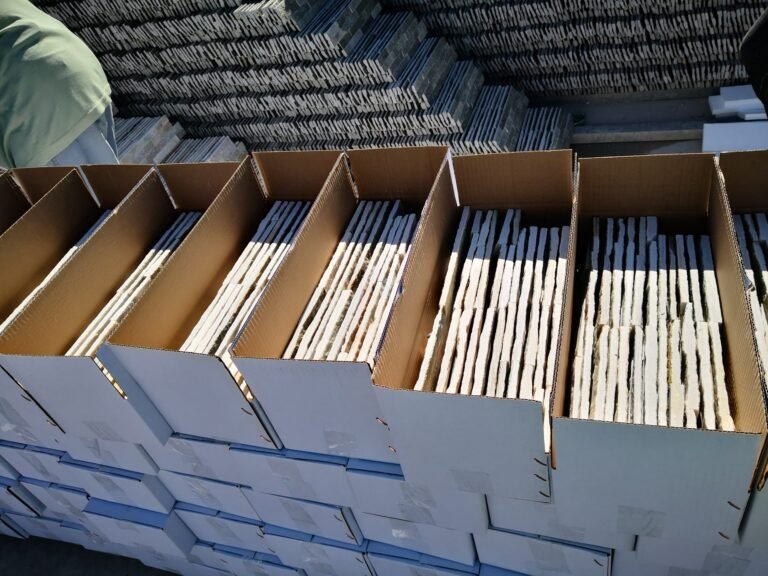
Most Chinese stone panel factories set their MOQ at one 20-foot general-purpose container (20GP). Depending on the product type and packing configuration, that translates to roughly 500–800 m² of stacked stone panels or 800–1,200 m² of thin ledgestone per container. Mixed containers that combine several product types in one shipment are often available for first orders.
Ready to Start?
Stone cladding distribution is a business where product knowledge, factory relationships, and local market presence create durable competitive advantages. The margins are real, the product is in demand, and the barrier to entry — a container of inventory and a place to show it — is achievable with focused planning.
Top Stone Panels supports new distributors from sample request through first container and beyond. With 18+ years of export experience, 220+ containers shipped annually, and a product range spanning stacked stone, thin ledgestone, Z-panels, flagstone, and stone columns, the factory partnership is in place. The rest — your market knowledge, your customer relationships, your local reputation — is what you build on top.