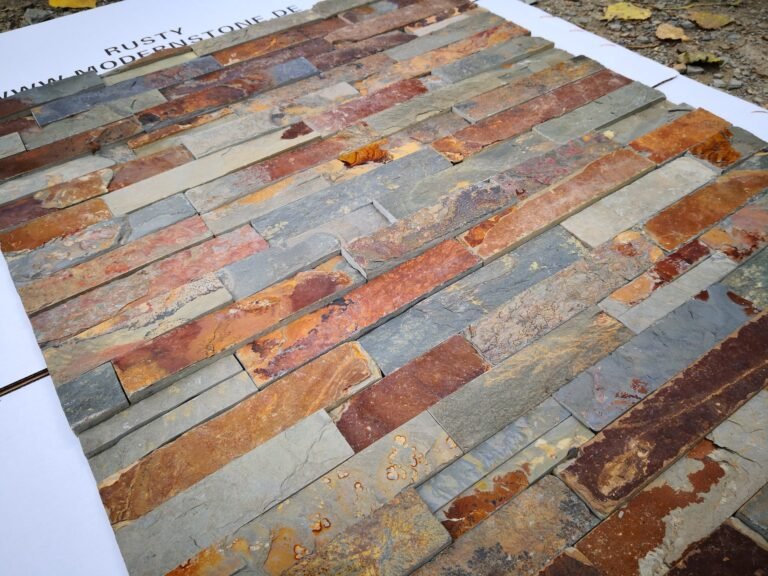
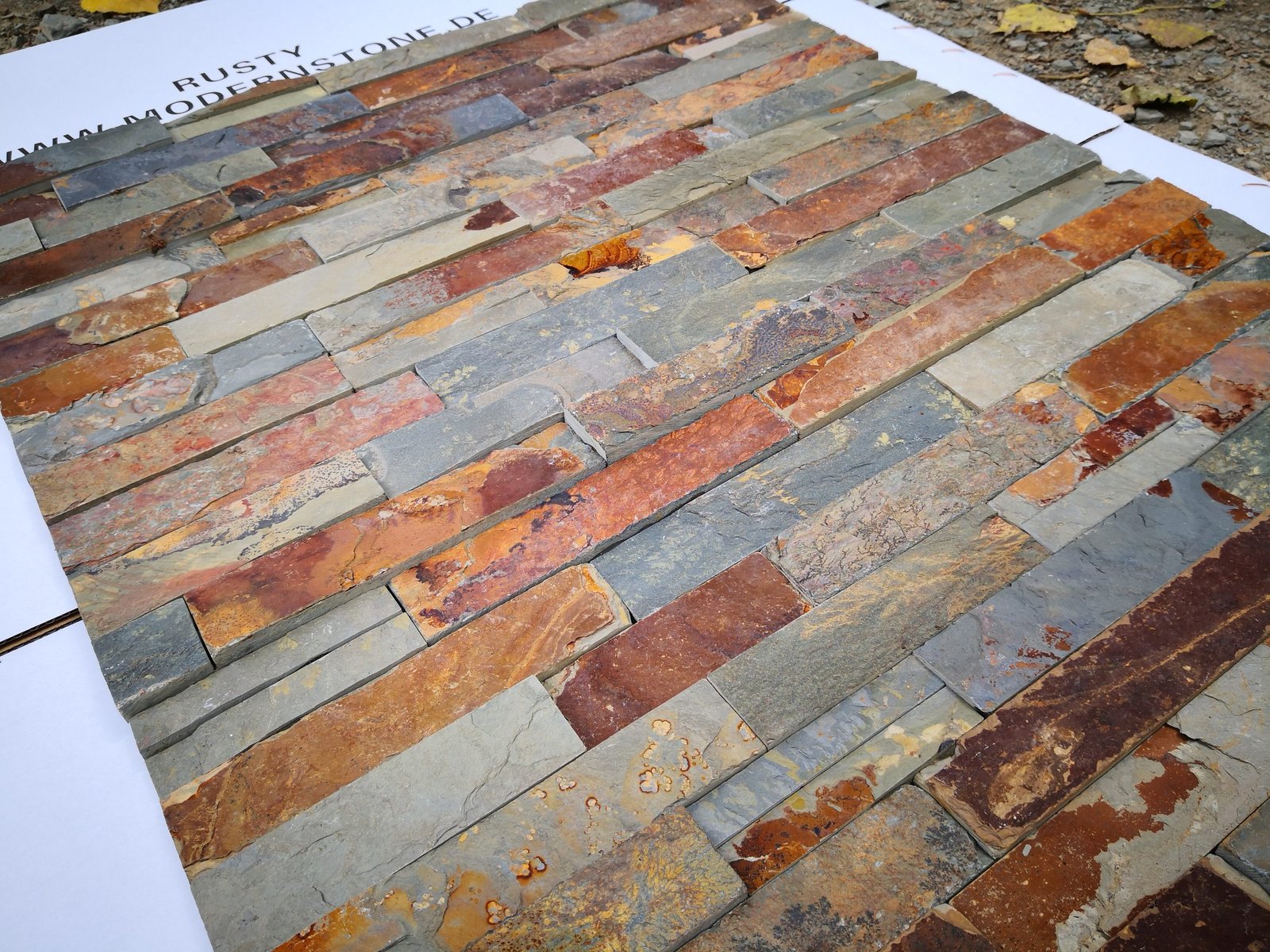
A building inspector walks onto a job site, pulls out a lighter, and holds it to the wall cladding. If that cladding is vinyl, it melts. If it’s timber, it chars. If it’s manufactured stone, it might hold — depending on the binder. If it’s natural stone, nothing happens. The flame touches geological material forged under millions of years of heat and pressure, and the stone simply does not care.
That is the core reason natural stone carries the highest fire classification available: A1 under EN 13501-1 and Class A under ASTM E84. No coatings. No chemical retardants. No engineered additives. Just mineral composition that was fire-resistant before humans built their first kiln.
For distributors, architects, and builders specifying cladding materials, understanding the natural stone fire rating is no longer optional. Stricter building codes in North America and Europe — especially after high-profile facade fires — now demand documented fire performance data for every exterior wall material. This guide breaks down exactly what those ratings mean, why slate and quartzite pass, and how to use that information in your next specification.
What Does an A1 Fire Rating Actually Mean?
The A1 classification comes from EN 13501-1, the European standard for fire classification of construction products and building elements. It sits at the top of a seven-tier scale (A1, A2, B, C, D, E, F) and means exactly this: the material contributes no heat to a fire, produces no flaming droplets, and generates negligible smoke.
Breaking down the classification system:
- A1 — Non-combustible. No contribution to fire. No smoke production limitation required because there is effectively none.
- A2 — Non-combustible with very limited organic content (typically less than 1% by mass). May have smoke (s) and flaming droplet (d) sub-classifications.
- B through D — Combustible materials with varying degrees of fire contribution. Many treated timber products and some plastics land here.
- E and F — Materials that contribute significantly to fire. Untreated wood, most plastics, and foam insulation.
In North America, the equivalent framework is ASTM E84 (also known as UL 723 or the Steiner tunnel test). This test measures two values: Flame Spread Index (FSI) and Smoke Developed Index (SDI). The results produce a Class A, B, or C rating:
- Class A — FSI 0–25, SDI 0–450 (best performance)
- Class B — FSI 26–75
- Class C — FSI 76–200
Natural stone consistently records an FSI of 0 and an SDI of 0 on the Steiner tunnel test. Stone does not burn, does not produce smoke, and does not drip flaming particles. These are not performance targets achieved through engineering — they are inherent material properties dictated by geology.
For specifiers working across jurisdictions, the mapping is straightforward: EN 13501-1 A1 corresponds to ASTM E84 Class A, and both represent the highest fire safety classification available for building materials. When a product data sheet states “natural stone fire rating: A1 / Class A,” it means the material meets the most stringent non-combustibility requirement recognized globally.
EN 13501-1 Classification: How Natural Stone Is Tested
Understanding the test methodology matters for anyone writing or reviewing material specifications. EN 13501-1 does not test a product with a single method — it applies a cascade of tests depending on the material type.
For natural stone, the relevant tests are:
EN ISO 1182 (Non-combustibility test): A cylindrical specimen is placed in a tube furnace at 750°C for a specified duration. The test measures temperature rise in the furnace, sustained flaming, and mass loss. Natural stone passes this test with negligible temperature contribution because the material has already undergone geological metamorphism at far higher temperatures. Slate, for instance, was formed under temperatures of 300–450°C and pressures that would crush most building materials. Putting it in a 750°C furnace is asking it to revisit conditions milder than its formation.
EN ISO 1716 (Gross heat of combustion): This bomb calorimeter test measures the total heat energy a material could theoretically release. For organic materials like wood or plastic, this value is substantial. For natural stone — composed of silicates, carbonates, and metal oxides — the gross heat of combustion is essentially zero. There is nothing in the mineral structure that can oxidize and release energy.
The smoke and flaming droplet sub-classifications (s1, s2, s3 and d0, d1, d2) apply mainly to materials that could produce smoke or dripping. Natural stone earns s1 (little or no smoke) and d0 (no flaming droplets) by default — there is simply no mechanism for stone to produce either.
This testing framework explains why the natural stone fire rating is so consistently high across all stone types. Whether you are testing Yixian slate, Brazilian quartzite, or Italian marble, the mineral composition tells the same story: these are materials that have already survived the most extreme thermal conditions on Earth.
Why Slate and Quartzite Are Inherently Fire-Resistant
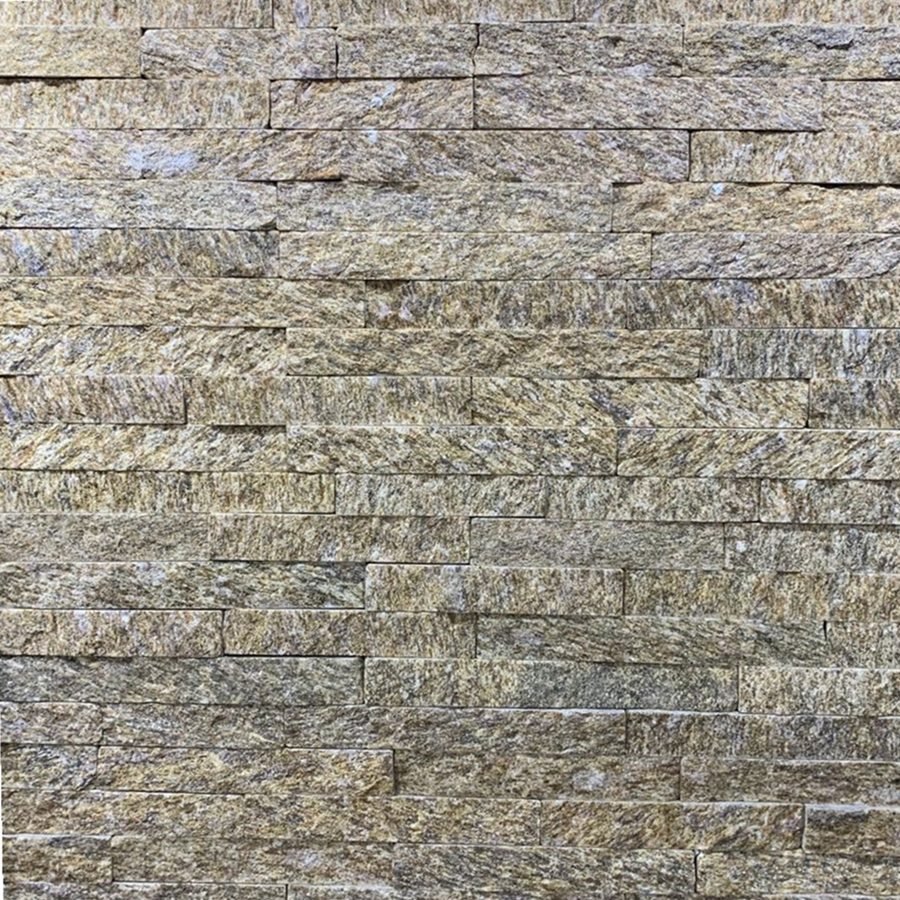
Fire resistance in building materials comes from one of two sources: either the material has been engineered to resist combustion (fire-retardant-treated wood, intumescent coatings), or the material is inherently non-combustible due to its chemical composition. Natural stone falls squarely in the second category, and that distinction matters enormously for long-term building safety.
Slate is a low-grade metamorphic rock formed from shale or mudstone under directed pressure and moderate heat (300–450°C). Its primary mineral constituents — quartz, muscovite, illite, and chlorite — are all non-combustible silicates. The iron compounds that give some slate its color (hematite, pyrite) are already fully or near-fully oxidized. There is no residual carbon in properly quarried roofing-grade slate. When used as wall cladding, slate panels present a surface that will not ignite, smolder, or contribute caloric energy to a fire event.
Quartzite is even more thermally robust. Formed from sandstone under extreme heat and pressure (typically 700°C+ during metamorphism), quartzite is essentially a solid matrix of interlocking quartz crystals. Quartz (SiO₂) has a melting point of approximately 1,650°C — roughly 800°C above typical building fire temperatures. Quartzite will not combust, will not decompose thermally at building-fire temperatures, and will not release volatile compounds when heated.
Both materials also exhibit extremely low thermal conductivity compared to metals. This means that even when one face of a stone panel is exposed to intense heat, the heat transfer to the substrate behind the panel is slow and limited. For wall assemblies, this thermal buffering provides additional protection to the structural elements behind the cladding.
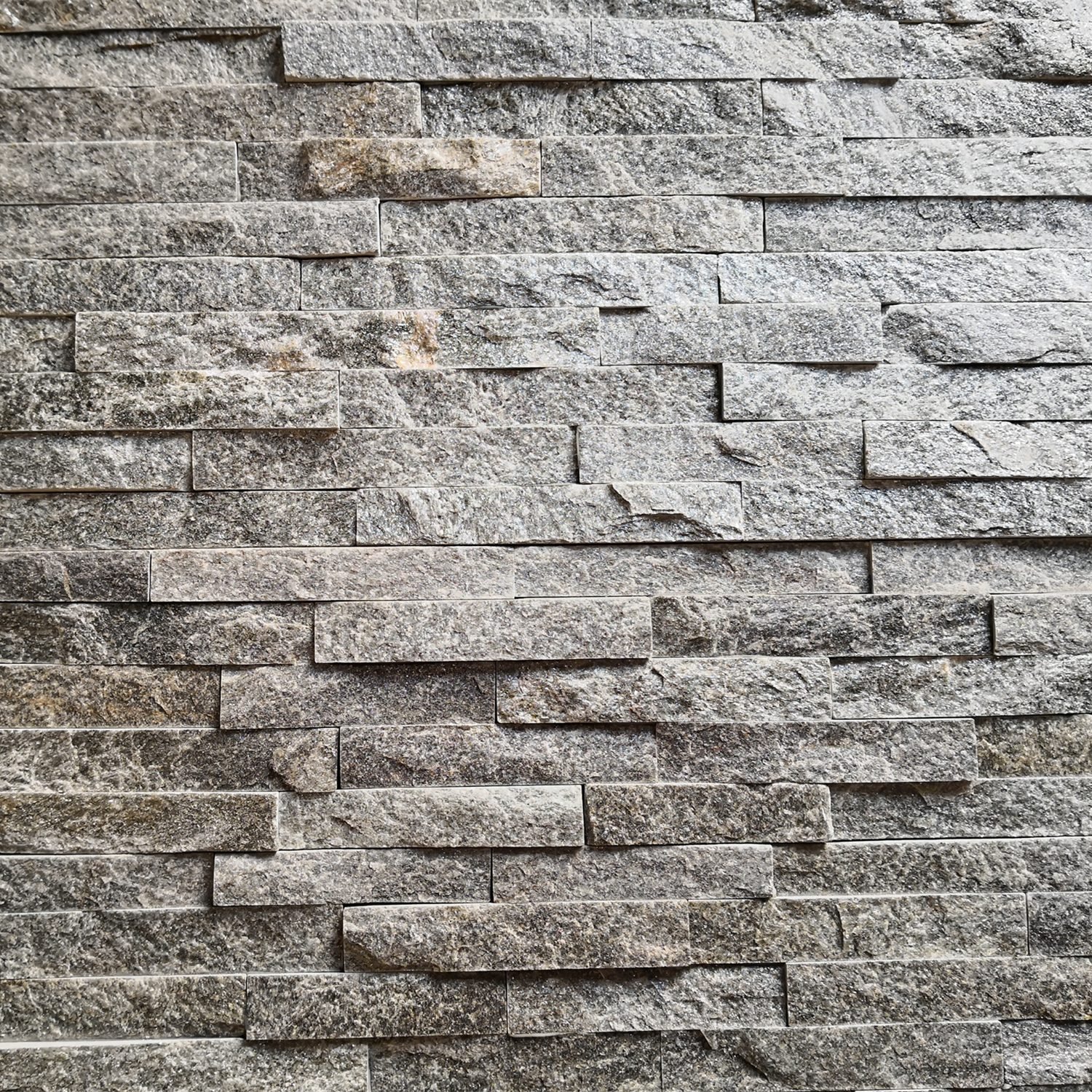
Stacked stone panels made from slate and quartzite inherit these properties directly. The panels consist of hand-split stone pieces bonded to a cementitious backing with marine-grade epoxy — both the stone and the bonding system are non-combustible. No organic adhesives, no foam cores, no plastic laminates. The fire performance of the finished panel is essentially the fire performance of the stone itself.
For a deeper understanding of material composition and how it differs from alternatives, the comparison between natural stone veneer and cultured stone is particularly instructive.
Natural Stone vs. Manufactured Stone, Brick, and Timber: Fire Performance Comparison
Specifiers routinely compare cladding options across multiple performance criteria, and fire rating is increasingly the deciding factor. The following table summarizes how common exterior cladding materials perform under fire testing:
| Material | EN 13501-1 | ASTM E84 (FSI / SDI) | Combustible? | Smoke Production | Toxic Fumes | Fire Retardant Treatment Required? |
|---|---|---|---|---|---|---|
| Natural Stone (Slate / Quartzite) | A1 | 0 / 0 | No | None | None | No — inherent |
| Manufactured Stone Veneer (MSV) | A1 – A2 | 0–15 / 0–50 | No (cement-based) | Negligible | None | No |
| Clay Brick | A1 | 0 / 0 | No | None | None | No |
| Fiber Cement Board | A2 – s1, d0 | 0–25 / 0–50 | Minimally | Low | None | No |
| Fire-Retardant-Treated Wood | B – s1, d0 | 25 / 50–100 | Yes (retarded) | Low–Moderate | Possible (treatment chemicals) | Yes — must be re-treated |
| Untreated Timber Cladding | D – E | 100–200 / 100–300 | Yes | High | Yes (CO, hydrocarbons) | Required for many applications |
| Aluminum Composite Panel (PE core) | D – E | Varies (core-dependent) | Yes (core) | High | Yes | Banned in many jurisdictions for high-rise |
| Vinyl / PVC Siding | D – E | 75–200 / 200–500 | Yes | High | Yes (HCl gas) | Limited by code in many regions |
Several patterns emerge from this comparison. Natural stone, clay brick, and manufactured stone all achieve non-combustible classifications, but they arrive there through fundamentally different mechanisms. Brick is fired at 1,000°C+ during manufacturing — it is essentially pre-burned. Manufactured stone relies on the non-combustibility of Portland cement but includes lightweight aggregates and pigments that introduce minor variability. Natural stone is non-combustible because it was never anything else — there is no manufacturing step that could introduce combustible content.
Timber and vinyl present the opposite end of the spectrum. Even fire-retardant-treated wood achieves only Class B at best, and the treatment degrades over time, requiring reapplication. PVC cladding, while popular for its cost advantages, releases hydrogen chloride gas when burned — a serious toxicity concern that has driven code restrictions in multiple jurisdictions.
For architects weighing exterior stacked stone veneer versus manufactured stone, the fire rating differential is small but the provenance guarantee is significant. Natural stone’s fire performance is a geological constant. Manufactured stone’s fire performance depends on consistent production quality at the plant level.
Building Code Fire Requirements by Region
Fire safety requirements for exterior cladding vary significantly by jurisdiction, building type, and building height. Here is how the major code frameworks address cladding fire performance:
International Building Code (IBC) — United States: Section 1403.5 requires exterior wall coverings on buildings of Type I, II, III, and IV construction to meet NFPA 285 (Standard Fire Test Method for Evaluation of Fire Propagation Characteristics of Exterior Wall Assemblies) when the building exceeds 40 feet in height. For buildings at or below 40 feet, Section 803.1 requires interior wall finishes to meet ASTM E84 Class A (FSI ≤ 25) in exit enclosures and Class B or better in other spaces. Natural stone satisfies all of these requirements without supplementary testing, since its ASTM E84 results are FSI 0 / SDI 0.
National Building Code of Canada (NBC): Canada’s NBC references CAN/ULC-S134 for exterior wall assemblies (analogous to NFPA 285) and CAN/ULC-S102 for interior surface burning characteristics. Stone veneer products consistently achieve the highest classification under both standards. Canadian jurisdictions have been particularly aggressive in restricting combustible cladding following the Lacrosse Building fire in Melbourne (which influenced Canadian code amendments), making non-combustible stone an attractive option for specifiers.
European Union (Construction Products Regulation — CPR): The CPR mandates CE marking with declared fire performance under EN 13501-1 for all construction products sold in the EU. For facade systems on buildings above a certain height (varying by member state, typically 12–18 meters), A1 or A2 classification is required. Natural stone products meet this threshold inherently. Post-Grenfell amendments in the UK and similar reforms across the EU have tightened requirements further, explicitly restricting combustible materials in external wall systems of residential buildings over 11 meters.
Australia (National Construction Code — NCC): Following the 2014 Lacrosse fire and 2017 Grenfell inquiry, Australia’s NCC now mandates non-combustible external wall cladding for buildings over 18 meters (4+ storeys) under Deemed-to-Satisfy provisions. AS 1530.1 testing confirms natural stone as non-combustible. For buildings under 18 meters, performance-based solutions may allow combustible materials, but specifiers increasingly default to non-combustible options to reduce liability.
The common thread across all these frameworks: non-combustible, A1-rated materials are always compliant. They never trigger height restrictions, never require supplementary fire testing, and never face retroactive bans after high-profile fire events. This permanence of compliance is a significant advantage for thin stone veneer and stacked stone panels used in multi-story construction.
How Top Stone Panels Products Meet Fire Safety Codes
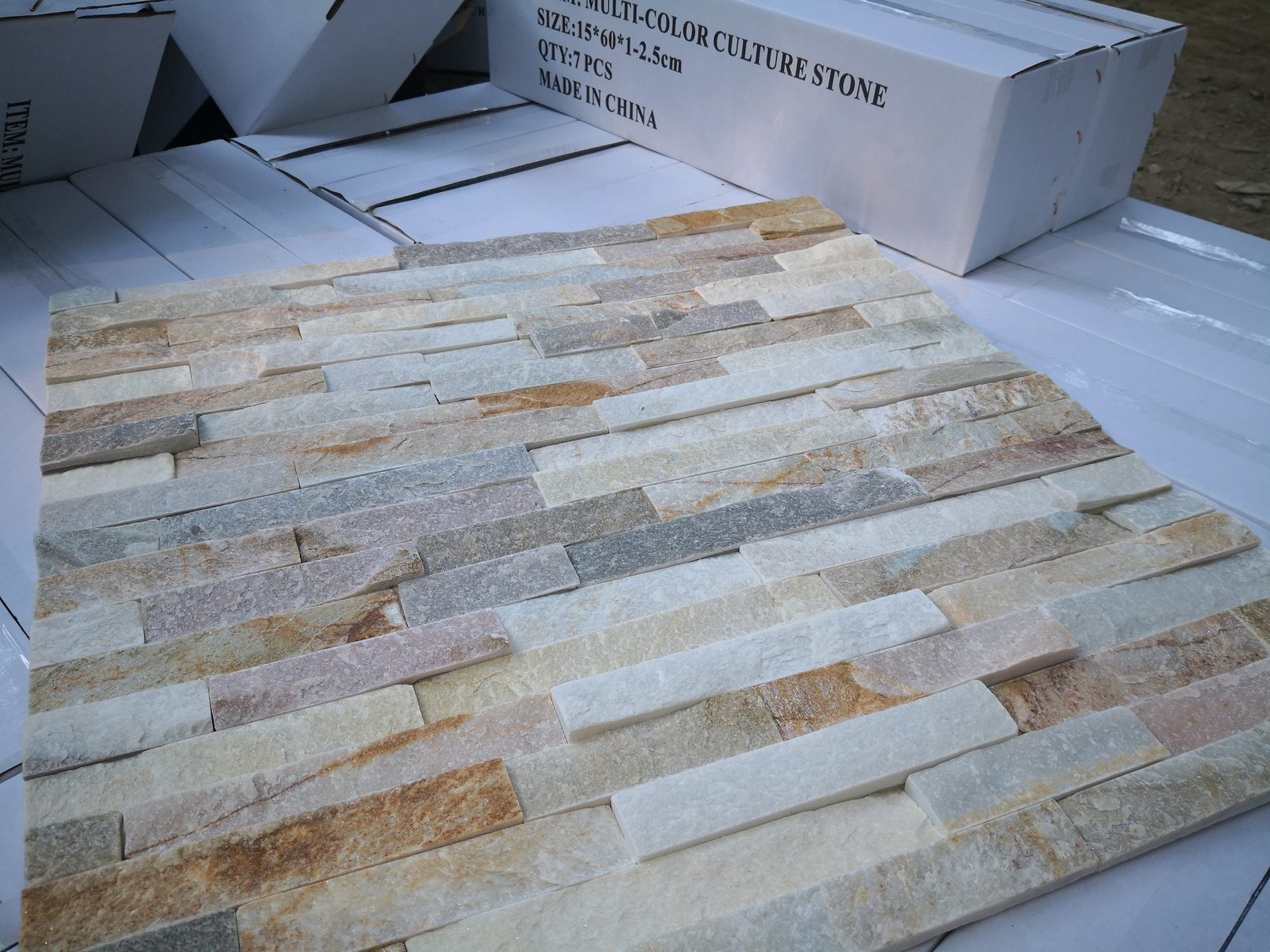
Every product in the Top Stone Panels catalog begins with a fire performance advantage that cannot be replicated by synthetic alternatives: 100% natural stone sourced directly from owned quarries in Yixian, Hebei Province. No reconstituted stone. No resin-bonded aggregates. No polymer-modified surfaces. The stone that comes out of the ground is the stone that goes onto the wall.
Here is how each product category performs from a fire safety standpoint:
Stacked Stone Panels (15×60 cm / 15×55 cm): These panels consist of hand-split slate and quartzite pieces bonded to a cementitious backing using marine-grade epoxy adhesive. Both the stone face and the cement backing are non-combustible mineral materials. The marine-grade epoxy, while technically an organic compound, is used in such minimal quantities (thin-set bond lines) that it does not affect the overall fire classification of the assembly. The panels achieve A1 fire rating as installed.
Thin Ledgestone (36×10 cm): Individual thin-cut stone strips, typically installed with thin-set mortar directly onto a masonry or cement board substrate. No backing panel, no adhesives beyond the installation mortar. The fire rating of the installed assembly is governed entirely by the stone and the mortar — both non-combustible.
Z-Panels (20×55 cm / 15.2×61 cm): Interlocking stone veneer panels designed for rapid installation. The Z-profile mechanical interlock reduces adhesive dependency, and the stone face provides the same inherent A1 fire performance as all Top Stone Panels products.
Thin Stone Veneer (random strips): Flexible, mesh-backed stone strips that conform to curved surfaces. The mesh backing is fiberglass — a mineral fiber that is non-combustible. The thin stone face provides both the aesthetic and the fire performance.
Flagstone and Crazy Paving: Mesh-backed natural stone tiles for floors, patios, and walkways. Same inherent fire performance as the wall cladding products, with the added benefit of providing a non-combustible walking surface around fire pits and outdoor cooking areas.
Stone Columns: Custom-section stone cladding for structural columns and pillars. Columns in commercial buildings often have specific fire rating requirements as structural fire protection elements. Natural stone column cladding adds a non-combustible thermal buffer to the structural member behind it.
Top Stone Panels has operated since 2005, with 18+ years of quarry-to-export experience. The 3-step quality control process — raw material selection, in-process re-inspection, and pre-shipment final inspection — ensures that every shipment maintains consistent material properties, including the fire performance characteristics that specifiers depend on.
Fire Testing Documentation: What Specifiers Need
Knowing that natural stone passes fire testing is one thing. Having the documentation to prove it to a building official, fire marshal, or insurance underwriter is another. Specifiers should request and maintain the following documentation for any natural stone cladding project:
1. Material Composition Statement: A declaration from the manufacturer confirming that the product is 100% natural stone with no organic additives, polymer coatings, or combustible backing materials. Top Stone Panels provides this for every product line — the stone is quarried, cut, and bonded with mineral-based adhesives. No exceptions.
2. EN 13501-1 Classification Report: For projects in the EU, UK, and jurisdictions referencing European standards, a test report from an accredited laboratory confirming A1 classification. The report should reference EN ISO 1182 and EN ISO 1716 as the underlying test methods. Many natural stone products qualify for A1 classification without testing (under EN 13501-1 Annex A, certain materials are deemed to satisfy A1 without testing based on their chemical composition), but having a formal report streamlines approvals.
3. ASTM E84 Test Report: For North American projects, a Steiner tunnel test report showing FSI and SDI values. Natural stone typically achieves FSI 0 / SDI 0, which satisfies Class A requirements for any application where surface burning characteristics are regulated.
4. NFPA 285 Assembly Test (if required): For exterior wall assemblies on buildings over 40 feet under the IBC, the entire wall system — not just the cladding — must pass NFPA 285. This is an assembly-level test, and the stone cladding’s contribution to fire propagation is negligible. However, the substrate, insulation, and air/water barrier components of the assembly must also be compatible. Specifiers should confirm the complete assembly configuration with the project’s fire engineer.
5. Material Safety Data Sheet (MSDS/SDS): While natural stone is not a hazardous substance, an SDS confirms the material’s chemical composition and thermal stability data, which can support fire engineering assessments.
For distributors stocking Top Stone Panels products, this documentation package is available on request and can be provided per shipment or per product line. The combination of geological provenance (material sourced from established quarries in Yixian, Hebei — a major slate-producing region with consistent mineral composition) and manufacturing transparency (3-step QC, infrared CNC diamond blade cutting, batch-specific vein selection) gives specifiers confidence that the fire performance documented in test reports will match the material delivered to site.
For more information on how natural stone compares to alternatives in real-world performance — not just fire resistance but also freeze-thaw durability and product type options for distributors — these guides provide additional specification context.
Practical Applications: Where Fire Rating Drives Material Selection
Fire rating is not just a compliance checkbox. In many applications, it is the primary reason natural stone is specified over competing materials:
Fireplace surrounds and hearths: This is the most obvious application, and natural stone has been the default fireplace material for centuries. Installing stacked stone veneer panels around a fireplace is straightforward precisely because the material requires no special fire-rated clearances or thermal barriers. The stone handles direct flame proximity without degradation, discoloration, or off-gassing.
Commercial kitchen cladding: Restaurant and commercial kitchens have stringent fire code requirements for wall finishes near cooking equipment. Natural stone panels provide a non-combustible, cleanable surface that satisfies health department requirements alongside fire codes.
High-rise exterior cladding: Post-Grenfell building code reforms across Europe, Australia, and parts of North America have severely restricted combustible materials on building facades above certain heights. Natural stone veneer panels — at a fraction of the weight of full-thickness masonry — offer a non-combustible cladding solution that meets height-unlimited fire requirements while delivering the premium aesthetic that developers and architects want.
Wildfire-prone residential construction: In California, Colorado, and Mediterranean regions, Wildland-Urban Interface (WUI) building codes require ignition-resistant exterior materials. Natural stone siding and accent walls satisfy WUI requirements without the cost and weight of full masonry construction. Thin stone veneer is particularly well-suited for WUI applications because it provides the fire protection of natural stone at a weight that standard wood-frame construction can support.
Parking structures and utility buildings: These high-risk occupancies often require non-combustible interior finishes. Stone columns and pillars in parking garages provide both structural fire protection and a premium aesthetic that elevates what would otherwise be utilitarian spaces.
In each of these applications, the natural stone fire rating is not merely a compliance enabler — it is a competitive advantage. Distributors who can document A1 classification and supply consistent, high-quality stone panels position themselves as the go-to source for projects where fire performance is non-negotiable.
The Bottom Line for Distributors and Specifiers
Fire safety codes are tightening globally, and the materials that pass today’s requirements will almost certainly pass tomorrow’s. Natural stone occupies a unique position in this regulatory trajectory: its fire performance is geological, not engineered. No code change can strip an A1 rating from a material that was non-combustible before building codes existed.
For distributors evaluating their cladding inventory, this permanence matters. Manufactured products can face reformulations, supply chain substitutions, and production quality lapses that alter fire performance between batches. Natural stone from a consistent quarry source delivers the same mineral composition — and the same fire rating — on every shipment.
Top Stone Panels offers distributors a direct quarry-to-container supply chain from Yixian, Hebei Province, with FOB Xingang, CIF, and DDP trade terms. The product range spans stacked stone, thin ledgestone, Z-panels, thin stone veneer, flagstone, and stone columns — all in 100% natural slate, quartzite, marble, and sandstone. Every product carries the same inherent A1 fire classification that only geological materials can provide.
Frequently Asked Questions
Does natural stone have an A1 fire rating?
Yes. Natural stone products such as slate, quartzite, marble, and sandstone are inherently non-combustible and achieve an A1 fire classification under EN 13501-1 without additional treatment. This is because stone contains no organic or combustible material. Under ASTM E84 (Steiner tunnel test), natural stone typically records a flame spread index of 0 and a smoke developed index of 0.
What is the difference between A1 and A2 fire rating for stone cladding?
A1 means the material contributes zero heat release and produces no flaming droplets under EN 13501-1 testing. A2 allows very limited combustible content (up to a small percentage by mass). Most 100% natural stone products qualify as A1. Stone panels bonded with cement-based adhesives on a mineral backing also typically achieve A1 or A2-s1,d0 classification.
Is natural stone fire rated for use around fireplaces?
Natural stone is one of the best materials for fireplace surrounds and hearths. It is non-combustible, does not emit toxic fumes when heated, and withstands direct flame contact. Slate and quartzite veneer panels carry an inherent A1 fire rating, making them fully compliant for fireplace applications in both residential and commercial buildings under IBC, NBC, and European building codes.
Does manufactured stone veneer have the same fire rating as natural stone?
Manufactured stone veneer (MSV) is made from Portland cement, lightweight aggregates, and iron oxide pigments. While MSV is generally non-combustible and often achieves Class A or A1 ratings, it relies on manufactured composition rather than inherent geological properties. Natural stone provides a fire rating guaranteed by its mineral composition alone, with no dependence on manufacturing process quality.
What fire test standards apply to natural stone cladding?
The main standards are EN 13501-1 (European reaction-to-fire classification, producing A1 through F ratings), ASTM E84 / UL 723 (Steiner tunnel test for surface burning characteristics, producing Class A/B/C ratings), and NFPA 285 (assembly fire propagation test for exterior wall systems). Natural stone consistently achieves the highest classification under all three.
Request Samples and Fire Documentation
If you are specifying natural stone for a project with fire performance requirements, Top Stone Panels can provide material samples, composition statements, and fire classification documentation tailored to your jurisdiction’s standards.
Contact the Top Stone Panels team to request samples or discuss fire testing documentation for your next specification. With 18+ years of export experience and a product range built entirely on 100% natural stone, we help distributors and specifiers deliver non-combustible cladding solutions that satisfy the most demanding building codes — from IBC and NBC in North America to CPR and EN 13501-1 across Europe.