Stone cladding for hotels and resorts is bought by people who are not stone specialists. The procurement lead, the interior specifier, and the owner’s representative share the same worry. The stone has to look like the rendering, survive ten years of luggage trolleys and pool chemicals, and land inside an FF&E budget that was fixed before anyone opened a catalogue. FF&E, furniture, fixtures, and equipment, treats wall cladding as a fixture line, which means the material, format, and finish get frozen early. Every later change costs time and money. This guide is written for that room.
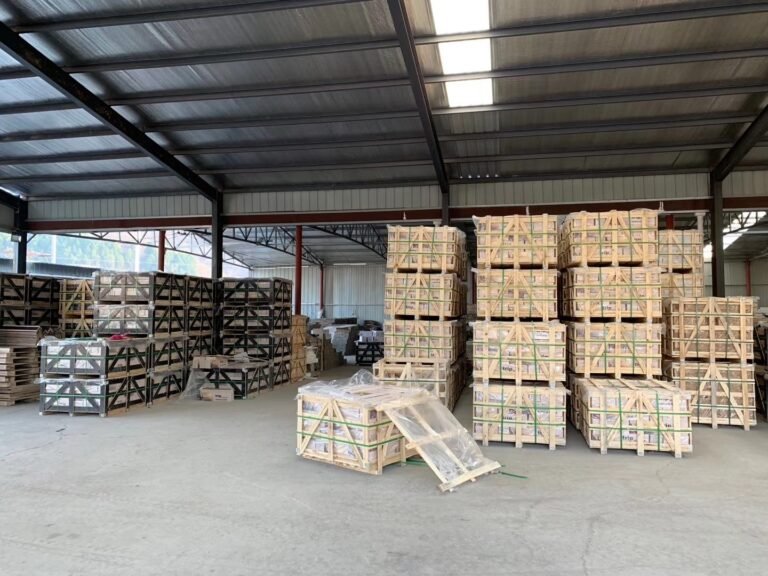
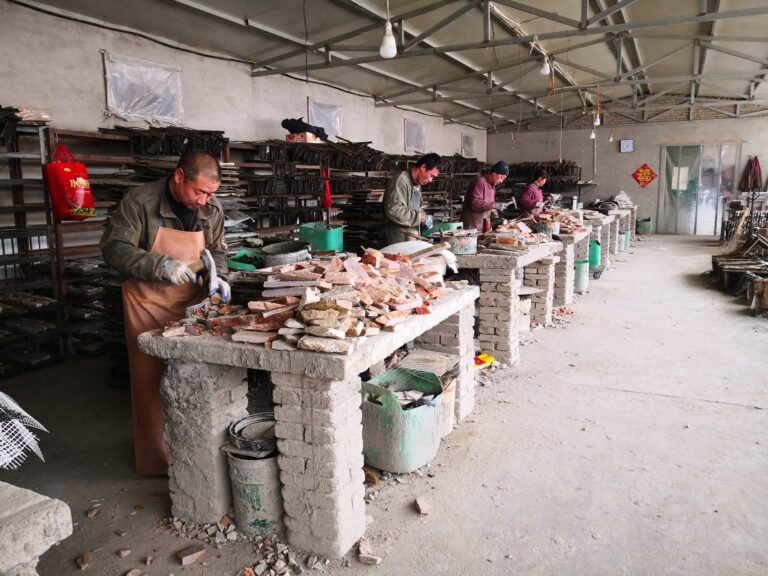
It walks the procurement sequence end to end: where natural stone belongs in a hotel, which product line fits which zone, what grades to specify, how to do the quantity and MOQ math, how mockups and sign-off work, and what your purchase order should lock down. It is anchored to a single-source factory, Top Stone Panels, which ships direct from its own quarries in Yixian, Hebei, China, and has supplied hospitality projects through distributors across North America and Europe.
Key Takeaways
- Specify stone zone by zone: stacked stone panels for lobbies and facades, thin ledgestone for guestroom and spa walls, stone column kits for entrances, loose veneer for exterior landscape walls.
- Choose dense rocks for traffic zones. Natural slate and quartzite faces resist trolley traffic, freeze-thaw from -30C to +50C, UV fading, and coastal salt.
- Natural stone carries an inherent Class A fire performance, aligned with the ASTM E84 Class A flame spread band of 0 to 25.
- Budget around the one-20-foot-container MOQ per product line: samples in 1-3 days for mockups, production in 20-25 working days, first orders about 25-30 days.
- Lock the PO with rock type, color mix rule, format, tolerance, backing, corners, packaging, and documents, and pay 30/70 T/T with loading video before the balance.
- Why Hospitality Projects Need a Stone Specification
- Where Stone Belongs in a Hotel or Resort
- Product Selection by Zone
- Fire, Slip, and Durability Grades
- Quantities, MOQ, and the FF&E Budget Math
- Samples, Mockups, and Owner Sign-Off
- Lead Times and Phased Delivery
- What Your Purchase Order Should Lock
- Frequently Asked Questions
Why Hospitality Projects Need a Stone Specification
Hotels buy stone differently from builders. A contractor buys against a drawing and a bill of quantities; a hotel procurement team buys against an FF&E schedule where every line item has an owner, a budget, and a sign-off date. Wall cladding sits in that schedule as a fixture, so the specification has to answer the same questions as a lounge sofa: what it is, how many, when it arrives, and what happens if it is late.
The fastest way to burn the budget is to choose the stone before locking the spec. When the product is defined loosely, the supplier’s quote can shift by format, by color mix, or by backing system, and every shift is a change order. A one-page material specification, rock type, format in centimeters, finish, color rule, tolerance band, backing, and corner pieces, turns that negotiation into a comparison of prices against a fixed baseline.
The full framing for writing such a document lives in the stone cladding purchase specification template. Here the angle is hospitality: what the spec must say for a hotel lobby, a guestroom floor, a spa, and a resort facade, and what the procurement calendar has to survive.
Where Stone Belongs in a Hotel or Resort
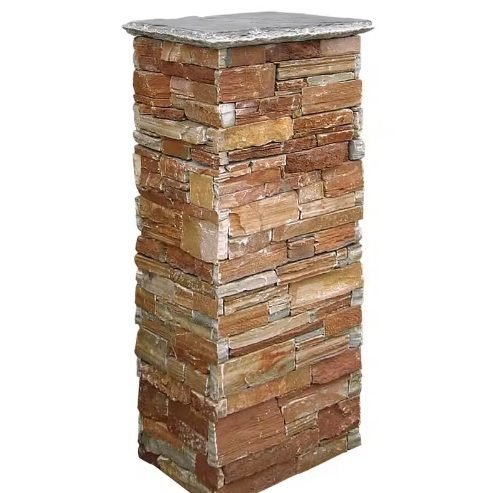
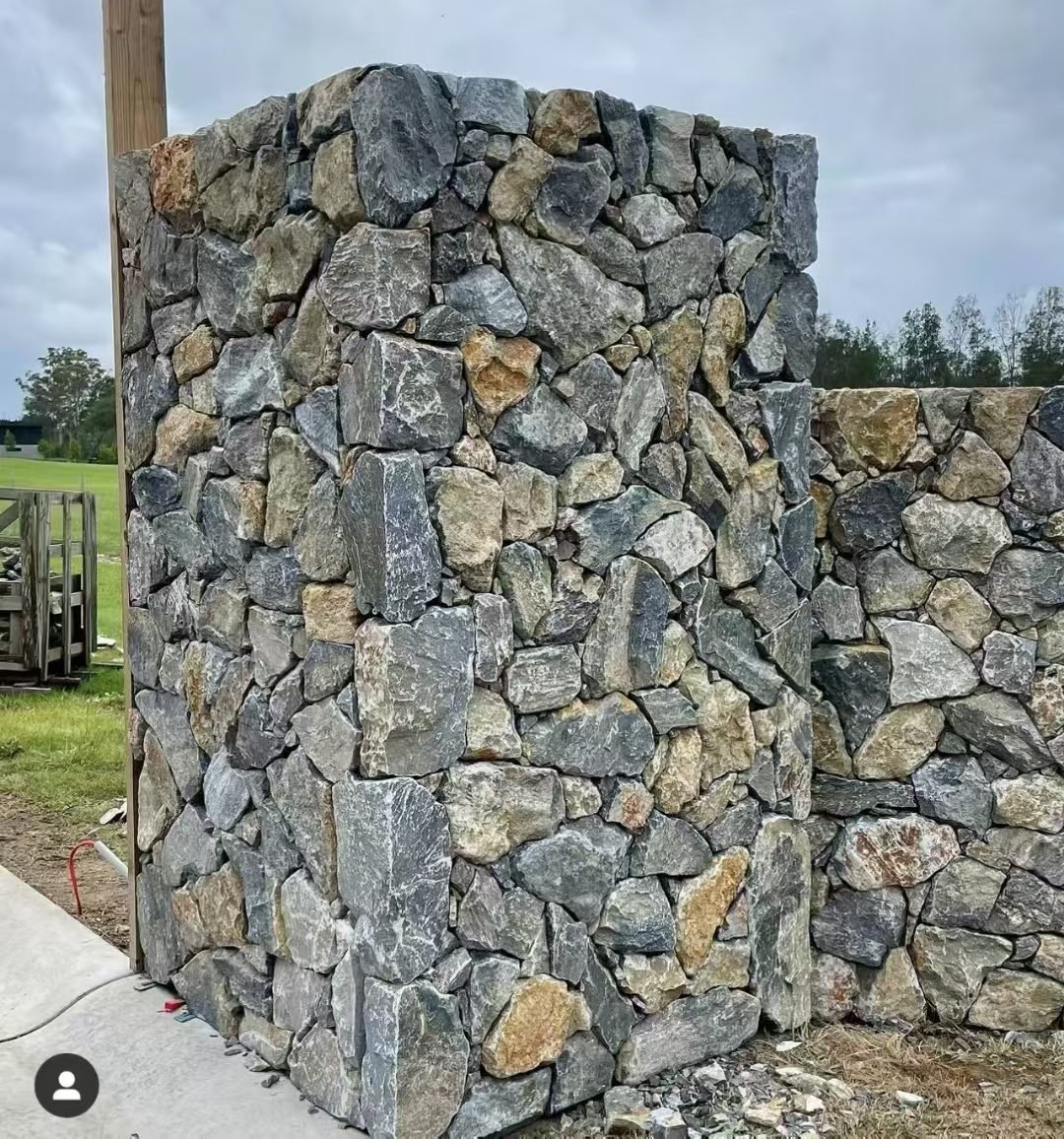
Natural stone earns its place zone by zone, and the design intent changes with the traffic. The lobby feature wall is the brand moment: large-format stacked stone panels behind check-in, lit from above, and read from ten meters away. The entrance columns carry the same stone to the street and give the signage something to hold. Guestroom and spa zones want intimacy and texture: thin ledgestone strips behind the bed headboard or along a bath wall, where small scale reads as craft rather than wall. Corridors and stairs want dense rock that shrugs off trolleys. The pool bar and exterior landscape walls want the same stone palette carried outside, where freeze-thaw and salt decide survivability.
Two specifications deserve separate lines in the FF&E set. Interior walls run thinner and lighter: thin ledgestone on mesh or epoxy, stacked stone panels on standard thin-set beds. Exteriors run the same stone family in denser, weather-resisting formats such as cement-backed interlocking Z-panels that pass freeze-thaw from -30C to +50C. Keep the interior and exterior specs on different rows of the document; the same colour family keeps the relation visible while the backing systems do their different jobs. The Z-panel line is the fast-cover option when corridors and exterior slabs share a deadline.
The resort angle adds a second rule: continuity. Guests should read the same stone family from the porte-cochere to the spa corridor, just in different scales. That is not a decoration rule, it is a procurement rule. When one factory supplies the whole palette, the color mix, batch control, and delivery experience stay consistent across every zone.
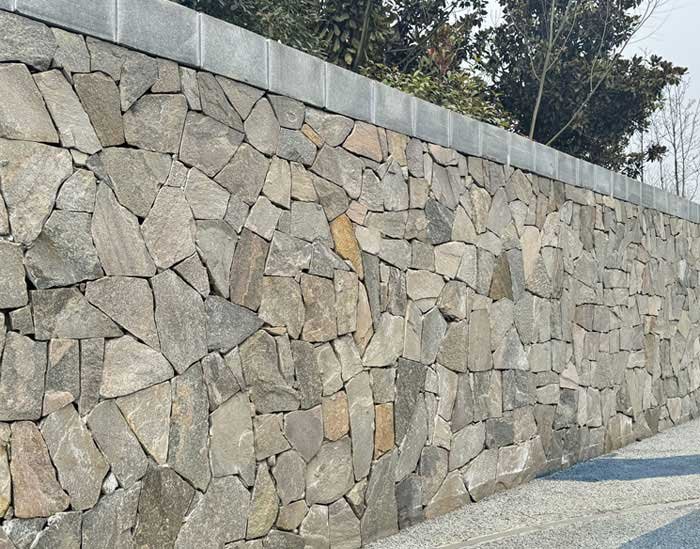
Five commercial interior concepts in this series show how those walls get designed in practice. The stacked stone feature wall guide shares the lobby, restaurant, and spa treatments ready to lift into a scheme.
Product Selection by Zone
The zone map translates into product lines. Each Top Stone Panels line has a format, a backing, and a natural use, and the matrix below is the shorthand version of the catalogue. The stacked stone, thin ledgestone, and stone column product pages publish the full size ranges and corner options for specifiers.
| Hotel zone | Product line | Typical format | Backing |
|---|---|---|---|
| Lobby feature wall, facade | Stacked stone panels | 15×60 or 15×55 cm strips | Marine-grade epoxy |
| Guestroom, spa, back bar | Thin ledgestone panels | 36×10 cm ultra-thin mini strips | Mesh or epoxy |
| Fast-cover corridors, exteriors | Interlocking Z-panels | 20×55 or 15.2×61 cm | Cement backer |
| Entrance columns, porte-cochere | Stone column kits | Custom section, e.g. 40×40 or 50×50 cm | Pre-assembled, caps included |
| Outdoor landscape, pool areas | Thin veneer loose stone | Random split-face strips | Loose or mesh |
| Walkways, terraces, decks | Flagstone and crazy paving | Random mesh-backed pieces | Mesh |
Three selection rules keep the scheme under control. First, one rock family per property; slate and quartzite cover the palette with grey, black, and tan tones, and mixing veins is a design choice, not an accident. Second, scale with the wall; a six-meter lobby wall cannot read from a 36×10 cm mini strip, and a headboard wall cannot absorb a 15×60 cm ledger. Third, match the backing to the substrate; cement-backed Z-panels and epoxy-bonded stacked stone go onto the same mortar or thin-set beds your installers already run.
Fire, Slip, and Durability Grades
Hospitality specification runs on three grades: fire, durability, and moisture. Natural stone brings them without coatings. A 100% slate or quartzite face carries an inherent Class A fire performance, matching the ASTM E84 Class A band, flame spread 0 to 25, that North American hotel projects routinely require. The wall assembly still needs its code review, substrate, adhesive, and jointing included, but the material itself does not need fire-retardant chemistry.
Durability is decided by the rock and the format. Dense quartzite and slate face stone on rigid backing survives the corridor traffic that soft sandstone takes damage from. The same stone family passes freeze-thaw cycles from -30C to +50C without spalling, which is the poolside and northern-climate test. Slip is a separate line item. For wet zones, specify a tumbled, split, or riven finish with surface texture, and require the installer to test the finished floor, tile and stone alike, for the project’s wet-condition coefficient of friction.
Coastal and pool properties add salt and UV to the list. Slate and quartzite hold their color under direct sun, and the dense face resists the salt spray and humidity that attack porous stone near the ocean. The earlier salt spray resistance guide and the UV stability guide walk the evidence behind both claims.
Carrying one stone family across every zone?
Top Stone Panels supplies stacked stone, ledgestone, veneer, columns, and flagstone from the same quarry veins, so color and batch stay consistent across the property.
One quarry family | Lobby to pool deck | 1-3 day mockup samples | 20-25 day production
Quantities, MOQ, and the FF&E Budget Math
Quantity math in hospitality is zone-by-zone coverage. A hotel procurement lead needs the square-meter number per wall, the wastage factor per format, and the container math, because both budget and MOQ live in containers. The worked example below is illustrative; your architect’s takeoff replaces it, but the structure holds.
| Line | Zone | Net coverage (m²) | Order coverage with waste |
|---|---|---|---|
| 1 | Lobby feature wall | 120 m² | 132 m² (~10% format + cutting waste) |
| 2 | Guestroom headboard walls | 180 m² | 198 m² (~10% format waste) |
| 3 | Spa and back bar | 90 m² | 99 m² (~10% format waste) |
| 4 | Entrance columns (6 sets) | Column kit sets | 6 custom column kits including caps |
MOQ sits at one 20-foot container per product line. That is not a penalty; it is the pricing unit that keeps factory terms sane, and it is the natural lot size for a property. A 132 m² lobby wall, for example, fits comfortably inside a single 20GP of stacked stone panels. For the property example above, the lobby, spa, and guestroom lines can each carry their own container, sequenced to the construction schedule instead of arriving in one unmanageable drop.
The landed-cost line deserves its own column in the budget. FOB quotes exclude freight, insurance, and duty, and those change the unit price by more than the stone variation. The stone cladding cost breakdown walks FOB to landed cost with shipping and duty, and the FOB vs CIF comparison tells you which term to take. Build the FF&E line on landed cost, not on the ex-works quote.
Samples, Mockups, and Owner Sign-Off
The approval path in hospitality is sample, mockup, sign-off, order. Physical samples ship in 1 to 3 days by express, which fits the FF&E calendar because the designer needs real stone against the lighting schedule before the concept is locked. Order more than one sample per option: hotel decision-makers keep a board, an architect keeps a chip, and the installer eventually needs the approved piece as the on-site reference.
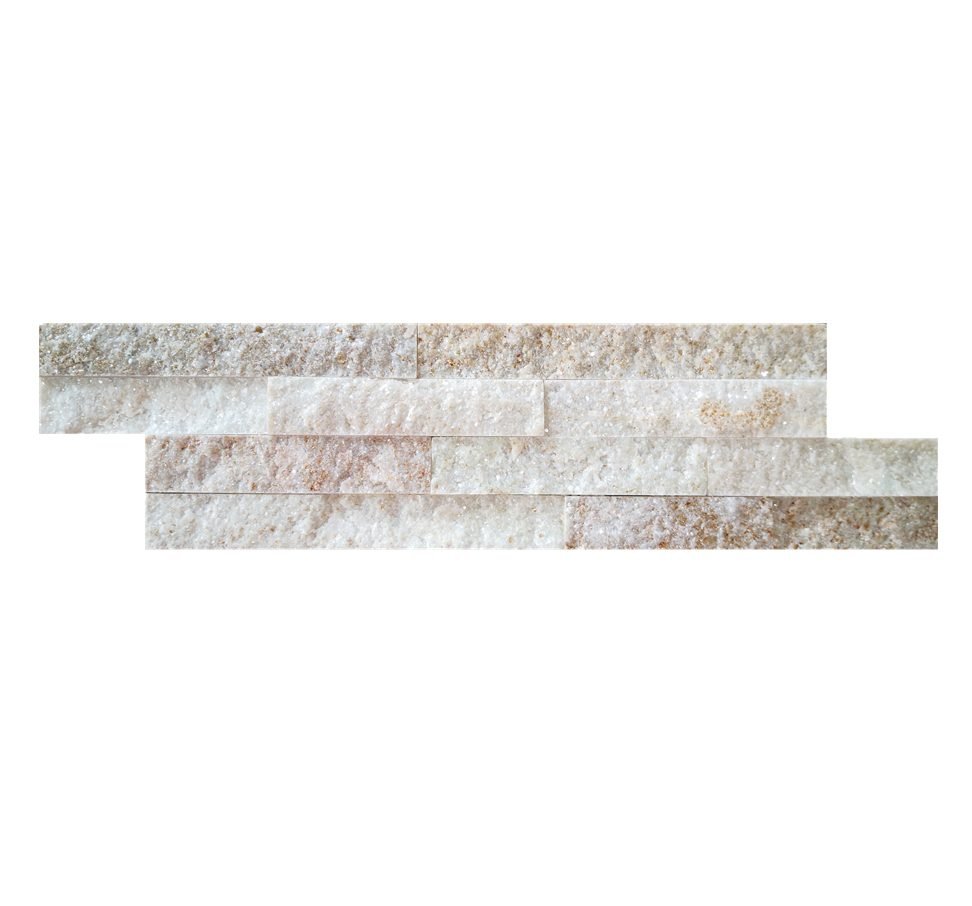
A full mockup room sets the color rule for the whole order. This is where the color-harmony decision gets made: the approved mockup defines how much vein variation the stone batch may show across the delivered containers. Custom color mixing is available, so properties can blend two veins into a bespoke palette rather than force the design onto a stock line. The sample evaluation checklist lists everything to inspect on that first piece, from thickness to backing edges.
Multi-floor properties should freeze the batch rule before production starts. The factory’s vein-sorted selection keeps color harmony at 95% or better within a batch, so guestroom floors ordered in one run match the lobby reference. On a large property, order a buffer of the critical floor in the first container to cover late field changes. Top up from the same batch while it is still in production; that closes the door on a colour shift between containers. The batch color consistency guide details how vein selection works from quarry to carton.
Sign-off should be the moment the budget stops moving. Once the owner signs the mockup, the spec is fixed, and the supplier builds to it. Changes after sign-off, a different format, a lighter shade, a column wrap that does not fit the steel, restart the production window and the clock. Procurement teams that hold the mockup sign-off until every zone decision is taken save themselves the change-order cycle.
Lead Times and Phased Delivery
A hotel build is a sequence of trades, and stone arrives inside a window, not at a date of convenience. Express samples leave in 1 to 3 days. Standard bulk production runs 20 to 25 working days, and a first order with custom cartons and branding runs about 25 to 30 days. Plan the calendar from the construction sequence, not from the day you sign the PO.
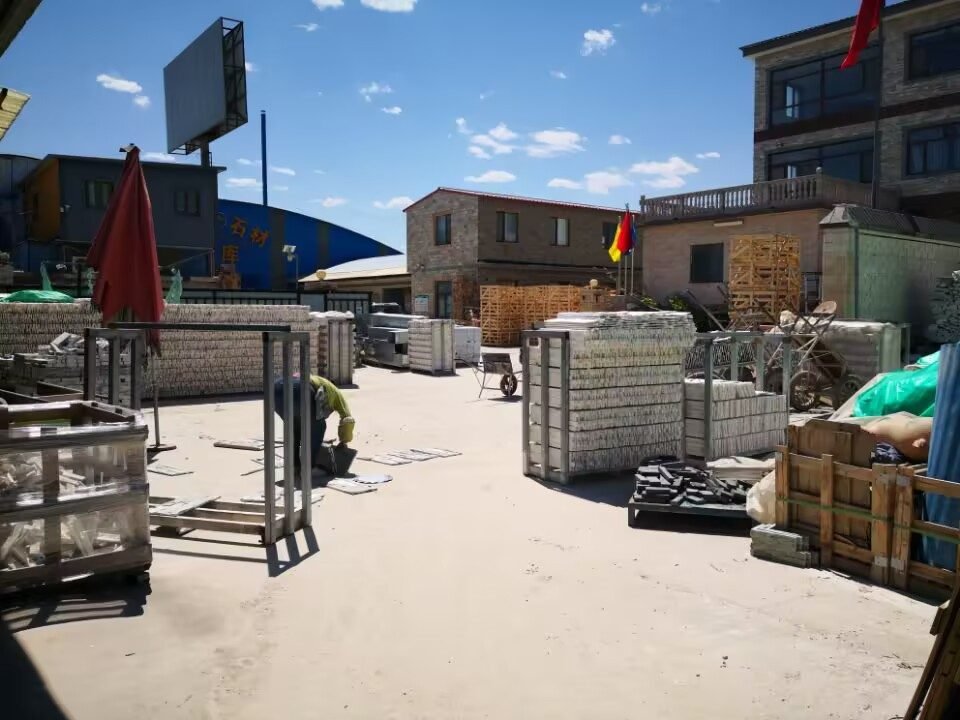
Phased delivery is how large properties handle the gap between lobby finishes and guestroom floors. Because MOQ is one 20-foot container per product line, procurement can book the lobby container first, hold the spa and guestroom lines in the factory schedule, and sequence departures to the site calendar. The factory runs upward of 220 export containers a year, so slotting a property across three ships is routine rather than special.
Packaging is part of the delivery promise. The zero-breakage protocol, 3 to 5 layers of hardened corrugated carton, fumigation-free solid wood pallets, 4 to 6 steel straps, and airbag bracing inside the container, is the difference between a clean install and a claims fight. The container loading guide shows the standard that keeps hotel stone intact to the site.
What Your Purchase Order Should Lock
The PO is the final control point, and the checklist below is the minimum set of facts a stone cladding PO for a hotel should carry. Every row becomes either a shipping-carton label or a claims document later.
| Checklist item | What to lock |
|---|---|
| Rock and finish | Slate or quartzite family, split-face or sawn, color mix against approved mockup |
| Format and tolerance | Exact cm sizes, corner pieces, ±1 mm calibration on CNC-cut face stone |
| Backing system | Marine-grade epoxy, cement backer, or mesh per product line |
| Quantity and waste | Net m² per zone plus format waste, column kit sets by section size |
| Packaging | Zero-breakage protocol, private-label carton printing if applicable |
| Documents | COO, ISPM 15 where wood packaging is used, inspection report with photos and video |
| Trade and payment | FOB Xingang or agreed term, 30% T/T deposit, 70% balance against loading video |
The spec template behind this checklist lives in the purchase specification guide, and the sourcing process, from supplier verification to order placement, is covered in the factory audit guide. Keep the tolerance and sampling rule inside the PO. That clause turns a truckload of stone into an installable order, and the thickness tolerance guide explains the ±1 mm band and the goods-in caliper check in full.
Frequently Asked Questions
What stone cladding do hotels use?
Hotels specify natural slate and quartzite in stacked stone panels, thin ledgestone strips, loose veneer, and stone column kits. The dominant selections are neutral grey and black thin-ledgestone for guest zones and larger-format stacked stone for lobbies and facades.
Is natural stone veneer durable enough for hotel corridors?
Yes, when the rock is dense and the format is bonded to a rigid backing. Quartzite and slate face stone on epoxy-bonded or cement-backed panels resists the trolley and luggage traffic that soft materials cannot.
What fire rating does natural stone cladding have?
Natural stone carries an inherent Class A fire performance, matching the ASTM E84 Class A band of flame spread 0-25. Specifiers should still verify the full wall assembly in the local code, including the substrate and adhesive.
How long does a hotel stone order take?
Express samples ship in 1 to 3 days. Standard bulk production runs 20 to 25 working days; a first order with custom cartons and branding runs about 25 to 30 working days. Plan phased deliveries against those windows.
Can stone panels include our hotel brand on packaging?
Yes. Factories such as Top Stone Panels run OEM and private-label programs, including customer carton printing, custom color mixing across the stone batch, and brand-level packing for FF&E delivery.
How do I order stone cladding for phased FF&E delivery?
Book production slots at the start of the FF&E schedule and stagger containers by zone. MOQ is one 20-foot container per product line, and shipments can be sequenced so the lobby batch lands before guestroom floors.
Conclusion
Hotel and resort stone cladding succeeds when the specification is written before the supplier is chosen. Lock the rock family, the format and backing per zone, the fire and durability grades, and the container math, then let price negotiation happen against a fixed baseline instead of a moving one.
Properties that follow the sequence, sample, mockup, sign-off, phased order, tend to land every zone on schedule and without a claims fight. The factory metrics that matter are the ones that protect that schedule: 1 to 3 day samples, 20 to 25 day production, one-20GP MOQ per line, and zero-breakage packing.
Top Stone Panels supplies all six product lines from the same quarry veins, in the same stone families, so the palette can run from porte-cochere to pool deck. Ask for the current samples and the inspection video when you scope the property; both ship before the container does.