The container door closes, a 26.5-ton load of stone panels heads for the port, and you will not see it again until it reaches your warehouse floor three or four weeks later. Pre-shipment inspection for stone panels is the moment where a committed buyer still holds leverage: check the goods, confirm the documents, and only then release the final payment. Miss it, and a color-mismatched batch or a stack of delaminated panels becomes an argument that runs across oceans and invoices.
This guide is the working checklist Top Stone Panels follows on its own factory floor and the one we recommend B2B buyers run before any container loads. It covers when the inspection happens, what exactly to check on product, packing, and paperwork, and which findings should stop a shipment outright. The numbers come from the factory’s own QC process: a 3-step check (raw material selection, mid-production re-check, pre-shipment final), a 30% deposit / 70% balance payment with loading video and layout photos released before the balance, and an export packaging protocol built for zero breakage. Every data point is either first-party factory data or established trade practice, and we flag the trade-practice items in the text.
Key Takeaways
- Inspection is your last control point. After loading, fixing defects costs freight, demurrage, and 20-25 days of production time.
- The 70% balance releases only after loading video and layout photos confirm the actual goods. Build inspection into that gate.
- Verify dimensions against a ±1mm CNC tolerance and the agreed thickness band: 7-12mm ultra-thin, 10-25mm stacked, 25-40mm standard.
- Color harmony must hit the approved sample at 95% or better within the batch, with vein selection kept to the same quarry.
- Packing checks cover 3-5 layer cartons, plywood pallets, 4-6 steel straps, and airbags inside the container.
- Collect packing list, photos, video, COO, ISPM 15, and test reports before you pay the balance.
Why Pre-Shipment Inspection Decides Container Quality
Natural stone panels ship in batches measured in thousands of square meters. At Top Stone Panels the standard stacked stone line runs 15x60cm and 15x55cm panels, thin ledgestone comes at 36x10cm, and Z-panels at 20x55cm or 15.2x61cm. Scale is exactly why an inspection procedure exists: no factory, including ours, guarantees every single piece from a multi-thousand-piece order matches a photograph.
What a good QC system does guarantee is that defects are caught by the maker before the buyer ever sees them, and that the buyer’s final check is structured around the few things that actually go wrong. The 3-step QC process at Top Stone Panels is an example: raw material selection against the quarry block, re-check during cutting and backing, and a final pre-shipment inspection at the packing table. The pre-shipment check is the layer that protects the shipment, and it is the layer you as the buyer can audit, either through video or in person.
There is also a commercial reason to care. The standard payment term for stone imports is 30% T/T deposit and 70% balance before shipment. Because the factory releases loading video and layout photos before requesting that balance, a buyer who asks for the inspection evidence is not being difficult; they are using the payment structure the way it was designed. Suppliers who hesitate to show the goods at the loading stage are telling you something, and it is worth listening.

When Does Pre-Shipment Inspection Happen
Timing is part of the procedure. Standard production at Top Stone Panels takes 20-25 working days, with first orders running 25-30 days when custom cartons and outer packaging are being produced for the first time. Inspection sits at the end of that window, after the final QC pass and before the forklift starts building the load.
For physical samples the timeline is much faster. Sample production and dispatch take 1-3 days, so a specifier or lab can test absorption, color, and dimensional accuracy long before production begins. That earlier check is not a substitute for the pre-shipment inspection; it establishes the baseline that the production batch must match. If you want the full planning picture, this article pairs with the import lead time guide, which walks through sample dates, production windows, and freight booking deadlines.
A practical rule: schedule the inspection before the container booking, not after. Once the container is booked, demurrage charges start ticking on the day it is delivered to the loading yard. Every fix a factory needs to make after inspection then competes with the container clock, and rushed fixes are exactly what you are trying to avoid.
Dimension and Thickness Checks
Dimensional accuracy is the easiest defect to measure and the most common source of onsite waste. Top Stone Panels cuts face stone with infrared CNC diamond tools at a ±1mm tolerance on the finished face. Verify a sample of panels from random cartons, not just the top layer of each pallet.
Thickness is the second dimension that matters, because it drives adhesive depth, weight, and the flatness of the finished wall. Typical production bands are 7-12mm for ultra-thin ledgestone veneer, 10-25mm for stacked panels, and 25-40mm for standard slabs, and the agreed band should be in your order documents. Full-thickness slabs traditionally carry a looser trade convention of about ±3mm, while panel products with a bonded backer hold tighter than that. If you see thickness walking outside the agreed band, flag it before loading, and the detailed thickness tolerance guide explains how to measure and what the industry standards expect.
| Check | Method | Pass threshold |
|---|---|---|
| Panel length and width | Steel tape on random cartons | ±1mm vs ordered size (CNC cut) |
| Thickness | Vernier caliper, several points per panel | Inside agreed band (7-12 / 10-25 / 25-40mm) |
| Squareness | Carpenter’s square on corners | No visible gap on 90-degree turn |
| Sample size | Random cartons across pallets | Trade sampling convention: square-root sample of cartons |
Sampling matters as much as measurement. Importers often check the first carton and call it done; the factory knows that, which is why the final QC pass randomizes selection. Ask for random cartons and spread the sample across at least three pallets or loading zones.
Color, Surface, and Bond Checks
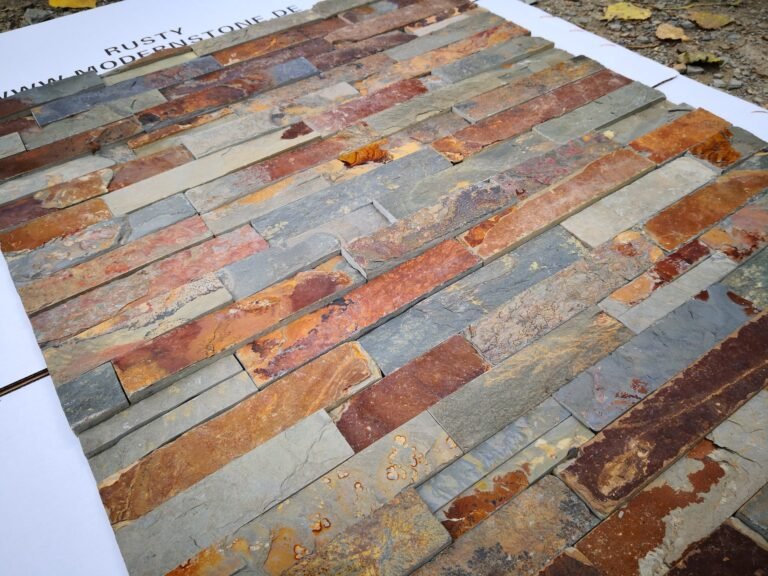
Color mismatch is the number-one stone import complaint, and it is also the most preventable one. Top Stone Panels controls this with batch-specific vein selection: panels for an order come from the same quarry block or vein family, and the batch must match the approved sample at 95% or better color harmony. Compare the loose pieces and the assembled face, not just single panels, because the eye reads the mix across a wall.
Surface inspection looks for chips larger than a pencil eraser on the face edges, pitting, hairline cracks, and loose stone fragments that will detach during freight. A few handling chips on a natural split face are normal and repairable onsite with color-matched epoxy; a pattern of damage across many panels is not. Check both faces of each sampled panel, because the back carries the bond that holds the system together. The batch color control article explains how quarry-side vein selection works and how to audit it.
The Delamination Test
Tap the face with a flick of the finger or a small mallet, and press the edges with both thumbs. A solid bond rings and resists; a delaminated panel sounds hollow and flexes. This checks the stone-to-backer joint, the most failure-prone part of panel construction. Hold the panel by the backer alone, gently, to see whether the stone separates. Marine-grade epoxy bonds and cement backers both pass this test when applied correctly, and the performance comparison between the two backings covers why the bond chemistry matters.
Work the delamination test into the video request too. Point the phone at the bond line, run a thumb along the edge of a few panels, and ask the factory to show the back face. It is a small ask, and a factory that runs a genuine final QC will do it without hesitation.

Corner Pieces and Accessories
Pre-made L-corner pieces are a defining feature of panel systems, because they eliminate onsite 45-degree miter cutting and are a large share of the labor saving. A typical stacked stone wall order includes L-corner pieces at 45x15cm, supplied one-piece or two-piece depending on wall thickness. They are also the first item counted short, because they are cut to order and packed as a separate component.
Count corner pieces against the packing list before loading, and check that the corner color range matches the flat panels. Corners cut from a different quarry block arrive the same color on paper but sit visibly cooler or warmer on the finished wall. If corners are short, the install stops at every outside corner, so treat a corner shortfall as a loading-blocking issue rather than a scheduling note. The L-corner guide explains the one-piece versus two-piece decision and how many corners to order per linear meter.
Accessory counts work the same way for column kits. Stacked stone column kits ship as a set with column bodies and matching flat panels; verify the full set quantity, because a missing column corner delays an entrance or porch finish completely.
Packing and Container Loading Checks
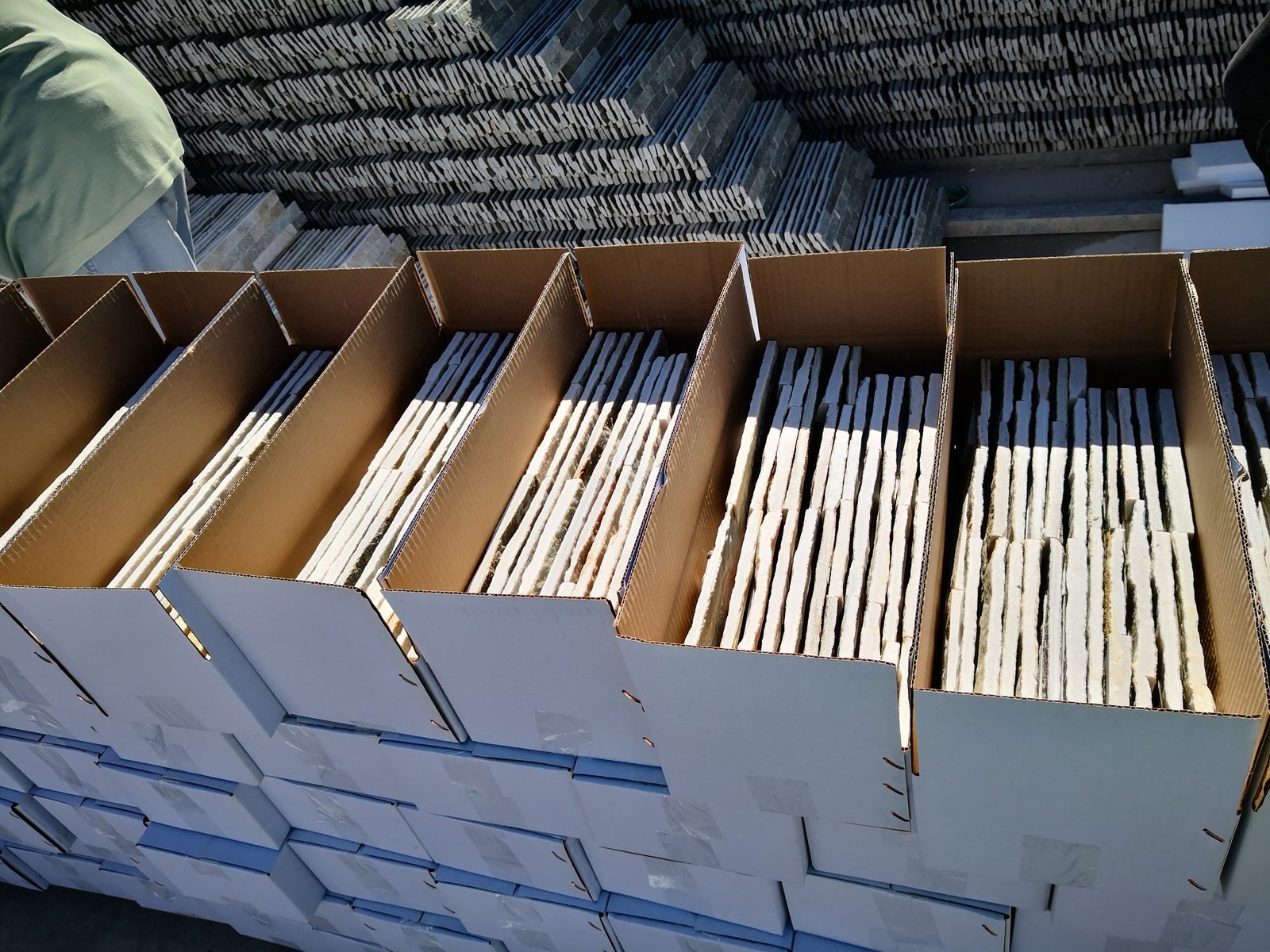
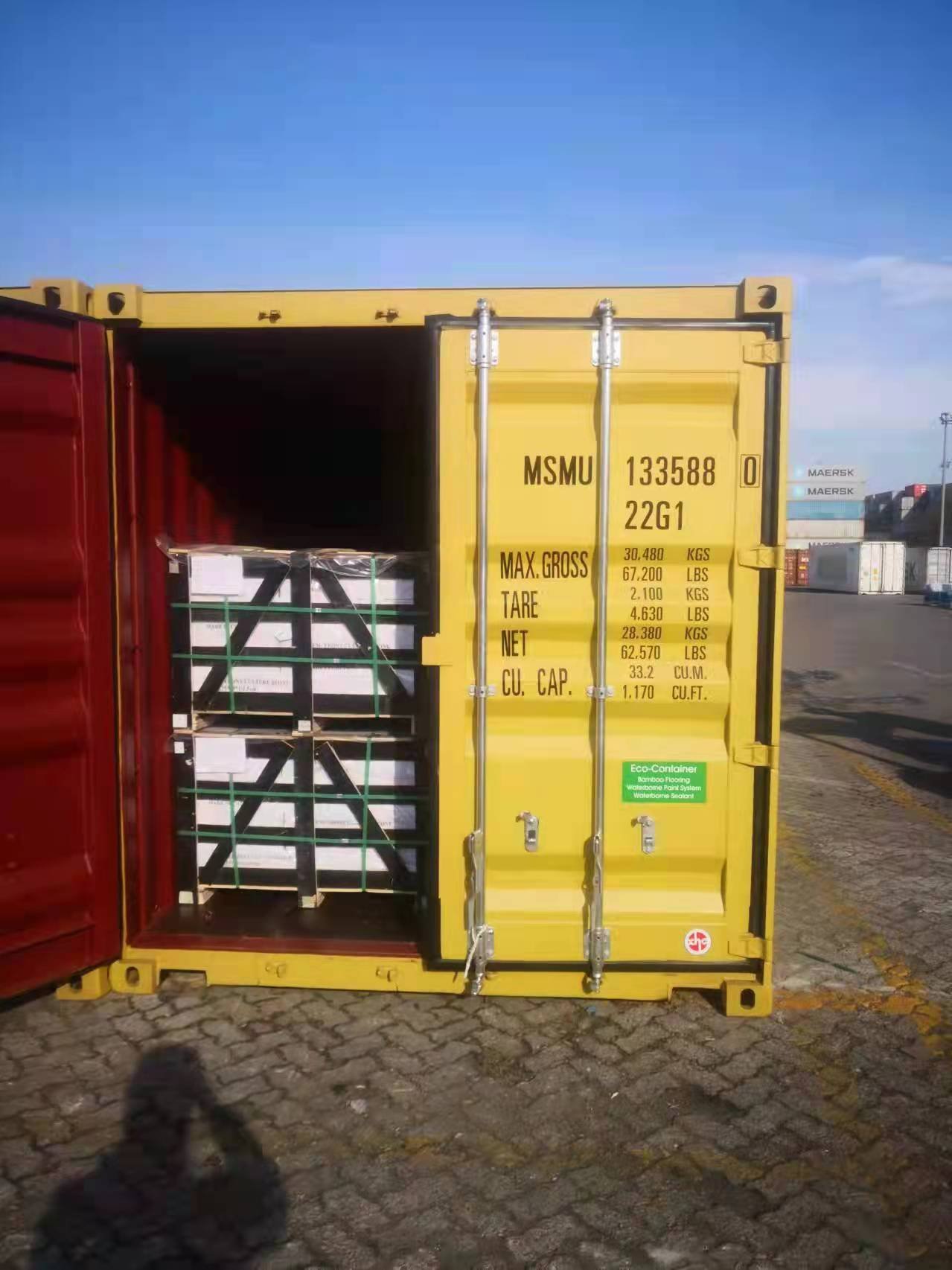
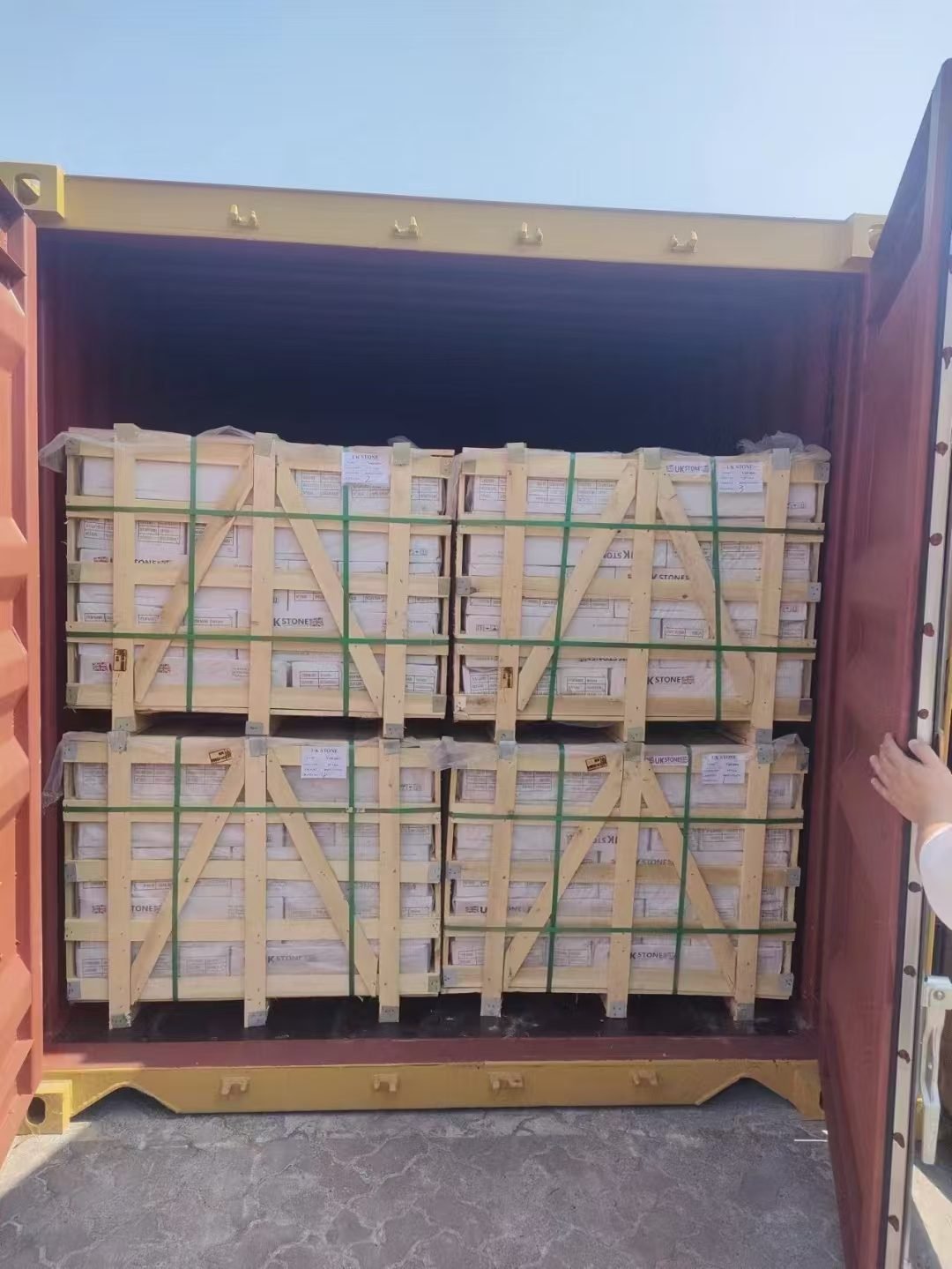
Packing is the least glamorous part of the inspection and the most expensive to get wrong. Top Stone Panels ships under a zero-breakage packaging protocol: 3-5 layer corrugated cardboard cartons, plywood or fumigation-free solid wood pallets, 4-6 high-tensile steel straps per pallet, and industrial airbags inflated inside the container to lock the load against shifting.
Open sample cartons during inspection and look at the actual inner packing: whether panels have corner protection, whether the carton layers were filled to prevent rattling, and whether the styrofoam or paper separators survived the trip to the loading floor. A container of stone is 26.5 tons with no room for cargo to move. Inspect the loaded container for how the airbags were placed, not just that they exist. Strapping that runs across pallets instead of around them is a shortcut that fails at first wave action.
Wooden packaging also carries a regulatory angle. If the load uses solid wood, the ISPM 15 fumigation certificate must accompany the shipment or the container can be rejected at destination customs. Plywood-based pallets avoid the requirement in many markets, which is one reason factory pallets are often plywood board. The zero-breakage packaging guide details the full protocol, and the ISPM 15 article explains the certificate requirements for imports.
Documents to Collect Before You Pay
The paperwork check is fast and often skipped. It is also the cheapest insurance on the order. Before releasing the 70% balance, collect and review:
- Packing list — carton count, panel count per carton, and square meters against your order.
- Loading video — full container loading sequence, with the camera catching the load build, not just the closed door.
- Layout photos — high-resolution flat-lay photos of the goods, used to confirm the color blend before balance.
- Certificate of origin (COO) — required for many import transactions and duties.
- ISPM 15 certificate — for any solid wood packaging in the load.
- Test reports — freeze-thaw, flexural, or other agreed tests, such as ASTM C666 cycling for cold-climate orders.
Cross-check the packing list against the video. Cartons on the list need to match cartons on the floor, and the video needs to show the load reaching full height. The certificate of origin process is documented in the export certificates guide, and the purchase specification template shows how to bake these document requirements into the original order so nothing is decided late.
Run It Yourself or Hire a Third Party
Three practical inspection setups cover most importers. The cheapest is the documentary check: review photos, loading video, and packing list remotely, and reserve the right to a live video call through the factory on the loading day. The middle option adds a live call where a factory staffer walks the floor under your direction, showing random cartons, the bond test, and the airbag placement. The highest-assurance option is a third-party inspection company that visits the factory and reports on the checklist.
Video has limits worth naming. It cannot verify caliper measurements, it reads color through a camera with white balance drift, and it cannot prove every carton matches. That is why a good arrangement uses video to verify process (loading sequence, airbags, carton condition) and reserves the physical measurements for the factory’s own final QC plus a third-party report when the order is large enough to justify it. Third-party inspection fees are typically the buyer’s cost, and for a first order from a new factory, the fee is small against a container of stone.
The factory audit guide goes deeper into supplier verification before you commit to an order. Pre-shipment inspection is the last act of that diligence, not the first.
Get a factory walkthrough before you commit
Top Stone Panels runs every order through 3-step QC and records the loading sequence for the balance gate. Ask us for sample delivery, a live factory walkthrough, or the current QC checklist for the product line you are sourcing.
Red Flags That Stop a Shipment
Some findings are negotiating points. A handful of chipped edges, a slightly drier cement batch, a few cartons with torn outer corners; these can be accepted, replaced, or priced, and the container can still sail. Other findings should stop the load until they are resolved:
- Delamination clusters — more than a couple of panels failing the tap test means a backing or bond process problem, not bad luck.
- Batch color drift — the production face reads clearly cooler or warmer than the approved sample, or the mix ratio changed between photos.
- Thickness out of band — panels measuring outside the agreed range across several random cartons.
- Short corner pieces — L-corners or column components below the packing list count.
- Document mismatch — packing list quantities that do not match the load, or missing ISPM 15 / COO paperwork at payment time.
The decision rule is simple: resolve every red flag before the balance releases. The 70% balance is the last real leverage an importer holds after the goods leave the factory yard, and holding it is not a payment delay, it is the process working as designed.
FAQ
What is a pre-shipment inspection for stone panels?
It is a final check of finished panels before loading: dimensions, thickness, color consistency, backing bond, corner counts, quantities, and packing against the approved sample and order documents.
When should pre-shipment inspection be scheduled?
After production finishes, before container loading. With production at 20-25 working days, plan the inspection around day 18-20, before the container booking locks the loading date.
Can I inspect stone panels from another country?
Yes. Use loading video and layout photos, a live video walkthrough, or a third-party inspection company on the factory floor. Most importers combine video with a documentary check.
Who pays for pre-shipment inspection?
Loading video and layout photos are normally free as part of the balance gate. Third-party inspectors are usually paid by the buyer, and the cost can be written into order terms.
What documents should I request before shipment?
Request a packing list, loading video, layout photos, certificate of origin, ISPM 15 certificate for solid wood, and agreed test reports. Confirm each before releasing the balance.
Conclusion
Pre-shipment inspection turns an anxious wait into a structured checklist. Run dimensions and thickness against the agreed band, hold the batch to the approved sample, tap the bond, count the corners, check the packing protocol, and collect the documents before the balance leaves your account. The factory’s own 3-step QC and the 30/70 payment gate with loading video exist to make this check possible from anywhere in the world.
- Check random cartons across pallets for dimensions, thickness, color, and surface defects.
- Run the tap test on the stone-to-backer bond and verify corner piece counts.
- Confirm zero-breakage packing, airbag placement, and a 26.5-ton loaded container build.
- Hold payment until the packing list, video, photos, COO, ISPM 15, and test reports match.
For the next order, request the QC checklist and loading video at quote stage so your supplier builds the inspection into the timeline from day one. The companion guide on creating custom color mix panels shows how the same inspection discipline applies when you move from stocking a catalog color to launching your own exclusive blend.
Before the container closes, run the load plan through the stone panel weight calculator so the declared gross weight matches what the scale will see.