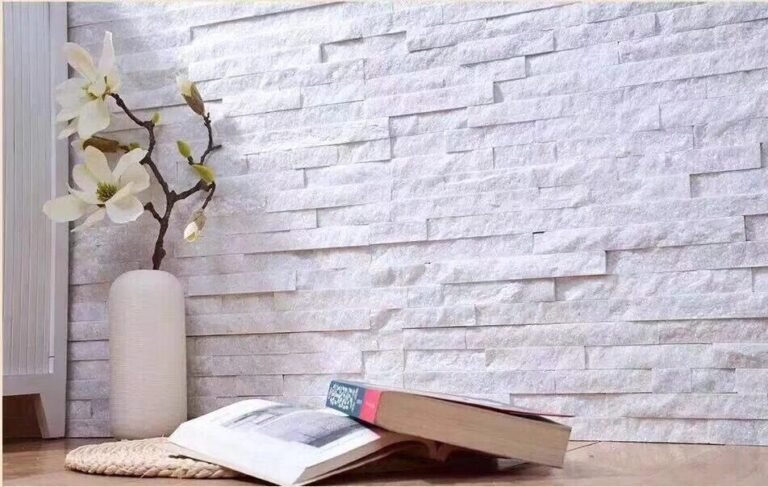
The best mixed stone walls are the most planned. Buyers usually discover this backwards: they order one color, get the wall up, and then stare at a field of identical grey panels that never had a chance to look natural. Mixed color variation is not an accident you hope for in the box — it is a ratio you specify, a layout you dry-fit, and a factory discipline you can verify before the container ships.
Natural stone earns its look from variation, and the variation comes from the quarry. Top Stone Panels locks every order to one quarry vein and hand-sorts the pieces so the natural differences stay coordinated; the documented target is above 95% color transition consistency across an order. That number is the difference between a wall that looks quarried and a wall that looks patched.
This guide covers why controlled variation is the goal, how to build a color map, the blend ratios that read as natural, the distribution rules that kill patchwork, the dry-fit sequence that locks the pattern, and what to send the factory so the mix arrives ready to install.
- Mixed color walls are planned, not accidental: build a color map and a blend ratio before any adhesive is mixed.
- A common working ratio is 60-30-10 — a dominant base tone, a mid tone at about half that, and a small accent presence.
- Patchiness is a distribution failure: place accents singly, break runs of three, and dry-fit the full layout first.
- Batch-specific vein selection locks one quarry vein to the order and holds color transition consistency above 95%.
- Custom color mix ratios are a standard OEM input at Top Stone Panels, set before production.
- Mixed-color orders run on standard wholesale terms: MOQ one 20GP, samples in 1-3 days, production in 20-25 working days.
Why Natural Variation Is the Goal
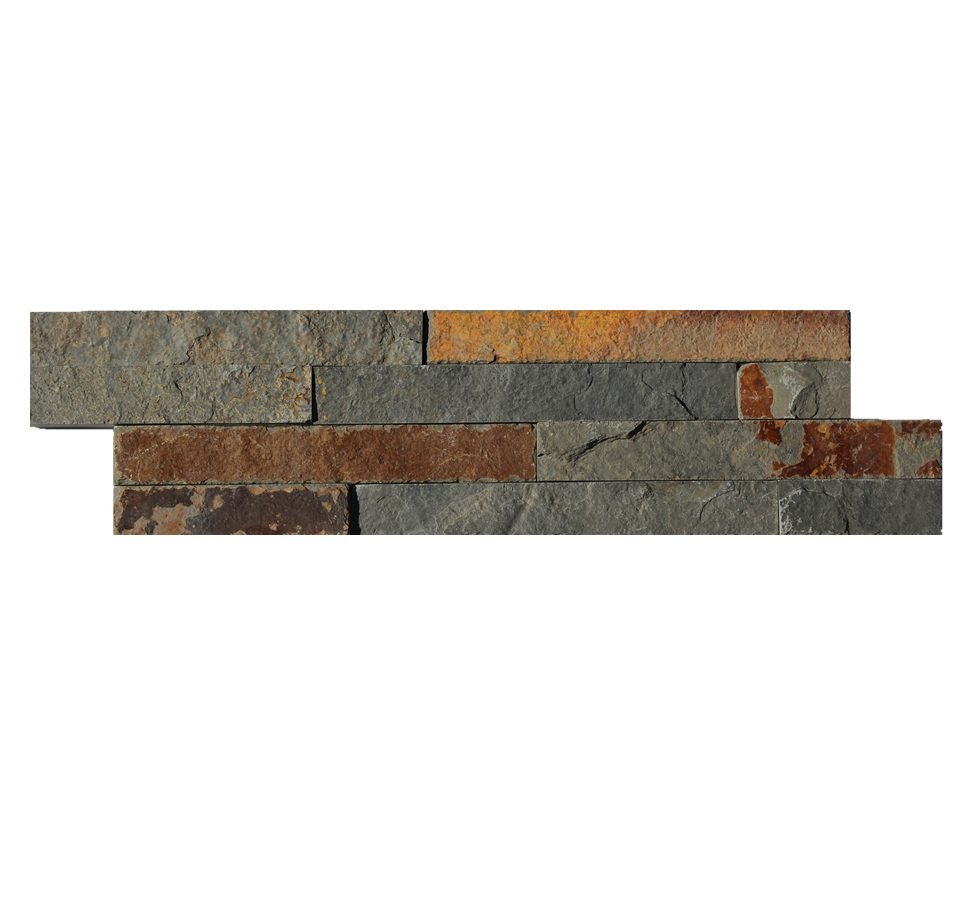
A quarry wall never repeats a tone. Slate and quartzite come in families — greys that drift from charcoal to light silver, warm quartzites that shift between cream and beige — and the job of a good mix is to reproduce that drift on a building elevation without letting it look random. The eye reads natural variation as material quality. It reads flat repetition as fake stone or tile.
That is the trap on the other side. When a buyer overcorrects and orders five colors without a plan, the wall ends up with clusters: three dark panels together here, a cream patch there, and the failed result is what suppliers call a patched wall. The color consistency guide explains the factory side of the equation; the short version is that variation must be coordinated before it can be beautiful.
The purpose of everything that follows is one outcome: a wall where the color changes gradually across the surface, never jumps, and never repeats in a visible rhythm.
Build a Color Map First
Start on paper, not on the wall. Sort the project’s pieces into tonal families — a light group, a mid group, and a dark group — and count how many pieces sit in each. A color map is simply that count, written down, with the families named so the crew and the buyer are looking at the same categories.
The factory makes this step easier in two ways. The batches are already color-sorted by vein selection at production, so the variation inside the box is deliberate. And the popular stacked stone families have known names — Alaska Gray and Midnight Black are the two the factory quotes most for North American buyers — which gives you a shared vocabulary when you order the mix.
| Tonal family | Typical slate tones | Typical quartzite tones | Role in the mix |
|---|---|---|---|
| Light | Silver-grey, pale grey | Cream, beige, light grey | Reflects light, brightens the elevation |
| Mid | Medium grey, Alaska Gray family | Warm grey, taupes | Carries most of the wall volume |
| Dark | Charcoal, Midnight Black | Deep brown, dark green-black | Adds depth and shadow accents |
Keep the map to three families on a single wall. More than three and the elevation starts to argue with itself; fewer and you lose the natural depth that made you choose stone. The map then feeds the ratio, and the ratio feeds the dry-fit.
Blend Ratios That Look Unplanned
The ratio is the proportion of each family on the wall. Masons working with natural stone commonly plan a 60-30-10 split: a dominant base tone, a mid tone at about half that share, and a small accent presence. The numbers are a working rule, not a law — a small accent wall can push accent to 15%, and a restrained commercial facade may drop it below 10%.
| Strategy | Base / mid / accent | Wall reads as | Best for |
|---|---|---|---|
| Restrained | 80 / 15 / 5 | One material, subtle depth | Commercial facades, large elevations |
| Standard | 60 / 30 / 10 | Natural quarried variation | Most residential and feature walls |
| Accent-heavy | 50 / 35 / 15 | Deliberate contrast, strong rhythm | Fireplaces, entry walls, interior accents |
Translate the ratio into boxes before the job starts. A 60-30-10 mix on a 100 m² wall means roughly 60 m² of base family, 30 m² of mid, and 10 m² of accent. If the supplier’s boxes run a consistent blend per box — which is what a custom color mix order gets you — the installer pulls from each box in sequence instead of opening all the dark boxes at once. That choreography matters more than the exact percentages.
Distribution Rules That Kill Patchwork
Ratio fixes the quantity; distribution fixes the placement. The same 60-30-10 wall can look quarried or patched depending entirely on where the accents land. Three rules cover the failure modes.
- Place accent pieces singly. Two accent stones touching is the beginning of a patch; three is a patch. The accent family exists to appear as isolated hints of depth.
- Break any run of three same-tone pieces. Watch the wall as you lay it and interrupt with the next family when a tonal run appears; the eye should never lock onto a strip.
- Keep the mid family as the negotiator. Mid tones bridge the light and dark families and absorb the mistakes; when a transition feels abrupt, insert a mid piece.
Corners deserve special attention. The pre-made L-corner system on stacked stone panels means the corner is a continuous piece of the mix; treat it as part of the adjacent wall, not as a frame. A corner that jumps two families reads as a design error even when the rest of the wall is perfect.
Grout changes the distribution math. A flush grey grout visually merges pieces and softens contrast; a recessed light grout separates every piece and makes the mix busier. The grout guide covers the joint options; for color mixing, pick the grout first, adjust the ratio second.
The Dry-Fit Sequence That Locks the Pattern
Dry-fit is where a good mix survives contact with reality. No adhesive, no spacers — just the pieces laid flat in the sequence they will go up, so the crew and the buyer approve the pattern before it becomes permanent.
Step 1: Sort the bundles
Open every box and sort the pieces into the three tonal families on the floor. Count each family against the ratio. This is the moment to catch a box that shipped too dark or too light, while it is still cheap to fix.
Step 2: Lay out the base rhythm
Place the base family pieces first in the pattern you plan to install — staggered joints for random or ashlar layouts, linear runs for ledger. This is the skeleton of the wall.
Step 3: Weave in mid and accent
Insert the mid family, then drop the accent pieces singly into the gaps. Step back at eye level, not from the plans. If a patch shows at floor level, it will show on the wall.
Step 4: Number and stack
Number the dry-fitted sequence and stack the batches in position. The installer then pulls from each numbered stack in order — the same batch, the same order, the same pattern. The dry-fit layout guide walks through this planning pass in depth, and it applies to mixed-color walls more than any other job because the sequence is the design.
The full dry-fit pass takes an hour or two on a residential elevation and a morning on commercial work. Skip it and the crew discovers the color issues halfway up the wall, at the top of a ladder, with mortar on.
How Batch-Specific Vein Selection Protects the Mix
Everything above assumes the raw material starts coordinated. That is the factory’s job, and it is why the mix conversation happens before production rather than on the scaffold.
Top Stone Panels locks an order to a single quarry vein — not a stone type in general, but the specific vein — and skilled workers hand-sort the pieces during production. The result is a boxed range of natural variation that stays within 95%+ color transition consistency. Order the same color story from two different factories and you cannot fix the mismatch on site; the veins differ before sorting even begins.
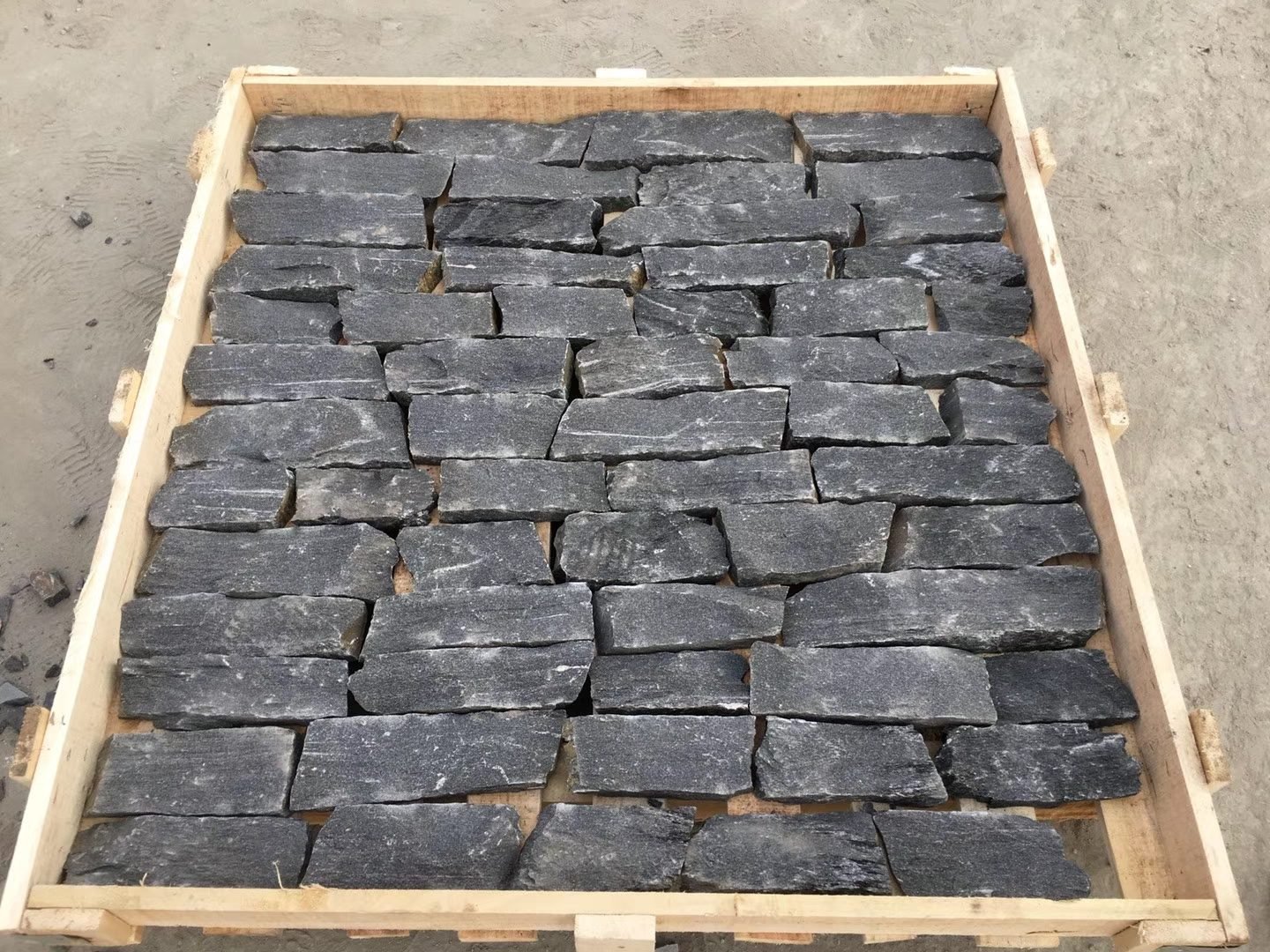
Because the vein is locked, the accent ratio is also locked. A custom color mix — say 60% Alaska Gray, 30% medium grey, 10% Midnight Black — becomes a production input, and the boxes ship blended toward that target. The grey veneer family guide and the six-panel distributor guide both walk through the color families the factory produces; the OEM process page covers how the ratio gets written into the order.
Mixing Across Product Lines
Color mixing is not limited to loose stone. The factory produces coordinated multi-color blends across several product families, and the technique adapts to each.
| Product line | Format | Mixed-color approach |
|---|---|---|
| Stacked stone | 15x60cm / 15x55cm panels | Blend panel families; watch corners |
| Thin ledgestone | 36x10cm ultra-thin | Multicolor mosaic blends already mixed in box |
| Thin stone veneer | Split-face loose strips | Custom color mix ratios per order |
| Z-panels | 20x55cm / 15.2x61cm | Multi-color boxes for commercial facades |
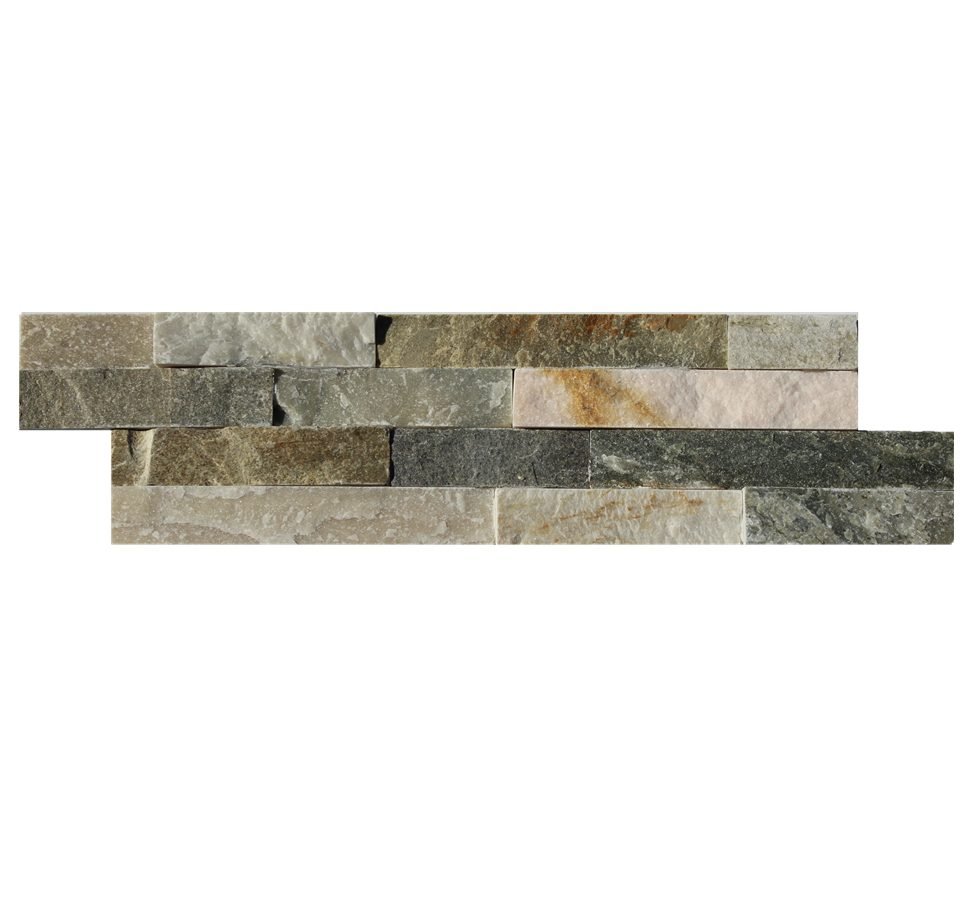
The thin ledgestone family is the easiest entry into mixed walls because the mosaic is blended at the factory — the box ships with the tonal range already distributed, and the installer’s job is placement, not sorting. The multi-color z-panel boxes work the same way for commercial facades: the blend arrives coordinated, and the dry-fit only checks distribution.
What to Order from the Factory
A mixed-color order starts with the same facts as any order, plus one page of color math. Send the total wall area, the tonal families you want with their percentages, the panel formats, and a physical sample or reference photo of the color story. If you are matching an existing project, mail a sample and the factory lab reverse-engineers the vein density and cut tolerance within 3 working days.
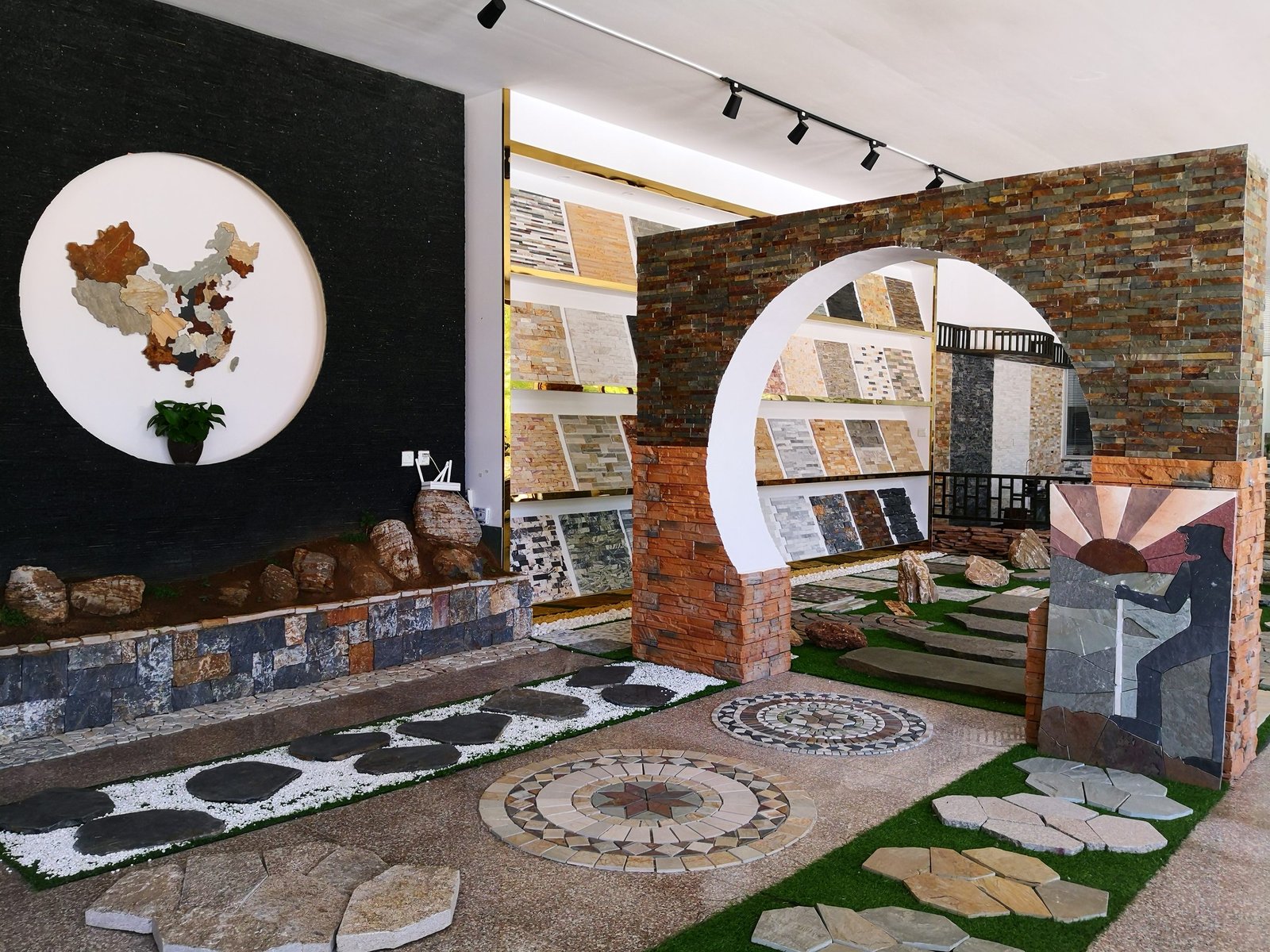
The ratio goes into the production sheet as a custom color mix, the same way top-selling Alaska Gray and Midnight Black stories are built. A 60-30-10 split is a normal input, not a special request. Confirm the blend with a pre-production mock-up photo, and the factory holds the same batch-specific vein selection across the whole order so the reorder matches the first shipment.
Wholesale terms are unchanged by the mix. MOQ is one 20-foot container per product line. Physical samples ship in 1-3 days. Production runs 20-25 working days, or 25-30 on a first order with custom packaging. Payment is 30% T/T deposit and 70% before shipment, confirmed against layout photos and the loading video. Shipping is FOB Xingang, EXW, CIF, or DDP, and mixed-color boxes travel under the same Zero-Breakage Packaging Protocol as single-color stock.
FAQ
How do you mix stone colors on one wall?
Build a color map of the tonal families, set a blend ratio such as 60% base / 30% mid / 10% accent, then dry-fit the pieces in that order before applying adhesive so no color clusters form.
What is the best ratio for mixing stone colors?
A common working rule is 60-30-10: a dominant base tone, a mid tone at roughly half that, and a small accent presence. The exact ratio follows the size of the wall and the stone type.
How do I stop a mixed stone wall from looking patchy?
Distribute every accent piece singly, never in pairs; break any run of three same-color pieces; and dry-fit the whole layout before mortar. Patchiness is a distribution failure, not a color failure.
Can the factory supply a custom color mix?
Yes. Custom color mix ratios are a standard OEM input at Top Stone Panels, locked to one quarry vein so the wall stays within 95%+ color transition consistency.
Does the color mix change the MOQ?
No. Mixed-color orders run on the same wholesale terms as single-color panels: MOQ one 20-foot container, samples in 1-3 days, production in 20-25 working days.
Which product lines come in multi-color blends?
Stacked stone, thin ledgestone, thin stone veneer, and interlocking z-panels all support mixed-color orders, with thin ledgestone mosaics shipped pre-blended from the factory.
Conclusion
Mixed color walls are a planning exercise, and every step of the plan is checkable: the color map, the blend ratio, the distribution rules, the dry-fit. Wall gets patchy and it is a distribution failure; wall reads flat and it is a ratio failure; reorder mismatches and it is a vein failure.
Your checklist before the next mixed-color order:
- Map the tonal families and count the pieces before you order — three families maximum per wall.
- Set the blend ratio in writing (60-30-10 as the working default) and pass it to the factory as a custom color mix.
- Dry-fit the full layout before adhesive, numbering the batches so the pattern survives the install.
- Confirm the order is locked to one quarry vein with 95%+ color transition consistency.
- Verify the mock-up photo and loading video before the balance clears.
Top Stone Panels produces coordinated mixed-color stone across every product line, from stacked stone panels to ultra-thin ledgestone. Send the wall area and the ratio, and the factory blends the order to match.