Almost every garden water feature looks expensive from the water out and cheap at the edge. The liner, the concrete rim, the sandbag hold-downs, the plastic weir: a pond or a cascade is full of engineering that no one wants to see, and the stone edge is what buys the illusion that the water simply emerged from the ground. Done well, pond and waterfall edging reads as a natural shoreline and survives years of being the wettest, most freeze-bitten, most walked-on stone in the garden. Done as an afterthought, it is the first thing to crack, tilt or go slimy, and it is the thing a landscaper gets called back to fix.
This listicle walks six edging treatments, from a crisp flagstone coping on a formal basin to a naturalistic beach entry, and pairs each with the detailing that decides whether it lasts: which dense stone to pick for the wet zone, how the base and the drainage behind the edge are built, and where the material comes from on Top Stone Panels’ flagstone, crazy-paving and ledge lines. The containment, the pump and the liner are a pond contractor’s domain; the stone and how it is bedded, jointed and drained are what a supplier’s specification and dieline guide actually change.
- Pond and waterfall edges are the wettest, most freeze-exposed and most walked stone in a landscape; spec them differently from a dry path.
- Dense slate and sandstone give the wet-zone anti-slip and salt/humidity resistance; lighter or high-absorption stone goes slimy and spalls at a waterline.
- Mesh-backed crazy paving is the organic-apron answer over a liner; cut flagstone is the formal-coping answer over a rigid rim.
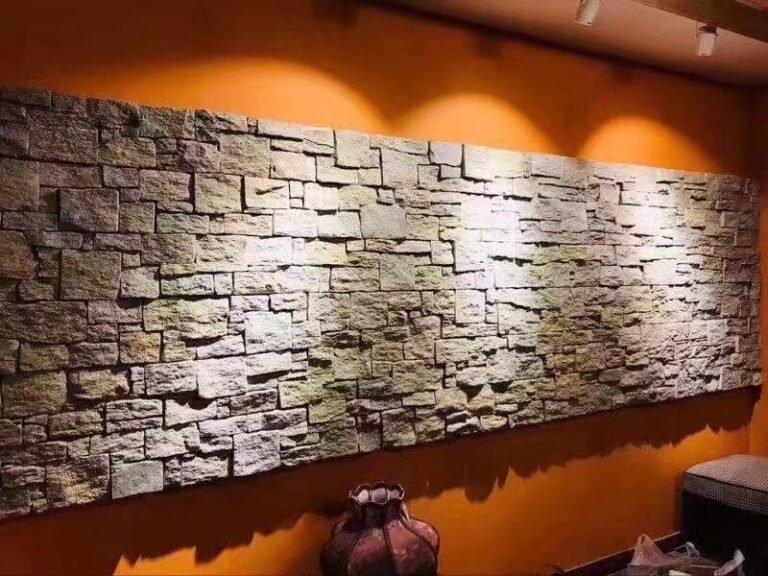
- Ledge and bonded panels clad the vertical face of a raised pond wall or weir so a structure reads as a rock cascade.
- Freeze failure at a pond edge is a drainage problem: splash and groundwater must leave behind the stone, not sit against it.
- Choose the design by how you want to meet the water, walk it, and hide its engineering, then bed it for the wet.
- Before the Six: The Wet-Zone Rules
- 1. Formal Flagstone Coping on a Rectangular Basin
- 2. Crazy-Paving Apron Over a Liner Pond
- 3. Slab and Ledge Waterfall Spillway
- 4. Dry-Creek Cascade in Graded Flagstone
- 5. Raised Pond Wall Clad in Ledgestone, with a Stone Weir
- 6. Naturalistic Beach Entry in Layered Flagstone
- Matching a Design to a Material Line
- Frequently Asked Questions
- Conclusion
Before the Six: The Wet-Zone Rules
A pond edge is not a patio that happens to have water nearby. It is saturated, it is splash-soaked every time the cascade runs, it is walked with wet feet, and in a freeze climate it is the wettest part of the garden going into winter, which makes it the part most likely to heave and crack. Three rules decide almost every choice below, and they are the same rules the Natural Stone Institute frames as stone selection for exposed and wet applications.
- Density is grip and lifespan. High-density slate and sandstone resist the algae film and the water absorption that spalls lighter stone at a waterline; they are the anti-slip, salt- and humidity-resistant choices, which is exactly why the flagstone and crazy-paving line leans on them.
- Drainage behind beats drainage off. Splash and groundwater have to leave from behind the edge, on a free-draining base with a detail that does not trap water against the liner or rim, because freeze damage at a pond is a drainage fault wearing a frost label.
- Bed it like paving, not like a wall. Anything you walk or that forms the coping is a horizontal paving problem: sub-base, jointing and edge restraint, treated in installing flagstone pavers: base and jointing and by the paving practice at ICPI.
1. Formal Flagstone Coping on a Rectangular Basin
The classic formal pond is a clean rectangle or circle with a hard rim, and the coping is a single course of flat flagstone laid around the top, overhanging the water slightly. It reads architectural, it is the easiest edge to keep level, and the straight geometry suits cut flagstone rather than random shapes. The critical detail is not the stone but the fall: the coping is set with a hair of tilt back toward the garden or a slight front drip so splash and rain leave the rim instead of running down behind it onto the structure.
Spec a dense slate or sandstone coping for the wet and walked zone, thick enough to span the rim without flexing, and keep the joints tight and filled so water does not pour through onto the liner below. This is the same water-side logic as pool-coping stone cladding, applied at garden scale, and the flagstone itself comes from the flagstone buyer’s guide and the paver types and sizes.
2. Crazy-Paving Apron Over a Liner Pond
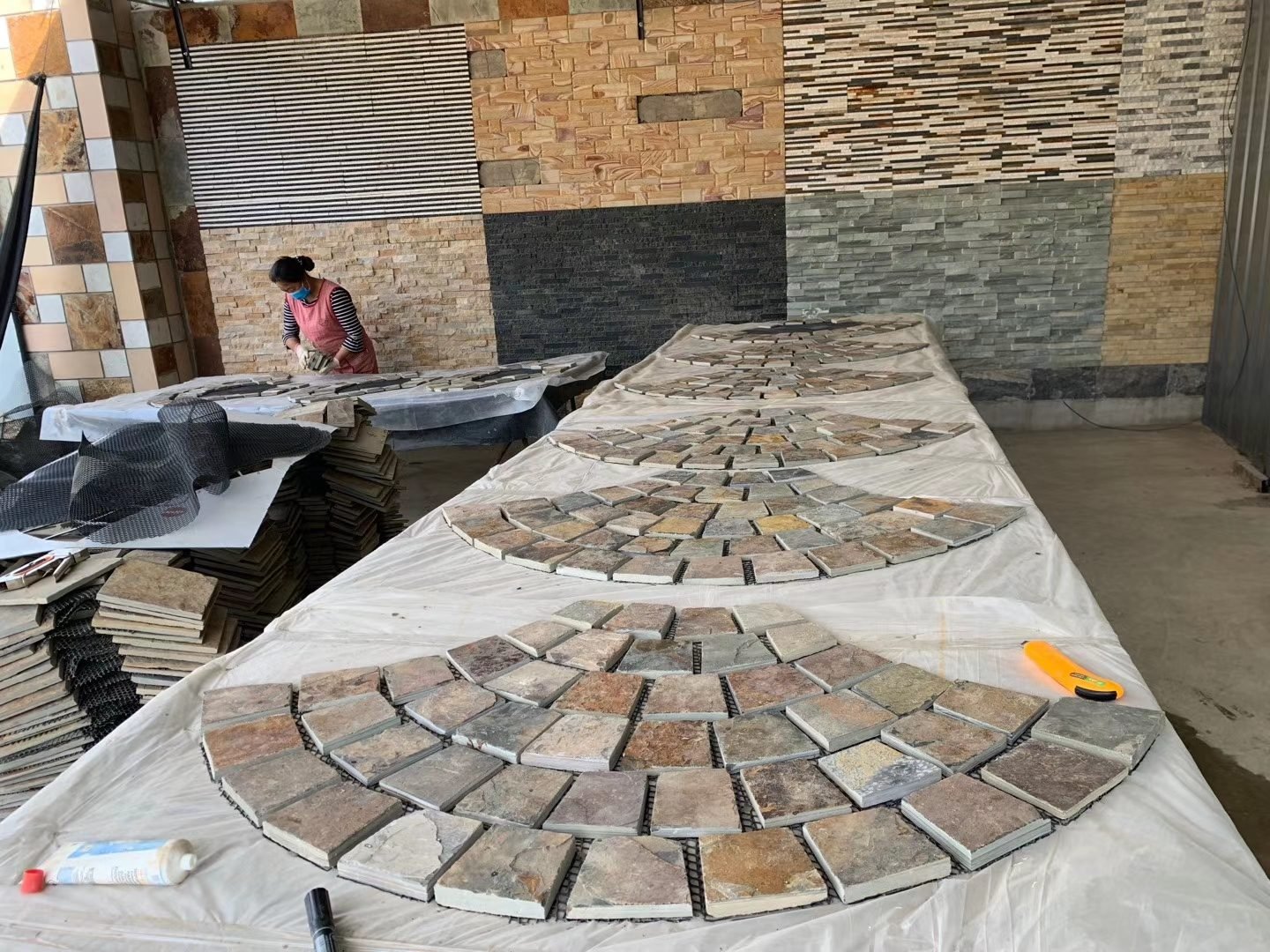
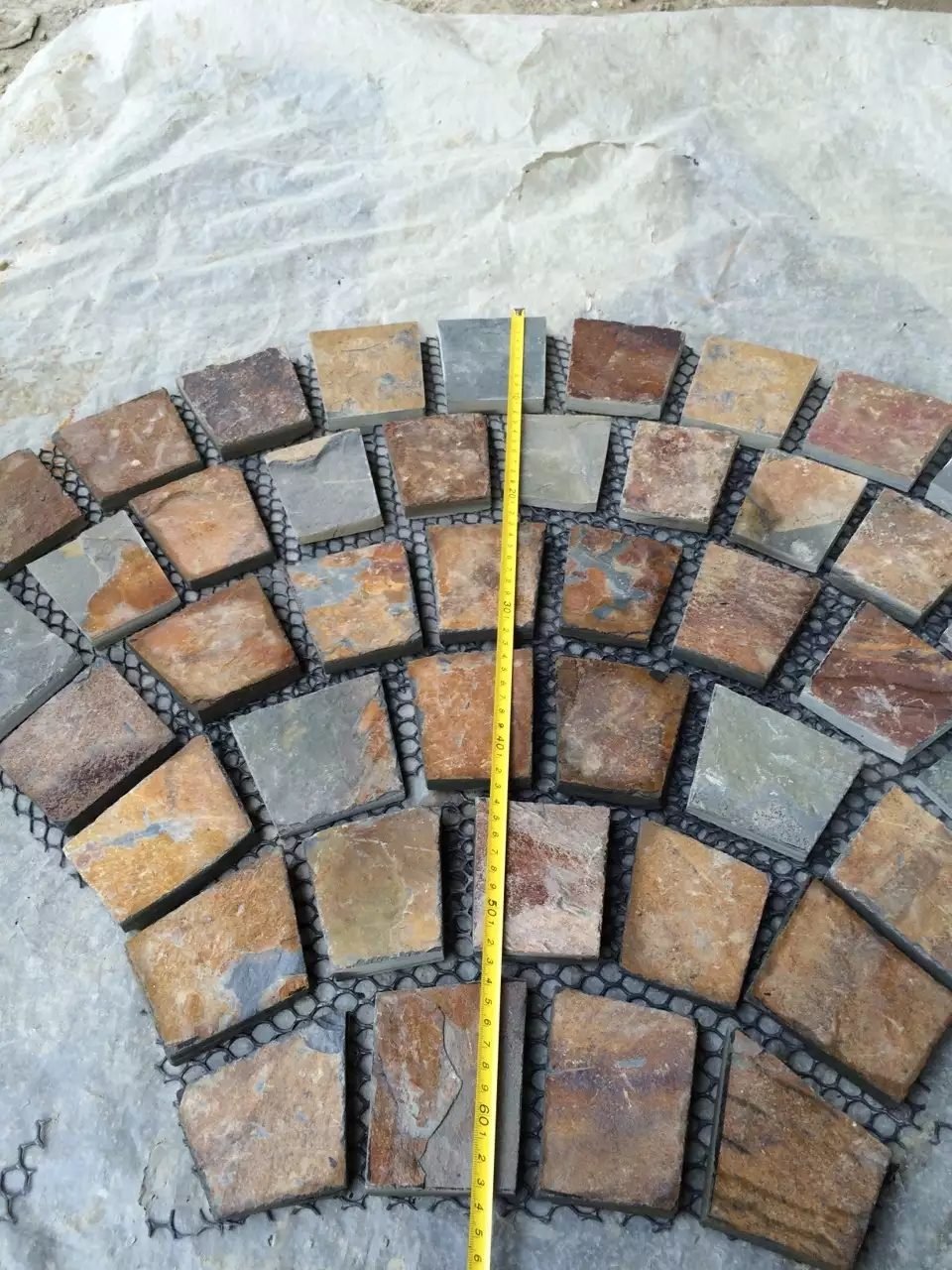
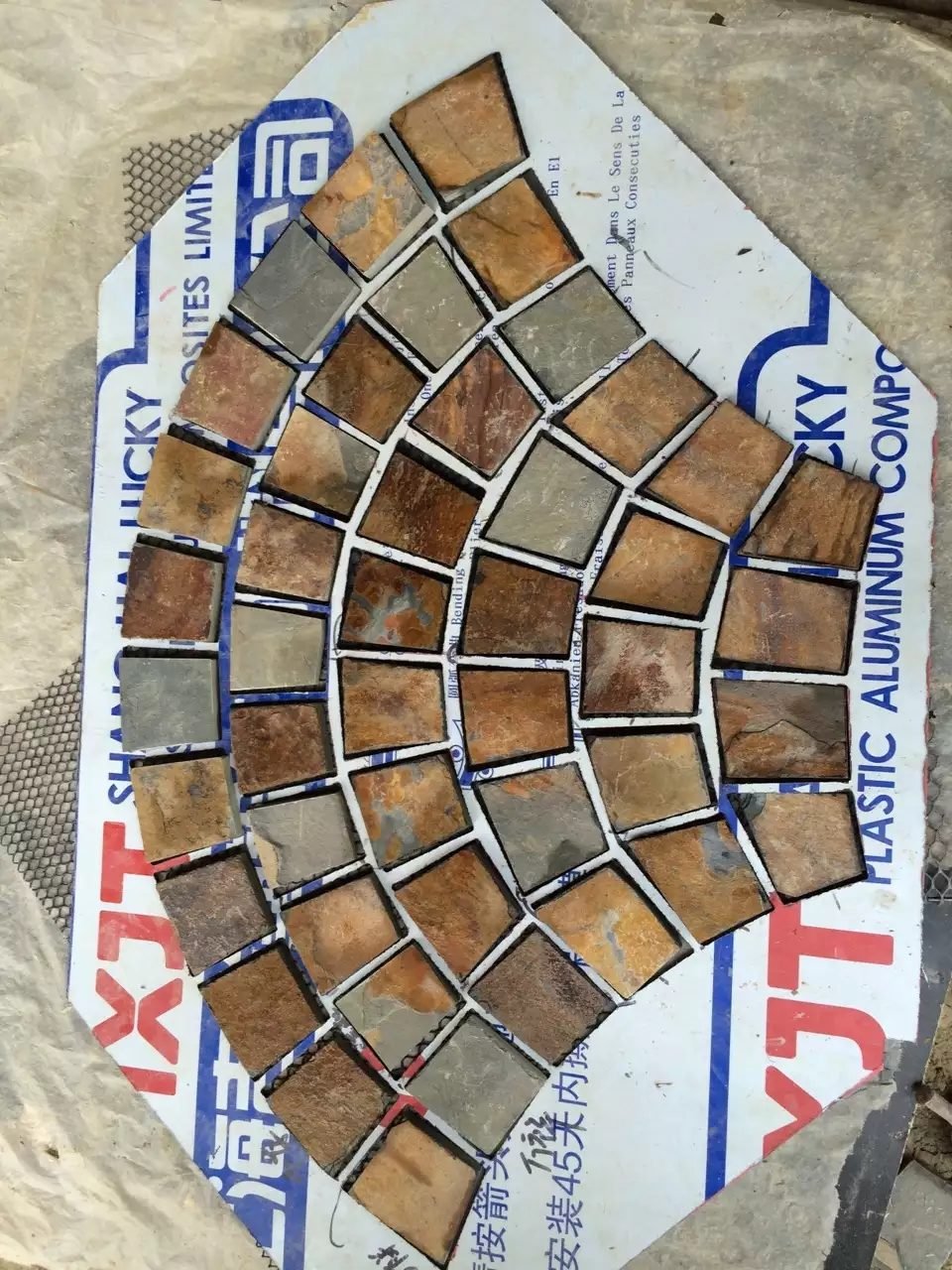
A soft-edged, naturalistic pond wants the opposite of a straight coping: a random apron of crazy paving that flares out from the water and dissolves into planting, hiding the liner and the underlayment without a single right angle. Because crazy paving is supplied mesh-backed, it lays as a continuous sheet with consistent joints, which is why it works over a curved or free-form edge where cut stone would fight the shape. The random pattern also reads as a natural shoreline, so the liner line disappears under stone that looks found rather than laid.
Keep the apron wide enough that splashed water lands on stone and not on soft ground at the liner edge, bed it on a compacted base over the underlay, and do not grout the joints solid where water needs to drain through to the ground. This is the landscape-scale cousin of the crazy paving versus flagstone steppers decision and of random versus patterned crazy-paving layouts. The wet-zone grip rule still applies: pick dense slate or sandstone crazy paving for the part that stays damp.
3. Slab and Ledge Waterfall Spillway
A waterfall is a drainage exercise disguised as a feature, and the stone is what makes the water read as a cascade instead of a tap. The spillway is built from larger slab and ledge stone set to break and sheet the flow: a top weir stone that spreads the water into a thin film, then stepping ledge stones that drop it in stages so it tumbles rather than pours. Getting the lip right, so water sheets off the front edge and does not cling and run down the back, is the whole skill, and it is set by the geometry and seat of each stone, not by the volume of flow.
Because splash saturates this zone constantly, the stone behind and below the cascade needs the same drainage discipline as the coping: a free-draining bed so the water the fall throws out does not stand against the rocks and lift them in the first hard frost. Where the fall is on a wall rather than a mound, the vertical face is clad with ledge or bonded panels, and the water-feature cladding treatment in stone veneer water features covers that application. For the chunky loose-stone look at a cascade, the flagstone stepping-stones line and the split-face loose-stone formats are the source.
4. Dry-Creek Cascade in Graded Flagstone
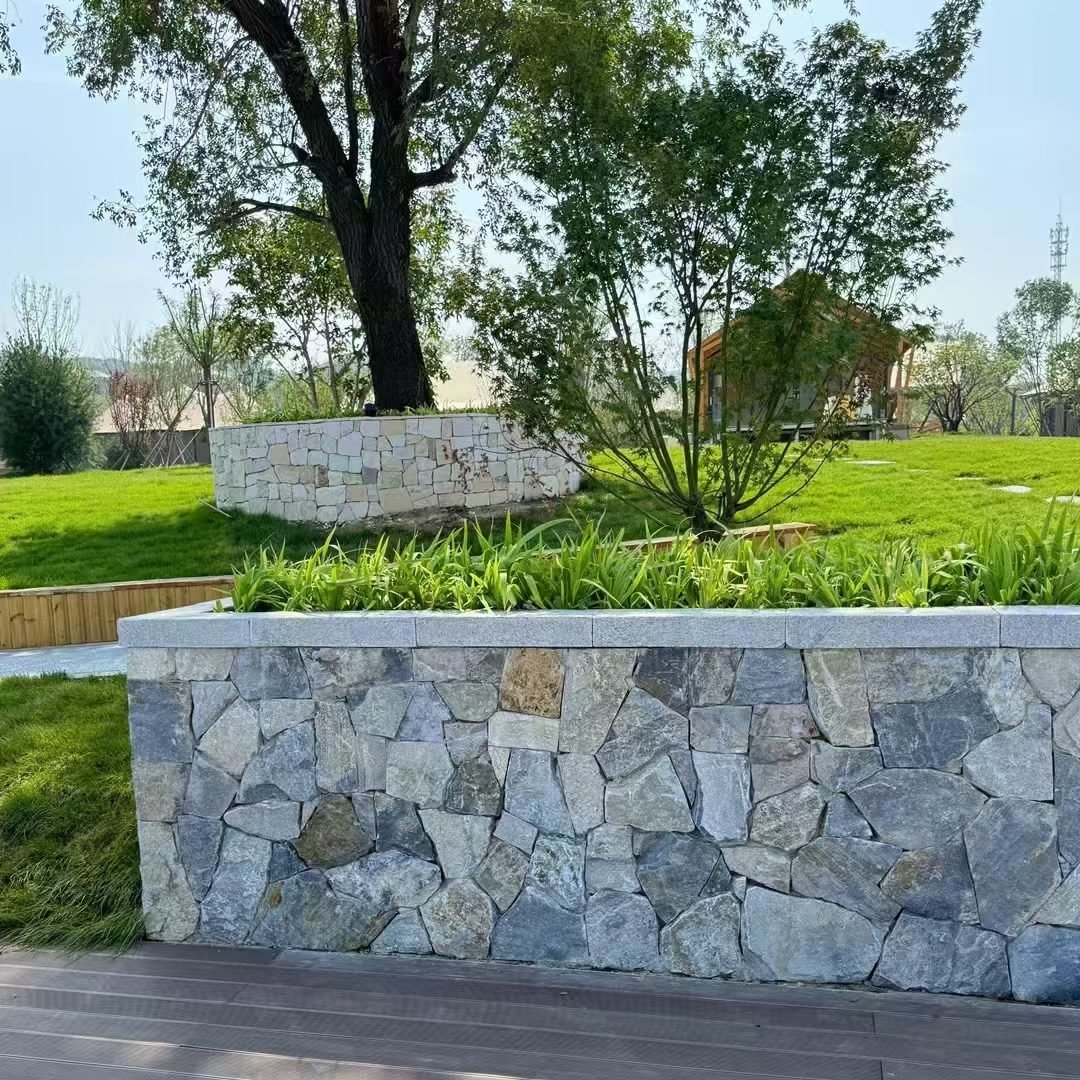
The dry creek is the low-maintenance answer to wanting a watercourse without standing water to freeze, algae or leak. A channel of graded flagstone and smaller stone carries flow only when it rains or when a short cascade discharges into it, and the stone set into the bed reads as a seasonal stream. Because it is not holding water permanently, the edge detailing is lighter than a pond coping, but the channel still needs to be set to move water along and out, not let it pond in hollows where it will freeze or breed mosquitoes.
Use a run of mixed flagstone sizes to build the channel floor and the slab-and-stone shoulders, with the receiving pool at the bottom of the cascade edged like a pond because that is where water always sits. The same stone that makes a path works here, so the layout thinking carries across from flagstone walkway ideas and the sand-base flagstone walkway install, with the channel fall standing in for the drainage gradient. It pairs naturally with a flagstone fire-pit circle where a seating area sits above the cascade.
The dry creek also earns its keep on maintenance, which is the reason landscape designers reach for it around a water feature. Because the channel holds no standing water between rains, there is no liner edge to keep shaded from algae, no coping to scrub, and no still pool to freeze and lift the stone. The planting that softens the stone edges goes in the joints and the shoulders rather than in the flow path, so the channel can be raked clear each spring without pulling a garden apart. Where a real pond is the wrong risk for a family or a dry climate, the cascade feeding a dry creek delivers the sight and sound of moving water and then hands the maintenance burden to rainfall. Set the receiving stones at the cascade foot like a small coping, though, because that one spot is the only place the channel genuinely stays wet.
5. Raised Pond Wall Clad in Ledgestone, with a Stone Weir
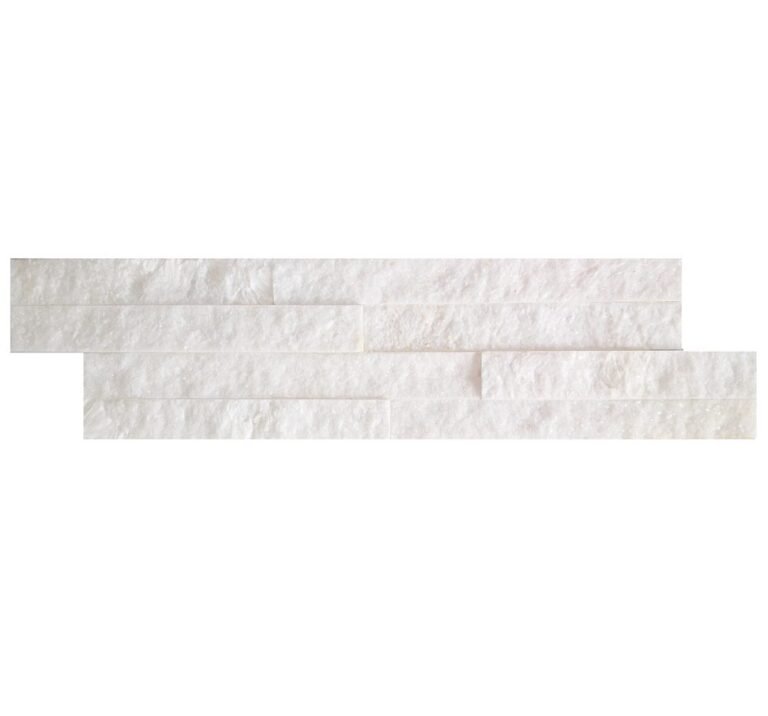
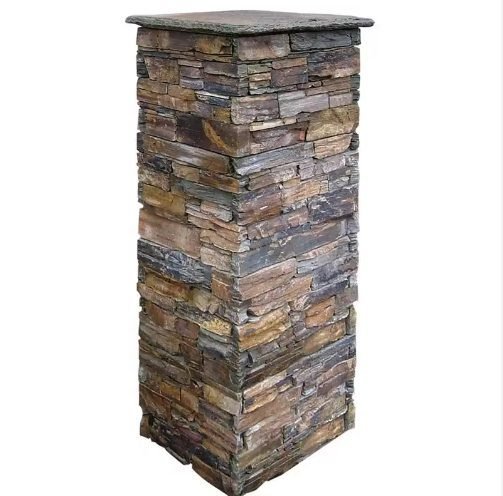
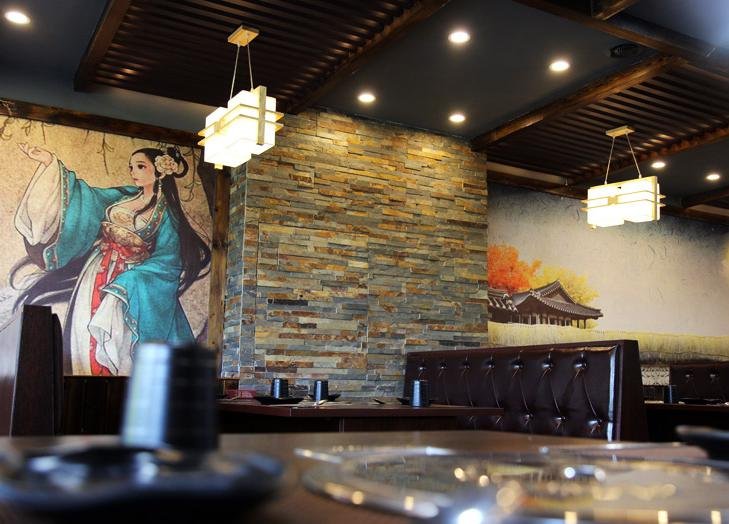
When the pond or the cascade head sits above grade, on a block or reinforced-concrete basin or a timber-framed raised pool, the structure itself is the thing to hide, and the vertical face is a cladding problem rather than a paving one. Thin ledgestone or bonded panels turn that wall into a rock face; the water spills over a capstone weir at the top and down the clad front, so the raised basin reads as a natural outcrop the water falls from. Because it is a vertical, constantly-wet, freeze-exposed surface, the bond and the backing matter as much as on any facade.
For the raised wall, choose cement-backed or mesh-backed panels that key and bond to a solid structure and carry the freeze-thaw load, as on the thin ledgestone panels and the stacked stone cladding lines; the wet-and-freeze behaviour that governs whether a cladding survives on a spillway face is treated in freeze-thaw resistance of natural stone. The raised-edge and planter-wall version, without moving water, is developed in stone garden walls and edging designs.
6. Naturalistic Beach Entry in Layered Flagstone
A swimming or paddling pond wants the edge to be walkable, safe and gradual, and the beach-entry treatment builds a shallow shelf of layered flagstone that steps down into the water. Instead of a hard coping and a ladder, you get graded stone shelves you can wade onto, which is also the pet- and child-safe access a family pond needs. The slip rule is now load-bearing: this is wet stone people stand on, so only dense slate or sandstone with a natural cleft or riven face belongs in the waterline, and the surfaces are laid flat and stable, not rocking.
The entry apron is a paving install on a proper base with edge restraint, and the shelves step down with each tier supported, not mortared to a false edge. Because this is a pool-scale wet environment, the same surround and deck detailing used around swimming pools applies and is worked out in flagstone pool decking, while the wet grip and material choice trace back to slip resistance in natural stone. On a larger pool the coping logic links to stacked-stone pools and veneer features.
Matching a Design to a Material Line
The six treatments draw on three material families, and picking the right one is mostly about whether the stone is horizontal and walked, an organic apron, or a vertical wet face.
| Design | Stone family | Non-negotiable detail |
|---|---|---|
| Formal flagstone coping | Cut flagstone, dense slate/sandstone | Fall set so splash leaves the rim, joints sealed against liner |
| Crazy-paving apron | Mesh-backed crazy paving | Wide enough to catch splash over underlay, joints free-draining |
| Slab-and-ledge spillway | Slab and ledge stone | Lip sheets water forward; bed drains splash behind |
| Dry-creek cascade | Mixed flagstone sizes | Channel set to move water out, no ponding hollows |
| Raised clad weir | Thin ledgestone / bonded panels | Cement/mesh-backed panels keyed to structure, freeze-rated |
| Beach entry | Layered dense flagstone | Cleft wet-grip surfaces, flat stable shelves on restrained base |
Frequently Asked Questions
What stone is best for edging a pond?
Dense, low-absorption flagstone or slate for anything you walk on or that sits at the waterline, because it resists the algae film and freeze damage; crazy paving for a soft organic apron; ledge or bonded panels for a vertical weir or raised wall.
Is flagstone slippery when wet around a water feature?
Any smooth stone is. Dense slate and sandstone with a natural cleft or riven face give better wet grip, and the anti-slip choice matters most on coping and stepping stones you actually walk.
How do you stop pond edging freezing and cracking?
Bed the stone on a free-draining base with a sealed edge so splash and groundwater leave rather than sit behind the rim, and use dense stone at the waterline. Freeze damage at a pond is almost always a drainage problem wearing a frost label.
Can crazy paving be used around a pond liner?
Yes, and it is common: mesh-backed crazy paving lays as an organic apron over the liner and underlayment, hiding the edge while its random joints read as a natural shoreline.
Do these designs need a professional?
The water containment is a landscape or pond contractor’s job; the stone selection, bedding and drainage behind the edge are where a supplier’s spec and dieline guidance earn their place, especially on weirs and raised walls.
Conclusion
A pond or waterfall is remembered by its edge, because the edge is where the engineering meets the eye. Formal basins want cut flagstone coping set to shed splash; naturalistic liners want a mesh-backed crazy-paving apron; cascades want slab-and-ledge spillways bedded to drain; a raised head wants a ledgestone-clad weir; and a paddling pond wants dense cleft flagstone shelves you can stand on wet. Across all six the same three disciplines decide the result: dense low-absorption stone in the wet zone, drainage that lets water leave from behind the edge, and a paving-correct base under anything walked. Get those and the stone hides the plumbing for years; treat it as trim and it fails first.
- Pick the treatment by how you meet the water, walk it, and hide its engineering.
- Use dense slate or sandstone at every wet and walked line, not lighter decorative stone.
- Build drainage behind the edge, not just off the top, to survive freeze at the waterline.
- Bed coping and stepping like paving with a proper base and edge restraint.
- Clad raised walls and weirs with freeze-rated bonded or ledgestone panels.
Specing stone for a pond, cascade or beach entry and unsure which line and grade the wet zone needs? Send the design to the Top Stone Panels team and we will match flagstone, crazy paving or ledgestone to your edge and supply a dieline guide for the bed and drainage.