A rush order is one of the most abused phrases in stone sourcing. A buyer in a tight spot asks to “rush,” a supplier who wants the order says “yes, no problem,” and three weeks later nobody can say what was actually expedited, because no one established which part of the timeline could move and which could not. The uncomfortable truth is that a natural stone factory cannot compress everything, and the parts it cannot compress are the parts that keep a facade from failing. A realistic rush plan is not about speed as a favour; it is about a map of the process, the honest floor of each step, and the trade-offs you are consciously paying to hit a date.
This guide covers exactly that map for a rushed container of stone cladding: what “rush” asks the factory to do, the three anchor lead times Top Stone Panels works to, which steps genuinely shorten, which are fixed by physics or shipping schedules, what cutting them actually costs, and the red flag to run from. The day-by-day production sequence and the ocean-transit side already have their own treatments on this site, so they are linked rather than repeated, and this article stays on the expedite decision.
- A rush order compresses the gap between PO and container load, and only some steps in that gap can move.
- Three anchors govern the conversation: samples 1 to 3 working days, in-stock shipment around 20, first custom batch 25 to 30 including carton printing.
- Real shortcuts are stock availability, dropping private-label printing to neutral or on-file cartons, pre-agreeing spec, and shipping the next sailing instead of consolidating.
- Fixed minimums are cutting, bond cure, the 3-working-day lab reverse-analysis, the sailing window and customs; nobody can beat them without cutting quality.
- The honest cost of a rush is usually a freight or packaging trade-off plus quality risk, not a big day-count saving.
- Durable speed comes from inventory and an approved vein plus artwork on file, not from expediting one order.
- What a Rush Order Actually Asks For
- The Three Anchor Timelines
- The Steps That Compress
- The Steps That Are Fixed
- What Rushing Really Costs
- A Realistic Floor, Worked Through
- How to Never Need a Rush Again
- Red Flags in a Rush Quote
- What to Ask Before You Pay to Expedite
- Frequently Asked Questions
- Conclusion
What a Rush Order Actually Asks For
Strip the phrase down and a rush order is a request to shorten the distance between the purchase order being signed and the container being sealed. On a stone order that distance is a chain: raw block selection, cutting and machining, colour sort or mix, backing and bonding, cure, quality checks, carton or crate production, packing, then the wait for a sailing. Every expedite conversation is really the question of which links in that chain you are paying to shorten and which you are pretending do not exist. A supplier who answers “we will just go faster” without naming the links is not describing a plan, and you should not treat their date as a commitment.
It also asks whether the order is even a candidate for speed. Rushing a first-ever custom product is a different problem from pulling an existing one from stock, and the honest first question is which of the two you are actually trying to do, because the achievable floor differs a lot and the levers are almost entirely different.
The Three Anchor Timelines
Every expedite discussion starts from the normal lead times, so the gap can be measured. Top Stone Panels works to three anchors. Prototype and short-run samples are made and sent in 1 to 3 working days. An in-stock or fast-shipping order runs about 20 working days from Tianjin Xingang. A first custom batch runs 25 to 30 working days, and a significant part of that extra time is private-carton printing and plate preparation, not the stone itself. The day-by-day production scheduling behind those numbers, and the ocean-transit side after the ship leaves, are set out in production scheduling and import lead time and stone shipping transit time; the point here is only that a rush order is measured against them, not that it deletes them.
Reading the anchors as a rush map makes the real opportunity obvious: the fastest path is already close to the in-stock figure, and the sample path is already days, so the compressible middle is the custom first-order path, where printing and stock-availability, not the rock, are the long poles. That reframes “rush me” into “get me onto the in-stock path sooner,” which is a settable question rather than a favour.
The Steps That Compress
There are four genuine levers, and none of them involve asking the rock to hurry.
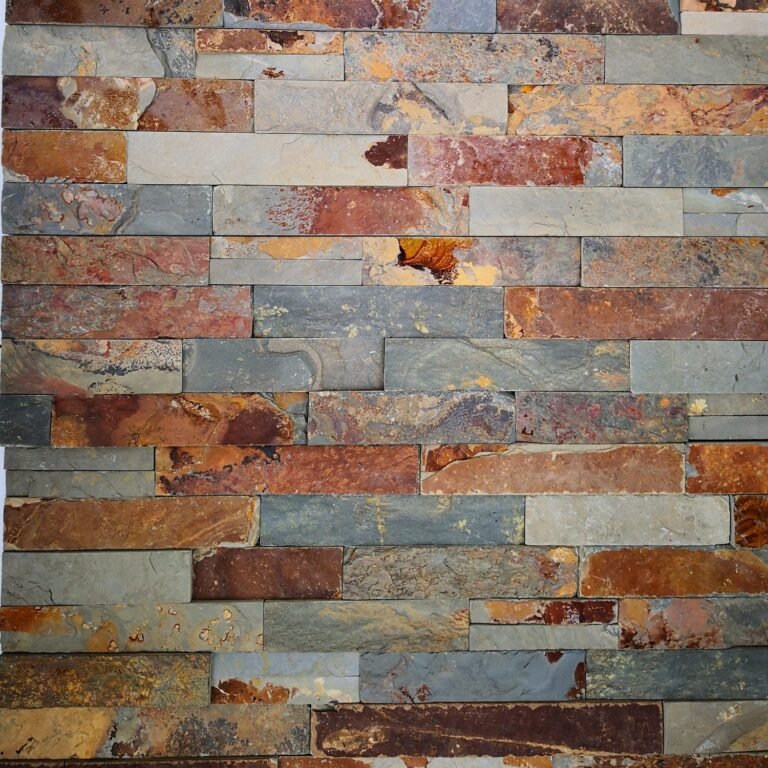
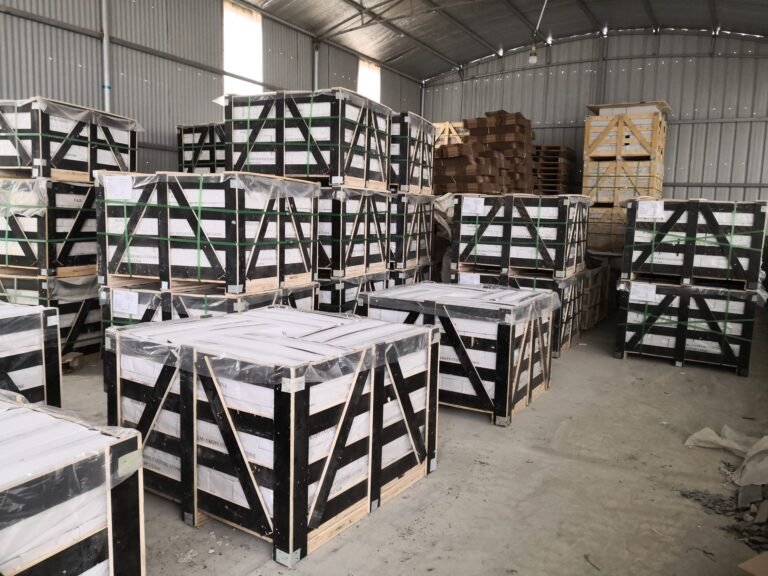
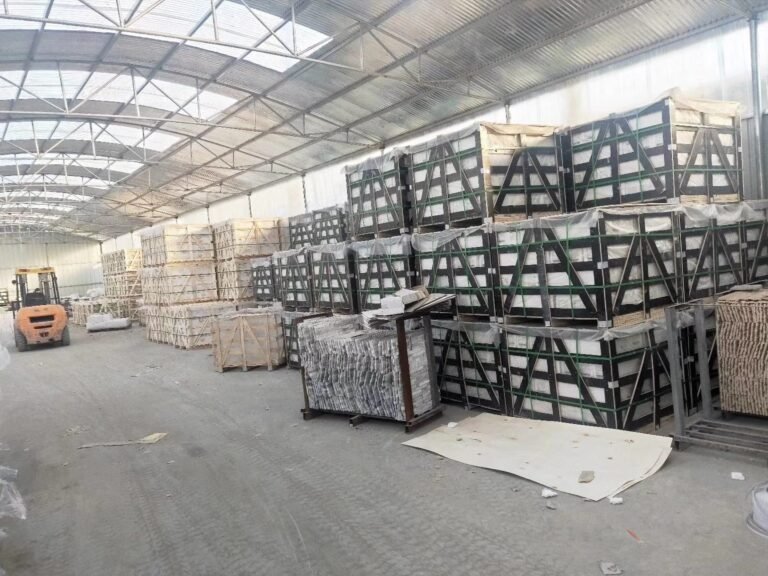
- Stock instead of queue. A factory with an export base pulling more than 220 containers a year holds inventory of fast movers. Ordering against in-stock material skips the block-to-panel production queue entirely and is the single biggest real saving, because you are not rushing anyone, you are drawing from work already done. This is why the in-stock anchor sits near 20 days and a first custom batch does not. Fast movers are typically the standard stacked stone bonded panels and thin ledgestone panels formats a distributor already carries.
- Drop the private label on that order. A custom printed carton has plate and print time welded to it. Shipping the same stone in neutral or already-on-file cartons removes a step that has nothing to do with the stone, which is the fastest lever on a first custom job. Branding can follow on the next order.
- Pre-agree the specification. Approval loops are schedule killers. A buyer who has already evaluated samples and locked a written purchase specification before the rush does not burn days on sign-off, which is why the sample evaluation checklist, ordering samples and the purchase-specification template are speed tools, not just quality ones.
- Ship the next sailing, not a full container. Waiting to consolidate a mixed order is often the true delay. Shipping the next departure, even less than optimally loaded, buys calendar time in exchange for freight efficiency, a trade decided against the container loading economics.
The Steps That Are Fixed
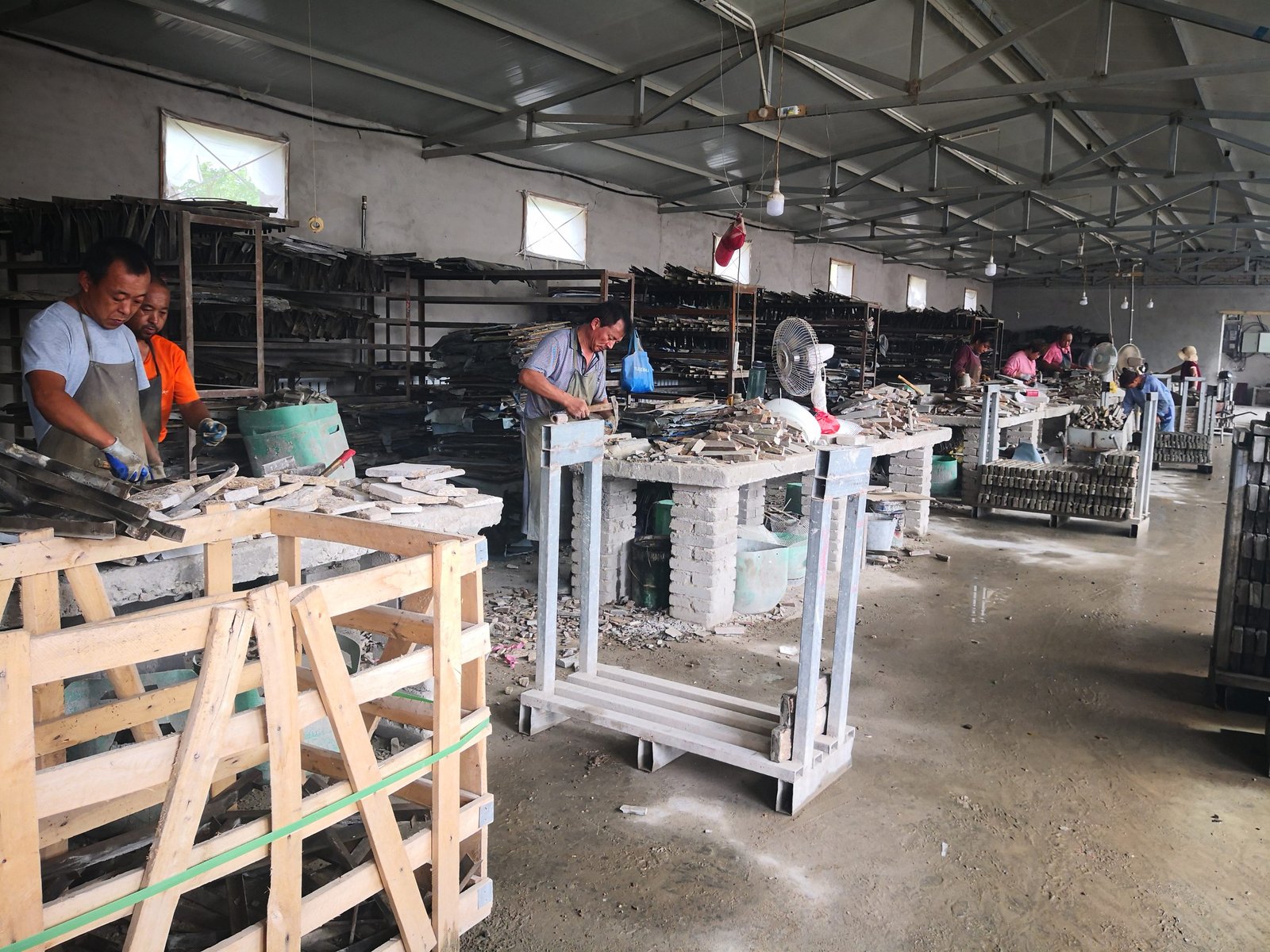
The compressible list matters less than the fixed one, because the fixed steps set the floor, and a rush quote that ignores them is a lie with a date on it. Cutting and machining a natural product to tolerance takes the time it takes. The epoxy bond on a backed panel needs to cure; that is chemistry, not scheduling, which is precisely why a marine-grade bond rated through a 26.5-tonne container and a -30 C to +50 C range is earned by a process and not by a promise. Where the buyer is matching an existing wall, the factory laboratory runs vein-density, cutting-tolerance and backing reverse-analysis over about 3 working days and issues a 1:1 sample; compressing that is where the wrong tone or the wrong thickness walks onto a facade. Then, entirely outside the factory, the container leaves on the next sailing whether you paid to be early or not, and the destination port clears it on its own timetable, so the last mile of any “rush” is freight and customs, detailed in port-to-port versus door-to-door shipping and receiving and unloading a stone container.
A useful way to hold it: production can often move toward the in-stock floor; it cannot move below the physical minimum of curing, cutting and testing, and it has no control at all over the vessel schedule or the customs queue. The floor of a rush order is the least compressible step, not the most eager one.
What Rushing Really Costs
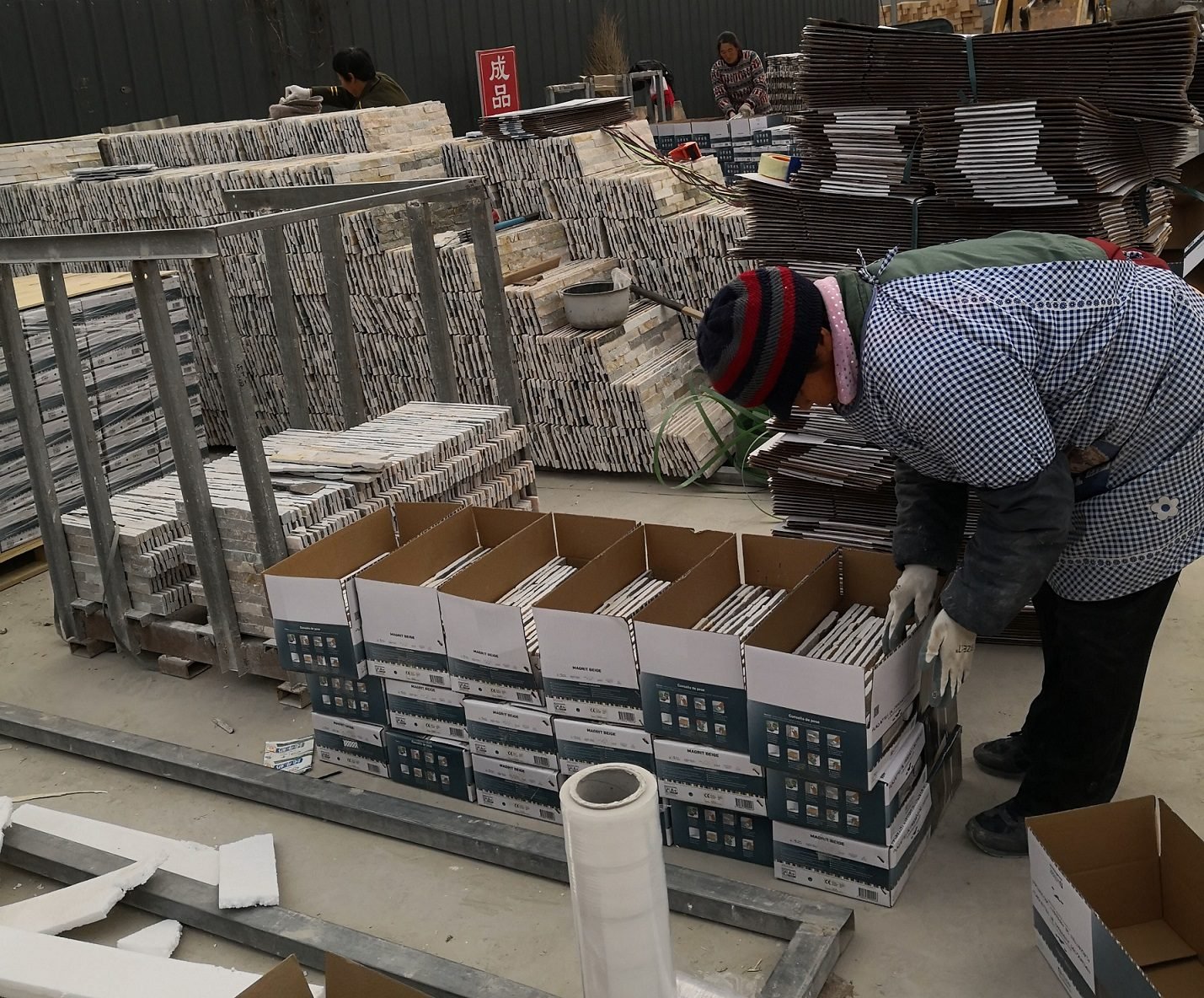
Buyers fear a rush costs a large premium in days saved; the reality is usually the opposite. Days saved are modest because the fixed steps hold the floor, and the price is paid in trade-offs instead. Switching to the next sailing before consolidating costs money per square metre, since you are shipping air. Dropping private-label packaging costs the branding moment on that container. Shipping from stock may cost you the exact tone or format you wanted and force a substitute from what is on hand, which is a quality-of-match cost, not a cash one. And every step a supplier agrees to skip in order to hit an aggressive date transfers risk onto your wall rather than off the calendar.
There is a payment dimension too. On the standard 30 percent deposit and 70 percent before shipment, a rush is often where a buyer is tempted to relax the pre-shipment confirmation, waiving the loading video and photo package that normally sits between the balance and the vessel. Do not. Those deliverables are the evidence the container was built to spec, and dropping them to save a day is trading your only inspection point for schedule. The FOB pricing factors and the payment-terms comparison cover the money side; the point here is that expedite “costs” are mostly risk and packaging, not a stamped surcharge.
A Realistic Floor, Worked Through
Take two orders that both want to be “in a month.” Order A is a distributor reordering an established product the factory stocks. The stone is done; the work is pick, pack and load. On the in-stock path, with artwork already on file so there is no printing, the compressible chain is short and the realistic floor is close to the ~20-working-day anchor, gated mainly by the next sailing and the payment confirmation. Order B is a first-ever custom panel, a colour mix the factory has not run, in the buyer’s own printed cartons. It cannot go faster than block-to-panel production plus cure plus the 3-day match analysis plus carton printing. Rushing B means removing the printing (neutral cartons) and the consolidation wait (next sailing), and pre-agreeing spec so approval is not in the critical path; the stone and cure days stay. The gap between “rush A” and “rush B” is enormous even when both buyers use the same word, and the honest rush conversation is different for each.
How to Never Need a Rush Again
The best rush order is the one you never place, and it is bought in advance with three decisions. First, stock fast movers rather than ordering everything to demand, so routine reorders sit on the in-stock path by default; planning that against the seasonal demand curve is treated in seasonal demand and pricing. Second, keep an approved vein and a defined custom mix on file with the supplier so a repeat does not restart sampling or matching; the OEM process is in custom colour-mix and OEM. Third, register your private-label artwork once, since holding packaging and colour definitions on file removes setup from repeat orders, as covered in private-label branding and OEM and private-label stone panels. Do those and speed stops being something you beg for and becomes something you already own.
Red Flags in a Rush Quote
A rushed timeline is where the worst supplier behaviour hides, so read the quote for these tells.
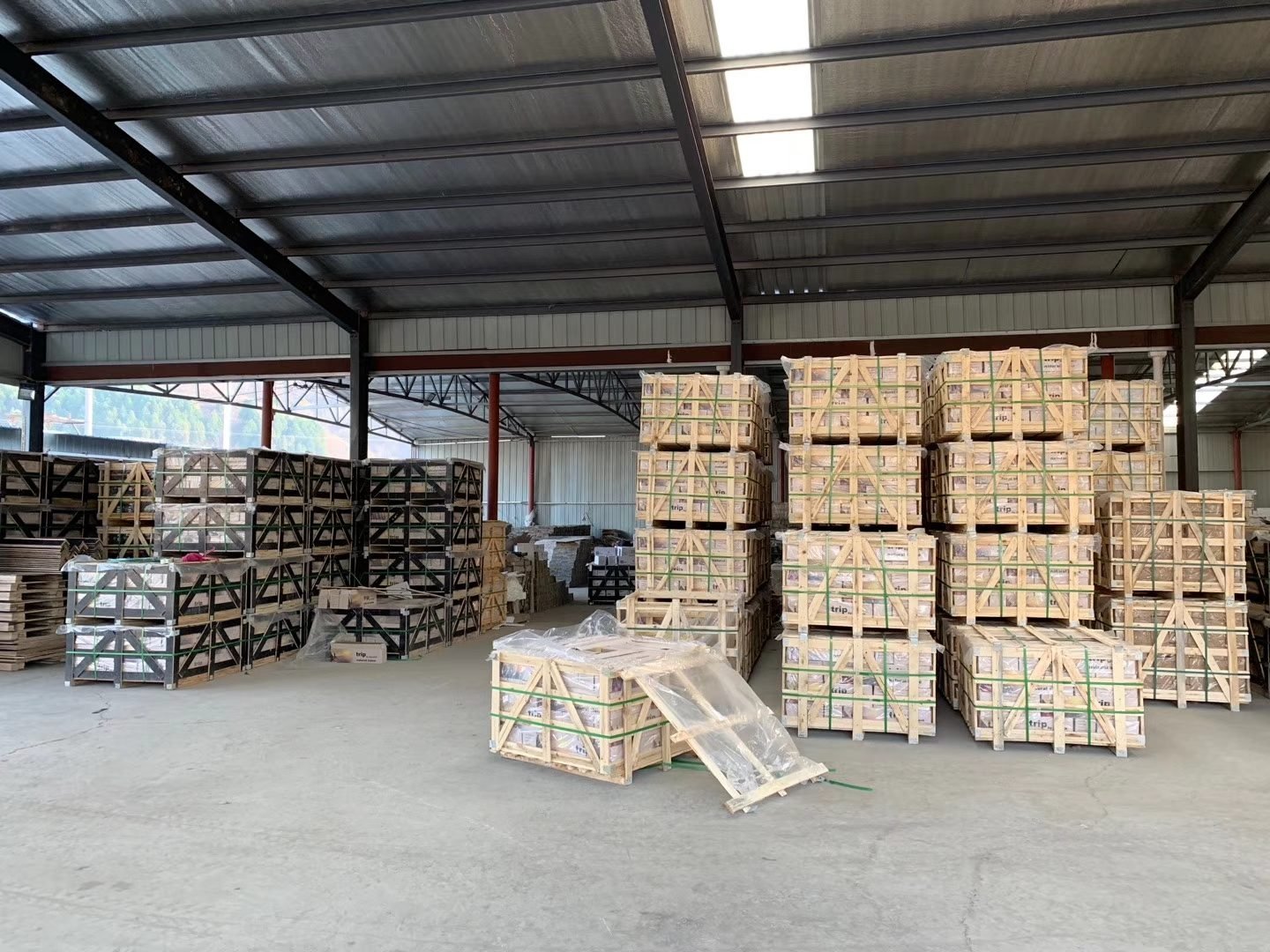
- Any supplier who promises to beat a bond cure time, a cutting tolerance or a sailing schedule: they are either lying or skipping a step that protects your wall.
- A date given as one number with no explanation of which steps compress, which means there is no plan, only optimism.
- Pressure to waive the pre-shipment photo and video or the sample-match analysis “to save time,” which removes your inspection at the exact moment quality risk rises.
- A substituted tone or thickness quietly swapped in because that is what was in stock, discovered only at unload.
- A quote that is cheaper because it dropped the wooden crate and steel strapping standard, moving the zero-breakage risk onto your freight.
The pattern is consistent: every illegitimate shortcut a rushed order invites is a transfer of risk from the supplier’s calendar to your project. A factory with a three-step QC protocol and its own quarry is the one that can tell you honestly what can and cannot move, and verifying the supplier before you need the speed is the real insurance.
What to Ask Before You Pay to Expedite
- Is any of this in stock, and what is the earliest pick-and-load date against current inventory?
- Which specific steps can you genuinely shorten, and which are fixed minimums?
- What do we lose if we go to neutral cartons and the next sailing, in days and in money?
- Give me the earliest date with every quality step, and the earliest that skips one, so I can see the risk spread.
- Will the pre-shipment photo and video package stay, or does the rush remove it?
- Is the tone and thickness locked to my approved sample, or does speed mean a substitution?
Frequently Asked Questions
How fast can a stone factory really rush an order?
To the floor of the compressible steps, not below them. An in-stock order already sits near a 20-working-day path and samples near 1 to 3 working days; a first custom order at 25 to 30 days cannot be compressed past its cutting, bond-cure and printing steps without cutting corners.
Which steps can actually be shortened?
Stock availability, carton printing by switching to neutral or artwork already on file, approval by pre-agreeing the spec, and consolidation by shipping the next sailing rather than waiting to fill a container.
Which lead-time steps cannot be rushed?
Cutting and machining, adhesive bond cure, the laboratory reverse-analysis of a match sample, the next sailing window, and customs clearance. These are minimums set by physics and schedules.
What does expediting really cost?
Usually less speed than people expect and more risk than they fear: often a freight or consolidation choice, sometimes giving up private-label packaging on that one order, and the genuine cost is the quality risk a supplier takes on by skipping a fixed step.
How do I avoid needing a rush order next time?
Hold inventory of fast movers, keep an approved vein and your artwork on file, and re-order against them, so the repeat lands on the in-stock fast path instead of the first-order path.
Conclusion
A rush stone order is a scheduling question with a quality floor. Against the anchors of 1 to 3 working-day samples, a roughly 20-working-day in-stock shipment and a 25 to 30-working-day first custom batch, the real levers are stock, packaging, pre-agreed spec and sailing choice, while cutting, bond cure, match analysis and the vessel and customs schedules are fixed and only a dishonest supplier claims otherwise. The rational expedite is not “make it fast” but “move me onto the in-stock path and take out the steps that are only there because this is a first order.” Get there, keep the pre-shipment evidence intact, and you can hit a date without borrowing the risk back into your own wall.
- Measure the rush against the anchors: samples 1 to 3 days, in-stock around 20, first custom 25 to 30 days.
- Pull from stock and drop or defer private-label printing, the two biggest genuine compressions.
- Pre-agree spec so approval is not in the critical path, and ship the next sailing when calendar matters more than consolidation.
- Accept that cure, cutting, the 3-day lab match, the sailing window and customs set the floor no one can beat.
- Keep the loading video and photo package even on a rush, and buy future speed with stock, an approved vein and artwork on file.
Facing a tight site date and unsure what a rush can honestly deliver on your product? Send the target arrival to the Top Stone Panels team and we will show you which steps compress against current stock, what it costs, and what we will not skip.