A showroom is the most flattering room in any stone business, which is precisely why buyers overweight it. Every piece on the wall is a good piece, the light is set to make texture read well, the corner samples are the cleanest ones the factory owns, and nobody has ever had a claim rejected by a display board. Yet a showroom visit is genuinely worth the flight when it is used for what it can actually do: put questions to a supplier in a room where they either can or cannot answer them, and then walk the answers into the workshop, the warehouse and the paperwork on the same day. The mistake is treating the room as the verdict instead of as the opening of the evidence chain.
This checklist is written for that use. It covers what a display wall can and cannot prove, the questions worth asking at each board, how to cross-check the answers in the three rooms that matter, which documents to ask to see, the red flags that end a conversation early, and how to score two suppliers once you are back at a desk and no longer being handed tea.
- A showroom proves sourcing and presentation, not production discipline: vein consistency, bond cure, packing and on-time loading all live outside the room.
- Ask at every board the same question in different clothes: which of these do you make, from which vein, and can I see that line today?
- Cross-check in a fixed order, workshop then quality-control station then packing and crating then the stock you would actually ship from.
- Documents beat verbal answers: packing and fumigation practice, the declared HS code, the written QC protocol and one completed export file from your region.
- The commercial claims that predict your next three orders are lead time, repeat-order setup and who owns the artwork and colour-mix definitions.
- Score the visit against the audit, the sample evaluation and the supplier interview, which are separate exercises with separate checklists.
- What a Showroom Proves, and What It Does Not
- Before You Arrive: Send the Drawing
- Reading the Display Wall
- The Questions to Ask at Each Board
- Cross-Check One: The Workshop Floor
- Cross-Check Two: QC, Packing and Stock
- The Documents Worth Asking For
- Red Flags That End the Conversation
- Scoring Two Suppliers After the Visit
- Frequently Asked Questions
- Conclusion
What a Showroom Proves, and What It Does Not
Start with the honest list of what the room can demonstrate. A well-built display wall shows that the supplier has access to a range of material, can lay and present it competently, and understands which colours and textures its market buys. It shows whether they can produce a corner, a thin format and a large-format panel, because those three appear as separate boards in a real producer’s room and are usually blurred into one in a reseller’s. It also shows appetite: what a supplier displays is what it wants to sell you, which is useful intelligence about where their capacity is aiming.
What it cannot show is everything that determines whether your container arrives the same as the board. Natural colour variation between veins, the cure quality of the epoxy that holds a panel together, whether the mesh or cement backing is consistent from pallet to pallet, how a crate is strapped, and whether a factory can hit a date in a busy quarter are all invisible in a room of perfect samples. That is why the visit is worth doing at all: it puts a buyer in the building where those answers exist, three corridors away from the display.
Before You Arrive: Send the Drawing
A showroom visit arranged as a general introduction produces a general introduction. Arranged as a specification meeting, it produces decisions. Before travelling, send three things: the product shortlist or drawing with formats and approximate square metres, the target market and any standard your project must meet, and the list of questions you intend to ask. A supplier who has that pack can pull the relevant boards, have the right people present, and put stock on the floor to look at; a supplier who cannot organise that from a written brief has already answered one of your questions.
Ask for samples to be ready to leave with you, because the factory that can cut and dispatch a prototype in 1 to 3 working days is describing a process that also runs on production, and a sample you carry home is the reference that survives the next twelve months of email. If your job is a replacement or an extension of an existing wall, bring a physical piece rather than a photograph, since matching vein density, cutting tolerance and backing is a laboratory exercise that takes about 3 working days and produces a 1:1 sample, not an opinion.
Reading the Display Wall
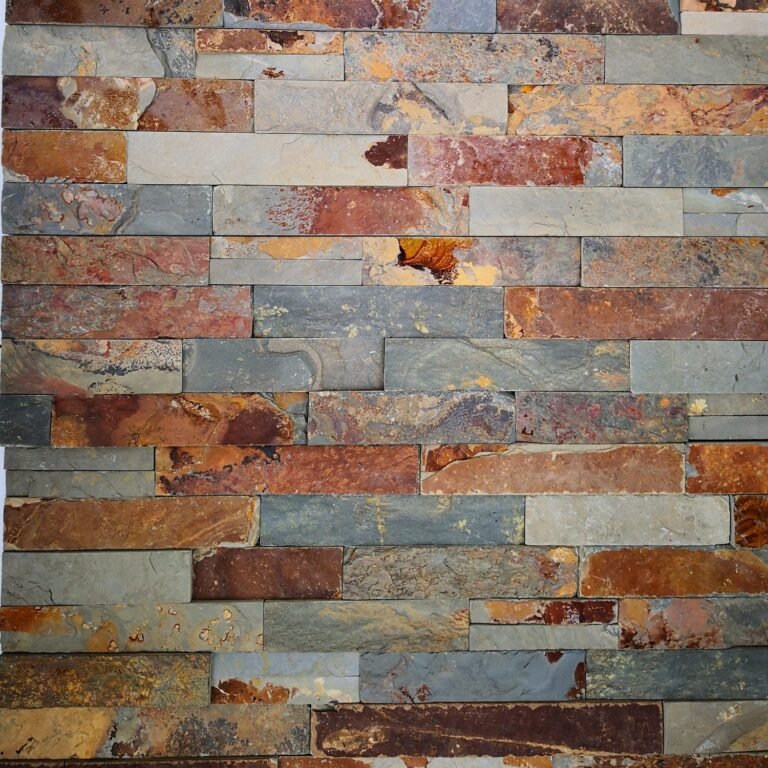
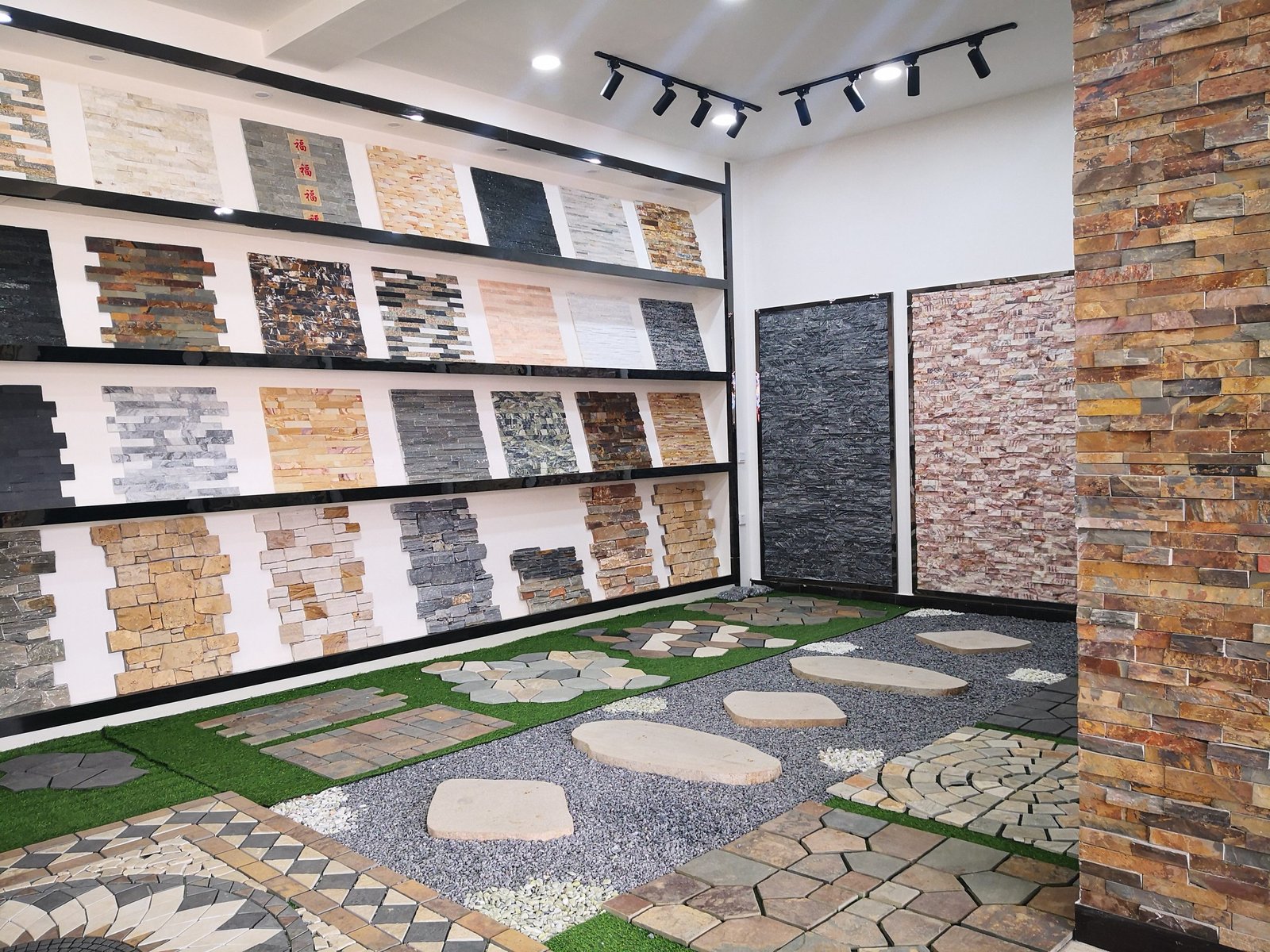
Read the room in categories rather than in colours. The first category is format range: bonded ledger panels in 15x60cm or 15x55cm, ultra-thin mini ledgestone in 36x10cm, interlocking cement- or mesh-backed cladding in 20x55cm or 15.2x61cm, loose split-face stone, corner pieces, flagstone and crazy paving, and column kits with pillar caps. A producer will have those as distinct boards because they come off different processes; a wall of near-identical shades of the same panel tells you about a colour range, not about a factory. The product range a supplier displays on site is the honest table of contents for what it can actually ship, so compare the boards in the room against that list line by line rather than against the brochure it emailed you.
The second category is the corner and edge story. Ask to see pre-made L-corner boards alongside field panels, and look at how the joint staggers: the asymmetric 6 by 12 plus 6 by 6 inch and 6 by 16 plus 6 by 8 inch sets read like traditional masonry, while the symmetric 6 by 12 plus 6 by 12 set gives an equal reveal. This matters commercially as well as visually, because a factory that moulds and ships finished corners is selling a labour saving of more than 50 percent on corner installation and roughly 20 percent less material waste, and that is a margin argument a distributor can put in front of a contractor. The third category is the back of the panel: turn a board over, look at the adhesive pattern, the mesh or cement, and the thickness consistency, and that is the half of the product a showroom rarely lights. How a distributor builds the same kind of display for its own yard is a separate exercise, covered in building a stone cladding display wall.
The Questions to Ask at Each Board
The same five questions, asked at every board, convert a tour into an interview. Ask them casually and in order, and write the answers down on the sample tag.
- Do you make this, or sell it? If they make it, ask which line it comes off and see it running. A source factory with its own quarry and eighteen years of cutting history will not hesitate, and hesitations here are the cheapest risk signal on the trip.
- Which vein does this colour come from, and how much of it is on the floor now? Consistency claims are batch claims. For split-face loose stone, hand-sorting from a single quarry vein is what holds natural colour transition at 95 percent or better, so the follow-up question is what happens on a repeat order six months from now.
- How do you control thickness and flatness, and can I measure three pallets at random? Thickness tolerance is a freight and a labour question as much as a quality one, since a wall of uneven depths eats mortar and slows a crew.
- What is the backing and bonding method, and what does it have to survive? The answer should include the load and temperature story honestly: Top Stone Panels bonds panels with marine-grade epoxy and holds it through a 26.5-tonne container and a swing from minus 30 to plus 50 Celsius on the way to site, and for severe-cold facades supplies cement-backed interlocking units, which are two different mechanisms for two different jobs.
- Show me the same board as it left the factory last month. A producer can put a recent production pallet next to a showroom sample; a trader cannot, and the gap between those two answers is the gap between a nice room and a dependable supply.
Where the product line is not the point but the numbers are, ask about capacity in the same breath: what the annual container count is, what share of it is the product in front of you, and what the order book looks like in your peak season. A site above 220 containers a year with a defined repeat mix is a supplier whose lead times are backed by throughput rather than by goodwill.
Cross-Check One: The Workshop Floor
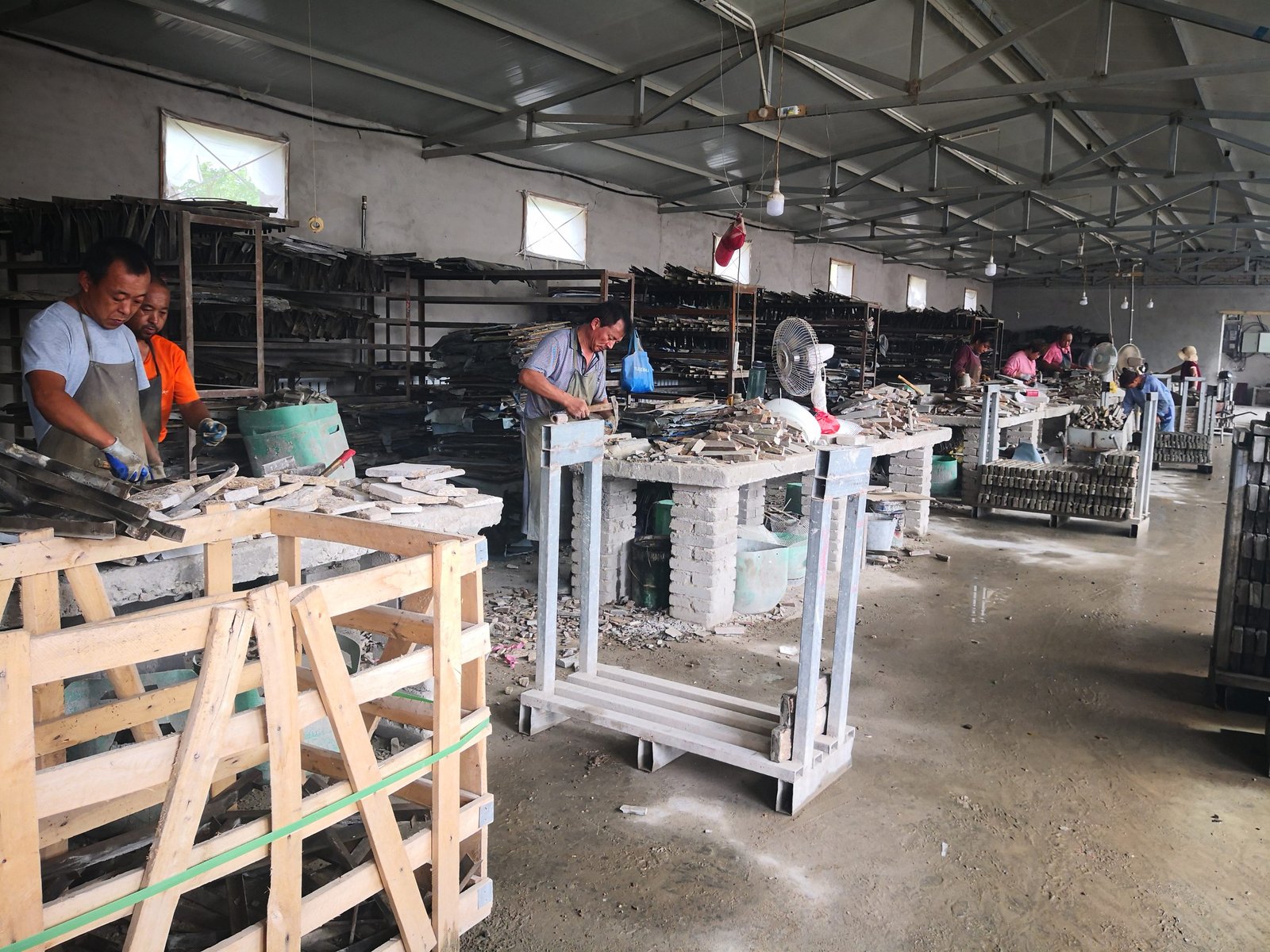
The display wall makes claims; the floor tests them. Walking the production line is the standard audit exercise and is set out properly in the supplier factory audit checklist, so what follows is only the showroom-specific version of the same logic: for every board you liked in the room, find the process that produces it. Stone and ledgestone panels come off a cutting line and a hand-lay bench, so look for the diamond cutting equipment, the infrared or precision cutting capability and the wall of hand-assembled faces, then check whether the people laying those faces have a reference sample in front of them or are working from memory.
Volume capability is a separate question from the presence of machines, and the production-capacity argument belongs to large-volume order capacity and QC; the visit gives you the physical check on it. A useful trick is to ask what the factory cannot make. A producer with eighteen years behind a quarry will name constraints in detail, which is a sign of an actual process, while a supplier who can make everything in any quantity has described a catalogue rather than a factory.
Cross-Check Two: QC, Packing and Stock
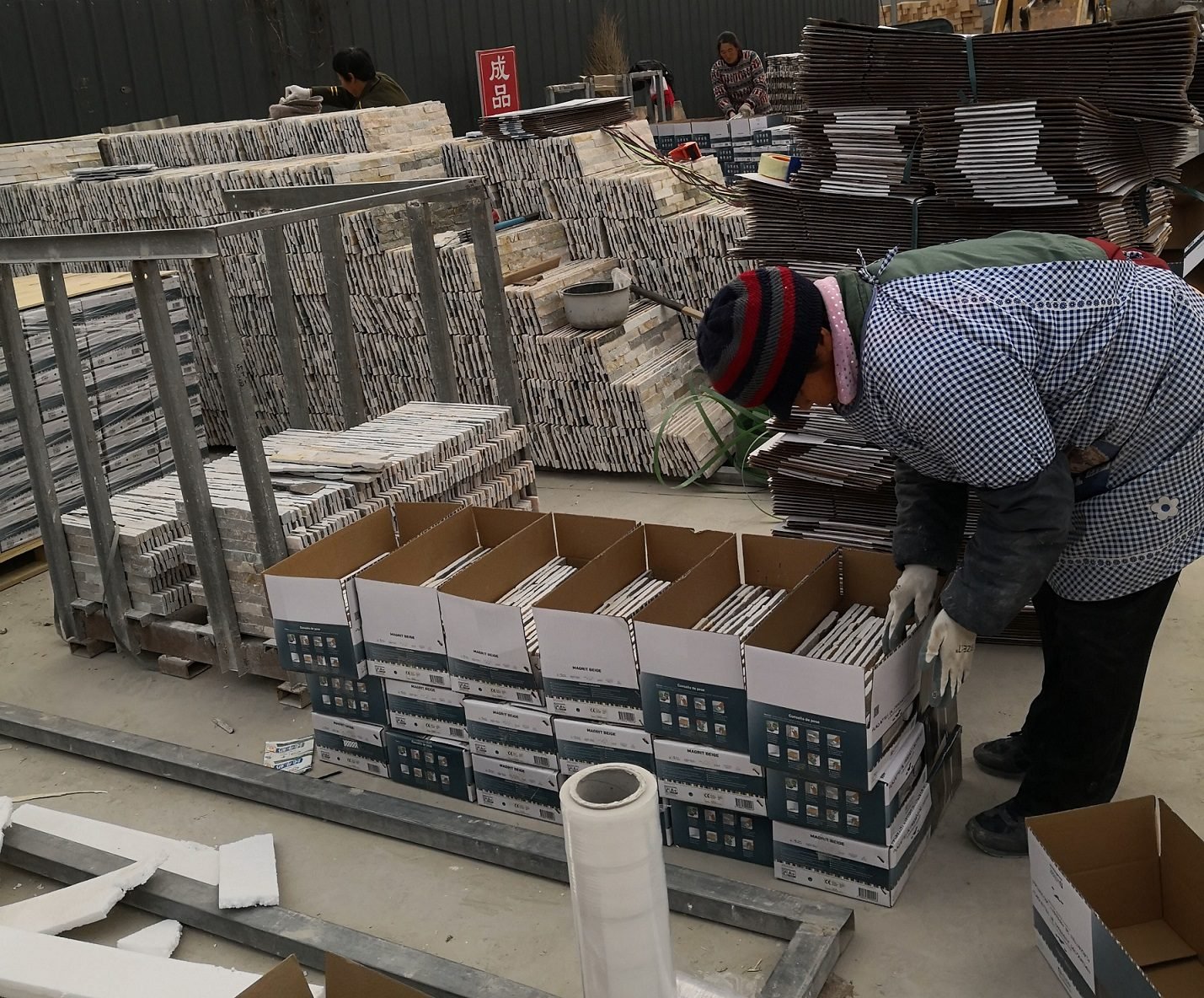
Three rooms after the display decide what you will open at destination. At the quality-control station, ask to see the protocol as written rather than described, and watch what gets rejected: thickness variance, face separation, corner chips and colour drift are the four things worth looking for in the reject bin, and a QC post with no visible reject pile is either very good or not working. The three-step thickness and quality process is documented on this site in the three-step QC process, and the language used at this station is defined in the QA glossary for buyers.
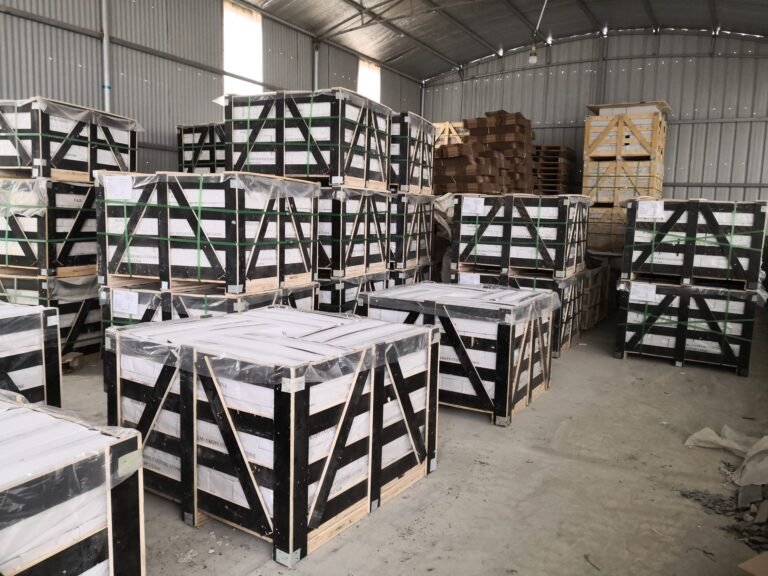
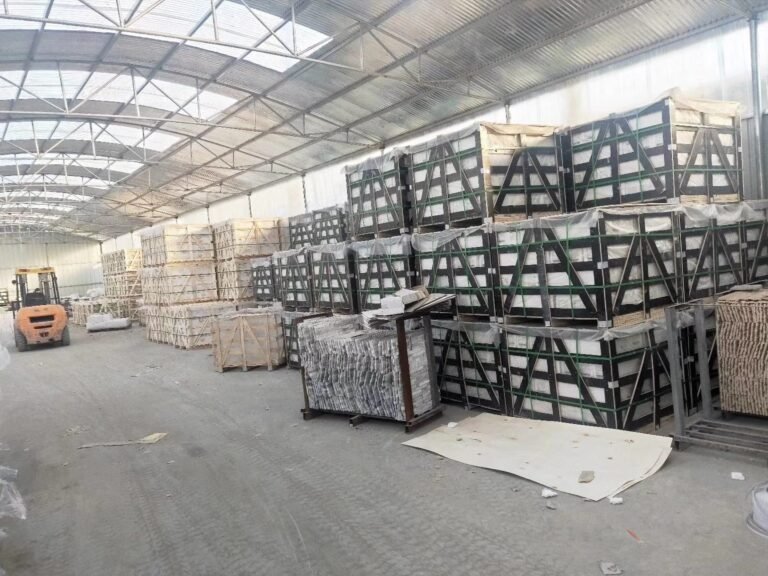
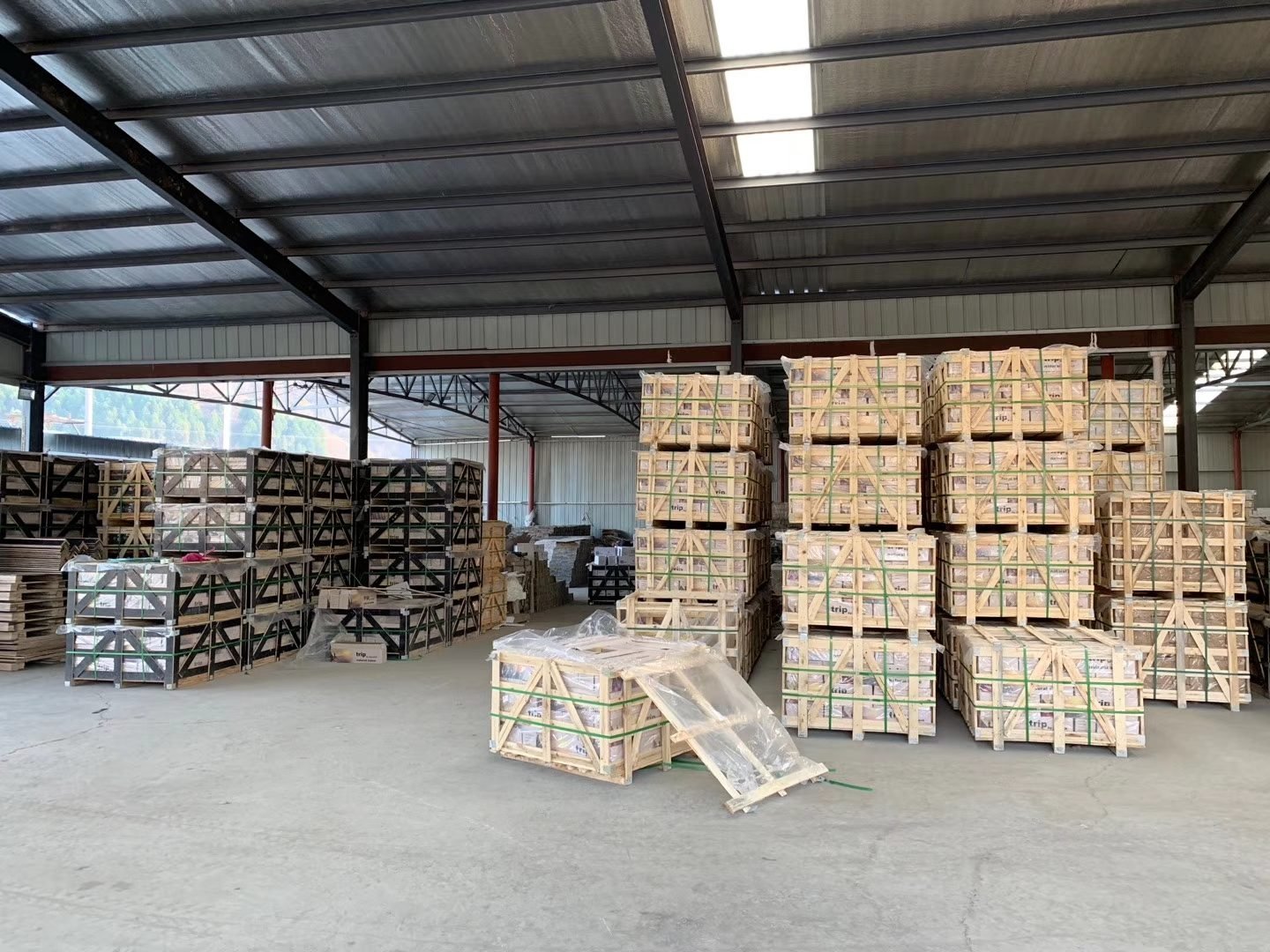
In the packing area, look for the crate, not the slogan. Reinforced fumigated timber, four to six passes of high-tensile strapping, palletisation and container airbag work are what a heavy brittle export actually ships in, and the standard should be demonstrable as a routine rather than as a special effort for visitors. Then ask which stock you would be drawn from. A warehouse of finished, cartoned, in-stock product is the difference between the roughly 20-working-day path and the 25 to 30-working-day custom path, and the same room tells you whether the fast movers they quoted you are real.
If a claim about third-party verification is made in the room, the same visit is the moment to test whether an independent inspection is possible and normal there, which is treated in third-party inspection of stone panels and in pre-shipment inspection and container loading. A supplier who welcomes an inspector is telling you something the display wall cannot.
The Documents Worth Asking For
Paperwork is the last cross-check and the one most often skipped because it is dull. Five items are worth asking to see on the visit, and all five are things a real exporter has to hand.
- A completed export file for your region: the packing list, the loading layout and the container video from a shipment that has already cleared. The delivery pack that should arrive with a container includes a loading and reinforcement inspection video set, a pre-shipment photo package and an installation and dieline guide, and seeing a real one is worth more than any verbal assurance.
- The declared HS code and the export document set: slate is declared under 6803.00.90 and quartzite under 6802.93.11; the practical detail lives in stone export documents and the HS code guide.
- Fumigation and timber treatment evidence: the crate is the risk, and ISPM-15 marking and certificates is the requirement to ask about by name.
- A written QC protocol and any material test report: read it with the guide to reading a stone panel test report, and remember that the properties a report should cover trace back to published stone guidance such as the Natural Stone Institute material resources.
- Proof of the private-label and OEM file: if the pitch is that your artwork and custom colour-mix definitions are held on file with no extra setup fee on repeat orders, ask to see your own file drafted, since that is the mechanism that makes your second order cheaper and faster than your first, as covered in private-label branding and the custom colour-mix and OEM process.
Red Flags That End the Conversation
Most of what goes wrong after a showroom visit was visible during it, in one of six forms.
- A display wall with no corners, no thin formats and no backing on show, which usually means the range is bought and re-sold rather than made.
- Refusal or delay in walking the production floor, or a tour that never leaves the room.
- Absence of stock while the pitch is short lead times, or stock that is visibly unsorted when the pitch was colour consistency.
- Every question answered by the salesperson, with no technician or production supervisor introduced at any point in the day.
- Quoted prices that move sharply downward when you mention a competitor, which tells you the first number was not a cost calculation.
- Pressure to sign before the samples have been evaluated, since the sample stage is where specification errors are caught cheaply, as set out in the sample evaluation checklist and how to order stone samples.
Scoring Two Suppliers After the Visit
Back at a desk, the visit is only useful if it is comparable. Score each supplier on five lines, using what you saw rather than what you were told, and put the numbers in the same order for both.
| Evidence line | What counts as a strong answer | Where it is proved |
|---|---|---|
| Manufacture versus resale | The board you liked is running on a line on the same visit | Workshop floor |
| Material control | Named vein, visible sort work, reject bin in use | Sorting bench and QC station |
| Assembly integrity | Backing type, bond method and load standard stated without hedging | Panel bench and crate |
| Delivery reality | In-stock pallets of your product plus a completed export file for your region | Warehouse and paperwork |
| Commercial fit | Terms, MOQ and repeat-order setup that match how you actually buy | Meeting and follow-up email |
Two further checks keep the score honest. First, ask what the money terms look like in writing, because the standard 30 percent deposit against 70 percent before shipment, released after the buyer reviews the loading layout and video, is a control on your side as much as theirs, and it is compared against letter-of-credit terms in T/T versus L/C at sight. Second, decide whether the quantity you want fits their order pattern, which is a container-mix question treated in MOQ and mixed-container ordering and, if the plan is to carry the range rather than a project, in starting a stone cladding distribution business. The wider regional context for the region you are standing in is worth reading once, in Hebei versus Fujian stone industries, and the questions a factory owner is asked by first-time buyers are collected in the factory owner Q and A.
Frequently Asked Questions
What should you ask during a stone factory showroom visit?
Ask which displayed samples the factory makes itself, which vein a colour comes from, how thickness and backing are controlled, what the loading and packing standard is, and what the lead time is for stock against a first custom batch, then have each answer shown to you somewhere other than the display wall.
Is a showroom a reliable sign of manufacturing capability?
Only partly. A tidy showroom proves sourcing and presentation ability. It proves nothing about vein consistency, bond cure, packing discipline or on-time loading, all of which live outside the room.
What should a factory visit include beyond the showroom?
The cutting and hand-lay line, the quality-control station, the packing and crating area, and the stock you would actually be shipped from, in that order, because each one is the cross-check for a claim made in the room.
What documents should you ask to see on the visit?
Current packing and fumigation practice, the HS code the product is declared under, the QC protocol as written, and a completed container file from a shipment to your region, including its loading video and photo package.
When is a showroom visit not worth the trip?
When the supplier cannot show production, stock or a completed export file, or when the visit is arranged so late in the season that nothing you find can change the order. A video walkthrough plus samples is a reasonable substitute in those cases.
Conclusion
A showroom visit repays the flight when it is used as the opening of an evidence chain rather than as the closing argument. The display wall tells you what a supplier can source and how well it presents; the questions at the boards tell you whether the range is made or bought; the workshop, the QC station, the crating area and the stock tell you whether the claims about consistency, bonding, packing and lead time are processes or phrases; and the export file tells you whether any of it has already happened for a buyer in your market. Score both suppliers on those five lines and the decision stops being a preference about colours.
- Treat the room as the first exhibit, not the verdict, and insist on the walk to the line behind it.
- Ask the same question at every board: do you make this, from which vein, and can I see it today?
- Cross-check consistency, backing and packing in the workshop, the QC station and the crate, and ask for the written protocol rather than the description.
- Look at one completed export file for your region, including its fumigation marking, declared HS code and loading video.
- Convert the visit into a comparison table before the next supplier meeting, and keep the three photographs as the memory that survives the quarter.
Planning a supplier visit and wanting a room that answers questions instead of a room that flatters? Send the shortlist and your question list ahead, and the Top Stone Panels team will have the relevant boards, the line, the packing area and stock on the floor before you arrive.